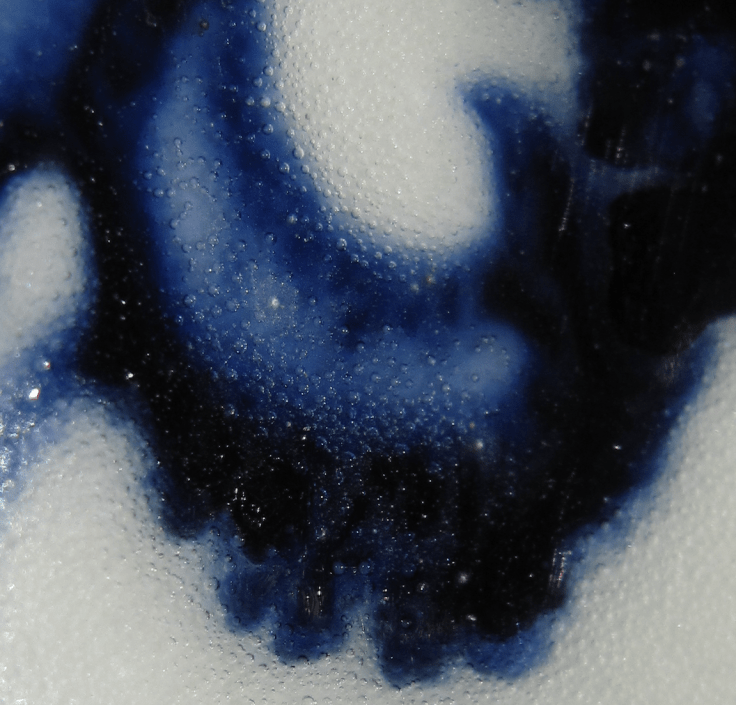
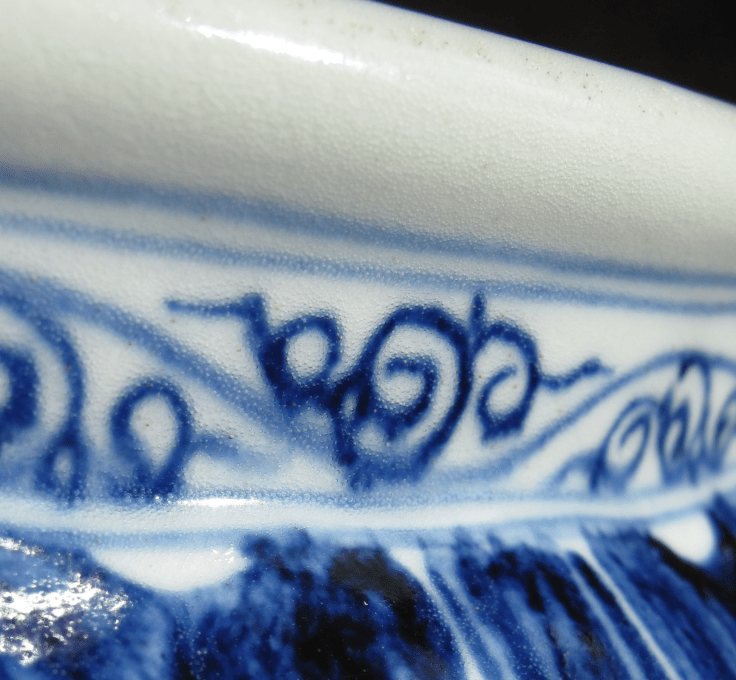
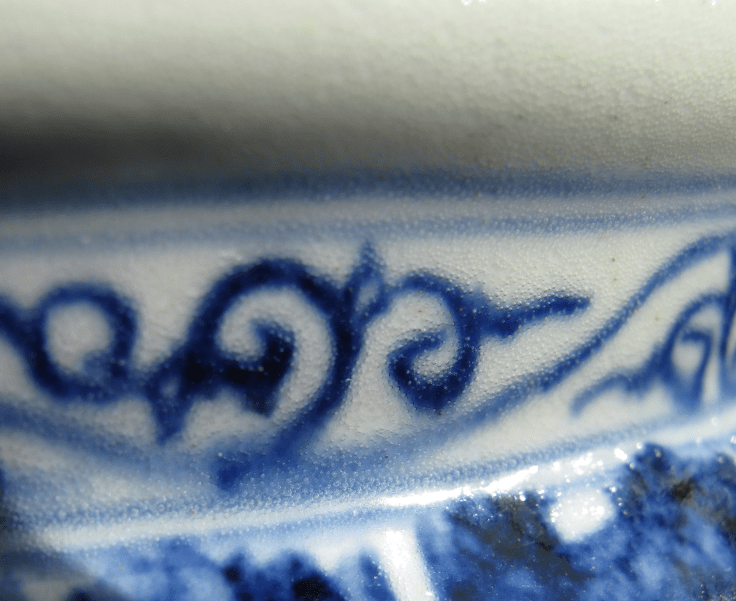
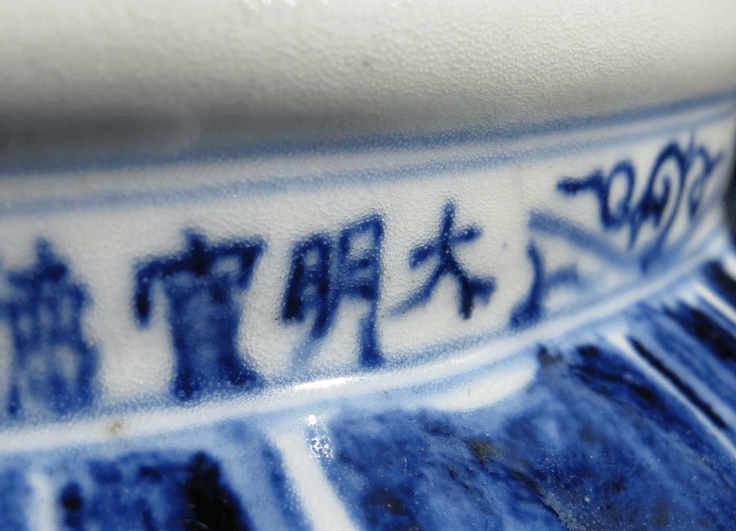
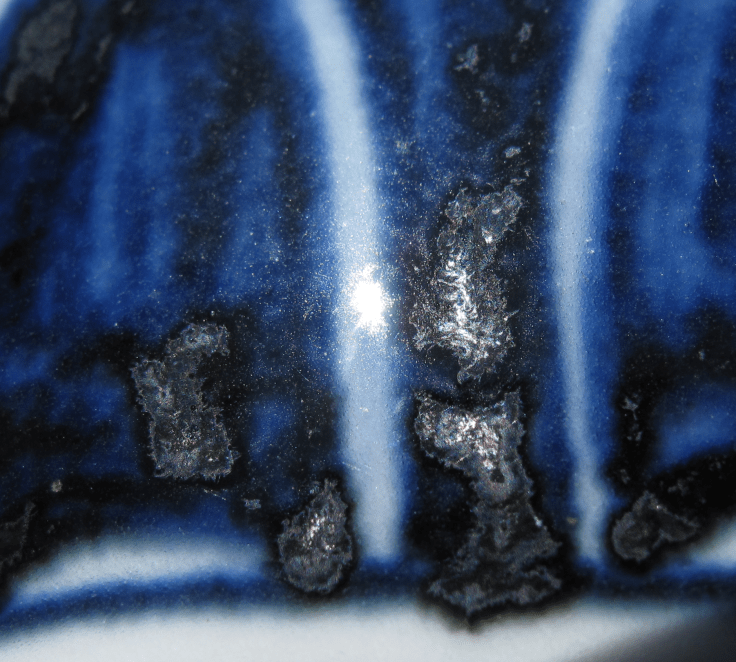
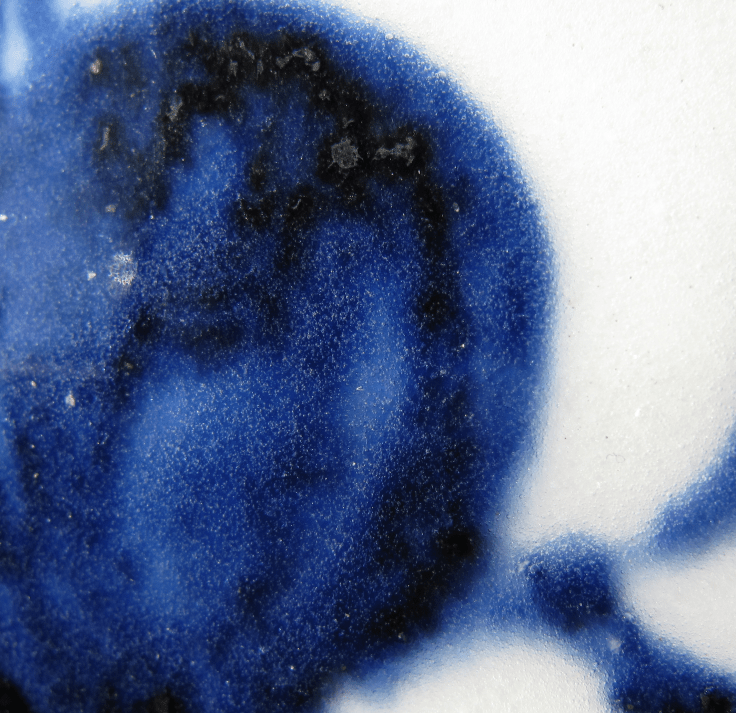
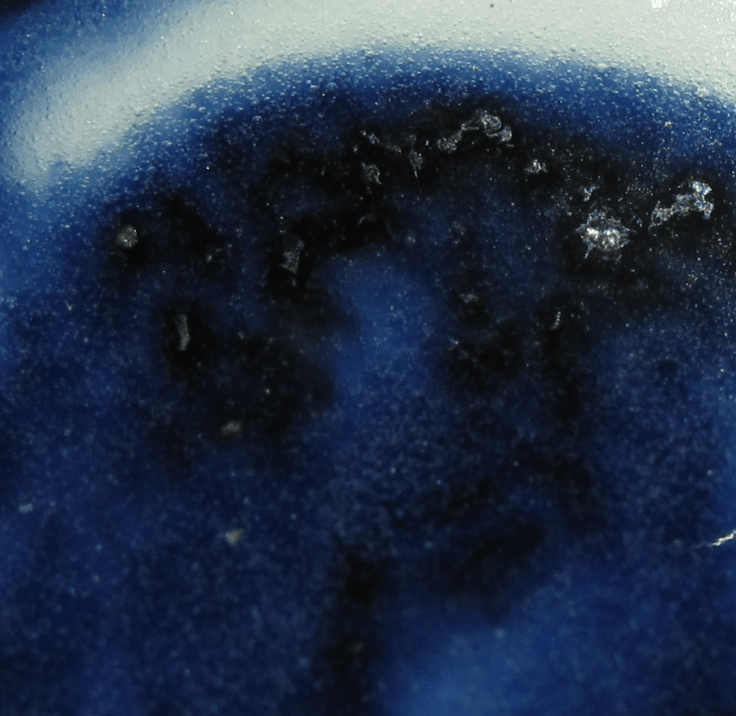
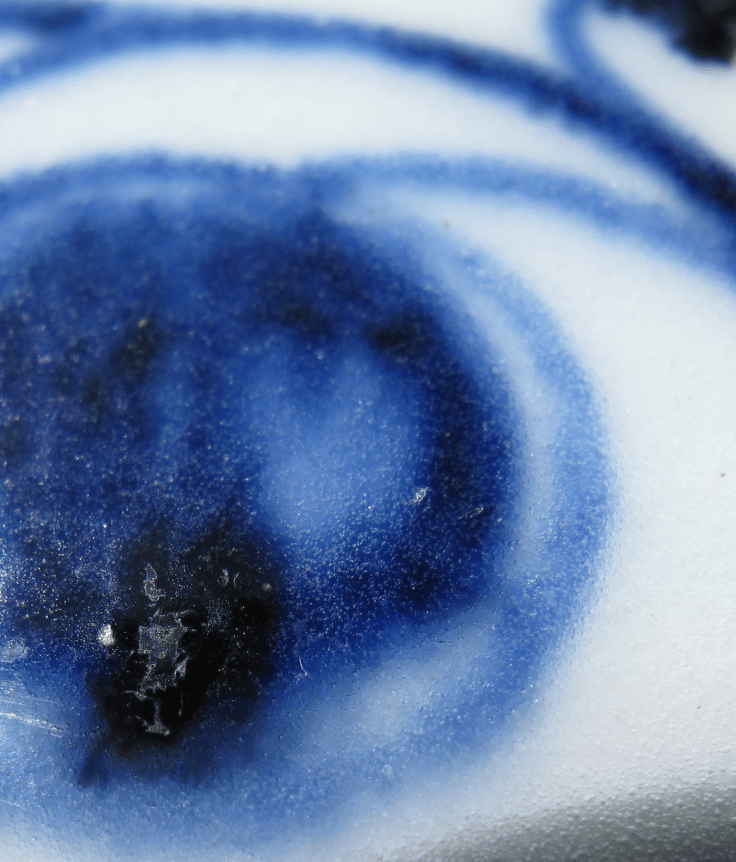
A Xuande Blue and White in the Shape of a Pipa

We all know that potters in the early Ming days are very skillful artists, as shown by the works that we still have today. They are not only skillful, they are creative. Many a time, they have created wares with such ingenuity that we can only marvel at the beauty of their work. Unfortunately, many of these beautiful wares were destroyed  when war and political upheavals  swept through the country all these centuries. Still a few remains. Of those that remain, some are rare, some are very rare, and some are extremely rare. In terms of monetary value, the rarer the ware is, the more expensive it would be. But there is a catch here—the rarer the ware is, the chances for it to be refuted by collectors and museum curators and experts become much higher. This is a time when we need to be very careful in our judgment. Many people pay a lot of attention to provenances, and I am not going to dispute that. But to me, the most important way to evaluate a ware is to go by its characteristics. This is particularly true when we are dealing with Blue and White of the early Ming period. We all know potters in those periods use the Sumali Blue dye for the painting of the motif. As I have shown you in the previous articles, we now know very well the characteristics of the Sumali Blue dye. So, in dealing with a rare ware in those periods, all that we need to do is to examine the characteristics of the dye, and see if they match those of Sumali Blue dye. It they match, I do not see any problem in confirming or denying the ware.

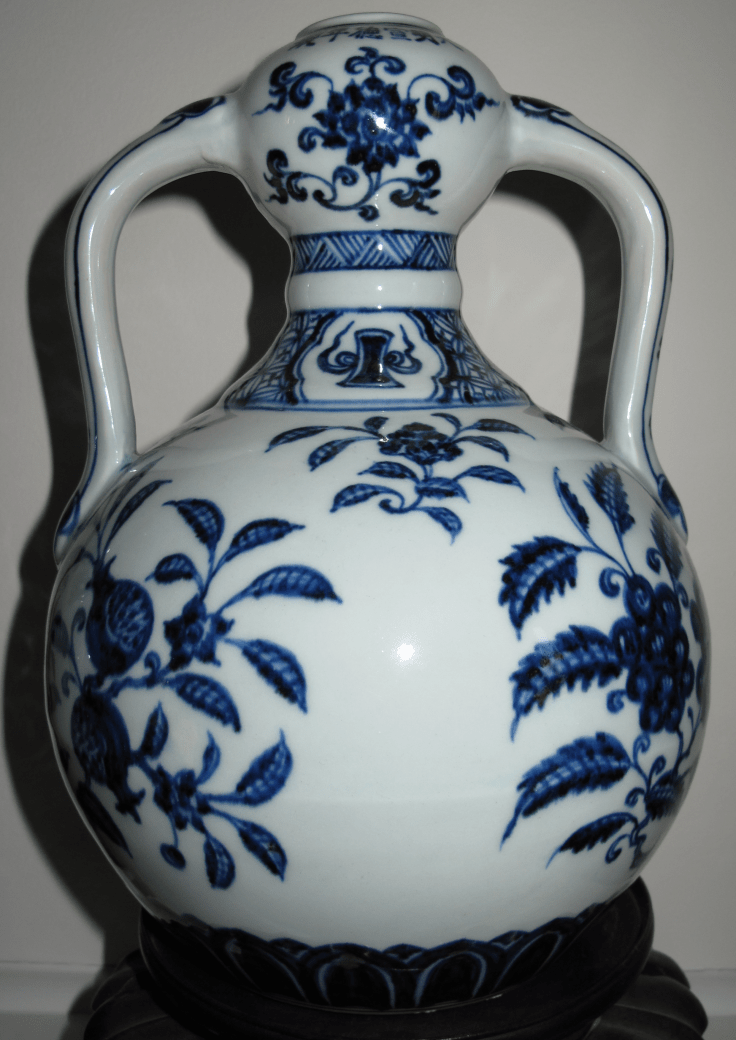
I’ll now show you a rather rare Blue and White of the Xuande period. It is a ware in the shape of a Pipa which is a Chinese musical instrument very similar to a lute in the west.
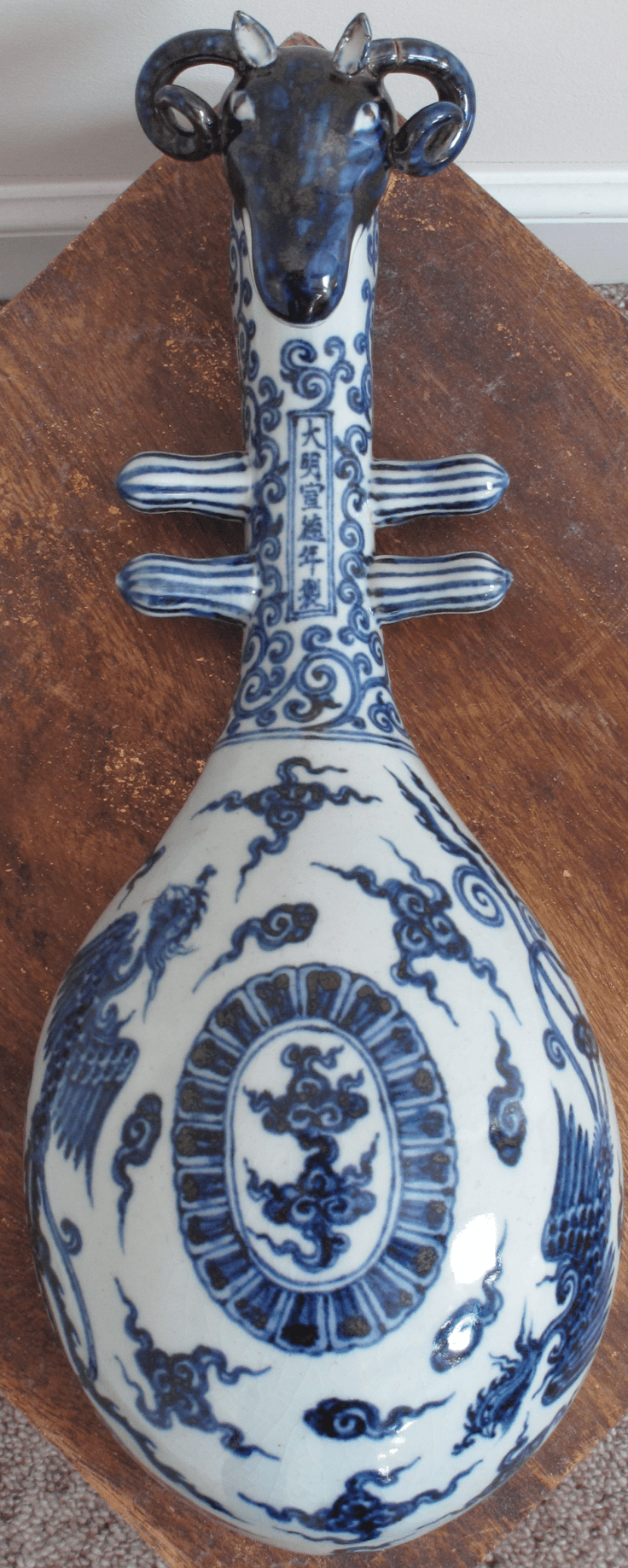
 

IMG_5431.pngFigure 1    

This Pipa measures 15 1/2 inches long, 6 1/4 inches wide and bulges up in the body for 3 1/2 inches, so that the body is almost a semi-spherical body. You can see that at the top of the Pipa, the part we call the scroll, is in the form of the head of a ram, completed with two curly horns and two ears sticking up high. A little below that is the tuning pegs. It is a very nicely made ware. What we now need to know is wether the ware belongs to the Xuande period, as the mark in the neck says (Figure 2).
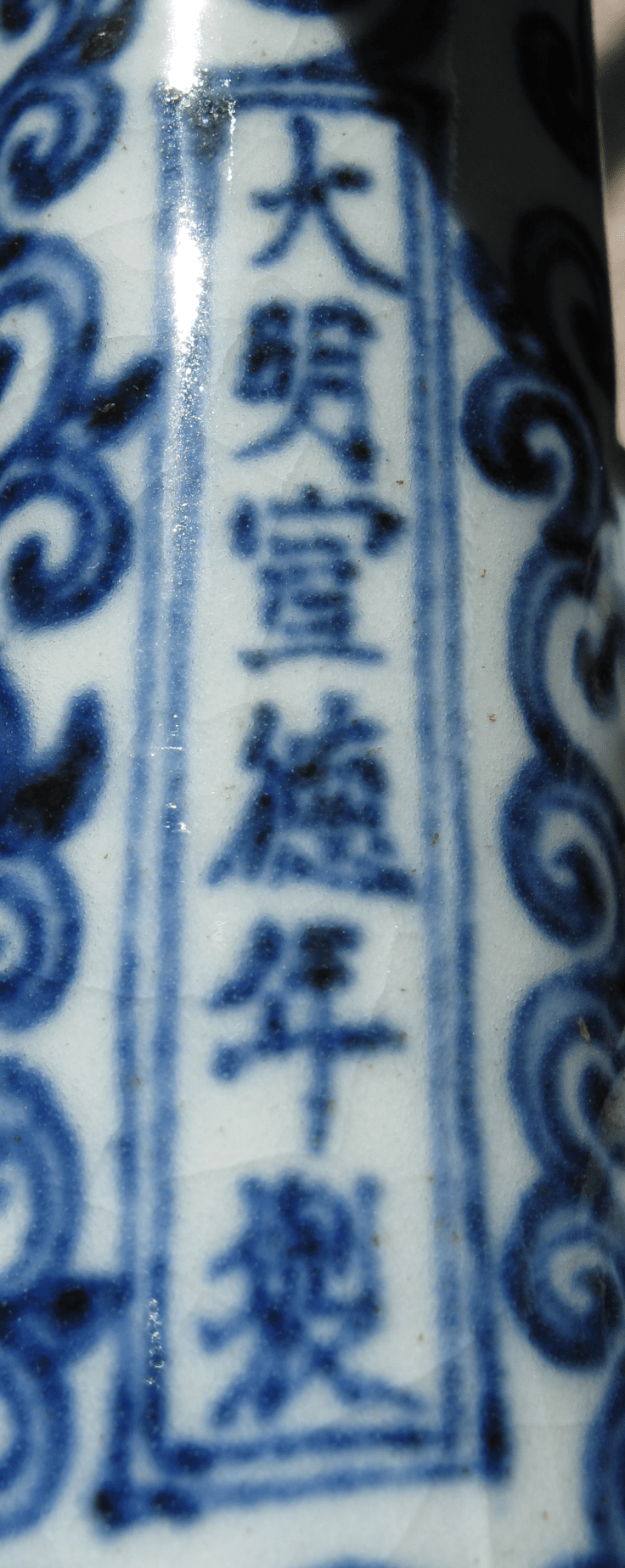
 

IMG_5252.pngFigure 2    

There is no secret here. We just look at the characteristics of the Somali Blue dye. The rarely seen shape of the ware should be your last worry. Let me show you a few photos of the plaques first.


IMG_5257.pngFigure 3  


IMG_5258.pngFigure 4   


IMG_5243.pngFigure 5  


IMG_5467.pngFigure 6  


IMG_5289.pngFigure 7   


IMG_5311.pngFigure 8   

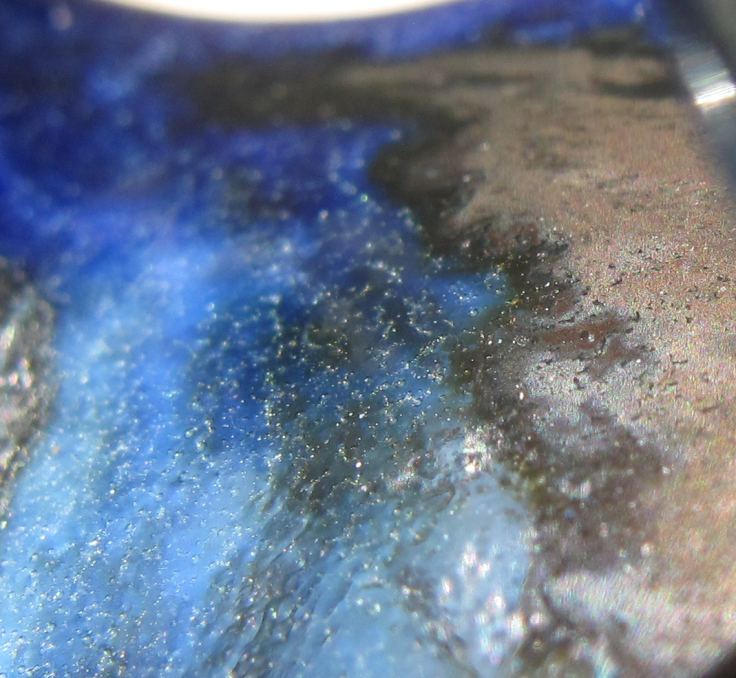
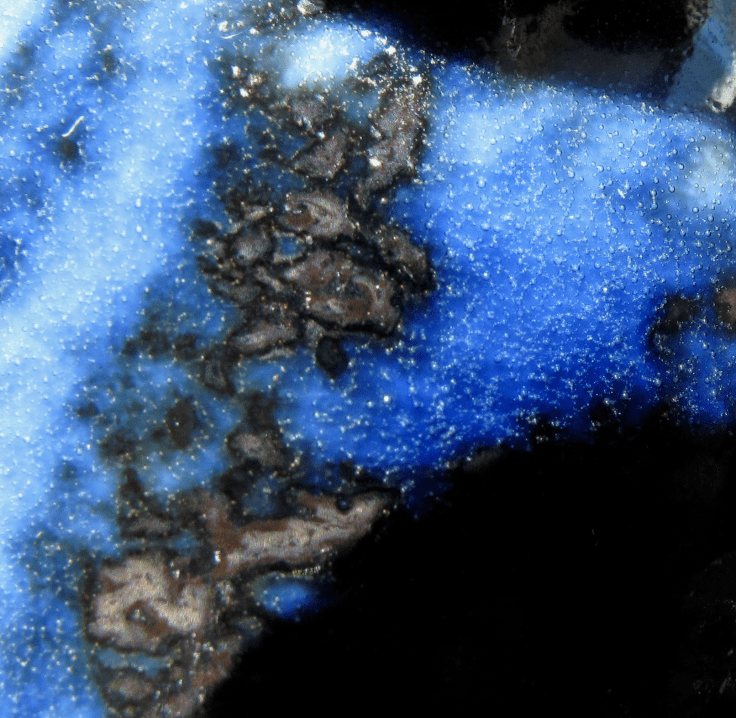
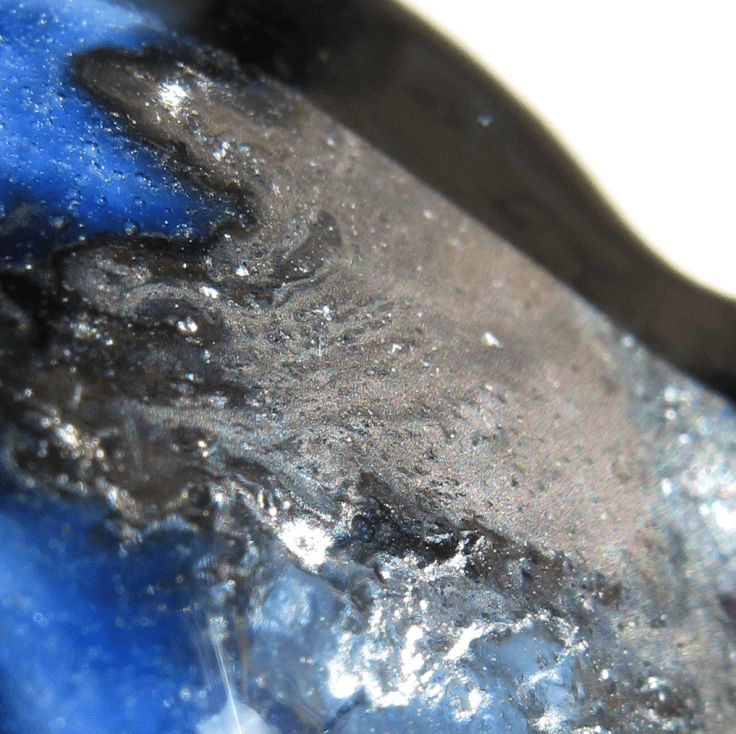
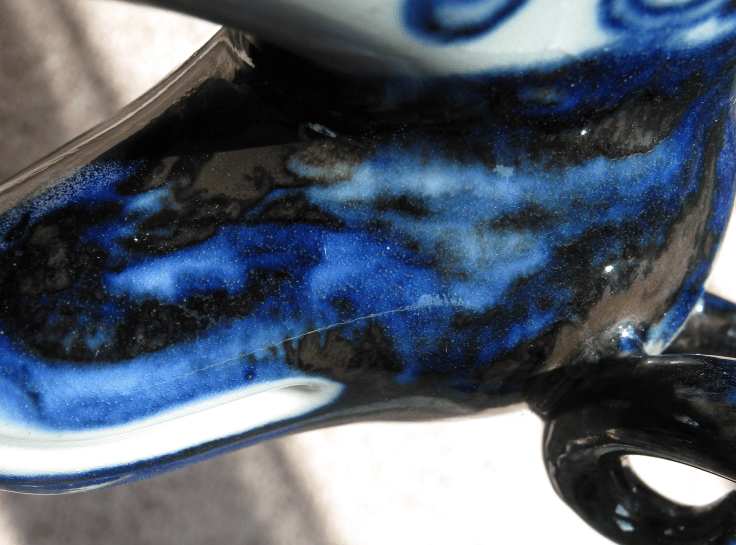
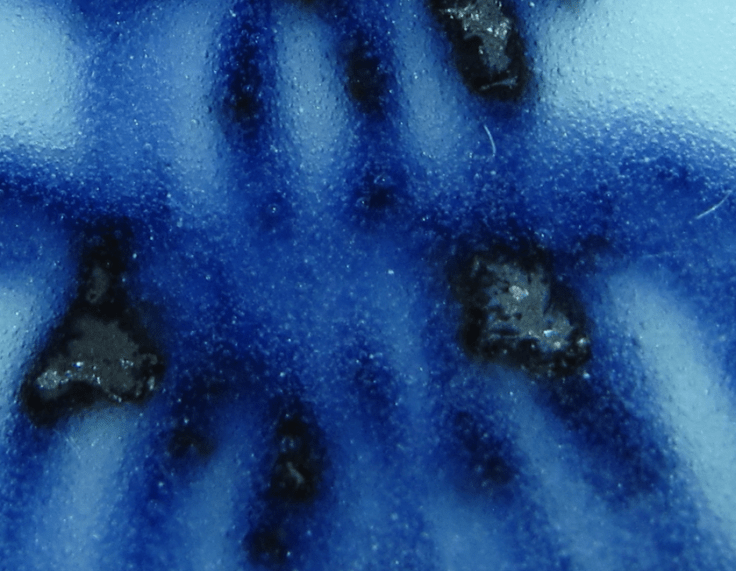
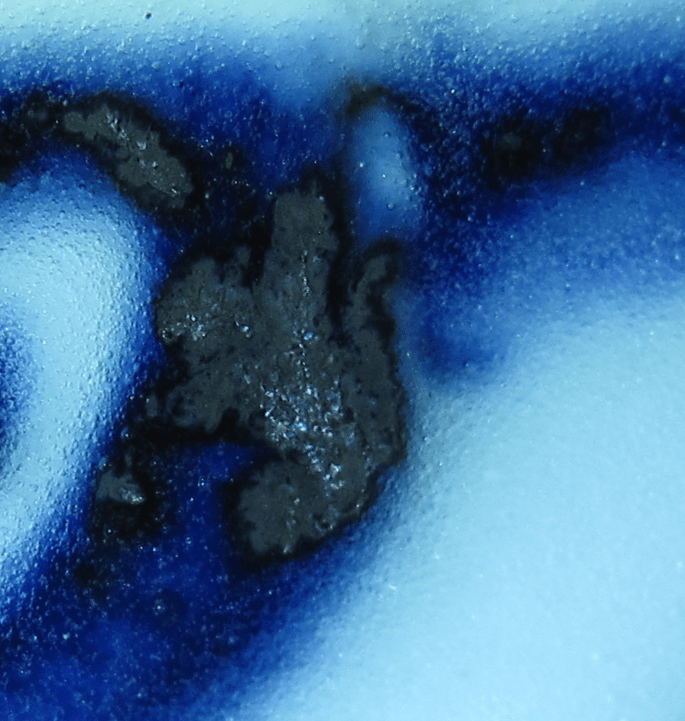
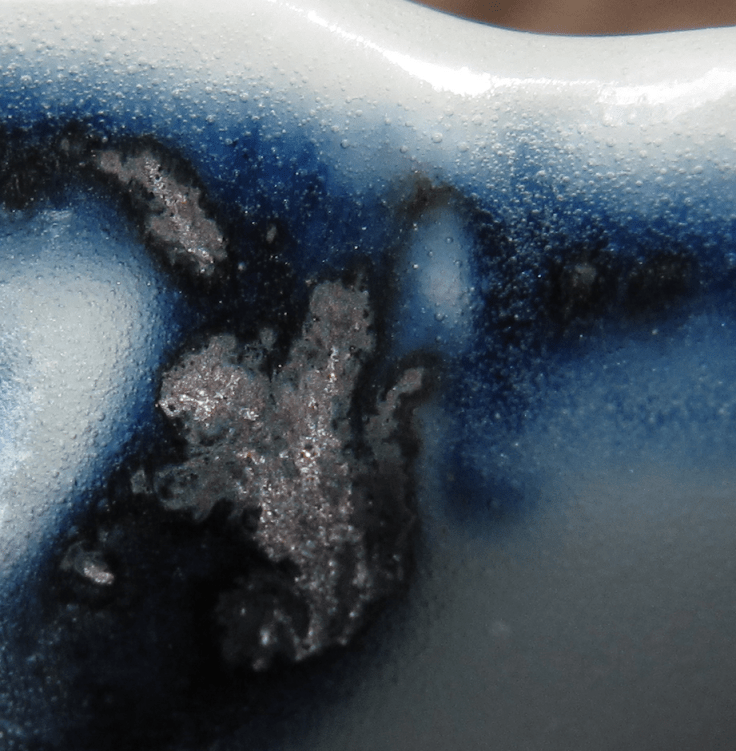
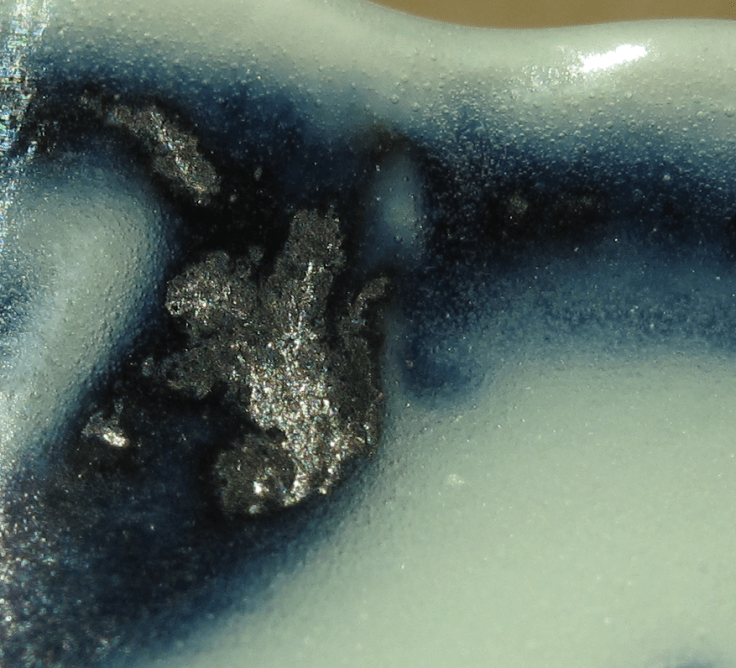
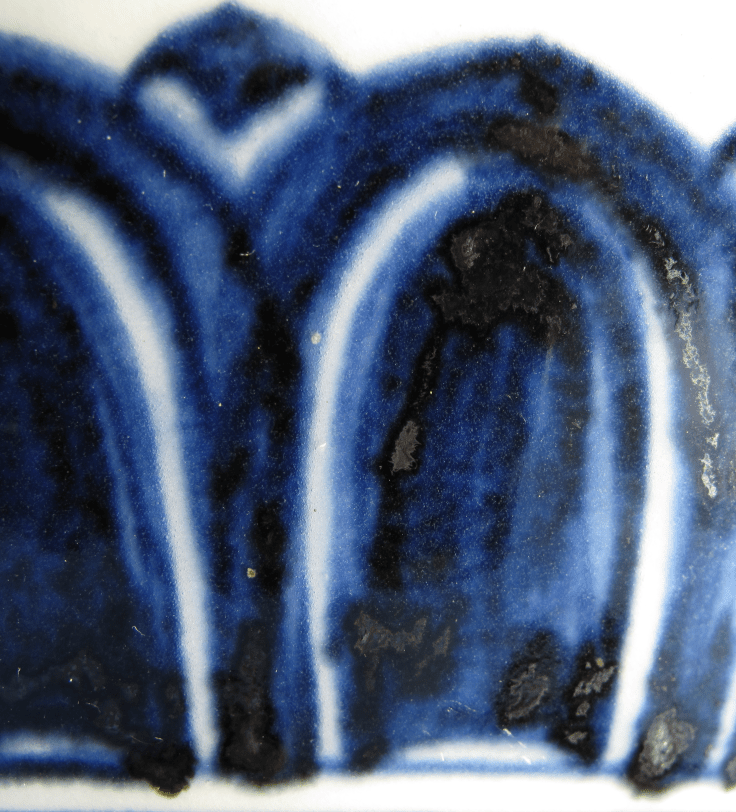
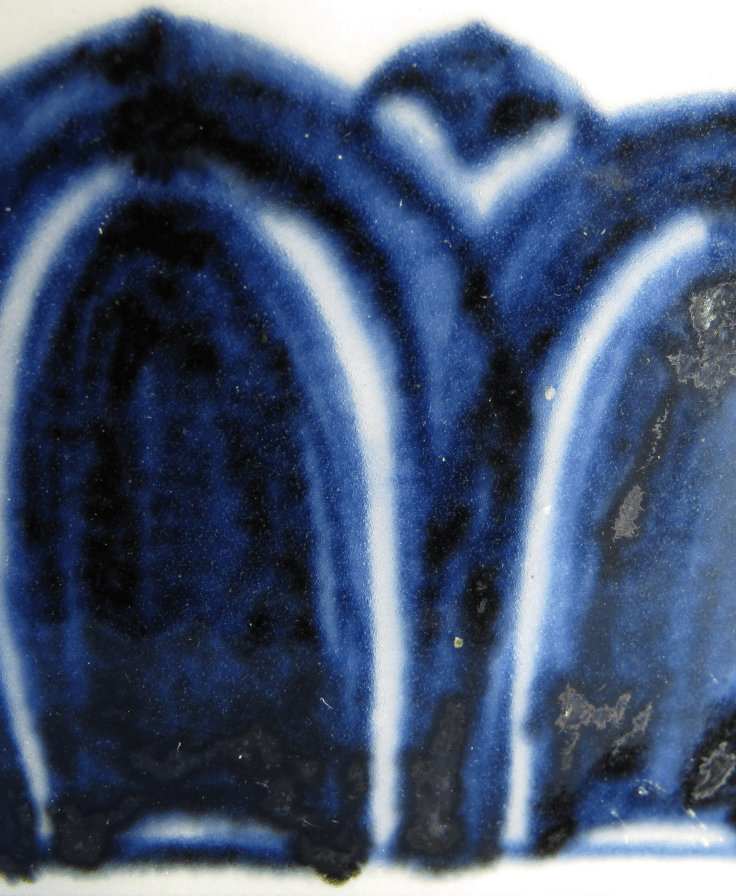
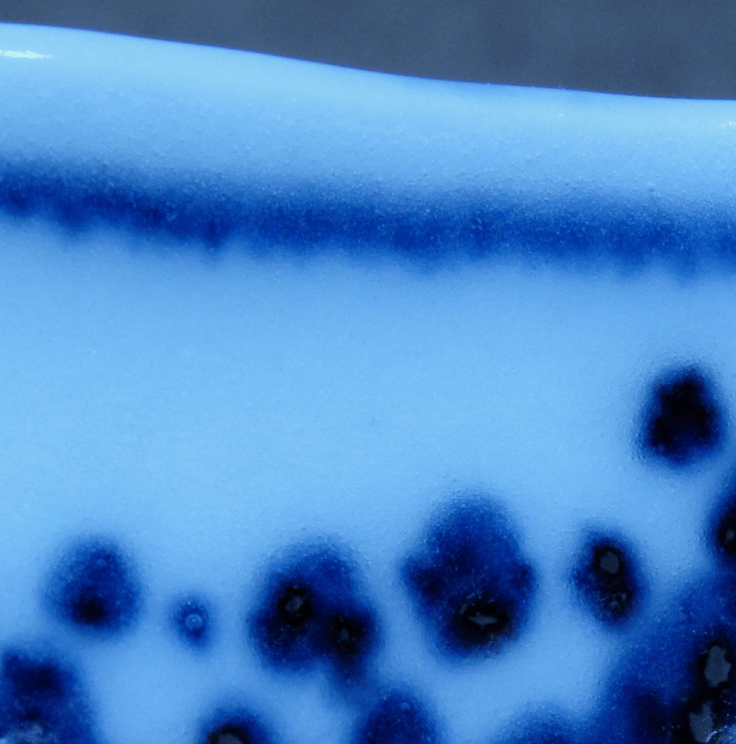
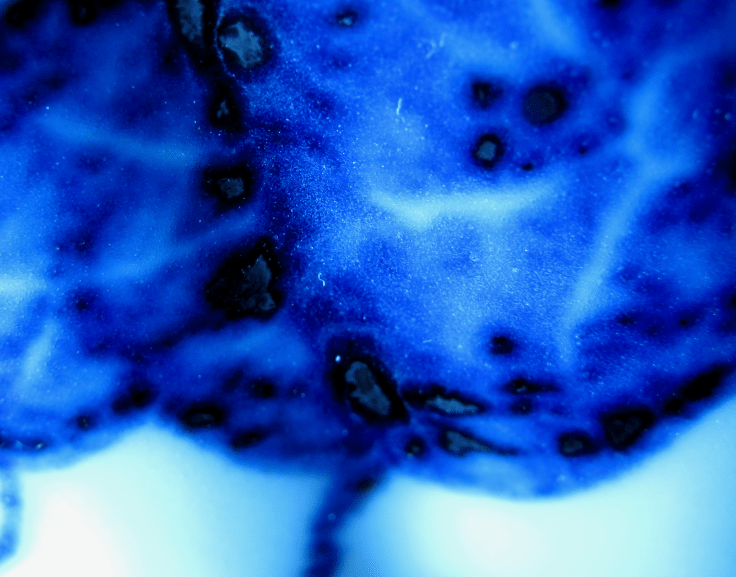
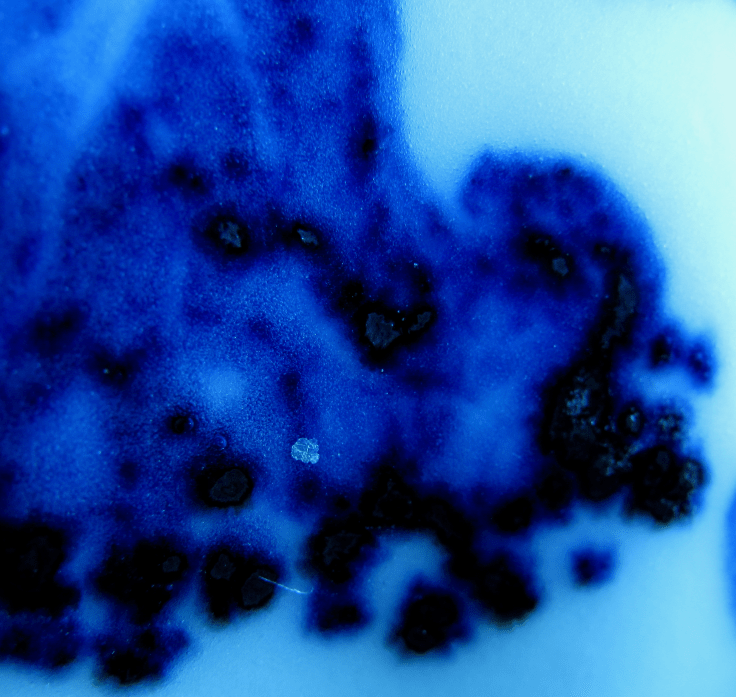
Figure 8 shows the head of the ram. The whole head is painted blue. You can see large patches of plaque here and there. They do not seem to have the metallic shiny foil floating on top, so that the plaques belong to those plaques that have a simpler structure, with only a muddy layer. In fact, the whole ware is painted with blue dye similar to the head here. A look at the blue patches anywhere in the pipa, there is little aluminum foil floating on top anywhere.

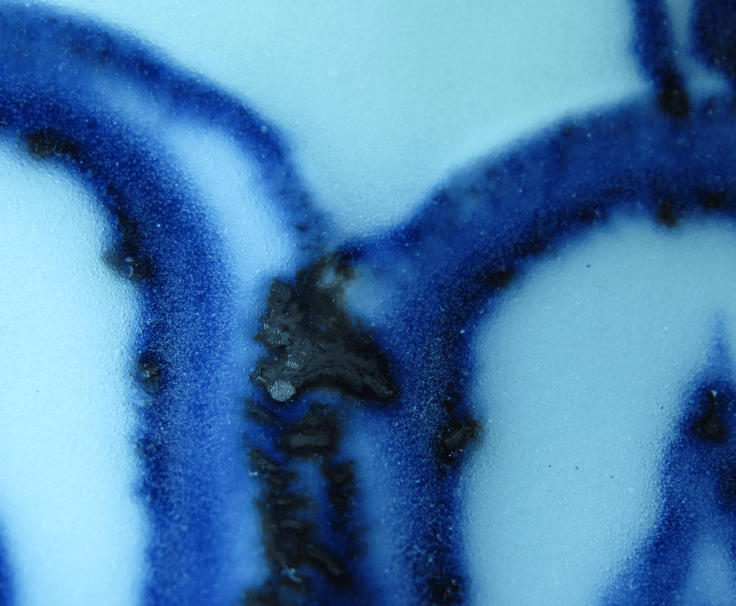
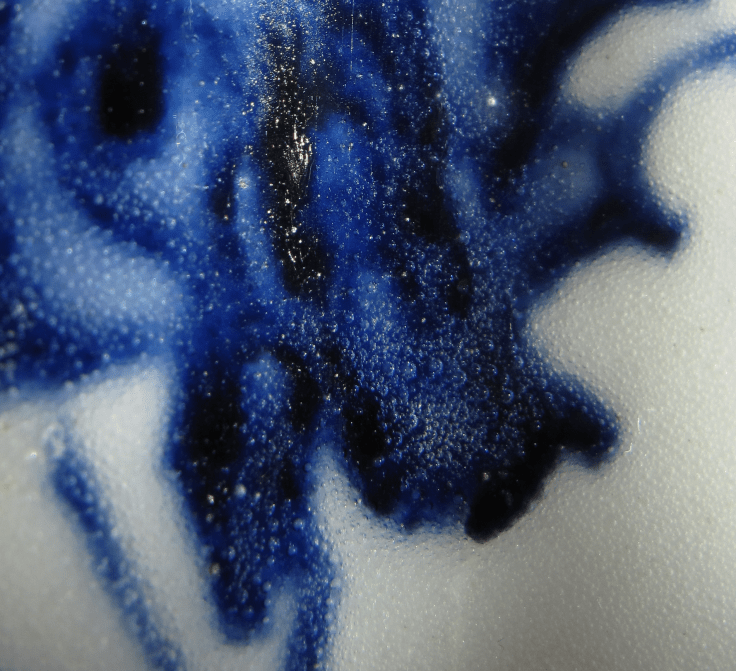
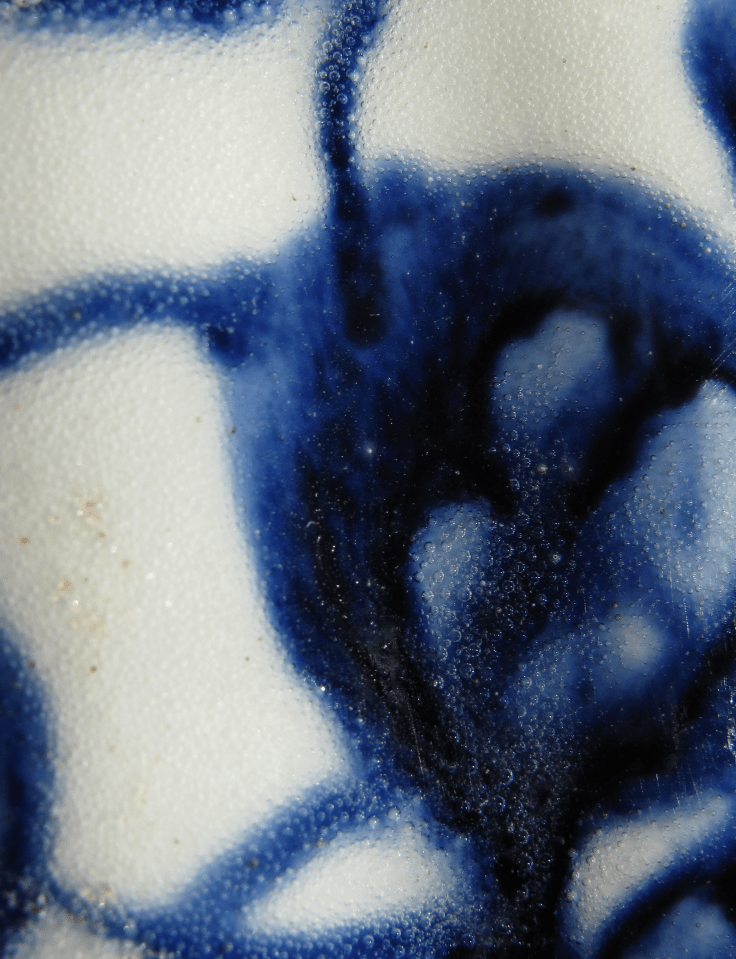
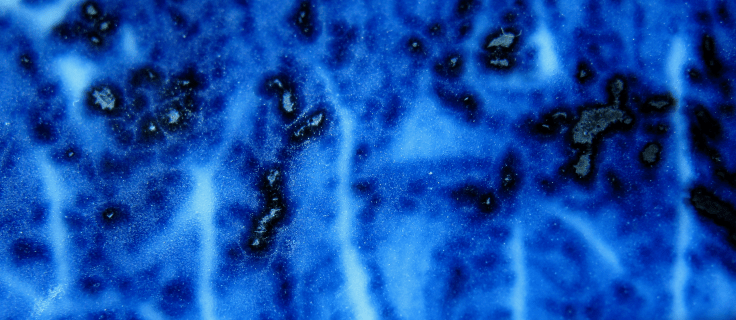
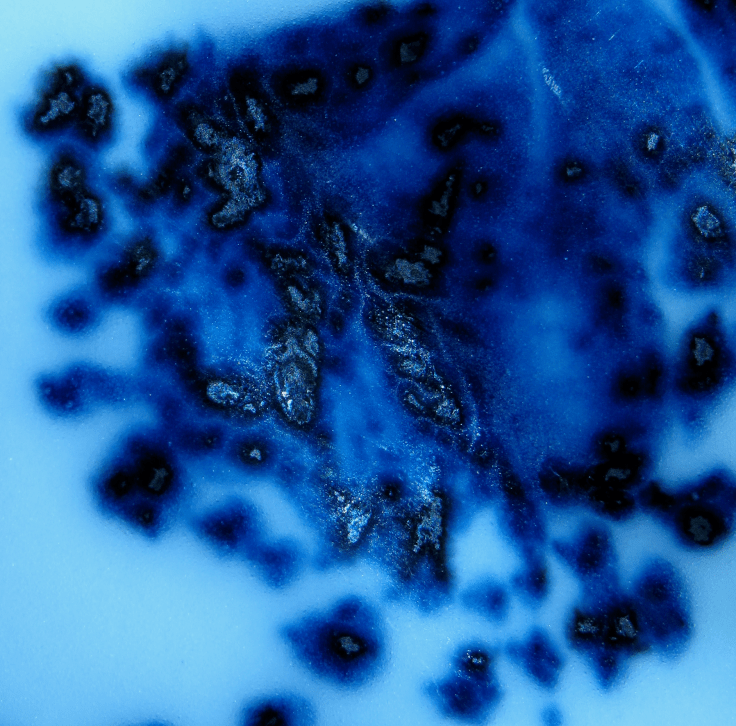
In Figure 3 and Figure 4, even when the plaques are quite large, you can only see the muddy layer. Under the sun, the plaques are not highly reflective, indicating that the metallic and other crystalline contents are low. But in other areas, (Figures 5-7), they have a different look. But no matter how you look at it, you have to say that they are beautiful.

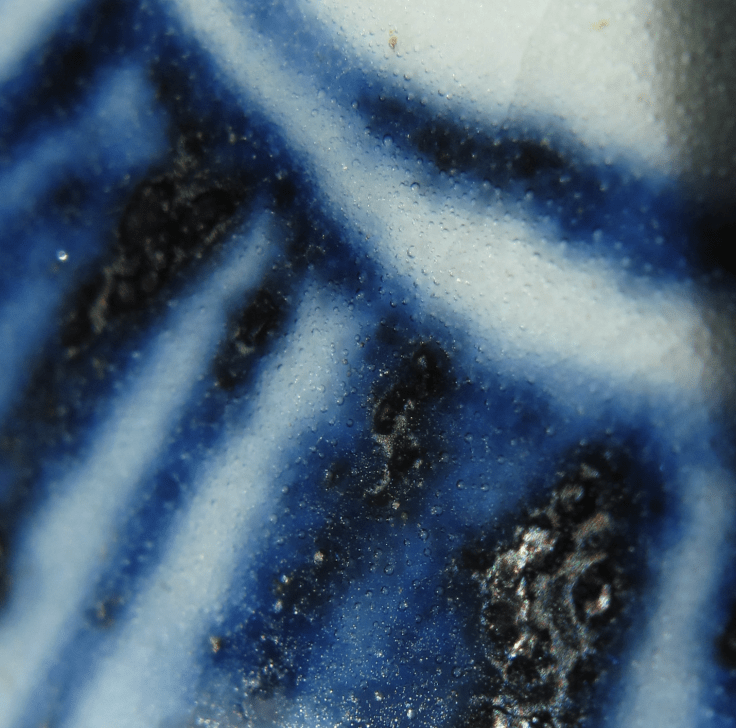
Now, let me show you areas where there are higher contents of metal and crystals, as indicated by the much more reflective nature of those areas.
 

IMG_5273.pngFigure 9   


IMG_5265.pngFigure 10  


IMG_5269.pngFigure 11   


IMG_5267.pngFigure 12   


IMG_5264.pngFigure 13   


IMG_5266.pngFigure 14   

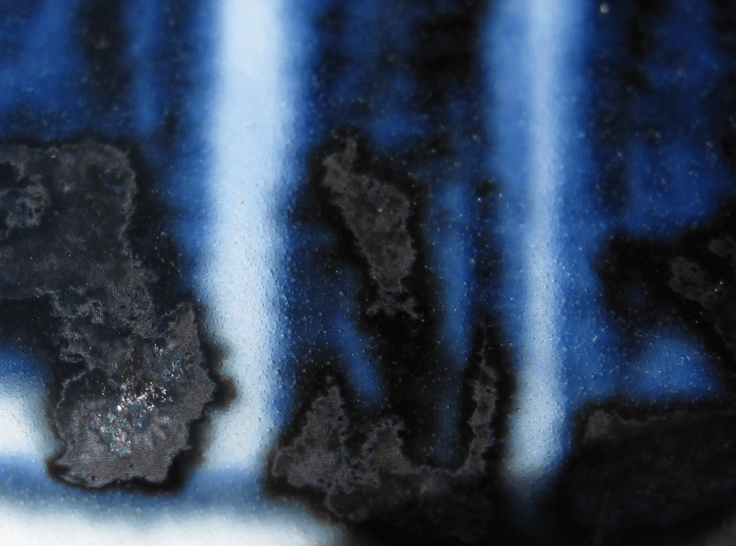
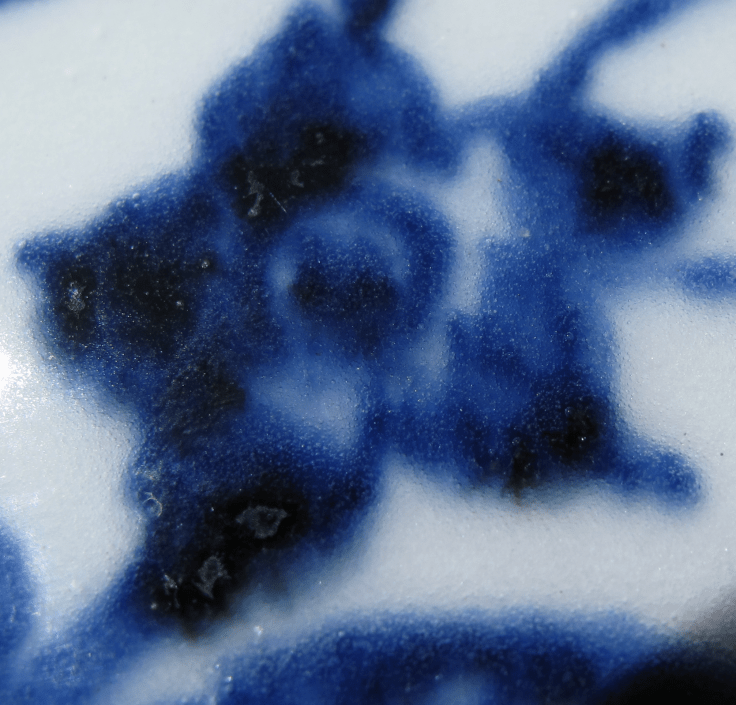
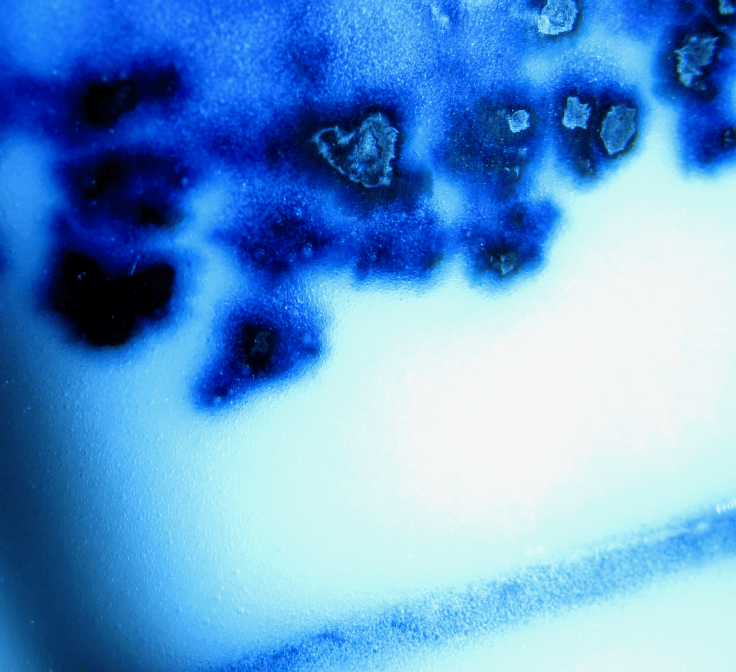
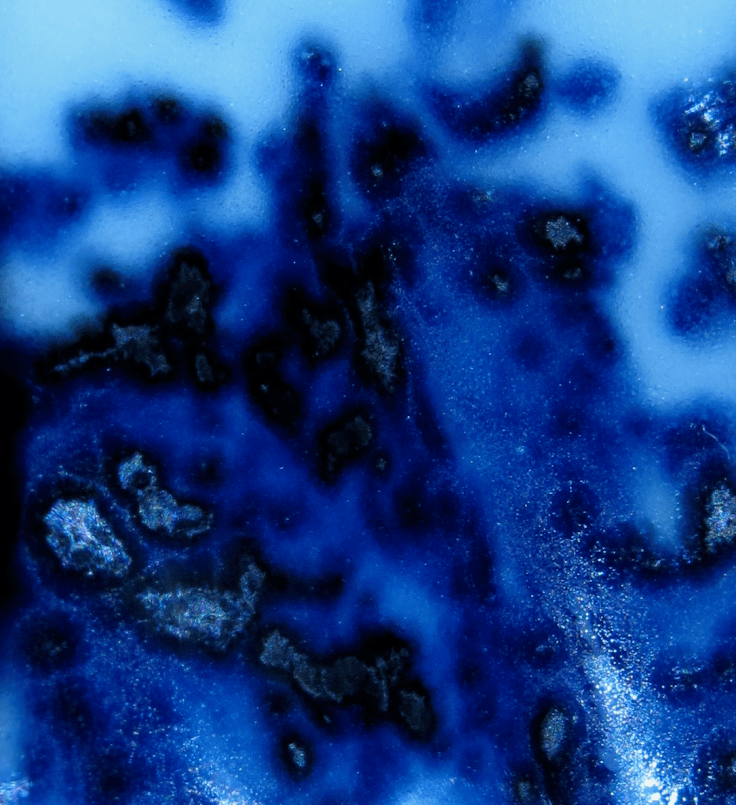
Look at these beautiful plaques in different forms and their reflections (Figures 9-14). They are comparable to those that I have shown you in other wares. In figures 13 and 14, the plaques that are next to the reflective ones look like pale brownish patches sitting in a dark blue area, beyond which is the not so dark blue coloration. This is typical of the Somali Blue dye, as the other features are. There is a reason for the plaques to look so different when they are less than 1 cm apart. The curvature of the body is so large that the angle of sunlight striking on the surface would vary much even within a short distance, and this difference means a lot when it comes to the reflection of light.


I’ll show you more photos of dull plaques morphing into brightly reflective ones with only a very short distance apart, maybe less than 1 cm.


IMG_5306.pngFigure 15 


IMG_5297.pngFigure 16   


IMG_5282.pngFigure 17  


IMG_5319.pngFigure 18   


IMG_5320.pngFigure 19   

Look at Figures 15-19 carefully, and the dull plaques morphing into very colorful and reflective ones. Figures 18 and 19 are in fact taken from the same spot. But you’ll notice that a slight shift of the position of the ware, the reflections look quite different.


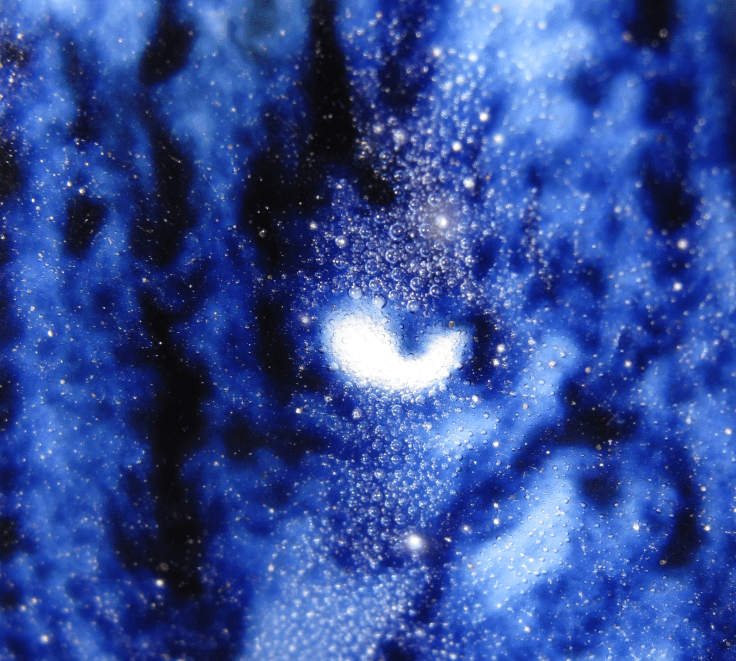
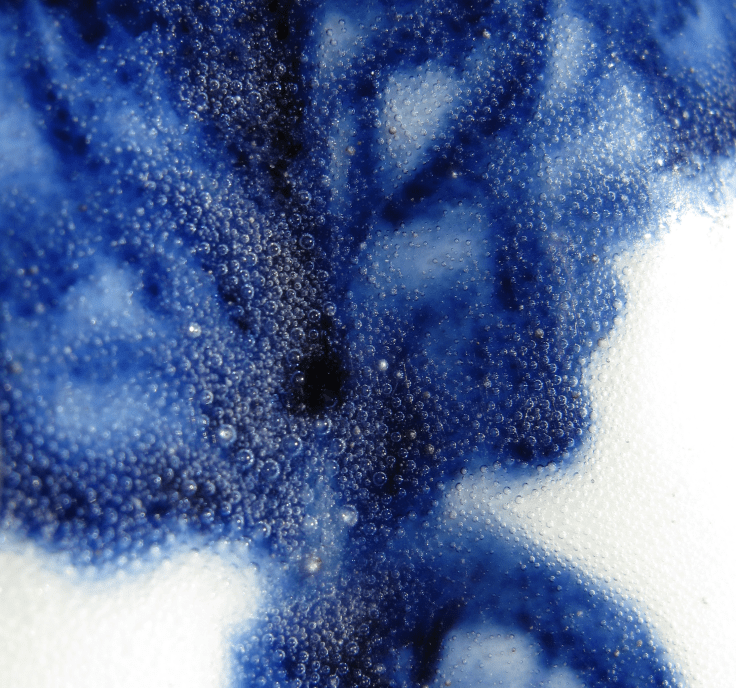
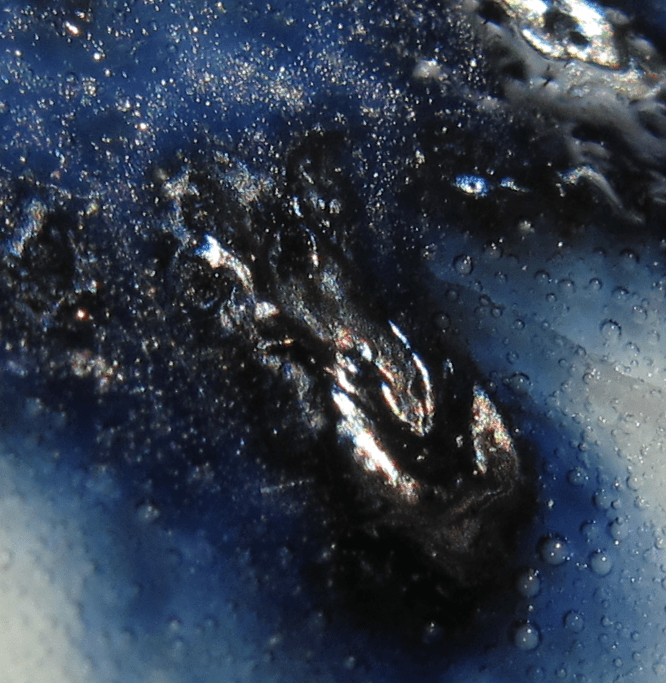
Now, I’ll show you an enlarged photo of one of the more colorful plaques (Figure 20). Do you notice the many tiny and yet  very colorful particles around the main plaque? As I have explained before, these tiny particles are the components of a plaque before they aggregate and form a proper plaque.
 

IMG_5325.pngFigure 20   

You may be interested to know how these plaques look like when the photos are taken in a not-too-close-up range.


IMG_5275.pngFigure 21  


IMG_5279.pngFigure 22   


IMG_5277.pngFigure 23

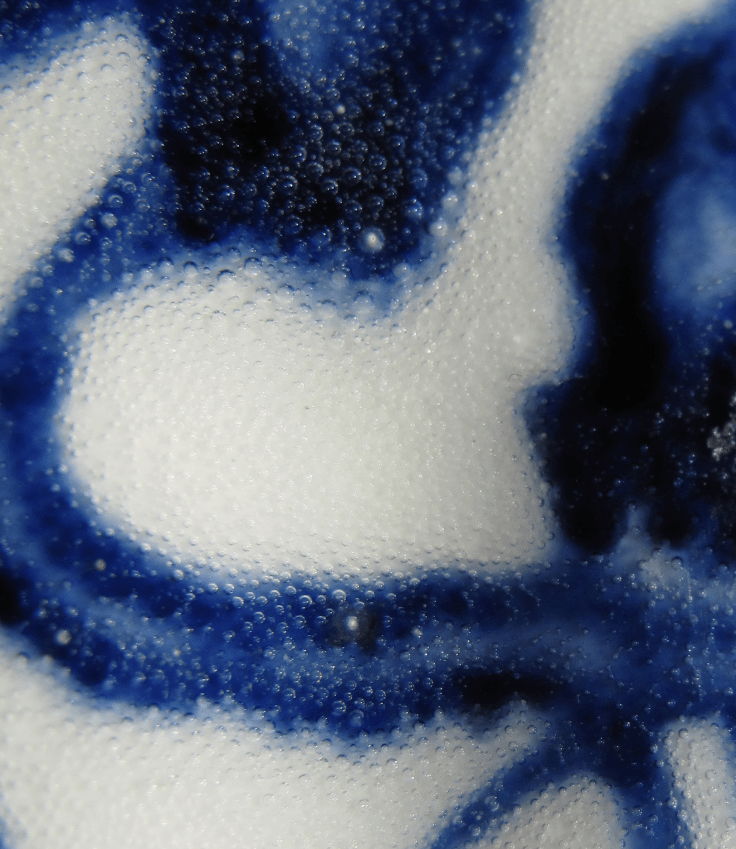
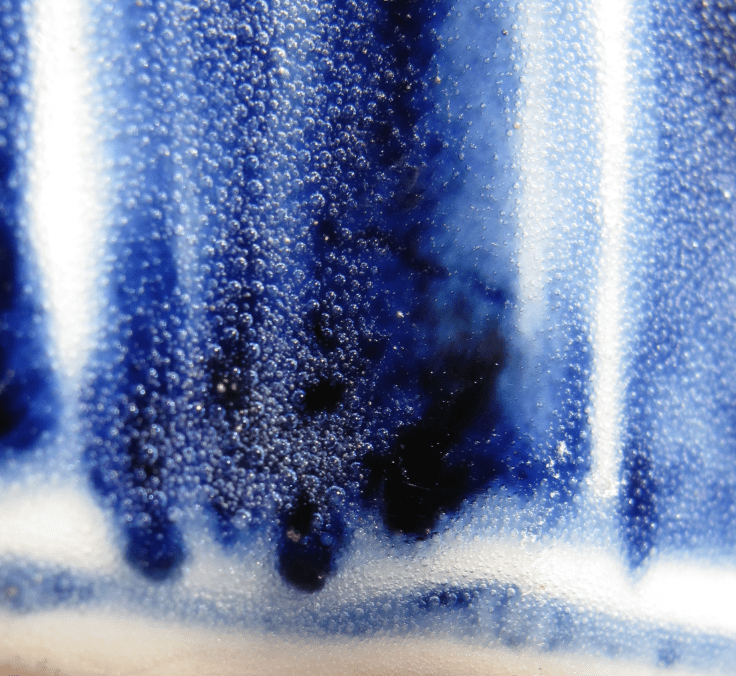
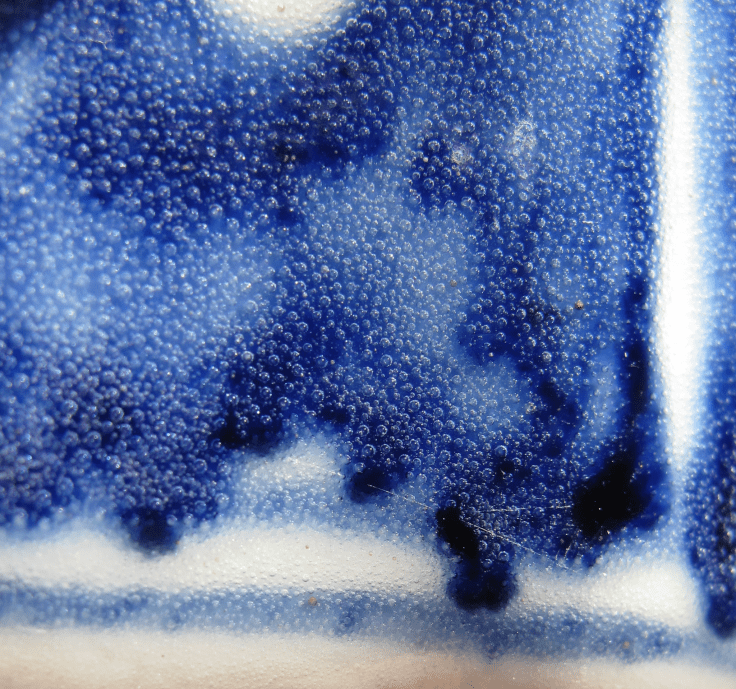
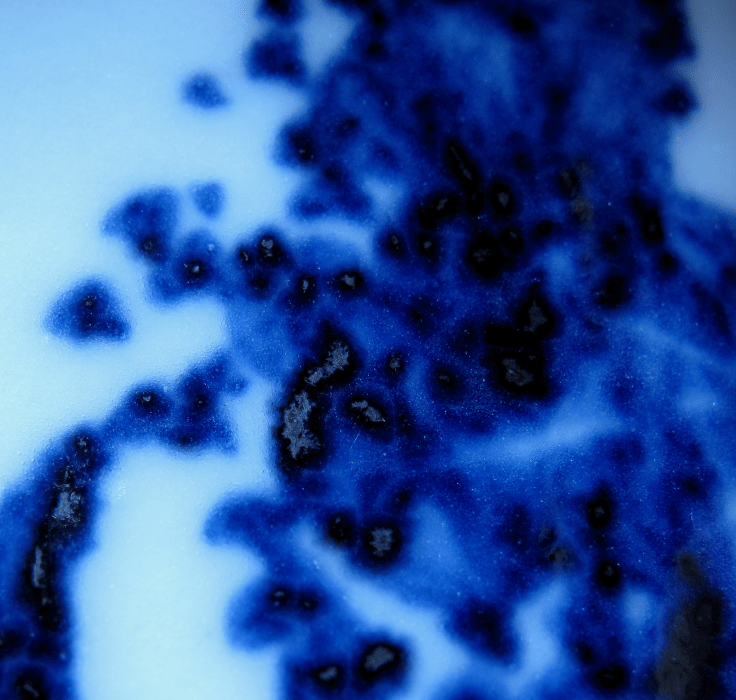
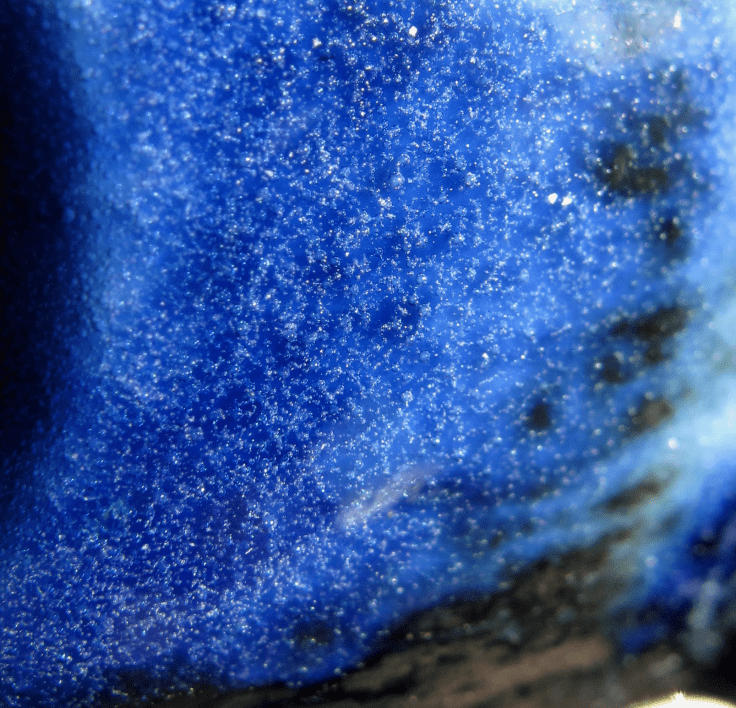
Note the plaques in these three photos (Figure 21-23). They are small, but some of them are distinctively reflective. You may also want to take this opportunity to study the flare and the dripping. I don’t believe that I need to dwell on them. And you will also note the bubbles. You have large bubbles, and rather small ones, ones that you’ll see in the Somali Blue dye. But I’ll show you more typical ones (Figures 24-27).
 

IMG_5291.pngFigure 24  


IMG_5286.pngFigure 25  


IMG_5254.pngFigure 26   


IMG_5260.pngFigure 27   

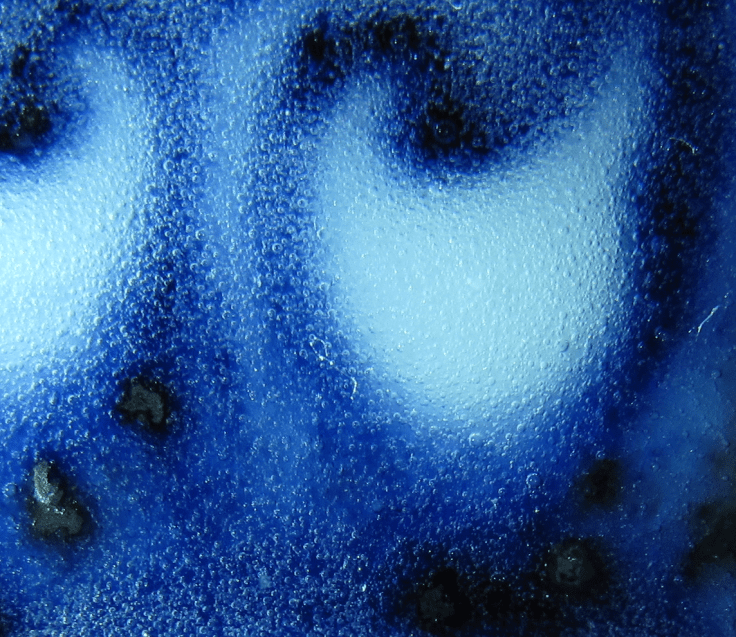
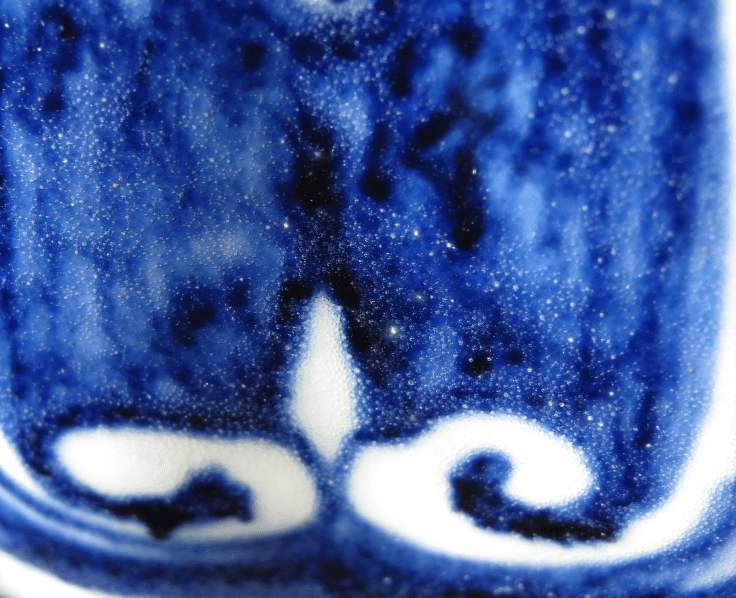
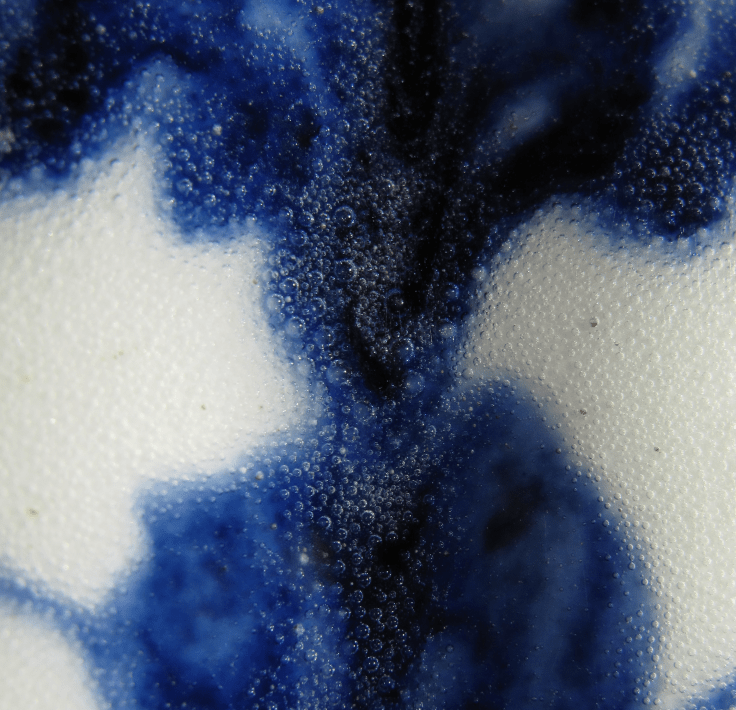
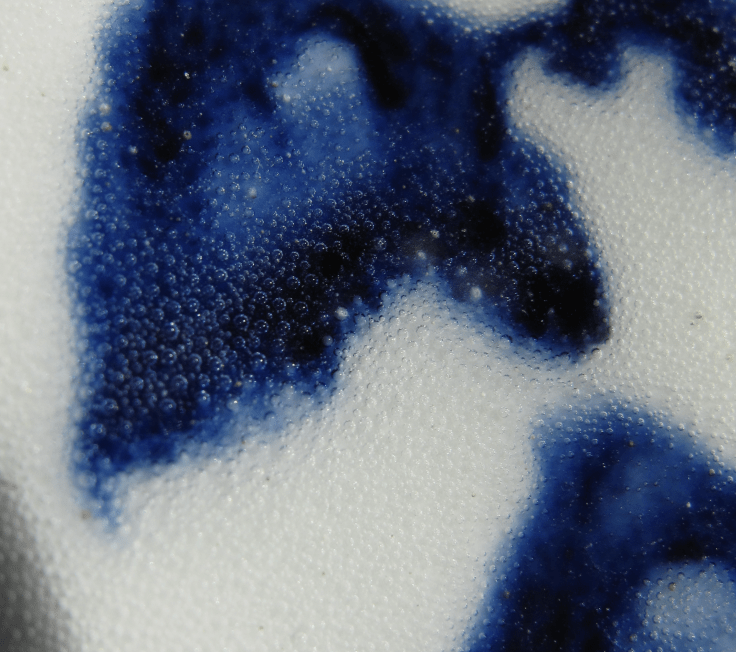
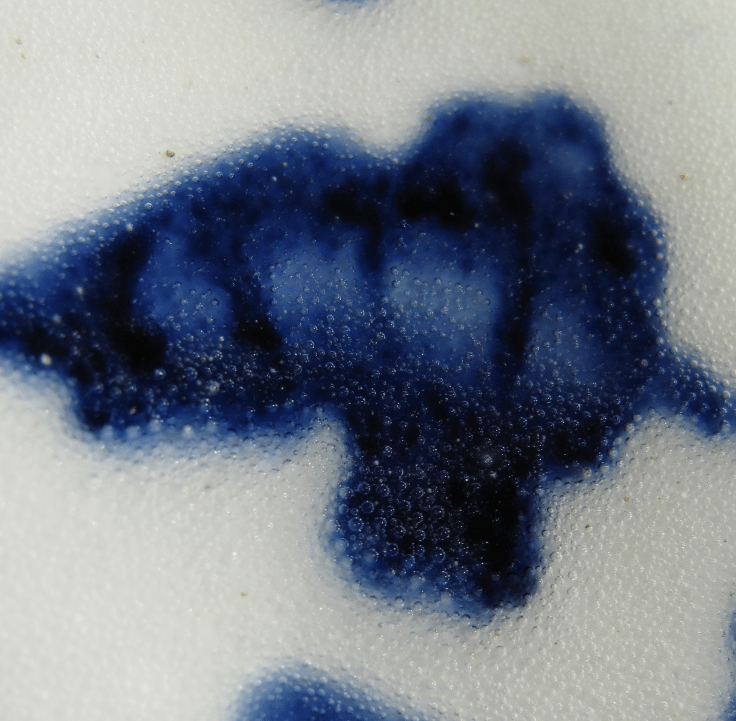
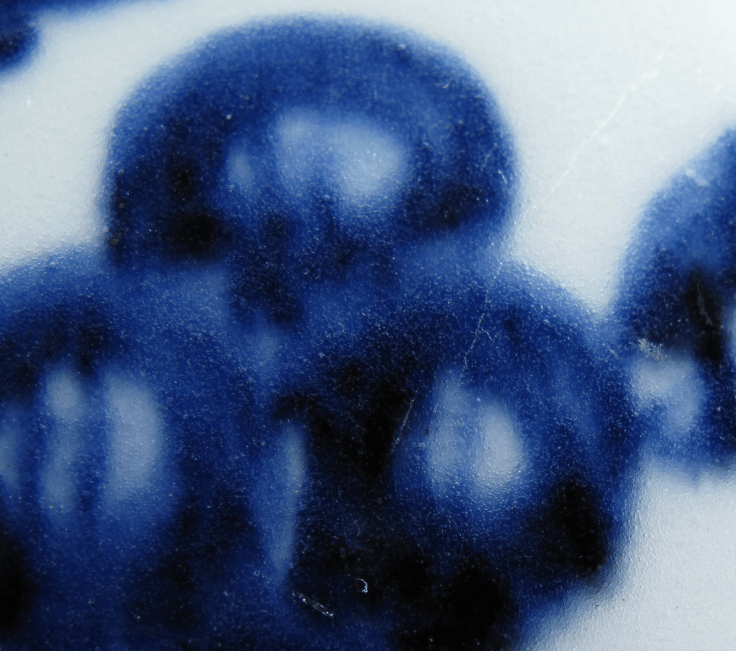
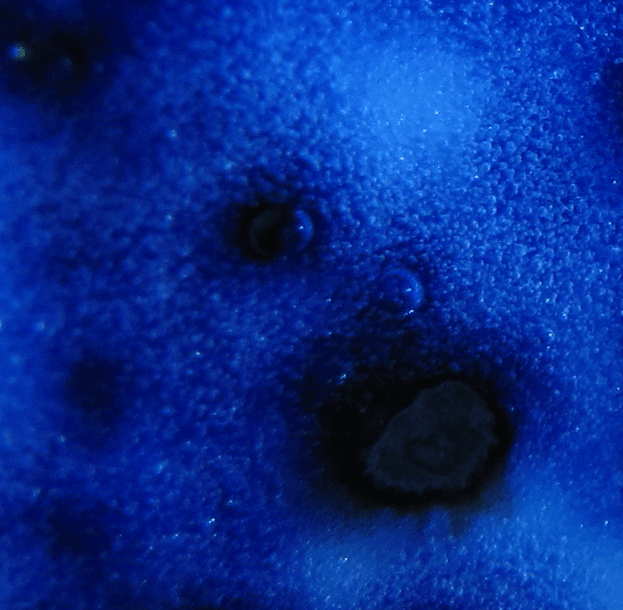
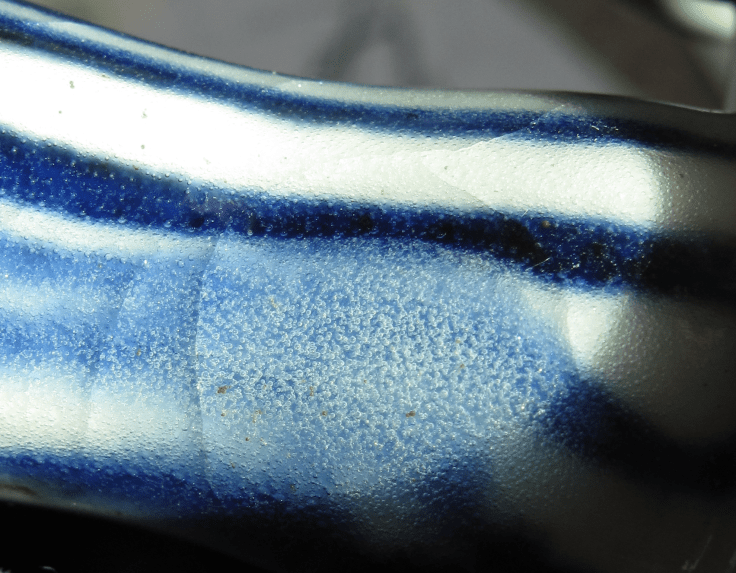
In these photos, do you not notice the large and small bubbles? The beautiful lacunae formation? Bubbles being linked up by short chains? And in Figure 26, the long string of large bubbles at the bottom? These are all so typical of the Somali Blue dye pigment, and their presence will lead you to the solid conclusion that the dye indeed in Somali Blue, and the ware has to be from the Xuande period. Before leaving this topic on bubbles, I’ll show you one more photo taken at the tuning peg (Figure 28). Note the tightly packed bubbles all trying to get to the surface, the dripping, the white-wash effect. Are these consistent with the Suymali Blue dye?
 

IMG_5406.pngFigure 28   

 There is one more thing that I want you to note in this ware. Do you see in many of the photos here, you can find crackles here and there. Not the extensive fine crackles that you see in Ge wares or Guan wares in the Song era. Rather, the crackles are much less extensive. But in Xuande Blue and White, this is something very uncommon. We don’t know why, all that we need to know is that this is no ground for rejecting this pipa as a real and genuine Xuande. 

A Xuande Blue and White Fluted Bowl with the Eight Auspicious Symbols 八吉祥

In the process of collecting early Ming and Yuan Blue and Whites, very often we’ll come across wares that have uncommon shape. What do we do? If you were to evaluate the ware in the traditional manner where shape and design and a few other things play an important role, you would instantly raise your alarm—this can be a fake. But if you were to use the Sumali Blue dye pigment characteristics as the standard for evaluation, you would stay calm. Just look at the dye’s characteristics, and you can draw your conclusions there.

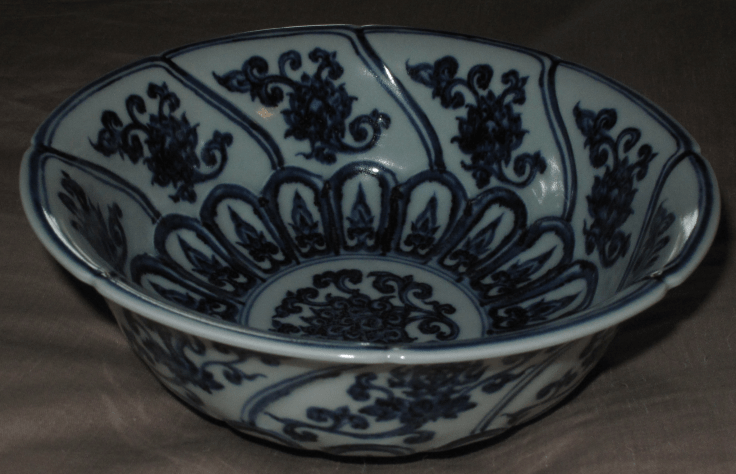
This time, I am going to show you a Xuande Blue and White fluted bowl. It stands at 8 1/8 in diameter, and 3 3/8 inches tall. Fluted bowls in the early Ming period are not very  common, though I would not say that they are rare. But this fluted bowl is different and is quite rare. Normally, with a fluted bowl, the groove on the outside and the ridge on the inside of the bowl are vertically down, from the mouth of the bowl to the bottom of it, or to the foot on the outside. Here, in this bowl, it is oblique. The groove on the outside and the ridge inside are slanting downwards at an angle at almost 45 degrees. In fact the groove and ridge also appear at the lower part of the bowl above the foot rim, and they are encircling each of the 16 decorative floral pattern. I would say this is quite a job for the potter who made this bowl.


IMG_5087.pngFigure 1  


IMG_5086.pngFigure 2  


IMG_5088.pngFigure 3  

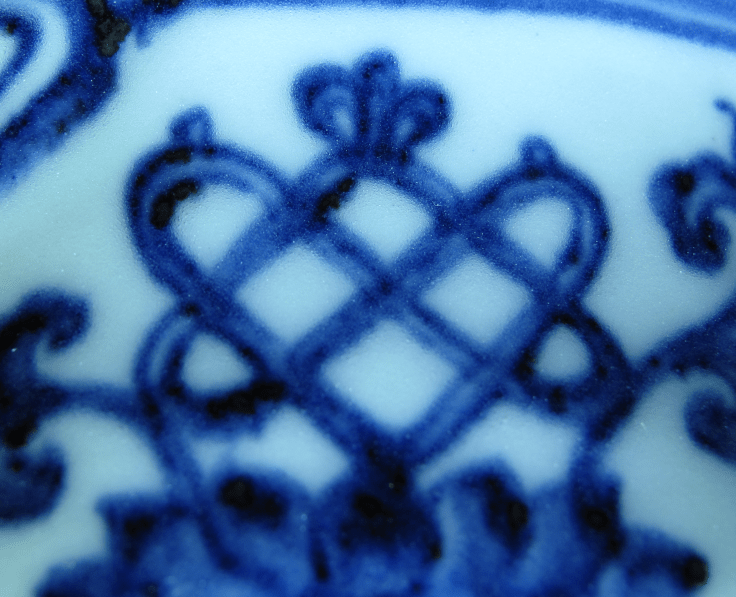
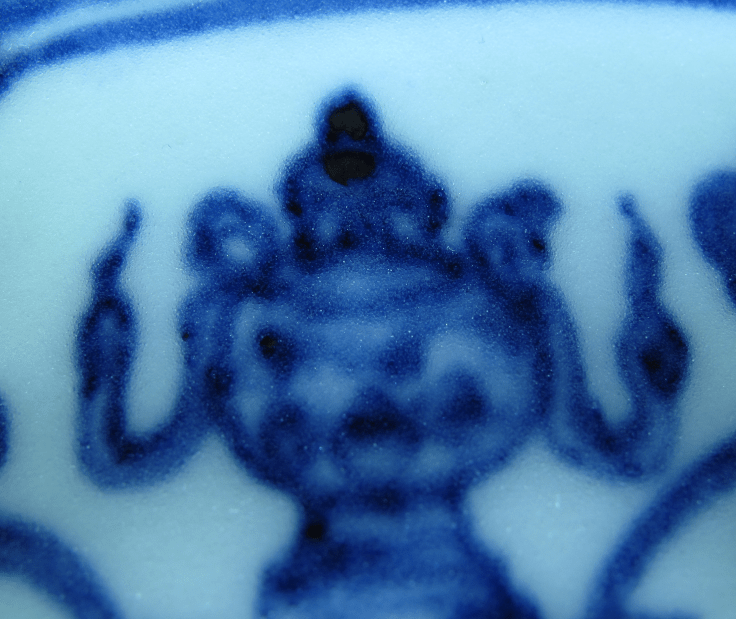
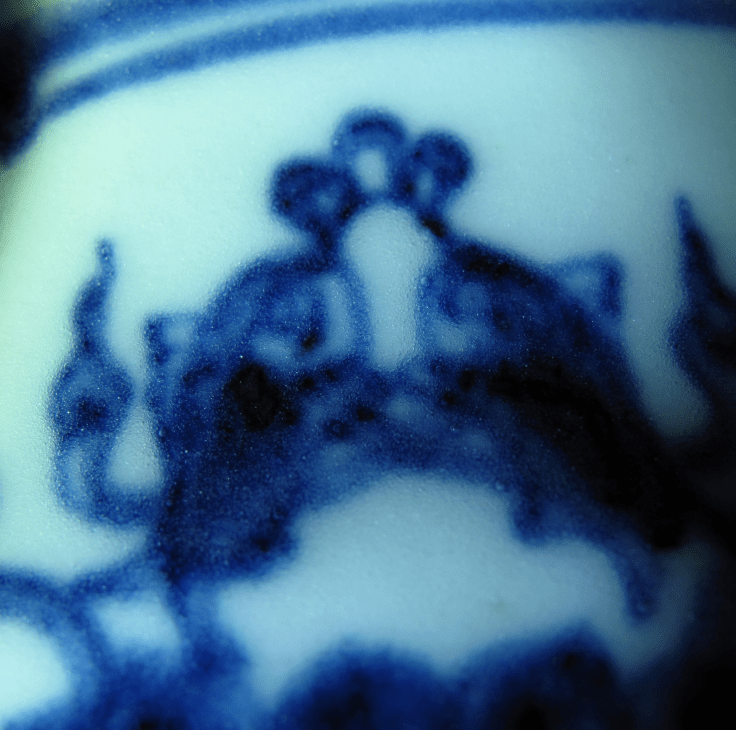
 The bowl is divided into eight panels by these grooves. In these eight panels, the eight auspicious symbols are drawn and each one is sitting on a lotus flower. Decoration in blue and white wares in early Ming period is quite common, and I’ll take this opportunity to show you these eight symbols.


IMG_5142.pngFigure 4       Flower


IMG_5143.pngFigure 5       Canopy


IMG_5144.pngFigure 6          Parasol 


IMG_5146.pngFigure 7       Conch 


IMG_5147.pngFigure 8           Wheel


IMG_5149.png  Figure 9        Knot


IMG_5150.png  Figure 10         Vase  


IMG_5140.pngFigure 11          Fish

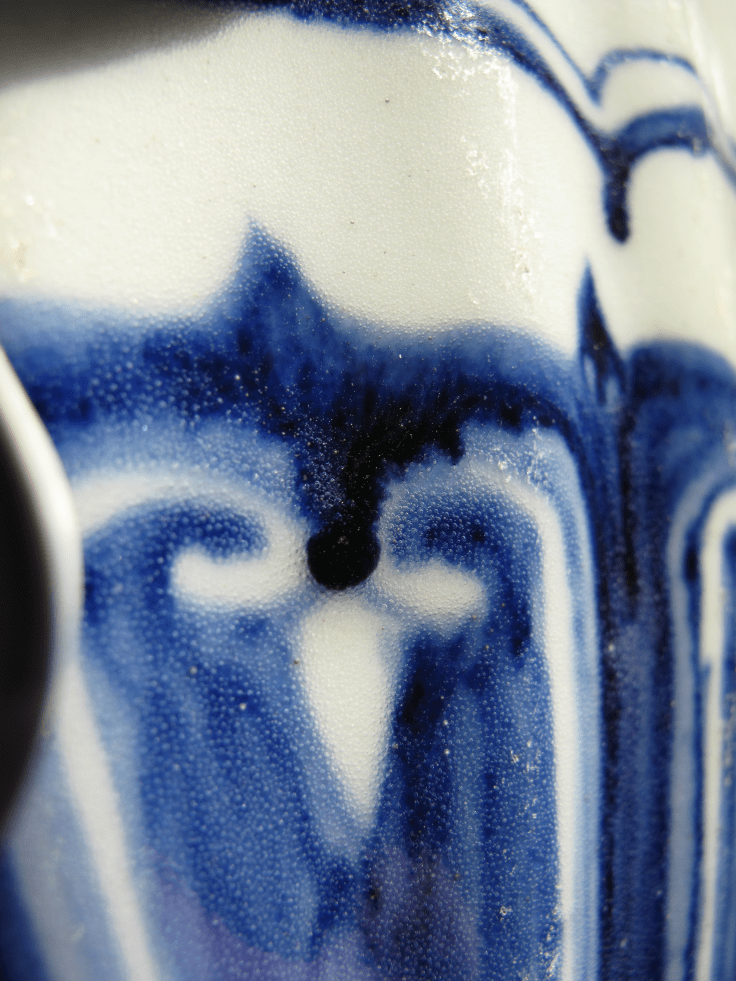
I have said it many times before that in evaluating an early Ming ware, one should not depend on the shape of the ware, the workmanship, and the motif. Skillful forges can overcome all these and make something so similar that no one can tell the differences. The only thing that they cannot imitate is the Sumali Blue dye and its characteristics. The only reason I am showing you the eight symbols is for the sake of interest, and for interest alone. The only sure way to tell a genuine B & W of the early Ming period is by looking at the characteristics of the dye pigment.

From these photos, some of the large bubbles and some plaques are already apparent. But I’ll enlarge these characteristics so that they can be clearly seen.


IMG_5121.pngFigure 12   


IMG_5218.pngFigure 13    

Look at these two photos. Figure 12 is taken under LED light, and Figure 13 under sunlight. Do you see the differences? The most obvious are the plaques. In figure 12, the reflections are not bright, nor are they colorful. And there are but a few areas with reflections. The rest of the plaque is dull. In fact, the reflective part is the area where there is a metallic foil floating on top, the dull area represents the muddy bottom with no metallic foil overhanging it. This kind of plaque with only a small area covered by the metallic foil is common, and in this bowl, almost all plaques are like this one. Look at the Figure 13, taken under sunlight, even the muddy layer gives a colorful reflection. This is because included in the muddy layer, there are many metallic particles intermingle with the mud-like material, and the metallic particles, like most metals, give colorful reflections. 

Look at the bubbles, particularly the large one, and notice the different appearances. Which do you prefer? In fact, people of experience  all say that ceramic wares, if possible, should be examined under sunlight. You have a different feel  about everything you look at. 

I’ll show you photos of another plaque, taken under LED light, weak sunlight, and sunlight (Figures 14-16).


IMG_5145.pngFigure 14   


IMG_5221.pngFigure 15   


IMG_5207.pngFigure 16   

 Look at these photos carefully and note the differences. Figure 14 is taken under LED light, Figure 15 weak sunlight and Figure 16 direct sunlight. Note the metallic sheet, the muddy layer and how the different lights affect them. The bubbles appear to be better shown in the LED photo, but that is because the sunlight is not the strongest when the photo was taken.

I’ll now should you a few more photos of plaques in this bowl (Figures 17-25). The plaques, as you can see, are rather typical of Xuande.


IMG_5171.pngFigure 17   


IMG_5110.pngFigure 18   


IMG_5105.pngFigure 19   


IMG_5122.pngFigure 20     


IMG_5114.pngFigure 21   


IMG_5162.pngFigure 22   


IMG_5173.pngFigure 23  


IMG_5148.pngFigure 24   


IMG_5165.pngFigure 25  


While looking at the plaques, pay attention to the flare and dripping effect. In quite a few of these photos, the dripping appear to be odd—it is dripping on both sides. But if you remember that there are raised ridges in these areas, the dripping on both sides is self-explanatory. You must also notice that at the end of the dripping, many a time, you can see that there is a tinge of greenish grey. I have told you before this greenish tinge is an indication that the dye is of good quality.

In some of these photos, particularly Figure 18, you can see the large bubbles very well. They are rather large, and sometimes pearly and opaque, another indication that the dye is good.

Let me further enlarge two more photos for you and you can appreciate the beauty of the large bubbles in this bowl.


IMG_5122 (1).pngFigure 26  

Look at the string of large bubbles on the left hand side. Isn’t it beautiful?


IMG_5157.pngFigure 27  

And look at the large bubble at the top near the center. It is sitting on a small pool of sapphire blue dye—a classic presentation of a beautiful bubble. The small bubbles nearby are very clear, and all bubbling up to the surface. This again is typical of a good Sumali Blue dye, and is most often seen in areas where the glaze is copious, for example, where the bowl proper joins with the foot rim (Figures 28-29). 


IMG_5137.pngFigure 28  


IMG_5139.pngFigure 29   


As I have said, you do not need to look at the shape, the motif to authenticate a genuine Yongle or Xuande Blue and White. Just look at the characteristics of the dye—the plaques and the bubbles and very often, the blue coloration, and they speak for themselves that the ware is a genuine Xuande, and in this case, when the bowl bears the Xuande mark, of the period.

A Xuande Blue & White Lantern-Shaped Zun Vase

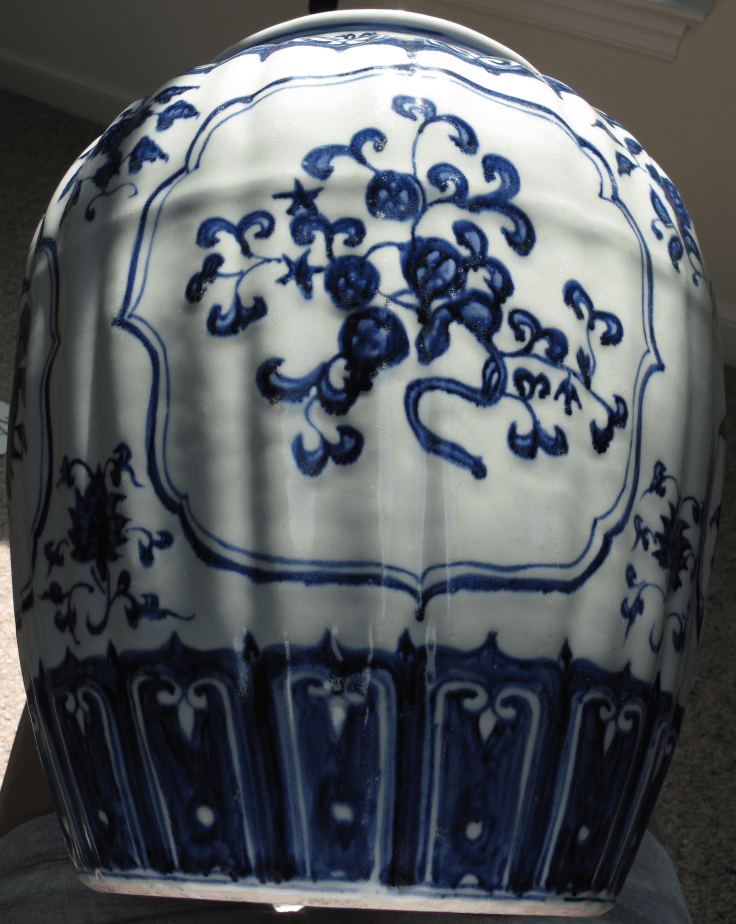
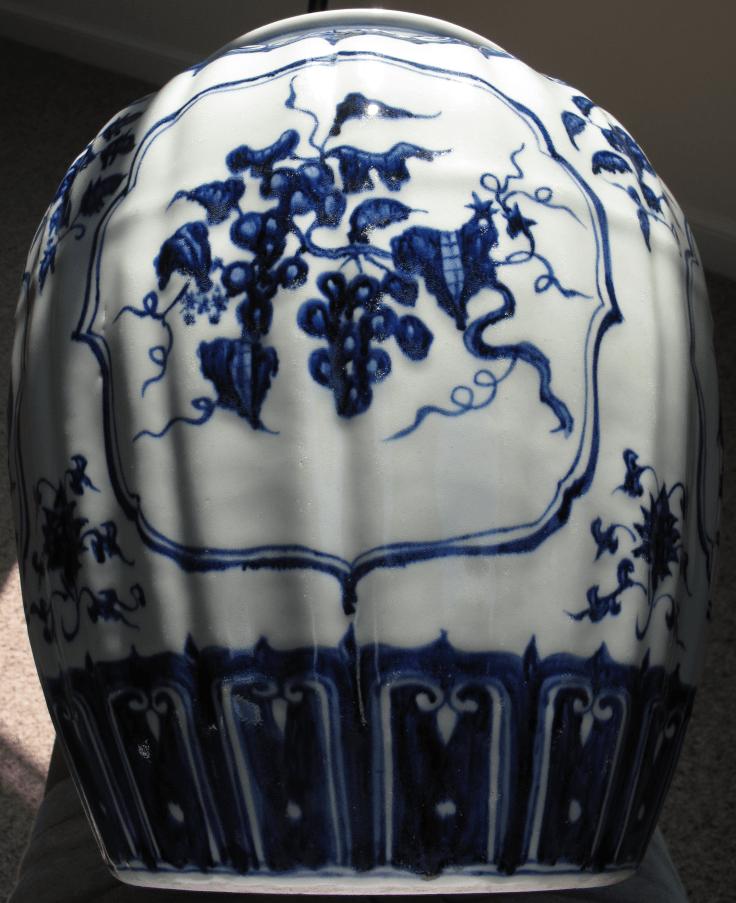
I have told you the Sumali Blue dye has two important characteristics. They are the bubbles and plaques. In all the previous articles, I have tried to show you the variations of these two characteristics that you can have with the dye with a lot of photos. It is crucial that you are familiar with these various forms of presentation, for the process of evaluating a genuine and real early Ming Blue and White ceramics rests very much on these specific features of the Sumali Blue dye. But one thing you can be certain: no matter how many photos I show you, there are bound to be other forms of presentations. The thing to remember is that variations in presentations should not trouble you so long as you know the basics about the bubbles and the plaques. Bubbles are never uniform in size. There are size variations. Plaques are a little tricky, that is why I try to show you as many variation as I can. Once you are familiar with these, you can easily tell the fake plaques on fake wares. Here in this article, I want to show you a rather rare ware with quite unusual bubbles and plaques. It is a lantern-shaped Zun vase, with Xuande mark. Whether it is of the period, we’ll try to look at the characteristics of the dye pigment.


IMG_4810 (1).png Figure 1

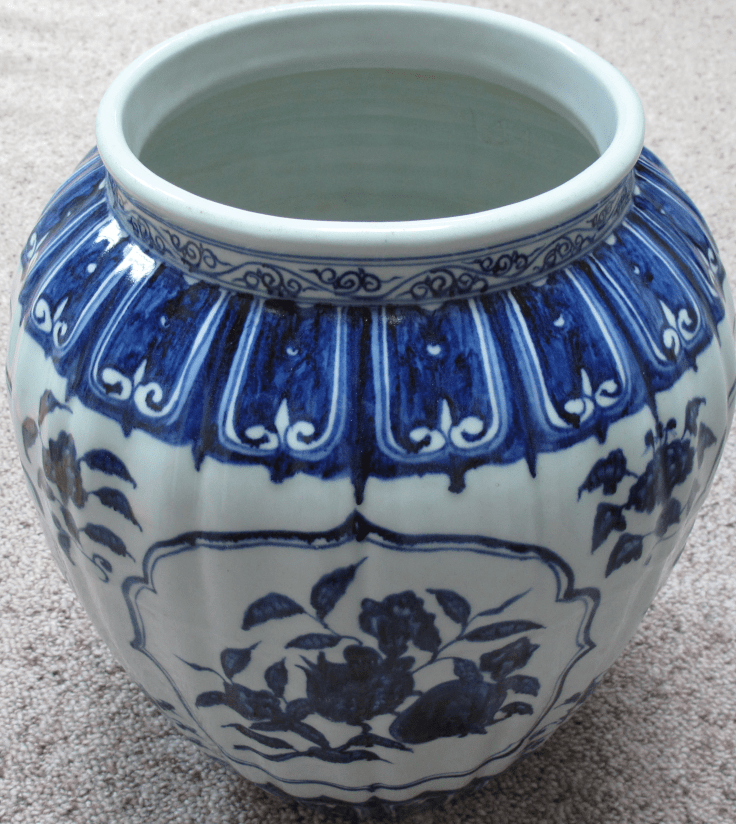
This vase stands last 13 1/8 inches tall. The shape, as you can see, is rather unusual for a Xuande Blue and White. While the motif of different fruit on a ware is common, the presentation of these fruits in four panels is very uncommon in early Ming B & Ws. If an expert is to base his judgement on the shape and style of the motif, I would not be surprised that the vase be dismissed summarily. Talking about the style of painting, it is only the paneling of presentation that is not common, the painting part is as typical of a Xuande as a Xuande can be, though I don’t normally stress on the painting style when evaluating a ware of the Xuande period.

Since the vase is so uncommon, I’ll show you all the four panels, plus a photo taking from the top.


IMG_4991.pngFigure 2  


IMG_4992.pngFigure 3  


IMG_4989.png Figure 4  


IMG_5044.pngFigure 5  

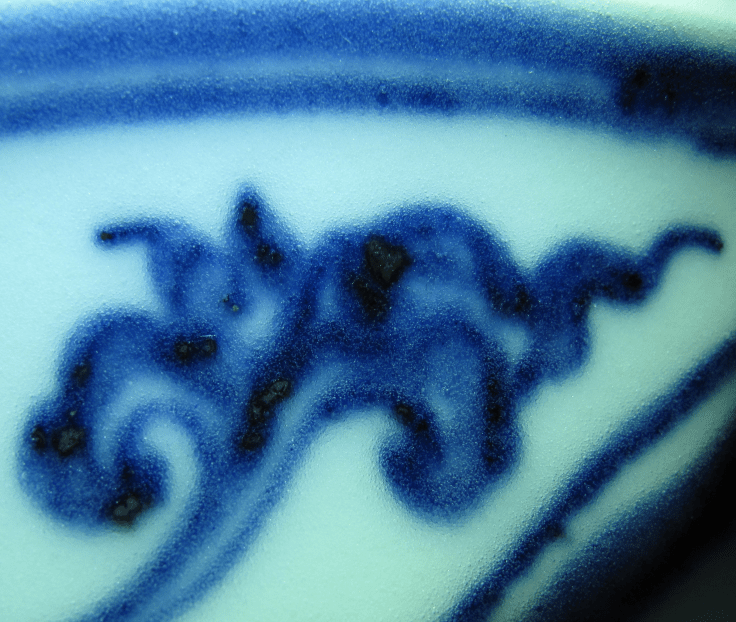
I’ll first show you the plaques. Plaques in this vase is almost completely absent with the naked eye, despite the fact that there are many very dark blue areas spreading across the vase, areas where you commonly find plaques. However, with the help of a magnifying glass, here and there, you do see some plaques. Most of them are very fine, like thin hairs, though in certain areas, they are very faint small plaques.


IMG_4926.pngFigure 6  


IMG_4930.pngFigure 7  


IMG_4931.pngFigure 8  


IMG_5074.pngFigure 9  

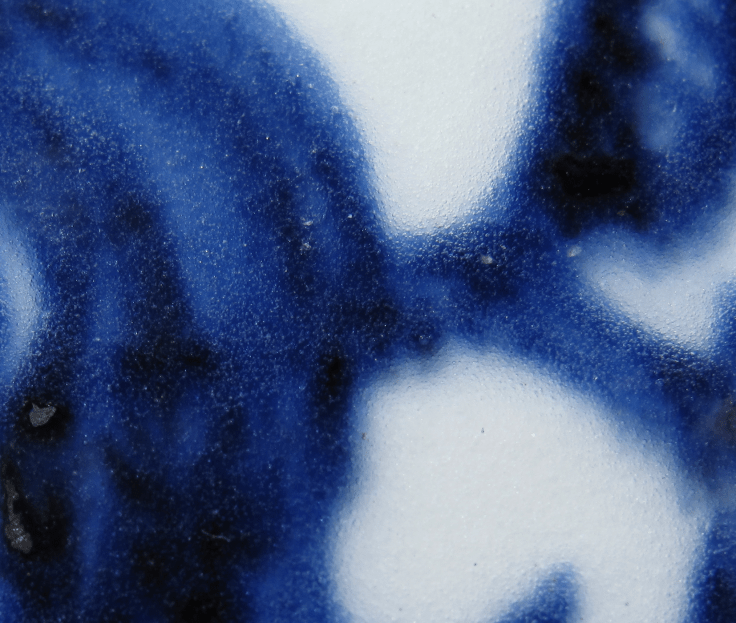
Do you see the very thin plaques (Figures 6-9)? I would say they are thinner than hair. Such thin plaques are very uncommon. And here, they sometimes intermingle with very small plaques. In one or two areas in this vase, you do see some small and vague plaques (Figures 10-11). The plaques here are quite different from those that I have shown you previously.


IMG_5068.pngFigure 10  


IMG_4936.pngFigure 11  

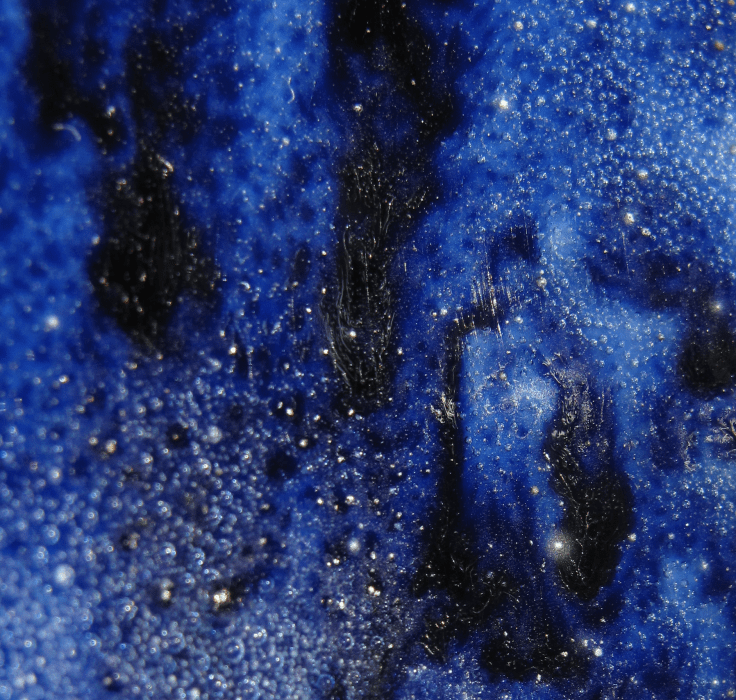
Now, in these photos, you must have noticed the bubbles are also very different from those that I have shown you before. You have bubbles from very small size to the rather large ones. If you were to grade the size from 1 to 10, you probably have all ten sizes. This is not common. Also there are a lot of pearly white bubbles. On many occasions, two or more bubbles are linked up, as if by a string. And the distribution of the bubbles is also unique. Let me show you more photos of the bubbles (Figures 12-19).


IMG_4947.pngFigure 12  


IMG_4953.pngFigure 13   


IMG_4948.pngFigure 14  


IMG_4956.pngFigure 15  


IMG_4971.pngFigure 16  


IMG_4974.pngFigure 17  


IMG_4975.pngFigure 18  


IMG_5013.pngFigure 19   


Look at these photos carefully. Isn’t it amazing that in some areas, the bubbles are so tightly packed, whereas in others, there are so few of them. And look at the strings of large, white, and pearly bubbles. there are so many of them. Are they not pretty? Even though lacunae formation is not seen in the larger bubbles, but in some areas where the small bubbles are not too sparse, you do see them, and very well too, as in figure 14. Have you seen bubbles present in this many in your B & Ws?

In all these phots, you would also notice the drippings, some are very dense, and some are not. I’ll show you more.


IMG_4980.pngFigure 20  


IMG_4981.pngFigure 21  


IMG_4985.pngFigure 22 


IMG_5023.pngFigure 23  

The drippings in figures 20-23 are very typical, though many a time, they are thick and dark.

There is yet another feature that is very obvious here in this vase. Let me show you a few photos first.


IMG_4850.pngFigure 24   


IMG_4853.pngFigure 25  


IMG_4855.pngFigure 26  


IMG_4858.pngFigure 27   

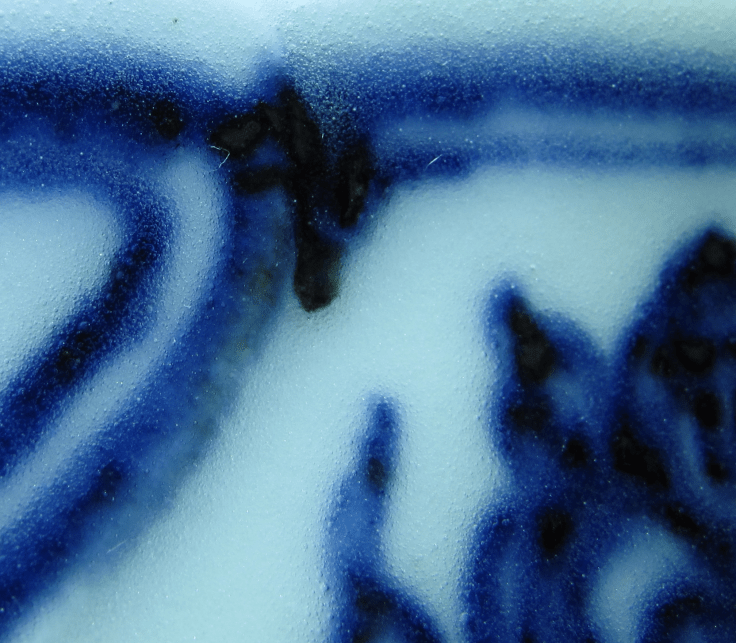
Now, in these photos (Figures 24-27), notice some parts of the lines of the floral scroll is being white washed, and the lines become lighter in color and flared out. It appearance is exactly what the term suggests—white washed. We do not know the cause of it, but it is certainly not the property of the dye. The occurrence is always at the top of the ware, in this case, the vase. For this, people have suggested that it might be due to too much glaze that is applied to the top, resulting in too much of the glaze flowing down, and washing away part of the dye pigment. And we can see that this phenomenon is also seen in the mark (Figures 28-29).


IMG_4860.pngFigure 28  


IMG_4865.pngFigure 29  

With the presence of all these features, no matter how uncommon the shape and drawing style are, do we have any doubt that this vase is of the Xuande period?

A Blue & White Xuande Vase

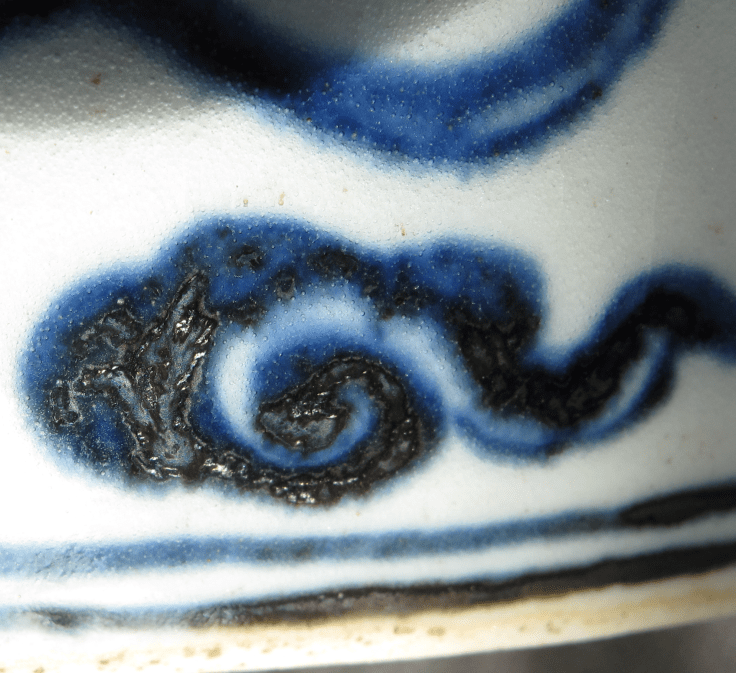
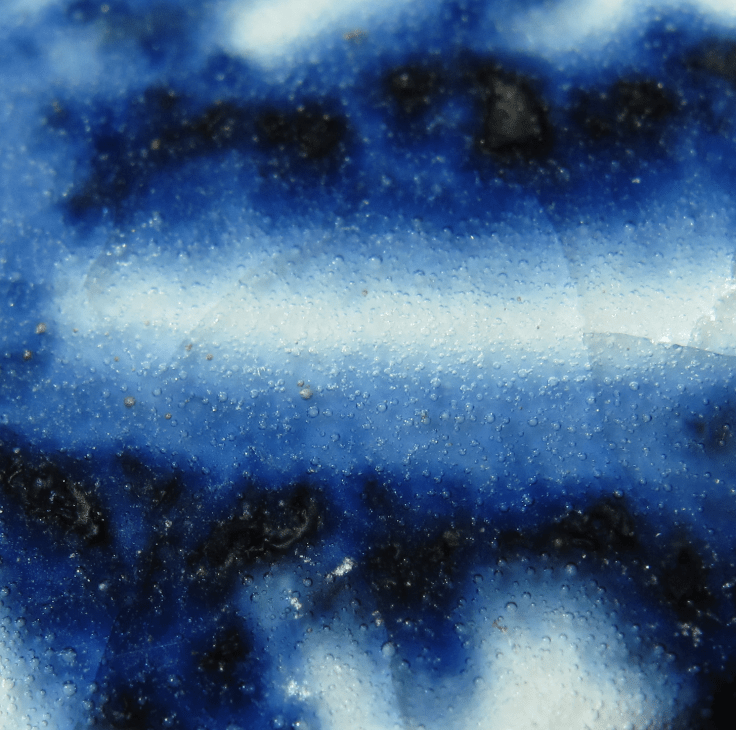
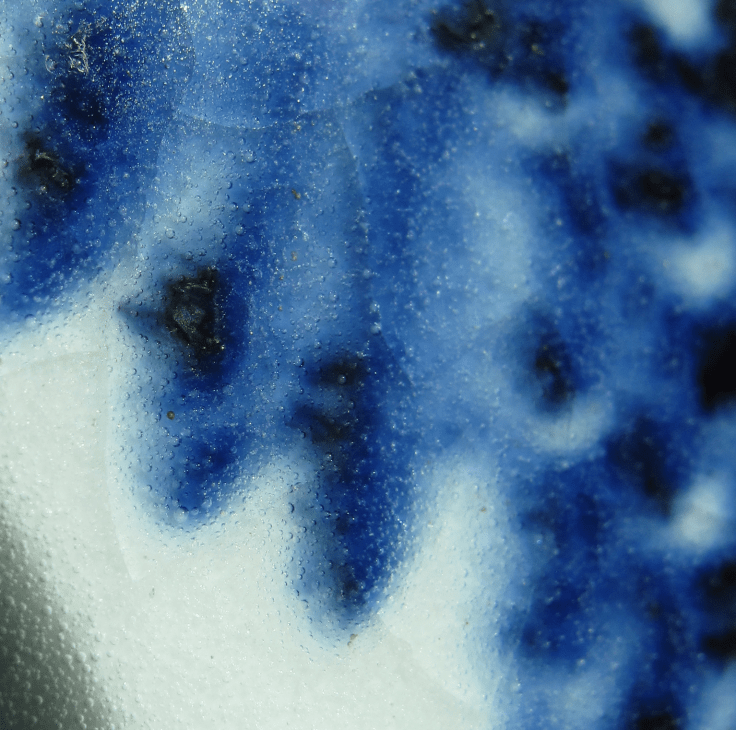
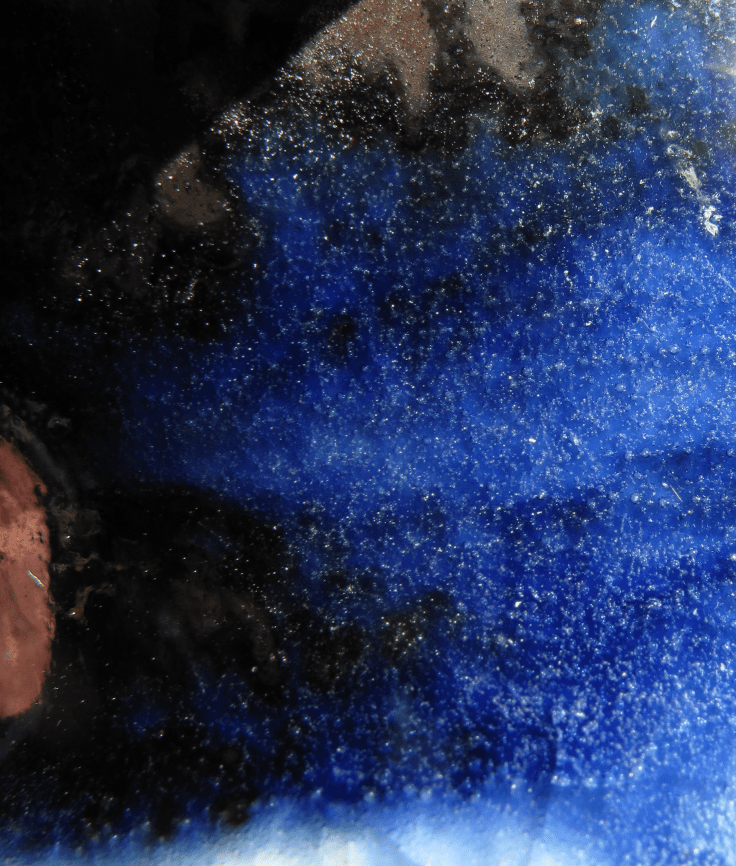
Plaque is not only an integral part of the Sumali Blue dye, it is also a most important feature. Except in some late Xuande B & Ws, where the plaques are reduced to very tiny specks, most of the time, they are very prominent. We have seen the very extensive plaques in many of the Yuan B & Ws. In Yongle and Xuande periods, the plaques are often less abundant, but still, they are very obvious.

I have told you that a plaque has essentially two components—a light reflecting metallic layer floating on the surface of the glaze on top of the plaque. It is so shiny that people used to call it tin foils. But I do have a suspicion that it is not tin. We must know that aside from tin, there is another element, aluminum, that also has a shiny reflection. Aluminum has a specific gravity of 2.7, whereas the specific gravity of tin is around 7.2-7.5. For the metallic foil to float on glaze, it is much easier with aluminum than with tin.

Underneath this aluminum foil is what I call the muddy layer that rests right on top of the ceramic bisque. The space between the aluminum foil and the muddy layer is all filled by the viscous glaze. This space is not always clear. Many a time, you can see particles that eventually form the aluminum foil rising from the muddy layer and get frozen abruptly in that space when the cooling process begins. It is as though a small part of the metallic sheet is caught there. A very interesting phenomenon. 

The muddy layer is also interesting if you are to look at it carefully. Unfortunately, it is not something that you can always see well. Why? When there is an aluminum foil floating right on top of the muddy layer, particularly when the foil is large, naturally, most of the muddy layer will be blocked from your view. The most that you can see will be the periphery of it. When the foil gets smaller, more of the muddy layer can be seen. In many Yongle and Xuande B & Ws, the metallic foil is completely absent. In such a case, we can make a very good study of the muddy layer. Now, I have shown you photos of the muddy layer in many previous articles, and under direct sunlight, they are colorful and beautiful. They are colorful because of the content of the mud that is very rich in mineral particles that are highly reflective of sunlight. They are called muddy layer because they often resemble a patch of dried mud when you see them in daylight using a magnifying glass, so that, in a way, they have a thickness. This is the commonest presentation. 

However, there are instances where the muddy layer is so thin that there is hardly any mud at all. This has a lot to do with the nature of the dye, I believe. These thin muddy layers, if you were to see them in daylight, not directly under the sun, are just deep bluish, or blackish patches intermingled with the surrounding blue coloration. But they do have colorful reflections under the sun, though not as much as the mud. I suppose they have the same components as the mud, but the amount is much less, so that even under direct sunlight, their reflective power is much less than that of the mud. Here, I am going to show you a B & W Xuande vase that has this kind of very thin muddy layer. It measures 10 1/4 inches in height.


IMG_2185.pngFigure 1

Let me just show you a few photos first (Figure 2-5).


IMG_3050.pngFigure 2 


IMG_3051.pngFigure 3   


IMG_3052.pngFigure 4   


IMG_3053.png Figure 5    

These photos show the laplet pattern that is typical of a early Ming B & W at the bottom of a vase. They are taken under direct sunlight. You will note that these four photos are taken at around the same spot, with the vase turning a bit to the right from Figure 2 to Figure 5.

The first thing you note here is that the plaques are not as reflective as many of the plaques that I previously showed you. On the left side of the photos, the reflection is well shown, though not exactly colorful. As you move to the right, particularly on the upper portion of the photos, sometimes the plaques are reduced to blackish patches without any signs that they  are formed plaques. The only reason for this is that the scarcity of the reflective particles present in the very thin muddy layer. 

Now let me show you the reflectiveness of these plaques in the laplets under the best of conditions.


IMG_2897.pngFigure 6  


IMG_2891.pngFigure 7  


IMG_2895.pngFigure 8    


IMG_2929.pngFigure 9  


IMG_2862.pngFigure 10  

Note the reflections in these photos. They are much less colorful than some of the other Xuande, Yongle and Yuan B & Ws. Still, they are colorful and beautiful. But for you to get a good grasp of their differences, you must go back to some of my other articles and compare. Only then can you know the variations between these plaques, and by logic, the dye pigments.

I have told you that potters/painters back in those times used to use different blue dye pigments for different purposes. This is an attempt to save money, for the Sumali Blue dye pigments are very expensive. We have no idea exactly how expensive the dye pigments are, and a lot depends on the grade and quality of the dye, but the best dyes must be terribly expensive, and the best wares are only for the court and high officials of the kingdom. Here, in this vase, we know that the pattern of laplets at the bottom is not the main theme, would the painters use a very good dye for that purpose? 

To answer this question, we can just look at the blue dye of the main theme—the different kinds of fruits in the body (Figures 11-16).


IMG_3040.pngFigure 11    


IMG_4734.pngFigure 12   


IMG_4736.pngFigure 13  


IMG_2910.pngFigure 14   


IMG_2879 (2).pngFigure 15   


IMG_2872.pngFigure 16  

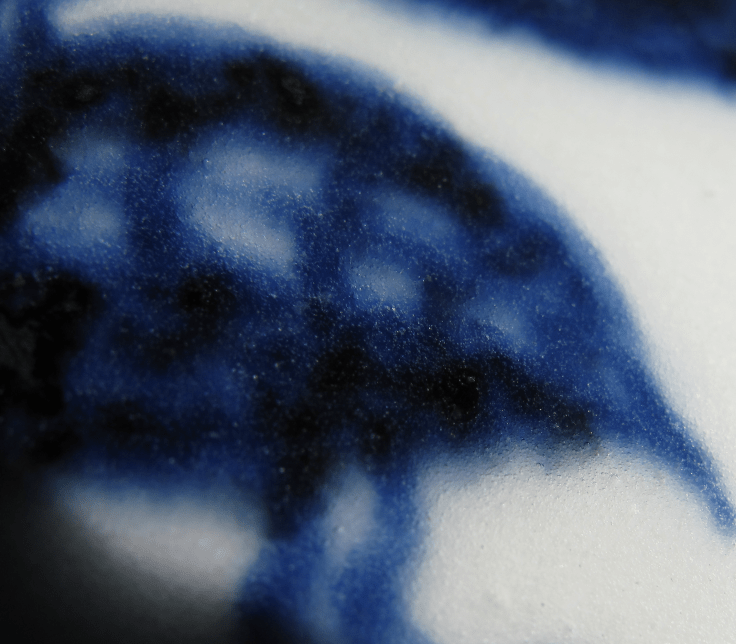
You will immediately notice the differences between the blue dye here and that of the laplets at the bottom of the vase. The blue color itself is different. Here, you do see the sapphire blue  here and there. I have talked to you about sapphire blue quite a few times, and that is indicative of dye of the finest quality. The plaques are not very extensive, as contrast to those in the laplets. But the reflections are much more colorful and have finer features. You will agree that these are nicer looking plaques. Not only that, the bubbles are very different. Here, the large bubbles are not many, but the small bubbles are rather densely packed, and many a time, have lacunae formation that are really impressive. I would say even the flare are different from those at the base of the vase. Are you not convinced that the potters used different blue dye pigments for these two areas?

We must look at these photos carefully, and blow them up if necessary. Note that the large bubbles, while not many are present at a glance, there are many others that are lurking in the dark blue areas. And the small bubbles and lacunae formation are so beautiful that I must show you more photos of these features (Figures 17-21), which are some sort of a hall mark that the dye is of very fine quality.


IMG_2853.pngFigure 17   


IMG_2889.pngFigure 18   


IMG_2854.pngFigure 19   


IMG_2206.pngFigure 20   


IMG_2888.pngFigure 21  

While looking at these large and small bubbles and lacunae formation, you must have noticed that even the flare and dripping have certain differences with those at the base laplets. Here, they are subtle, and faded into the whiteness beyond almost seamlessly. It is a pleasing sight to look at. Let me just show you a few more photos of these flares and drippings.


IMG_2911.pngFigure 22  


IMG_2200.pngFigure 23  


IMG_2883.pngFigure 24   


IMG_2876.pngFigure 25  


IMG_2922.pngFigure 26   

Are these flares and drippings charming? But I think, in going through these photos, you should, in each photo, pay attention to the plaques, large and small bubbles and the lacunae. You would begin to appreciate the beauty of the Sumali Blue dye. 

A Xuande Blue & White Bowl—Fishes in the Imperial Pond

In April 2017, Sotheby’s sold in Hong Kong a Blue and White Xuande ceramic bowl for HK$229 million. This is the second highest price ever paid for a Chinese ceramic at an auction. The bowl is a 9-inch diameter bowl and the theme of the motif is ‘Fishes in the Imperial Pond’. As it is a highly important work of art, before the sale, there is a long article published, introducing the bowl as well as the motif of it. For those who want to see photos of the bowl, they can search in Google—Sotheby’s Xuande bowl Fishes in the imperial pond. There are quite a number of photos there.

One of the selling point of the bowl is that it is rare, very rare. There is no similar bowl, in size and motif, found in museums and private collections. There is only one bowl with similar basic shape and design found in the Taipei National Palace Museum, but it is of much smaller size, measuring 18.4 cm or 7 1/4 inches in diameter, though there are two such bowls listed in the inventory. These are the only known bowls with such a shape and such a design, and that is why they are very rare.

This brings us to the subject of rareness. Collectors pay tremendous importance to the rareness of a ceramic ware. It is easily understandable. No one will treasure anything that can be found everywhere, even though it is beautiful. A beautiful ceramic is only valuable when people you know do not have it, few big-name collectors own it, and only a small number of museums possess it. Generally speaking, the value of a piece of beautiful ceramic is inversely proportional to the number of similar pieces in existence. That is to say, the fewer you get, the more valuable these pieces would become. It is hardly any wonder that this bowl, with no similar known bowl in existence, could fetch a price of more than HK$200 million. 

When Sotheby’s makes the claim that this bowl with this particular size, shape and design is the only one known in existence, they are perfectly honest about it. They have looked into catalogues of museums and well-known private collectors, and nothing similar is found. The only problem here is that they have not taken into account all small and nameless collectors. But there is no way to contact all these people, collectors or not, and I would say the claim is still perfectly legitimate. There is nothing wrong there.

But the hard truth might turn out to be quite different. I have explained to you before that there are many people who are interested in ceramics. Some are collectors, but many others are not even collectors. They are just interested in ceramics and they might have one or two pieces at home, and that is all that they have. But when you combine all these collections together, their collection must be many, many times larger than the collections of museums and big-name collectors combined. And many of these pieces are very beautiful, and might not have been seen in museums, books and catalogues. In short they are not even known to the world. 

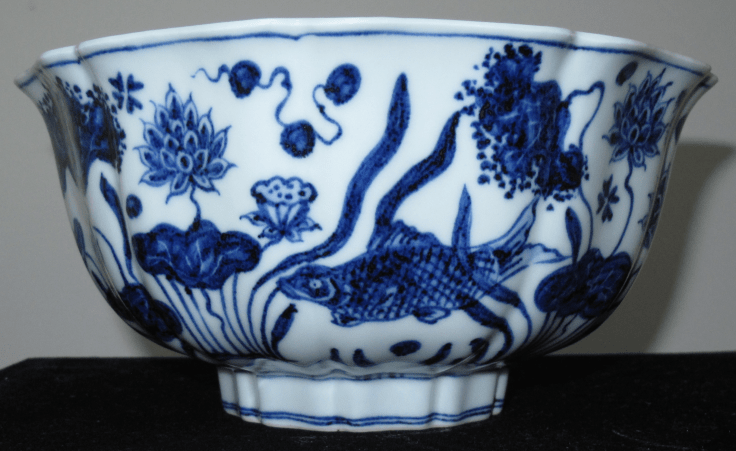
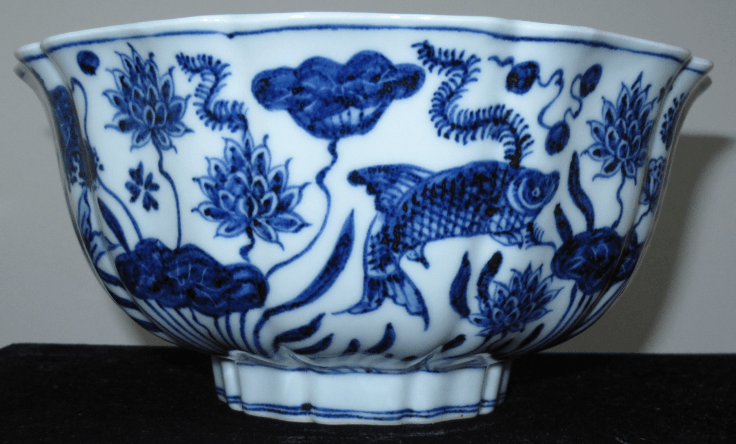
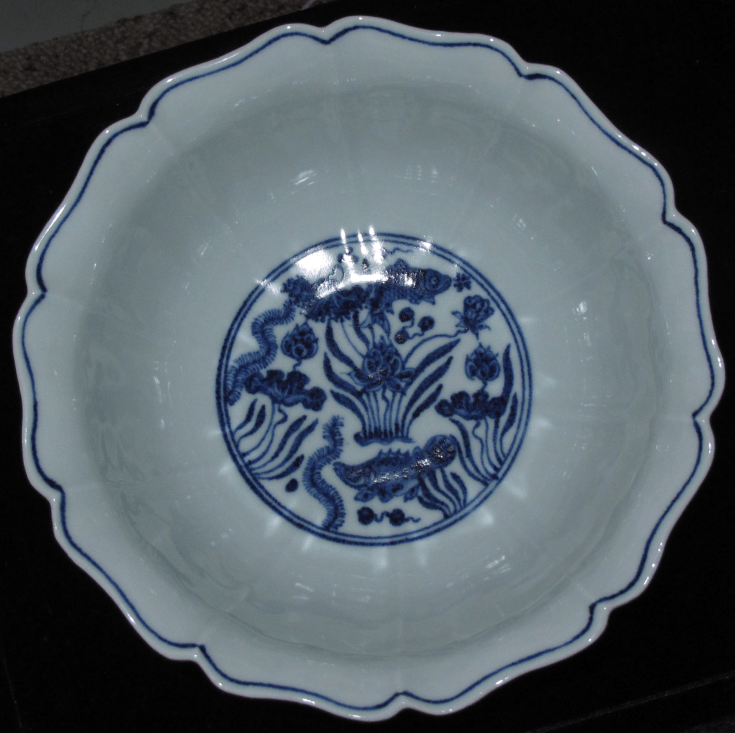
With all these said, I am going to give you a solid example. Not something the world has never seen, but something the world knows to have only one in existence. You guess it right. It is a Xuande B & W bowl with the theme—Fishes in the Imperial Pond. It belongs to a collector no one has heard before. For the purposes of comparison to the one sold at Sotheby’s, I am going to show you multiple photos of the bowl first (Figures 1-6). The bowl measures 8 7/8 inches in diameter, just 1/8 of an inch smaller.


IMG_4230.pngFigure 1      


IMG_4231.pngFigure 2    


IMG_4233.pngFigure 3     


IMG_4234.pngFigure 4       


IMG_4236.pngFigure 5     


IMG_4241.pngFigure 6    

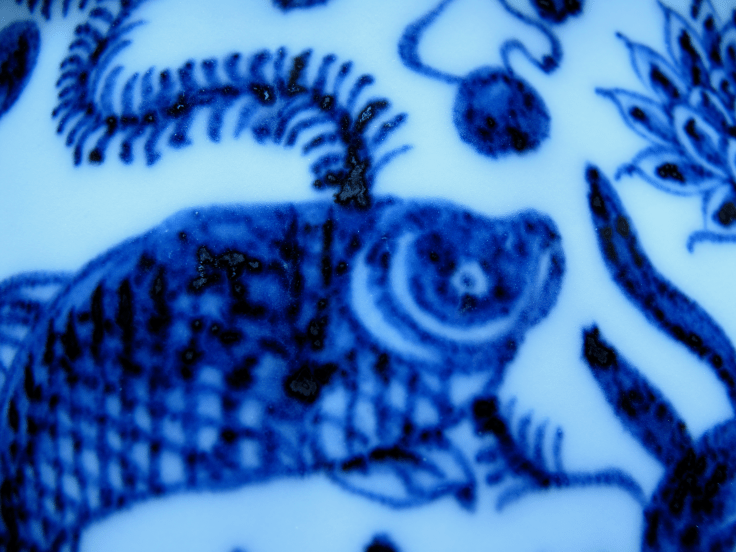
Now, when you compare this bowl to the one sold at Sotheby’s, the size, the shape and the motif are very much the same. The way the motif is drawn is not identical, but the pattern is the same.  It seems to me that the potter/painter has some sort of a draft, and every bowl should have the motif painted according to the drawing of the draft. This only makes sense, for these painters are highly skilled artists. They should have the freedom to paint the bisque in the way they want, just to express their artistic feeling, if the general principle of following the draft is observed. We have seen this sort of thing happening again and again in other wares. In this case, it is highly likely that the two bowls were painter by the same potter/painter. Just look at the style and the end product, and you’ll agree. 

In this era when fake news and fakes things abound, it is only logical to ask if this bowl is a fake, not to say that the two bowls are both painted by the same potter/painter. Well, I am going to show you the blue dye pigment here is Sumali Blue dye, and that is proof enough. Let us first look at the bubbles first (Figures 7-14).


IMG_4263.pngFigure 7   


IMG_4243.pngFigure 8  


IMG_4415.pngFigure 9 


IMG_4393.pngFigure 10   


IMG_4391.pngFigure 11   


IMG_4484.pngFigure 12   


IMG_4268.pngFigure 13   


IMG_4279 (1).pngFigure 14   

Before we talk about the bubbles, let us assess the photos in general terms. The blue color is beautiful, what we call sapphire blue, and there is mottling in areas where there is a large patch of blue. Mottling, I have told you before, is more often seen in Yuan B & Ws, and most of the time, is indicative that the blue dye pigment is of very good quality. 

Now the bubbles. Look at the large bubble in figure 8, pearly white and beautiful. In fact, in this bowl, there are few bubbles as large as this one. The small bubbles in the adjacent blue spot are rather smaller. In these photos (Figures 7-14), if you enlarge them, you will see large bubbles in varying sizes. Not only that, the small bubbles also seem to have varying sizes too, so that, taking together, you seem to have bubbles from the very small size to bubbles of rather large size (Figure 14). You do not see very large bubbles here, which are most present in Yongle B & Ws. It is interesting to note that there seem to have more large bubbles in the sea weeds than anywhere. To me, the painter back then must have, like modern painters, a palette with different blue dye pigments in front of them, and they use different colors for different purposes. In areas where there are few small bubbles, there is no lacunae formation. But you do see lacunae areas where the small bubbles are packed (Figures 13 and 14). In fact, bubbles presenting themselves this way, from large to the very small, are not the most common pattern, but they are beautiful, and you must enlarge these photos to have a good look at them. I’ll enlarge portion of Figure 14 for you.


IMG_4279 (2).png

Figure 15  

In these photos, you can see some very obvious plaques and the flares and dripping around them. You will note that the flares and, even with the added dripping effect, are not exaggerated. This is an important point. Any dripping that is excessive, you need to have a second look, you need to be careful. Here, I’ll show you more of these plaques and flares.


IMG_4298.pngFigure 16    

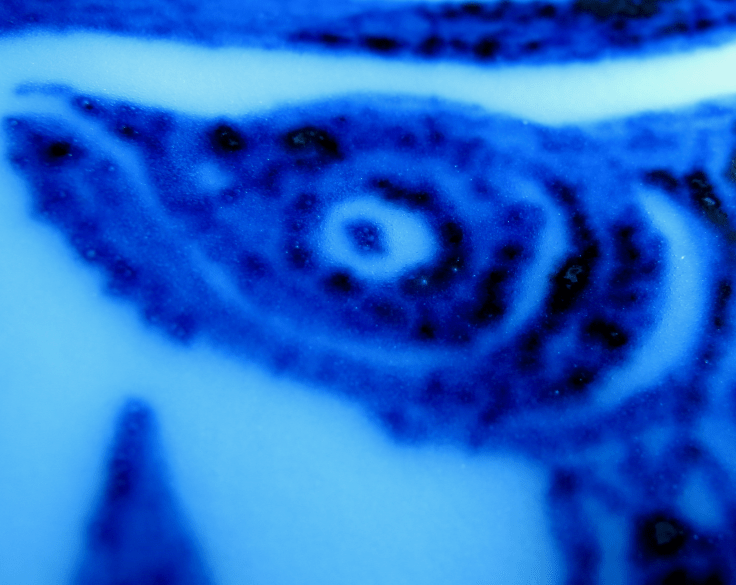
Here, in Figure 16, the colorful plaques can be seen reflecting under the sun. Here in this bowl, all plaques are without the metallic foil floating above the muddy layer. They are just represented by the muddy layer. You can also see particles forming ring like structures surrounding some of these very dark areas with a plaque in the center. These particles, if they were to coalesce together, will form a plaque. Again, do you think they are beautiful? Figures 17-22 are just more photos showing these reflecting plaques and the associated flares. Again, take a good look at these photos.


IMG_4459.pngFigure 17   


IMG_4462.pngFigure 18   


IMG_4464.pngFigure 19   


IMG_4313.pngFigure 20    


IMG_4303.pngFigure 21    


IMG_4367.pngFigure 22    


IMG_4479.pngFigure 23    

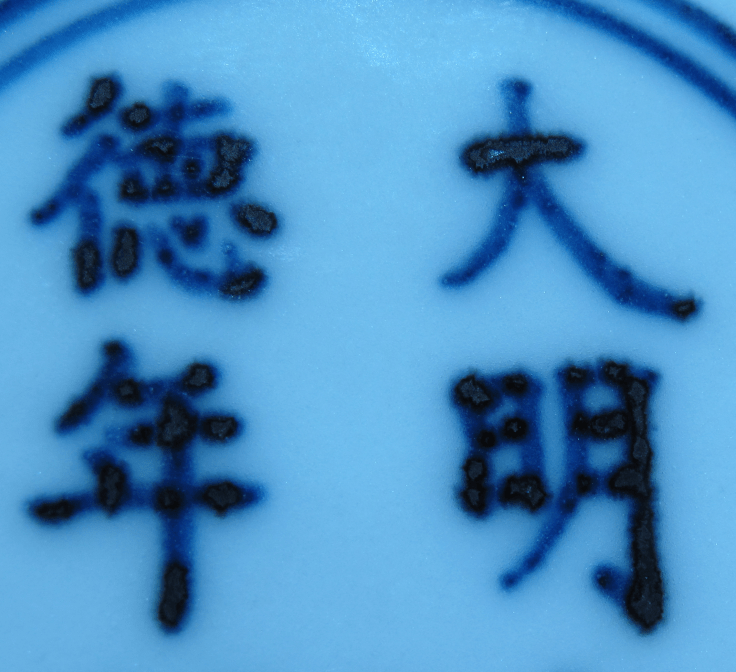
Figure 23 is taken from the motif inside the bowl. I’ll now show you the mark on the bottom.


IMG_4493.pngFigure 24     


IMG_4492.pngFigure 25    


IMG_4491.pngFigure 26  

 Do you see the plaques, the bubbles, and the flares here? With all these photos showing the features of the Sumali Blue dye, do you have any doubt that the bowl is a genuine Xuande and of the period? Someone might want to tell me how is this different from the one that Sotheby’s had sold? I cannot tell, nor you, because we do not have that bowl in our hands.

Blog at WordPress.com.

Up ↑