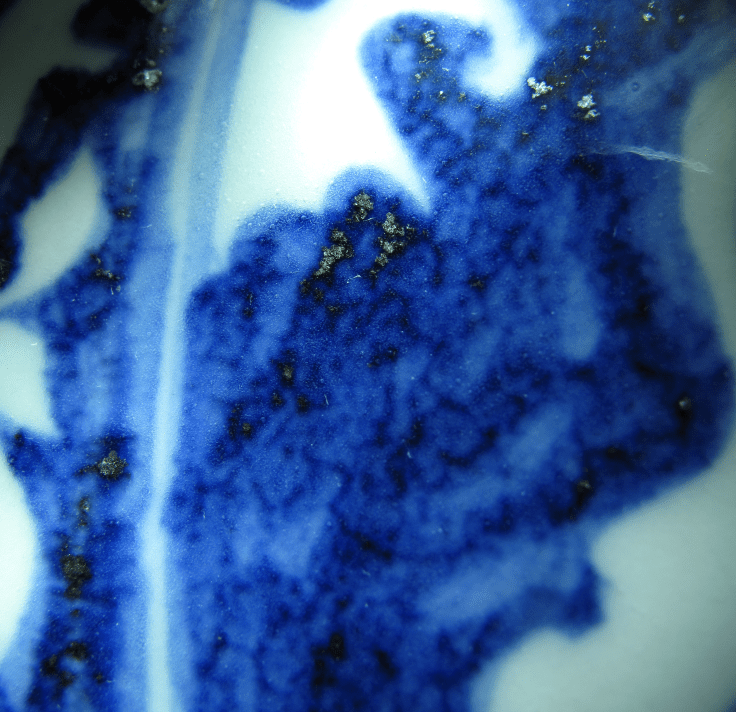
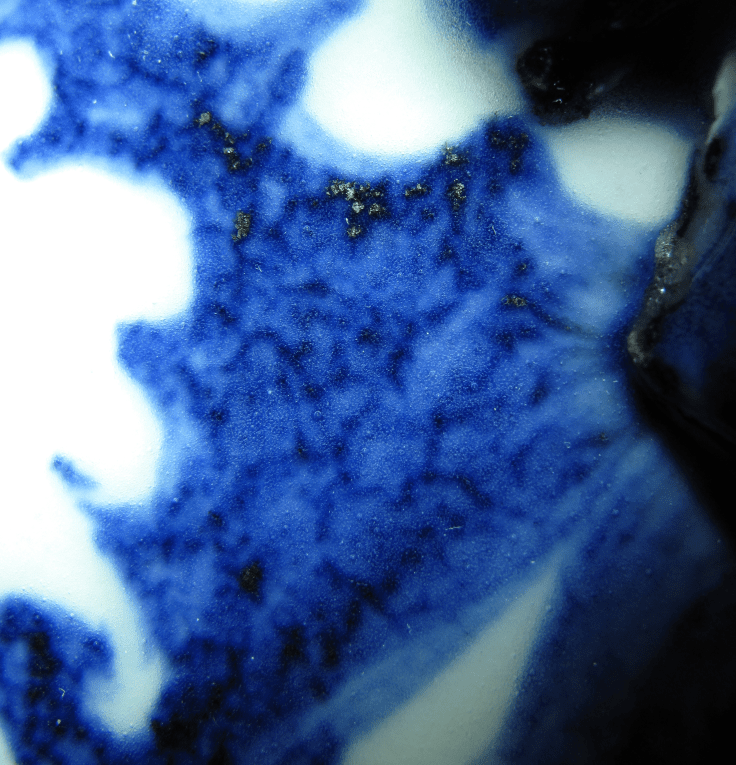
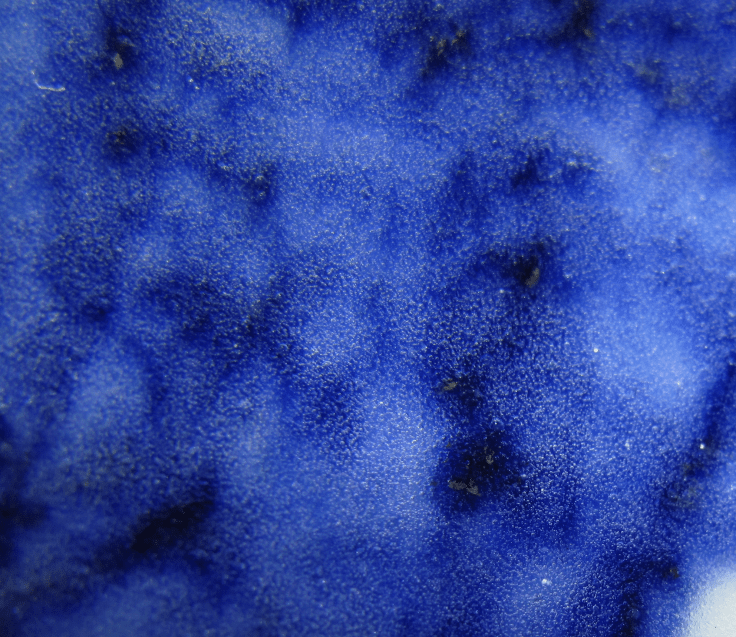
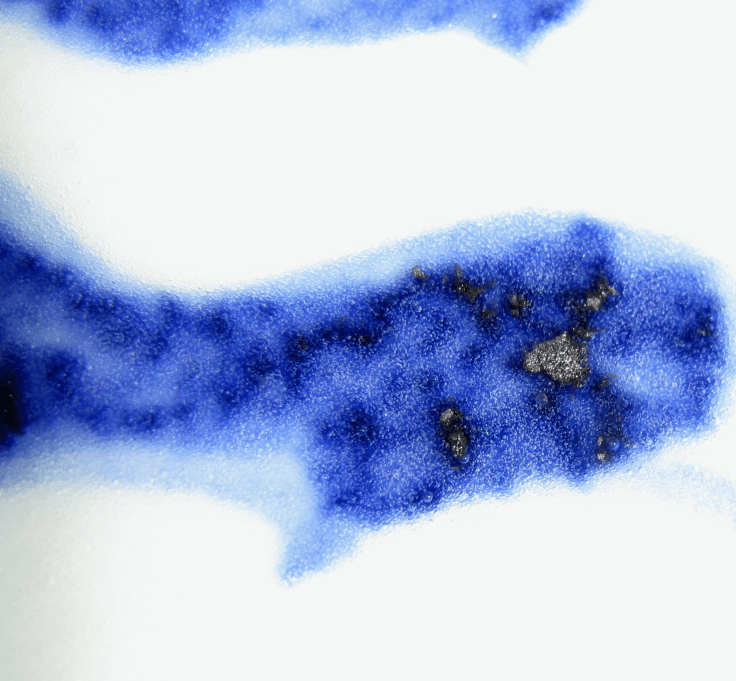
Blog

A Yuan Jar with Dragon Design

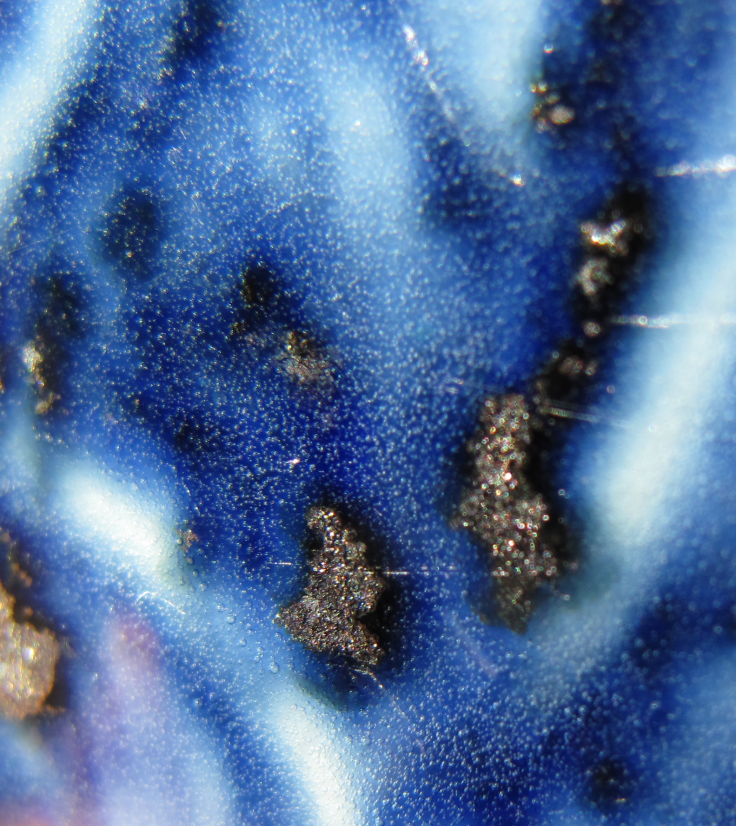
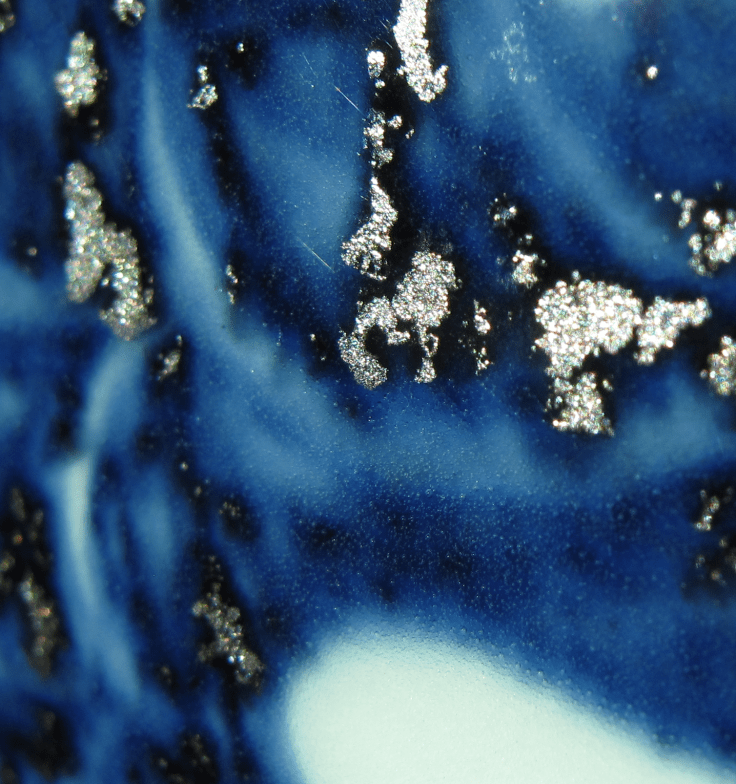
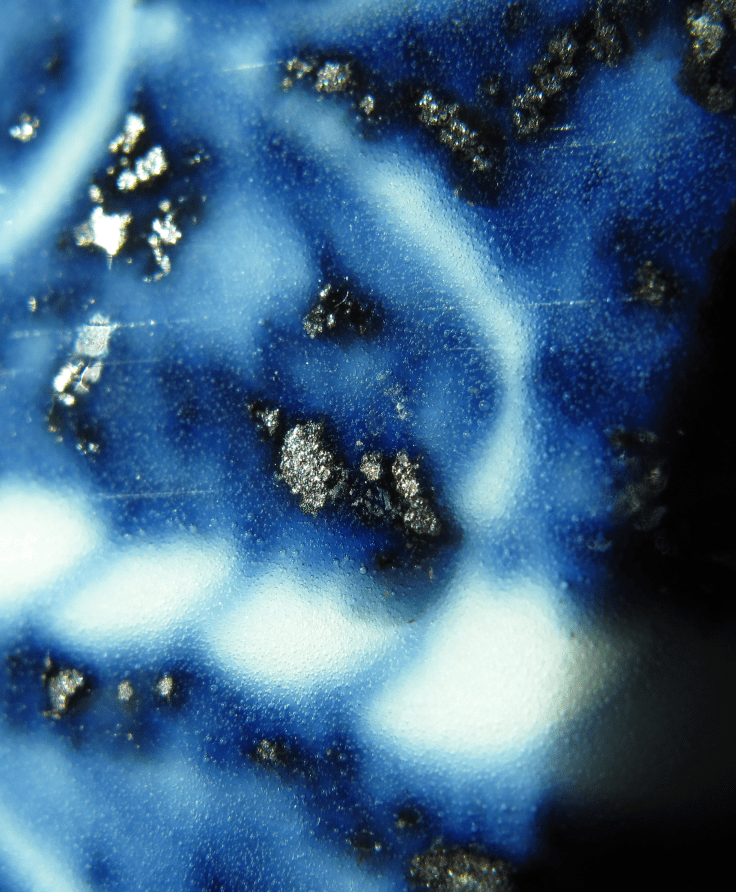
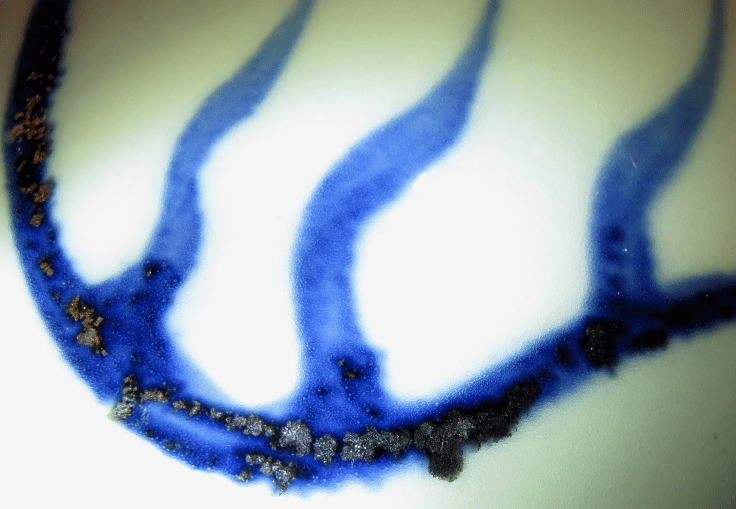
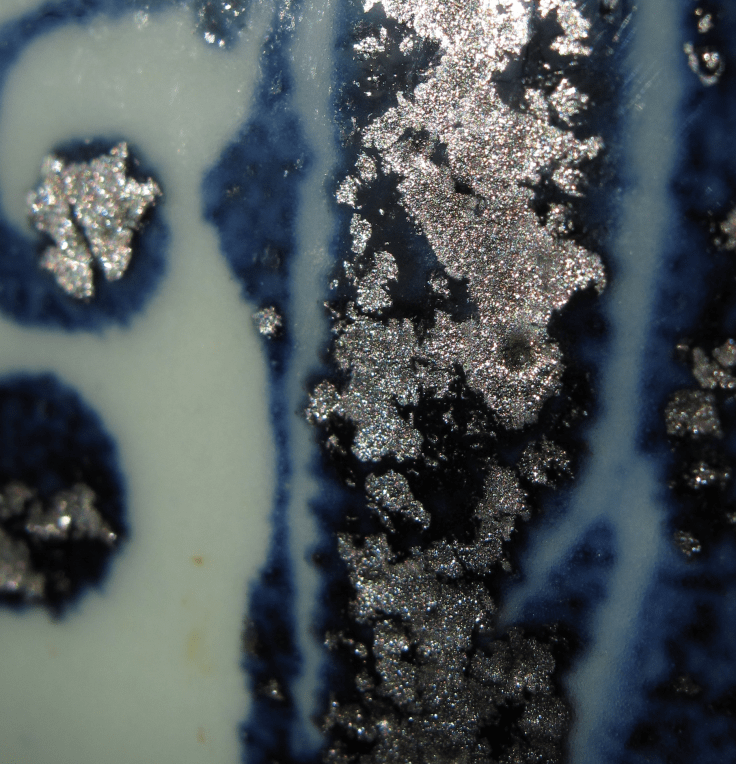
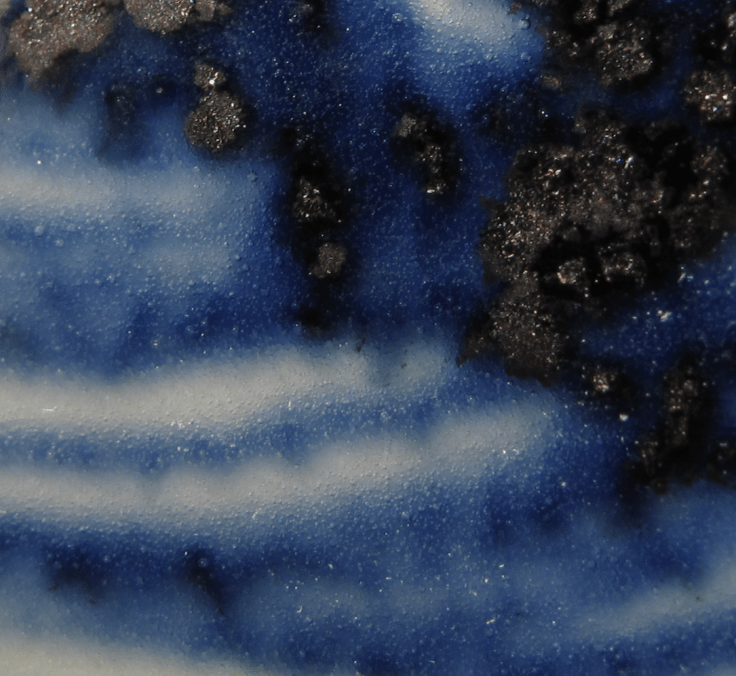
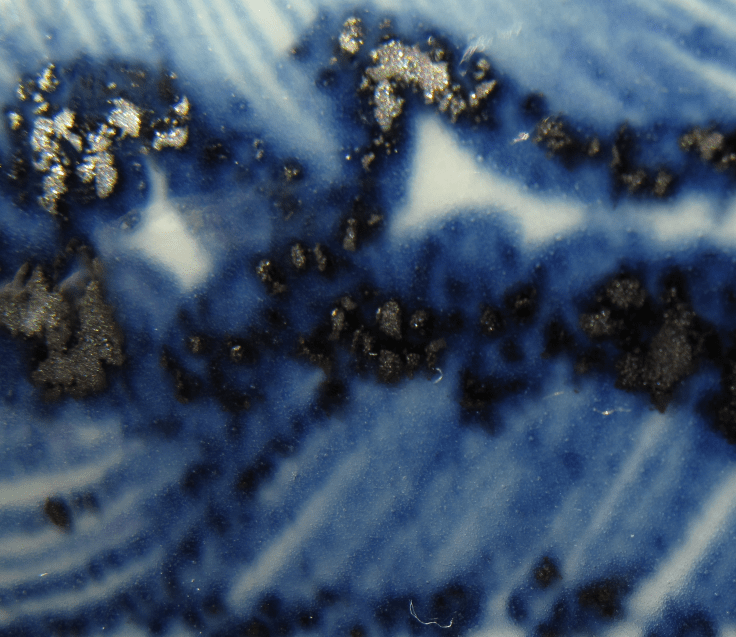
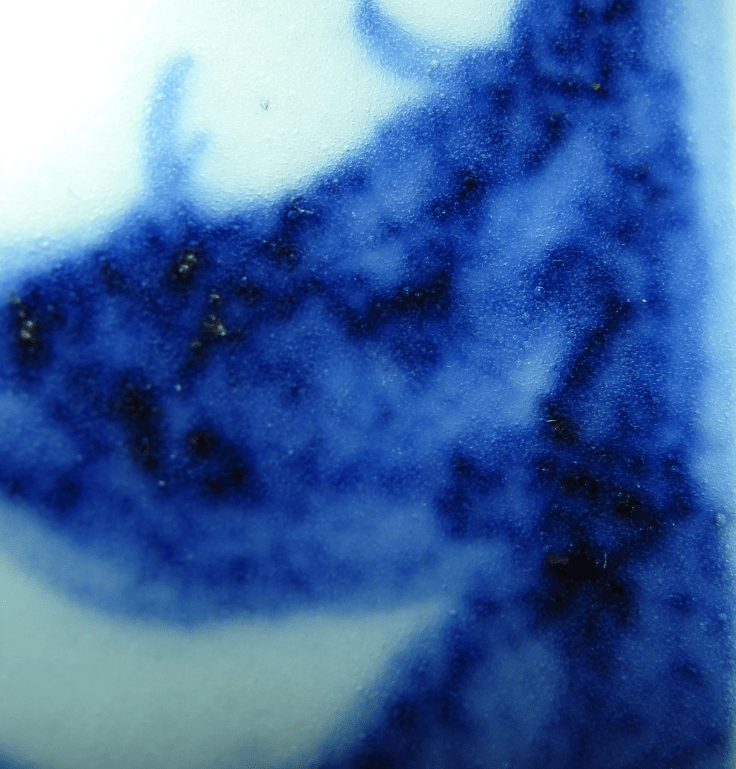
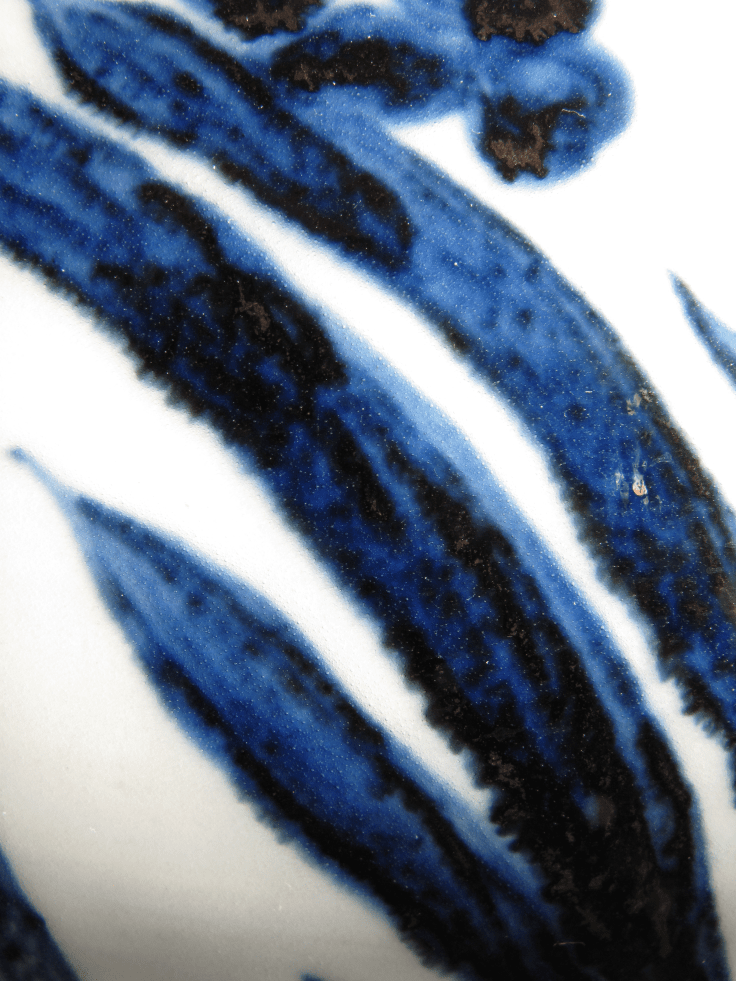
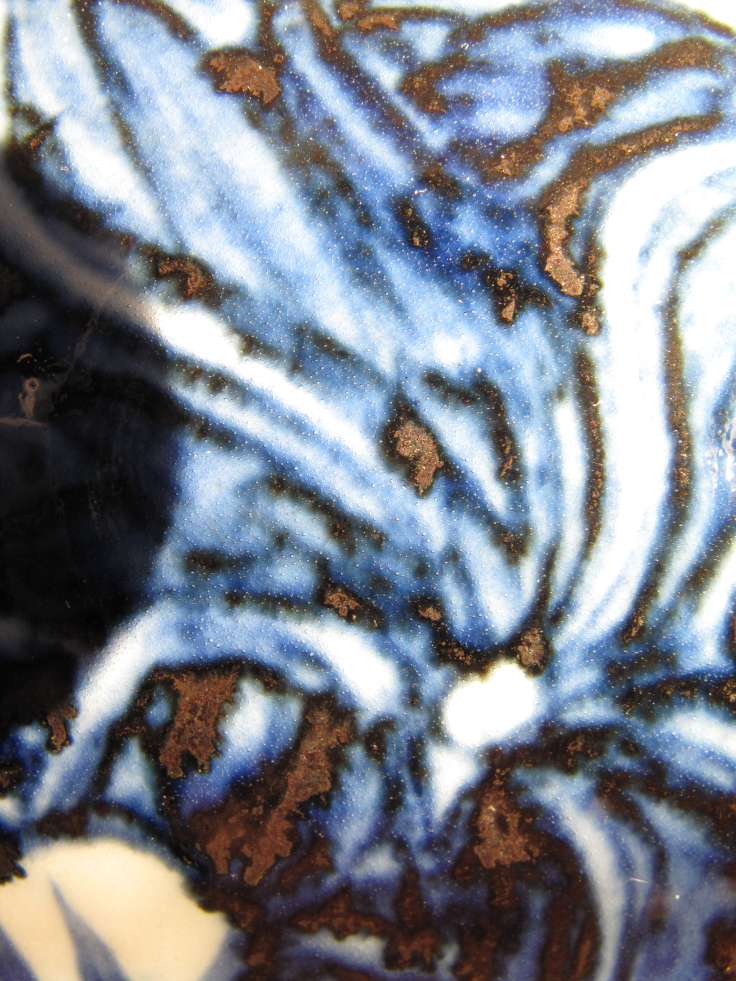
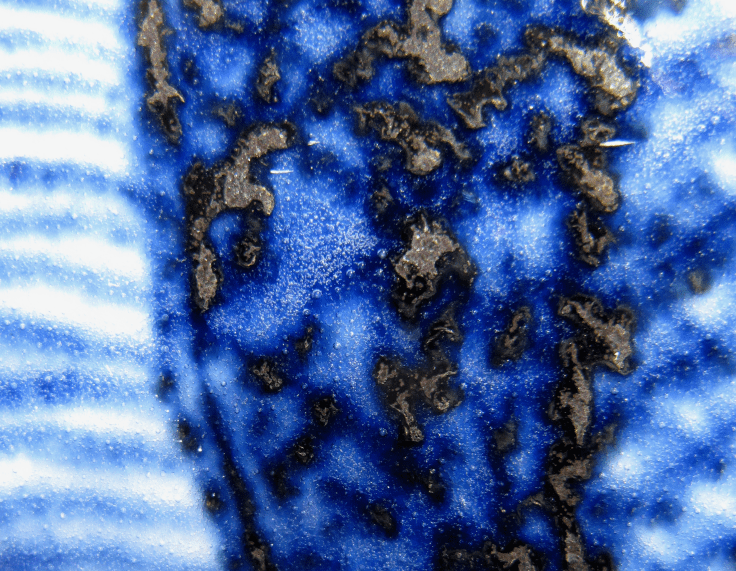
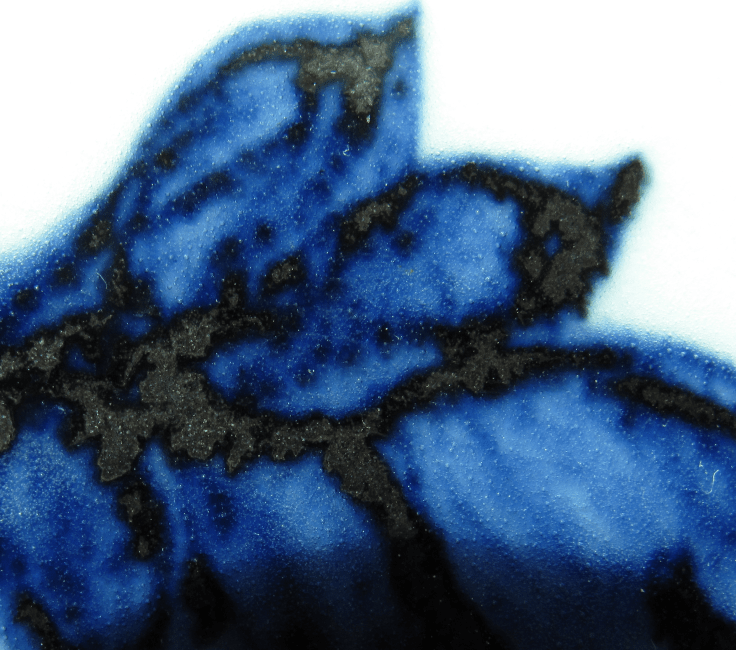
We all know that the Sumali Blue dye holds the key to the identification of a Blue and White of the Yuan and early Ming period. Forgers, past and present, are never able to reproduce the very specific features of the dye. Once we can master the appearances of the dye, there should be little problem in evaluating such B & Ws. The trouble that we have here is that the Sumali Blue dye is quite unlike our present day dye, where you get exactly the same dye if you have the right code number for it. No, the Sumali Blue dye varied and evolved with time during the eight decades when the dye was imported from we-know-not-where to China. Even within the Yuan period, the dye varies quite significantly in its appearance. One good example is the plaques.

Some people believe that plaques are from impurities of the dye. They argue that, as the technology of purification gets better, the many plaques seen in Yuan B & Ws are reduced to almost no plaques in the Xuande era. But if we were to look at the plaques together with the bubbles, another prominent feature of the Sumali Blue dye, we will be convinced that the argument is not valid. The plaques change with time, so do the bubbles. If the plaques are impurities, after their removal, the bubbles should be the same. This is clearly not the case. So, while the statement that the plaques in the B & Ws are getting less from Yuan to early Ming is true, it is for quite a different reason. I believe the exporters, over time, had changed the materials they used in making the dye pigment. Not drastic changes, but similar material that is of a slightly different nature. We have no idea why they should make such changes, but the changes are obvious. This leads to some changes in the ingredients of the dye, and their inherent properties. The changes that we see in plaques over those several decades are testimony to what I have just said.

The changes do not limit themselves to the plaques, other characteristics of the Sumali Blue dye also show some other variations, especially the bubbles. But I have to stress here that the decrease in plaques from Yuan to Xuande does not follow a linear function, rather the pattern fluctuates, so that in some Xuande B & Ws, the plaques can be pretty prominent. But the tendency is such that there is a gradual decrease in plaques from Yuan downwards. The variation in the bubbles is even more difficult to describe. There is not a general statement to fit all situations. That is why, we need to look at many different wares to get an idea of what bubbles would look like in the three different eras. As our experiences in looking at the bubbles grow, we would be more certain of ourselves.

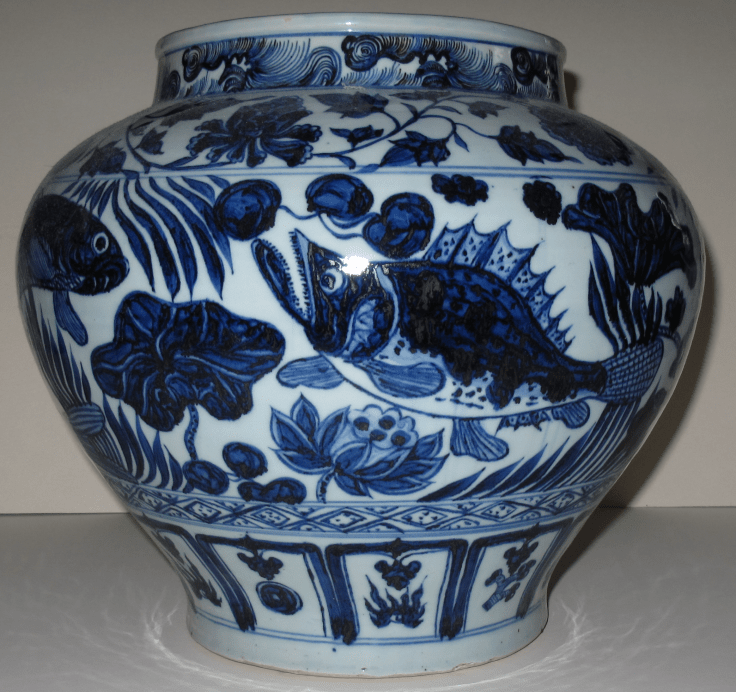
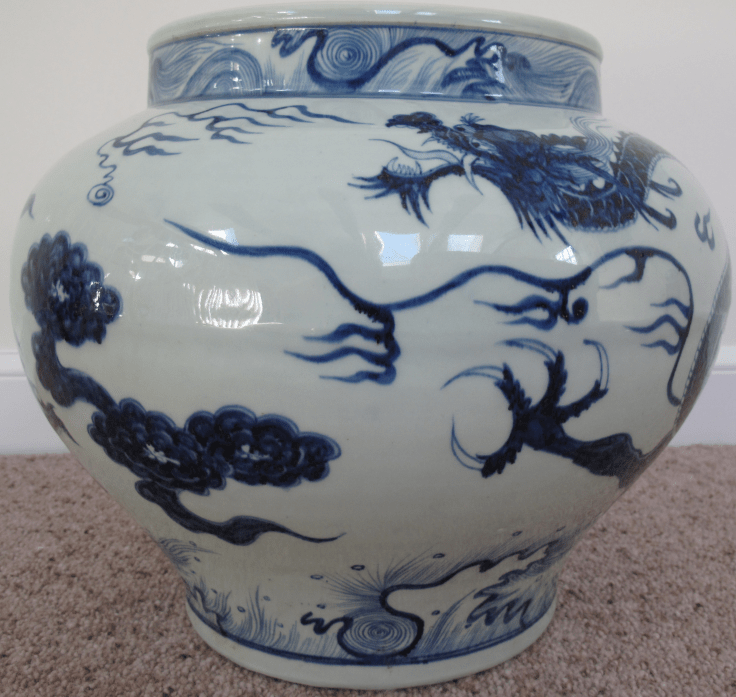
Here, I am going to show you a Yuan Jar, of dragon design, whose Sumali Blue characteristics are quite different from the several Yuan B & Ws that I have shown you (Figure 1).
IMG_1861Figure 1

The jar measures 11 3/4 inches in height, and is 14 3/16 inches in its widest diameter. This is a rather rare jar. While it is common to decorate the neck with huge and rough breaking waves in a Yuan jar, the foot is mostly decorated with petal lappets. Here, both the neck and the foot are of the wave design. The dragon is lively drawn with 4-claw feet. With this uncommon design, we would like to find out if the jar is a real Yuan jar. Let us look at the specific features of the dye, and see if they fall into the category that we have attributed to the Sumali Blue dye.

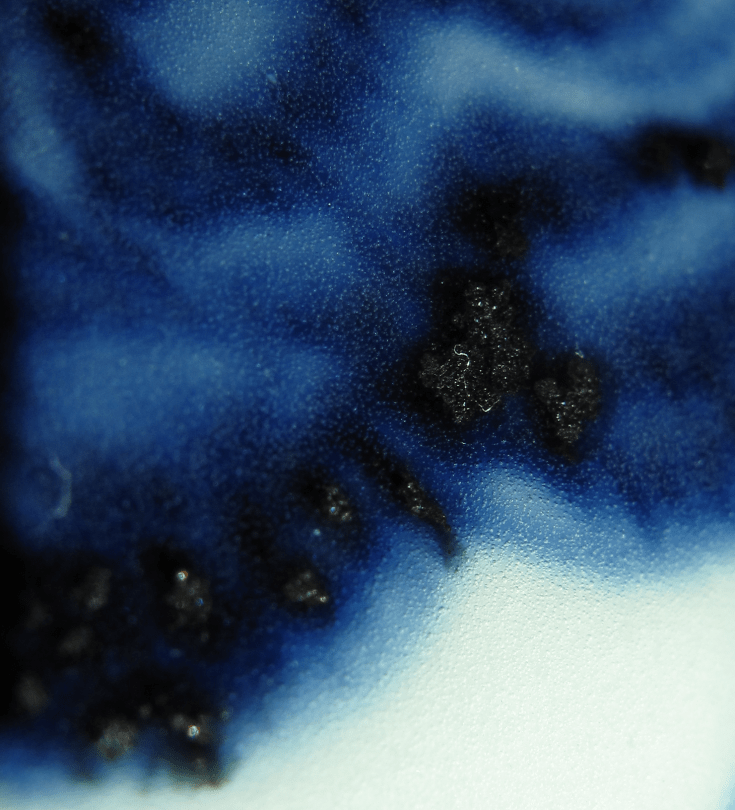
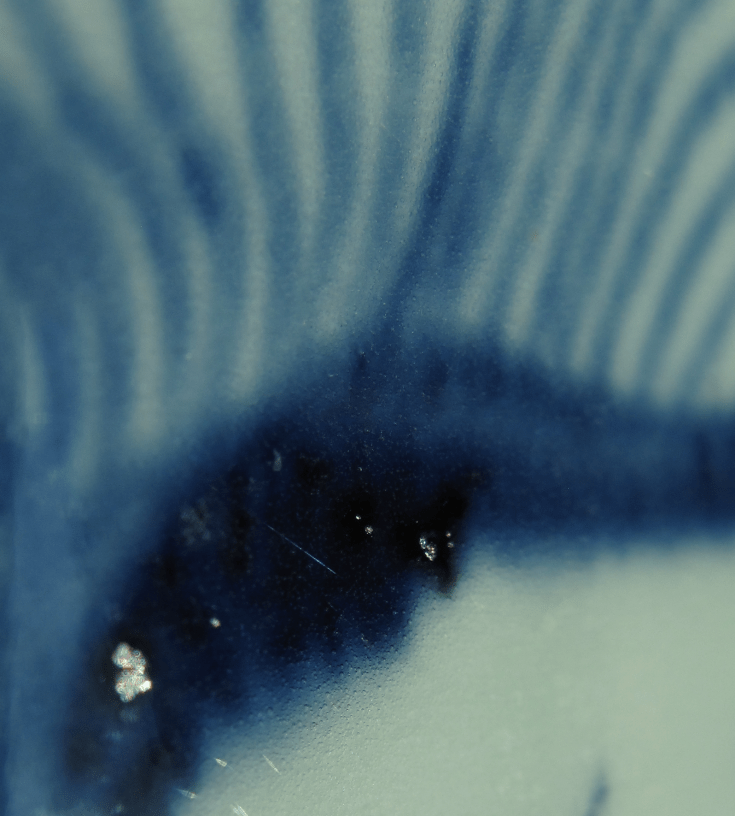
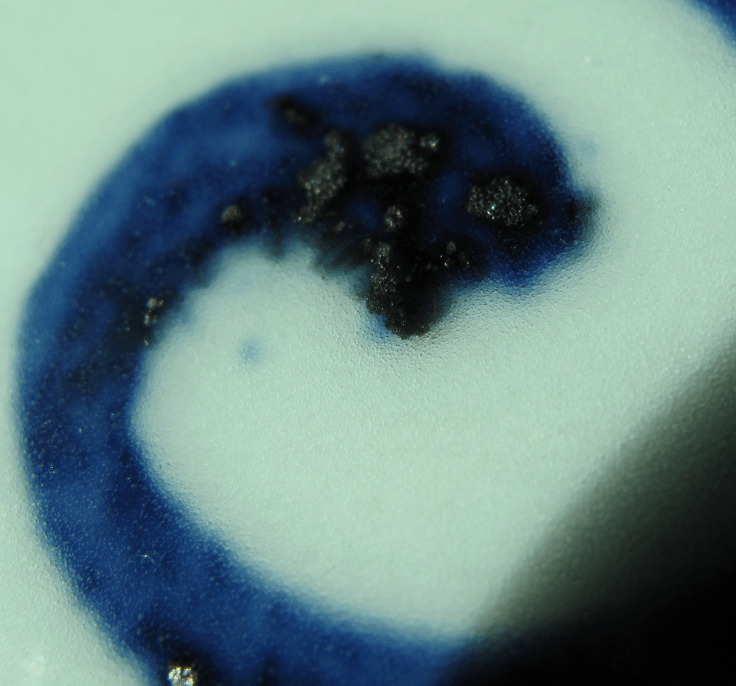
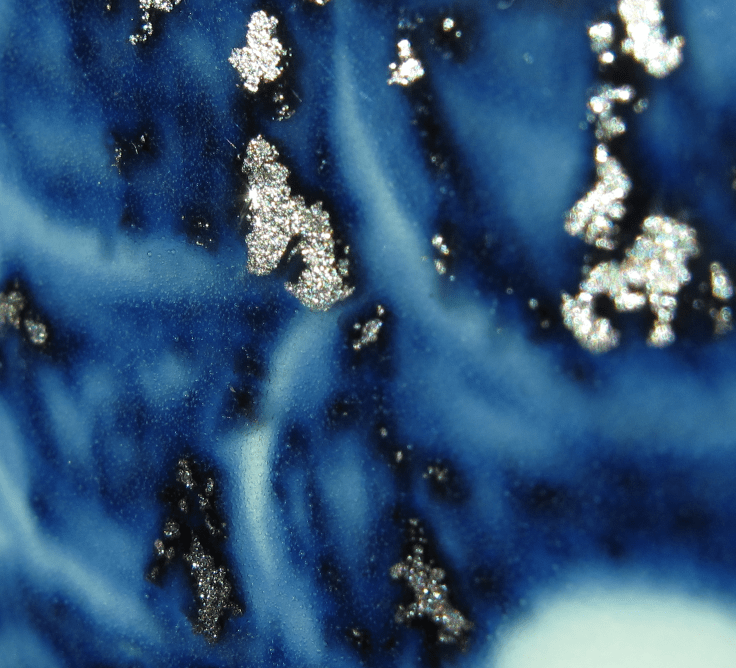
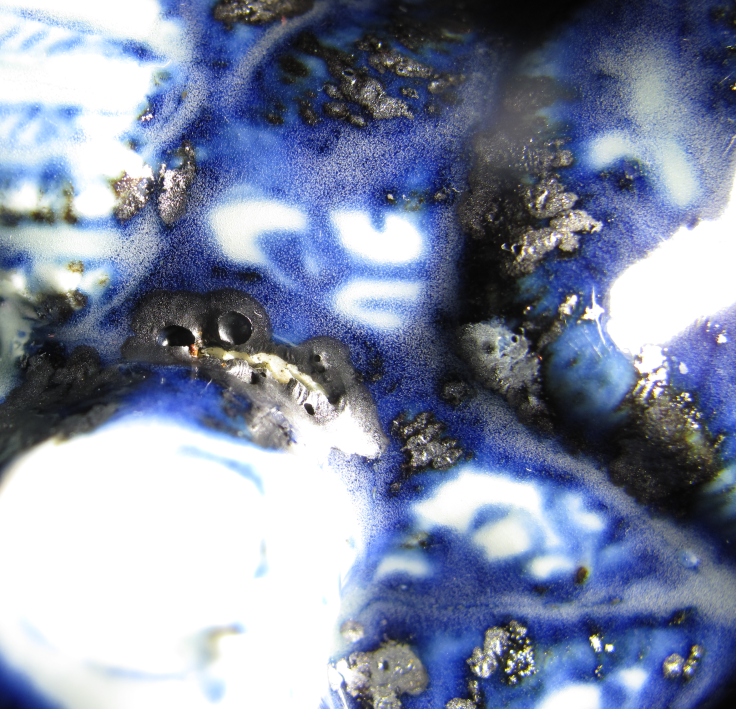
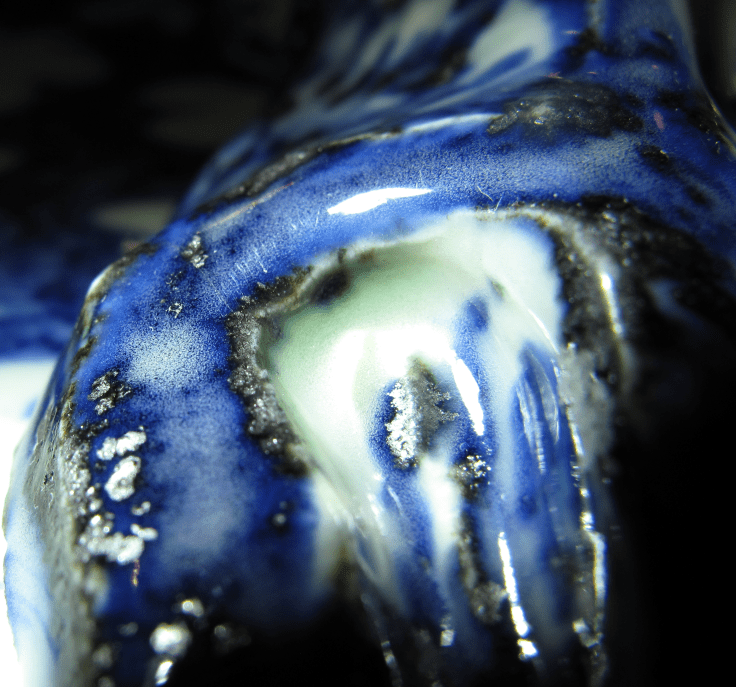
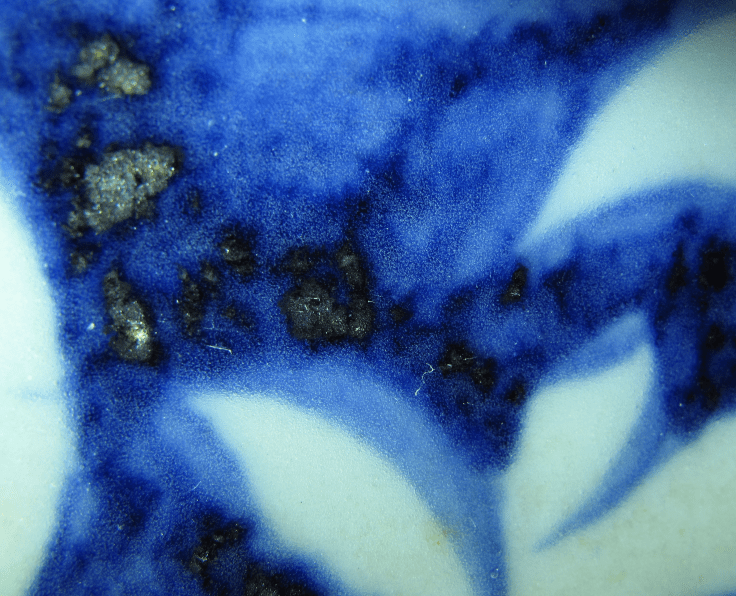
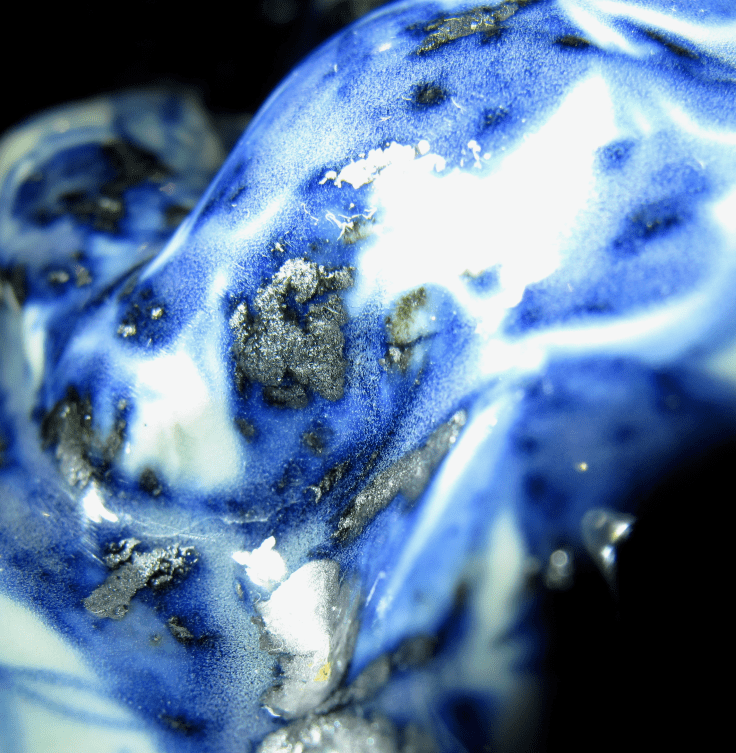
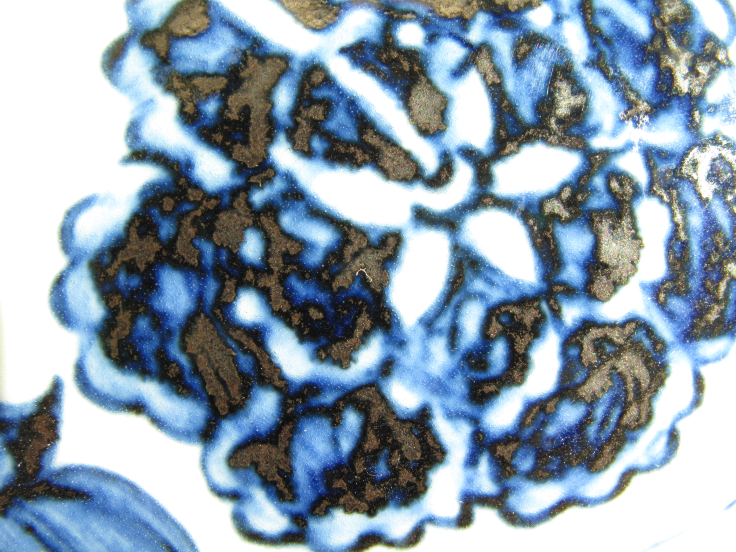
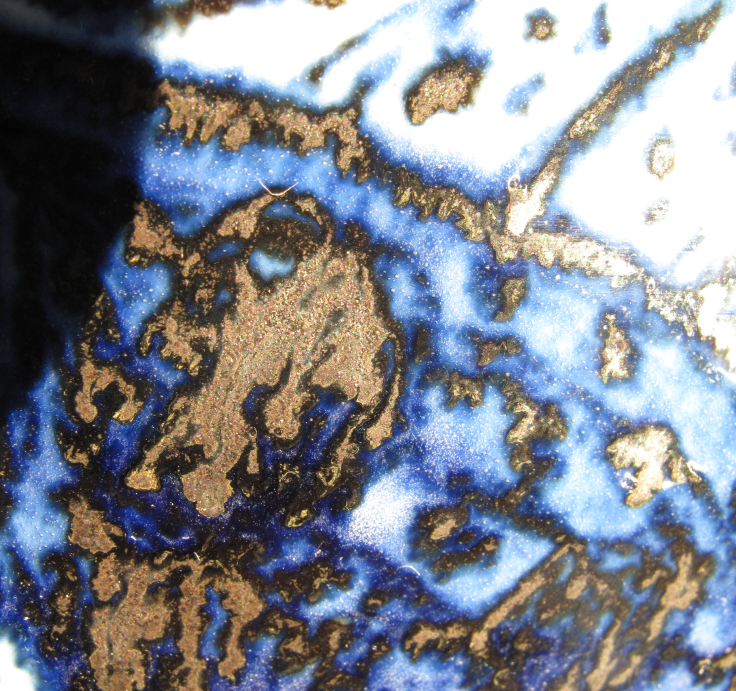
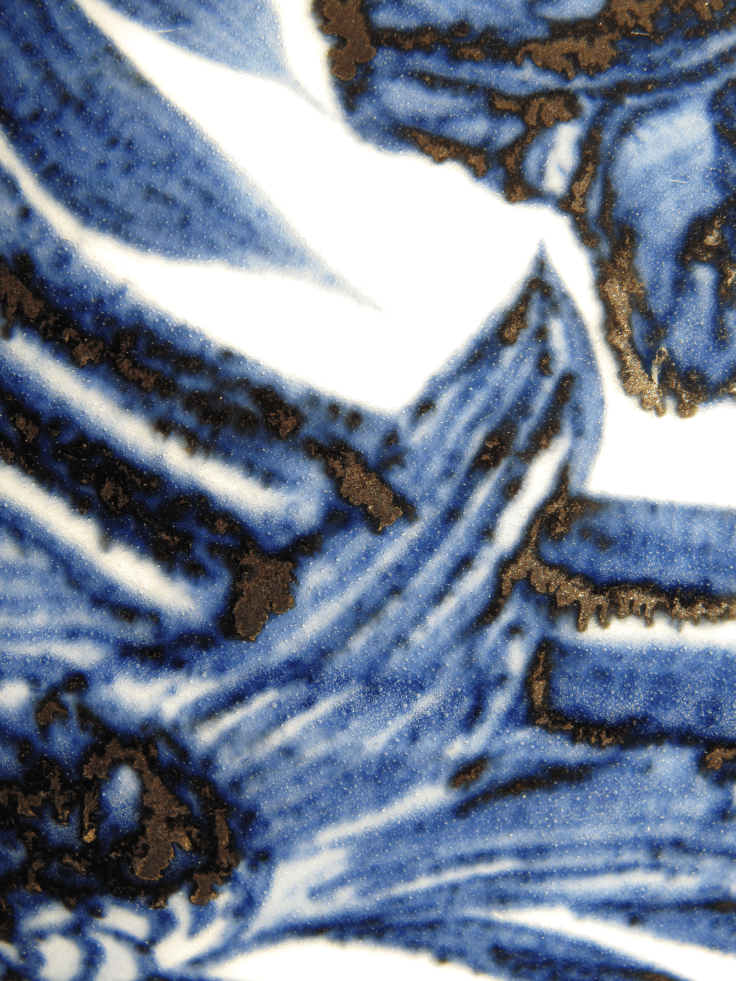
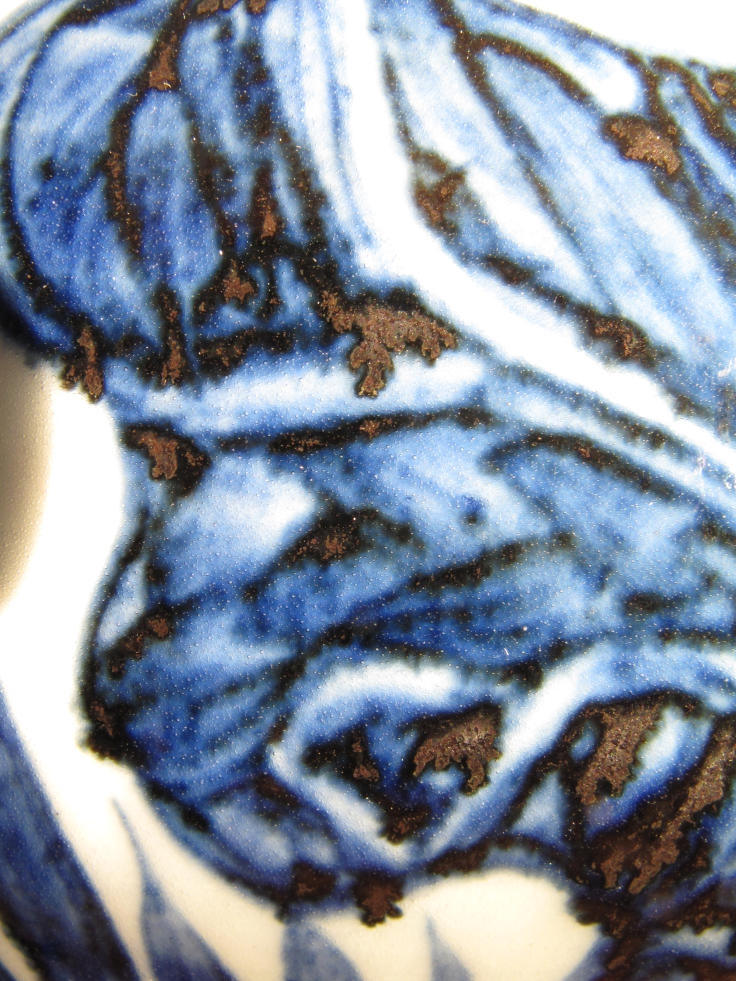
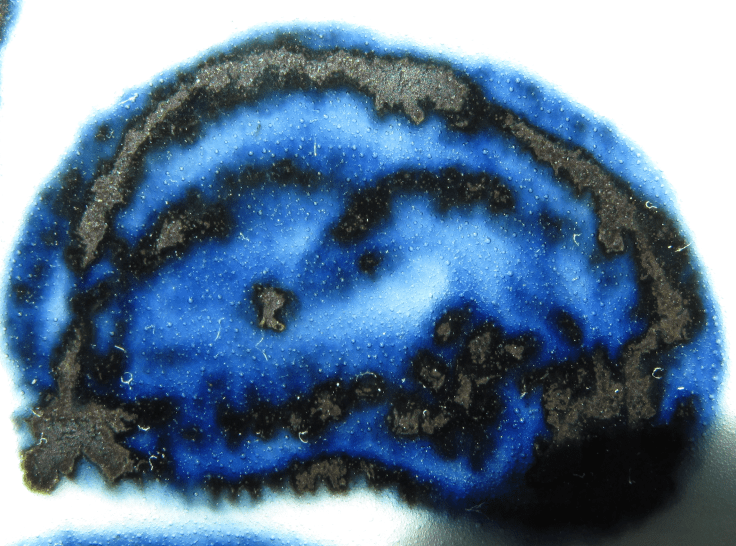
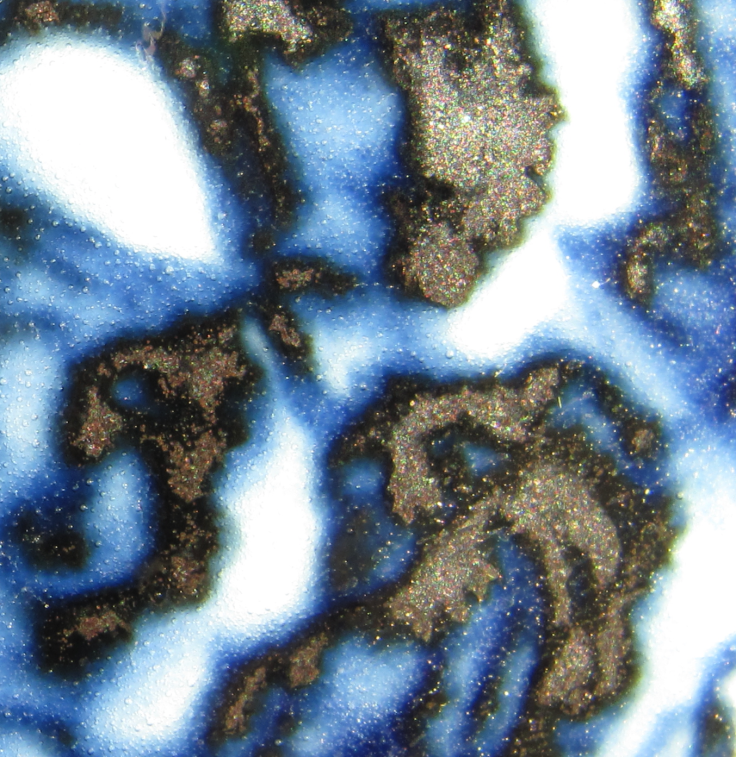
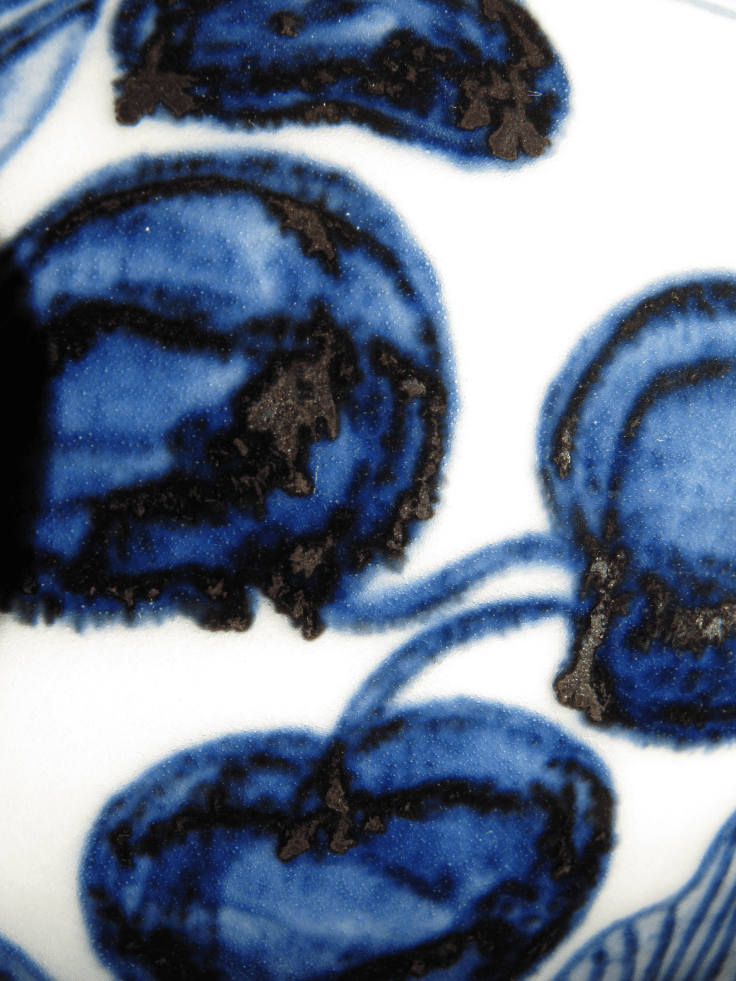
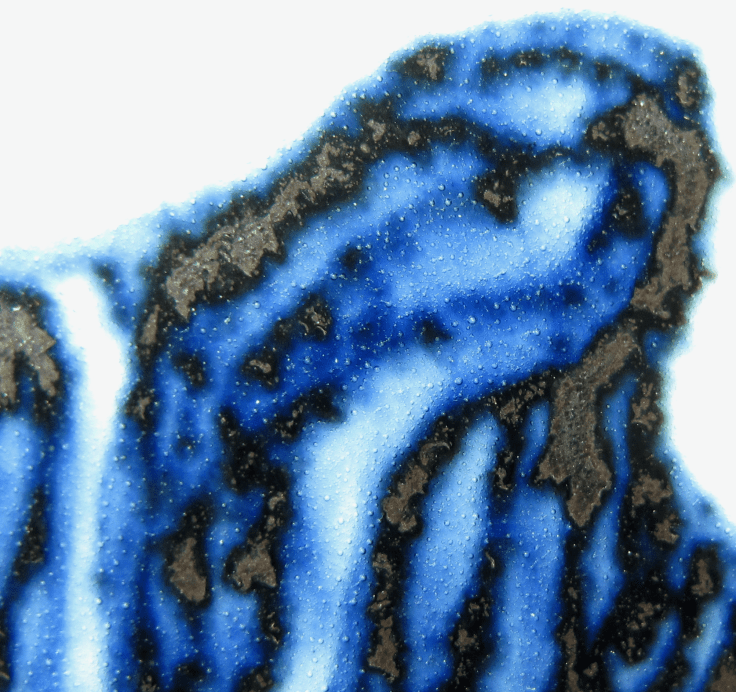
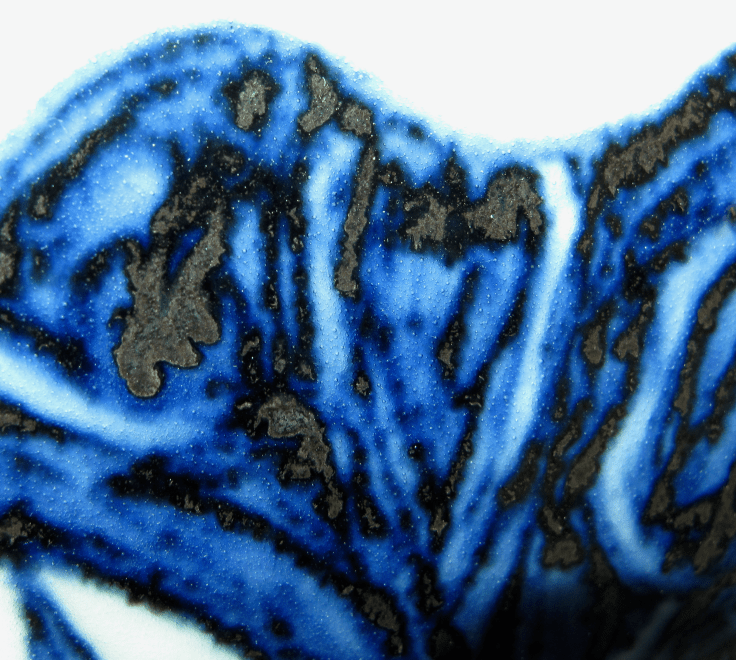
Let me first show you the plaques in this jar (Figure 2-7). You will agree with me that the plaques in this jar is less numerous than the few Yuan B & Ws that I have shown you. But the basic structure is quite the same. The granules are coarse, and under the sun, they have beautiful and colorful reflections that is very much enhanced when the plaques are slightly out of focus (Figures 4-5). But these plaques also have similarities to those found in the Yongle B & Ws. Look at these photos carefully, and you will find that some of the plaques have spiky and sharp edges, a feature that is very prominent in Yongle wares. When I say the exporters were making changes in the ingredients of the dye from time to time, the changes seen here can serve as some form of proof.
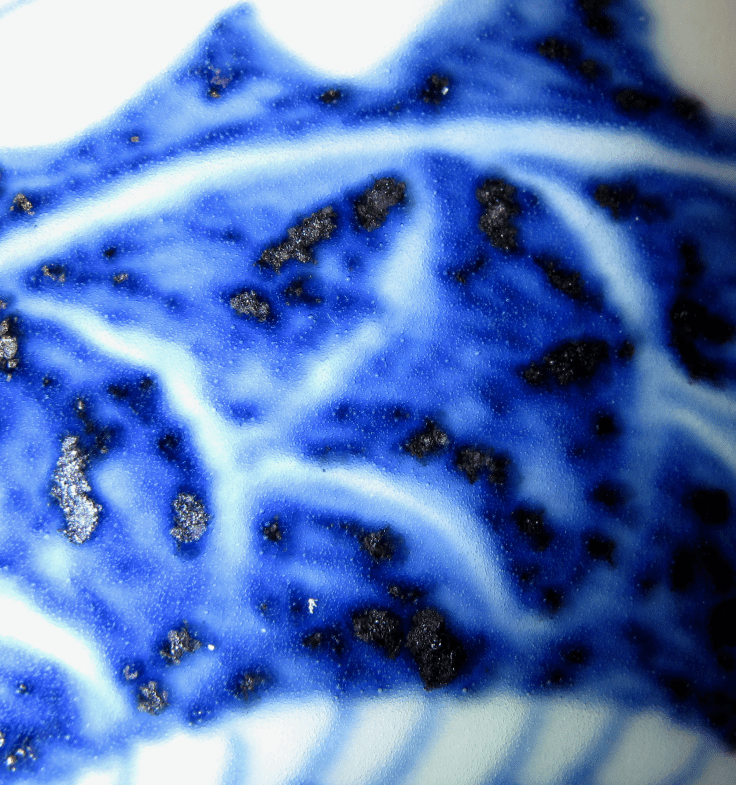
IMG_4575Figure 2


IMG_4584Figure 3


IMG_1914Figure 4


IMG_1880Figure 5


IMG_1890Figure 6


IMG_4573Figure 7

Before I leave the plaques, I have to stress again that when you look at these photos, don’t just look at the plaques, pay attention to the bubbles and flares and drippings as well.

You will notice that, in these photos, the drippings and flares are quite easily seen. But I’ll show you more (Figures 8-16).
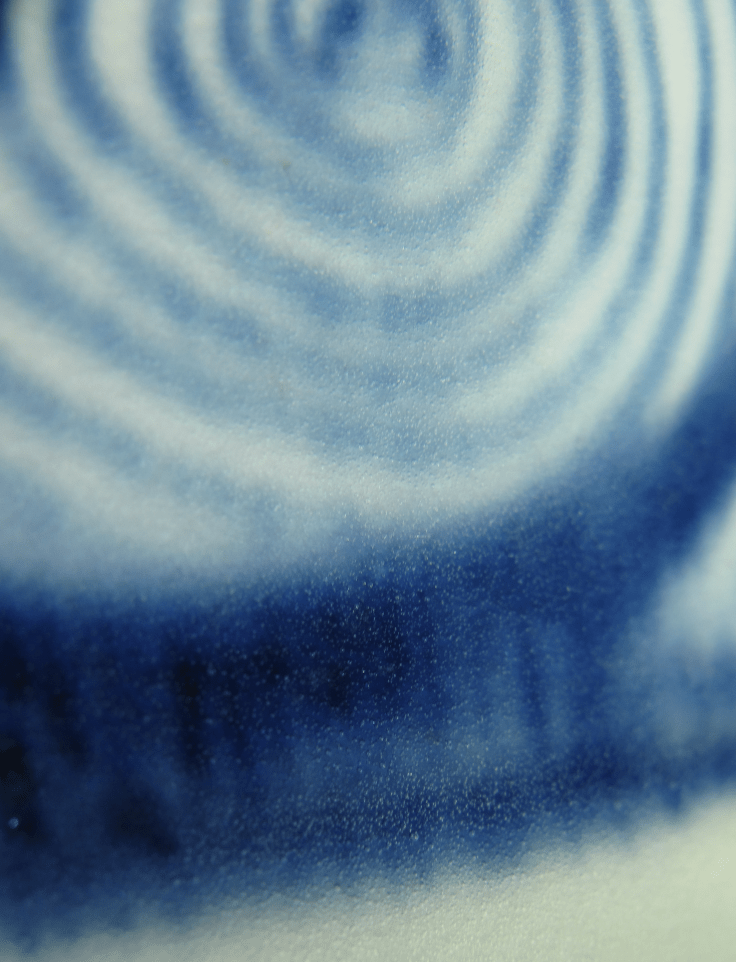
IMG_1969Figure 8


IMG_1967Figure 9


IMG_4577Figure 10


IMG_1956Figure 11


IMG_1965Figure 12


IMG_1877.pngFigure 13


IMG_1876Figure 14


IMG_1875.pngFigure 15


IMG_1879.pngFigure 16

The flares shown in these photos are all exaggerated because of the globular shape of the jar. The motif is drawn, for the most part, on a nearly vertical wall, so that the flare is in fact very much enhanced by the dripping effect, which, as I have explained, is brought on by the gravitational force. In Figure 15 and some other photos, if you care to look at them closely,  this gravitational force has its effect also on the thickened plaque, so that the plaque becomes part of the dripping. This is not uncommon in Yuan B & Ws where excessive plaques are of frequent occurrence. The excessive flares/drippings seen in Figure 8 come about for a different reason. If we look closer, the flare/dripping is near where the lower part of the neck meets the global body. The neck is short, but not too short, so that, if the painter applied too much glaze over the neck, there is more glaze to flow down. This will bring with it more blue dye pigment, allowing this exaggerated dripping to occur.

These photos are worth some close study, for they show various presentation of the flare/dripping effect. They show little difference to those flare/dripping in the other Yuan and Yongle B & Ws that I have shown you. It is importance to know their appearances well. These appearances, together with the plaques, would allow you to make a verdict that the ware is a genuine Yuan B & W, even without looking at the bubbles. But bubbles would add further evidence that your verdict  is beyond doubt.

Now, I’ll show you bubbles in this Yuan jar.


IMG_1957.pngFigure 17

Here in this photo, look at the string of large bubbles in that patch of flare/dripping, and some other large bubbles in adjacent areas. These large bubbles are not really as large as those large bubbles in the Yongle era, but they too have this semi-opaque appearance. You will also note that when I say semi-opaque, it does not mean that they are semi-opaque to the same degree. Some are more semi-opaque than the other, some are less so. But these semi-opacity is a characteristic of the Sumali Blue dye and you need to recognize this feature. The small bubbles are not too closely packed, but they are dense enough to allow you to see the lacuna formation.
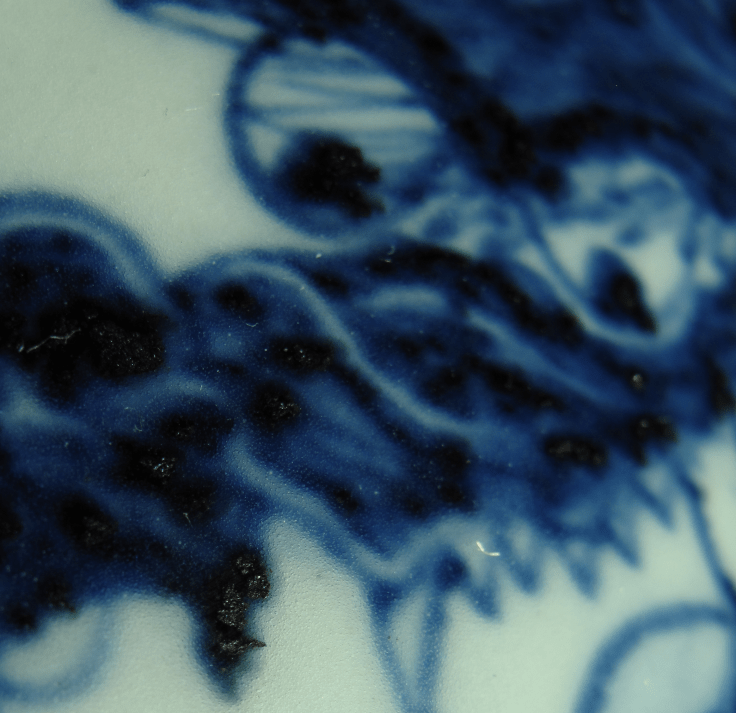
 

IMG_1960.pngFigure 18

Here in this photo (Figure 18), at a glance, you do not see many large bubbles. But if you enlarge them, and look inside the dark part of the dye, you will see many larger bubbles are hiding inside the dark shadow. This, again, is a feature of the Sumali Blue dye.


IMG_1891.pngFigure 19

Figure 19 is a nice photo. Look at the very nice bubbles, large and small. The distribution of the large bubbles is exactly what we are familiar with—in the darker part of the blue color. The small bubbles are just right, not too tightly packed, and do not give a disorderly feeling. The plaques are typically Yuan and the flare/dripping on the left even has a small breakaway plaque. The slightly greenish hue there tells you that the dye is of very good quality.


IMG_1900.pngFigure 20

Figure 20 is another good photo, particularly the bubbles. Study the photo carefully, and you’ll understand what are good bubbles, what are good plaques and goof flare/dripping effect.

To finish this article, I’ll have another photo to show you the bubbles, plaques and flare/dripping (Figure 21). Look at these features and study them. There is no way a forger can reproduce the features that I have shown you in all these photos. If the ware has all these features, it is not a fake. It is not only genuine but to the date. You can be sure that it is a Yuan Blue and White.


IMG_1902.pngFigure 21

A Yuan B & W Large Bowl

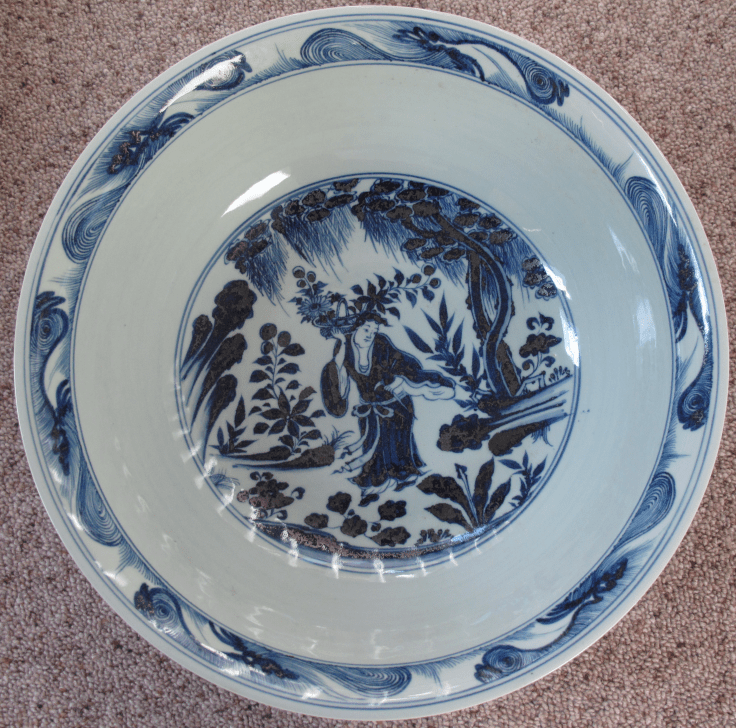
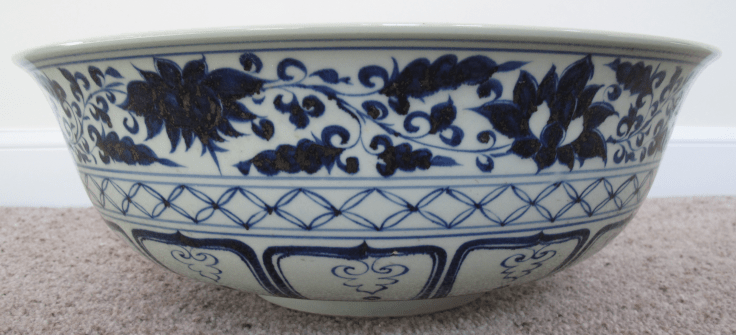
In the article on a Yuan Charger with a Lohan in relief, I have told you that the potters, in painting the charger, they had used at least two different kinds of Sumali Blue dye. It seems that that was a very common practice, in an attempt to cut down the cost. It has long been known that the Sumali Blue dyes were very expensive, though we will never be able to find out how pricey those dye pigments were. Simple logic will tell us that even in those days, the exporters must have many different grades of dye pigment to offer. Some are much more expensive than the others. The potters, knowing exactly the price of each pigment, would choose the right kind of pigment for their purpose, and minimize the cost for maximum effect. In this large bowl (Figure 1 and 2) that I am going to show you, the potters must have used three different grades of the Sumali Blue dye, as I’ll  show you.

IMG_1663Figure 1

The bowl measures 16 3/16 inches in diameter, and is 6 inches tall.

IMG_1852Figure 2

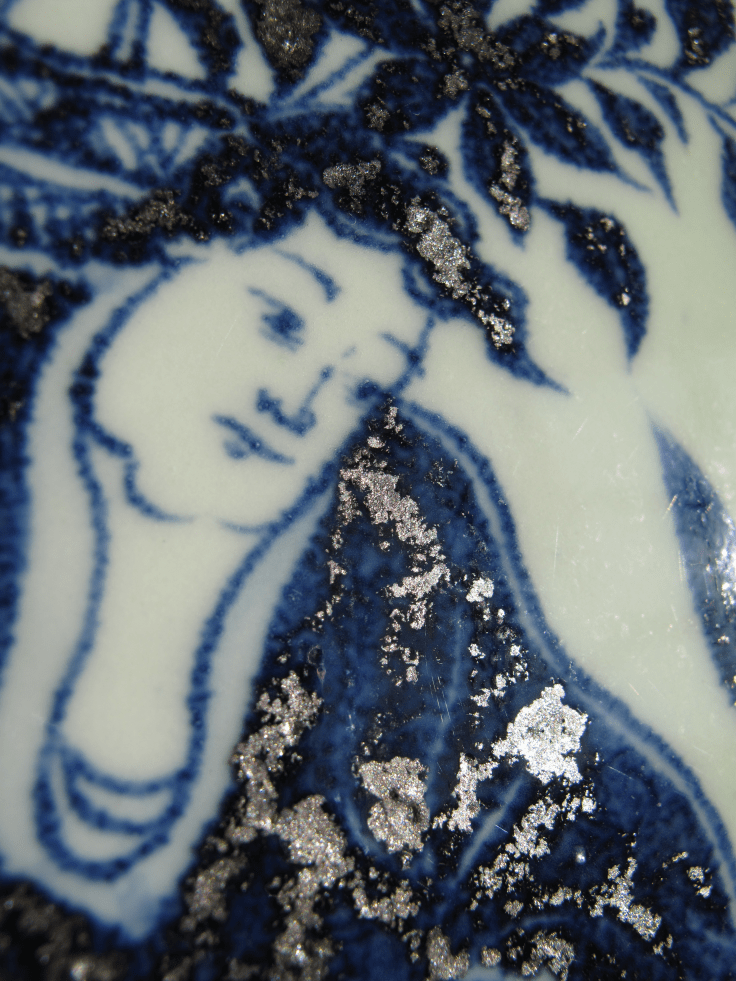
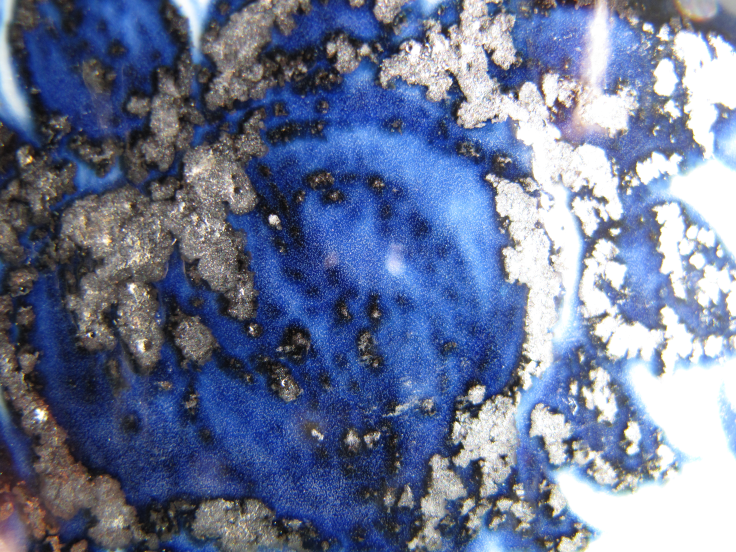
As you can see, plaques in this bowl are everywhere. The abundance of plaques is a prominent feature of B & W of the Yuan dynasty, particularly when the color of the blue dye is very dark. As a general rule, when the blue color gets less dark, the plaques will be less abundant, and probably thinner too. I have told you that the shape of a plaque is ever changing, and it is a waste of time trying to describe it. Rather, by looking more of these photos, and enlarging them when the occasion warrants it, you learn more about plaques than any other method you can think of, except, of course, by looking at the real thing. Still, there are a few characteristics of these plaques that you may want to remember—they will serve you in good stead. These plaques are quite thick with coarse granules. On closer examination, many minute particles of different colors are embedded in the granules. Our modern day high resolution cameras are still not able to capture these minutes particles. But, if we were to examine these plaques with a 10x magnifying glass under the sun, you will be shocked to find that these plaques can be THAT beautiful with a lot of particles reflecting many different colors. Sometimes, at the verge of the thick plaque, there are small breakaway plaques that lie close to the main plaque, as in cases of flare and drippings. There. you will notice how thin these small plaques are when compared to the main plaque.

Now, let me show you some photos of these plaques.

IMG_1702Figure 3

IMG_1716Figure 4

IMG_1746Figure 5

IMG_1705.pngFigure 6

IMG_1706.pngFigure 7

IMG_1710.pngFigure 8

Figures 3-8 show you the very varied appearances of these plaques. Note their coarse nature and the multi-color reflection of these plaques. In figure 6-8, I have deliberately included the part of the photo that is not in focus. It is these blurred parts that would allow you to see the multi-color reflections a lot more clearly. The color particles are no longer minute dots, they are now seen as hazy small circles, and you can see how colorful these small circles are. They are in blue, in green, in pink, in white and other colors. I don’t believe these plaques are impurities, as some experts have suggested. According to them, the plaques are getting less in Yongle B & Ws, and much less in Xuande era, because the process of purification of the dye pigments had improved with time, and much less impurities were in the dye pigments in those two later periods. This does not sound like a plausible theory. There is no impurities that can be that beautiful. It is just the nature of the dye that has changed. The exporters were continually changing their primary ingredients of the dye pigment, which, by the way, we have no idea what they are. At this point, I would like to tell you my suspicion. Can the primary ingredients be precious gemstones that were ground down into powder form?

In these photos of the plaques, it is difficult to tell if the potters were using different dyes in different parts of the bowl. But, if we were to look at the blue dye, the bubbles and the flare and dripping, it would tell another story.

IMG_1693.pngFigure 9

IMG_1529.pngFigure 10

IMG_1515.pngFigure 11

These three photos (Figures 9-11) were taken from the motif at the bottom of the bowl. That is to say, from the flat part of the ware. The first thing that catch your attention if the mottled appearance of the blue dye. The mottling is not the work of the painter, but rather random deposit of dye pigments at the bottom. This is a feature of the Sumali Blue dye, and, as I have explained before, such appearance generally associates with good quality dyes. Here you can see the very beautiful sapphire blue color.

Aside from the mottling, you can also see irregularities at the blue dye margins over many places. Sometimes, such irregularity can mimic the blade of a saw. Look at the edge of the leaf on the left hand side of Figure 11, and you will understand what I am trying to say. This is what we call flare, something very fundamental in Sumali Blue dyes. If the same leaf is drawn on the vertical part of the bowl, the flare will be exaggerated, and will become a dripping, as you will see.

We must now look at the bubbles. The bubbles are either large or small, with the large bubbles not unduly large, except for an occasional few. The small bubbles are far from tightly packed. Still, at places where there are more small bubbles, you can see the lacunae formation.

Now, let me show you photos that were taken from the inner side of the mouth of the bowl (Figure 12-15).

IMG_1713.pngFigure 12

IMG_1723Figure 13

IMG_1728Figure 14

IMG_1718.pngFigure 15

A look at these four photos will tell you that the shade of the blue color is different from that at the bottom of the bowl. There is no more mottling. Even though the rim of the mouth is not vertically down, it is still curving down at a rather steep angle, the flare that we see in the flat part of the ware is now exaggerated into drippings. Look at these four photos carefully, and you will not miss the dripping effect that is built on the flare phenomenon.

In figure 12, there are several places where we can see small, break-away thin plaques that originate from the main plaque nearby. This phenomenon, again, is only seen in good quality Sumali Blue dyes.

There are definitely more large bubbles in these three photos than the previous three, and you can find some large bubbles lurking around some plaques. Also note the translucent large bubbles. These are also features of the Sumali Blue dye. Can you find lacunae formation in some of these photos? Would you agree that the dye pigment here is different from that in the bottom?

Now, let me show you the bubbles and drippings at the drawings at the outer side of the bowl. The wall where the drawings are made obviously is a lot more vertical than the rim of the mouth of the inner side. And let us look at the flare, which is very much exaggerated into dripping by the force of gravity (Figures 16-18).

Look at the lower margin of the blue dye patches. The dripping is obviously more intense than those dripping appearing at the rim of the mouth. But they do not drip down very far. I believe this has much to do with the viscosity of the glaze. Pay attention to the greenish hue between the main plaques and those small break-away small ones that is apparent in many places. The presence of this greenish hue, as I have told you before, indicates that the dye is of good quality. Now, look at the large bubbles, which are not too many, and occasionally, you can see one that is distinctively large, as in the top of Figure 17. when you slightly enlarged these photos, at areas where the blue patch is large, lacunae formation is very clear. All these features are very different from the dye over the rim and at the bottom, and that is my reason to say that, in  this large bowl, the potters must have used three different grades of Sumali Blue dye.

In these photos, though I demonstrate to you the presentation of the bubbles and flare and dripping, I have to remind you again that it would help you know the dye better if you will also look at the plaques and the rest carefully and get familiar with all the peculiar features of the different grades of the Sumali Blue dye

IMG_1737.pngFigure 16

IMG_1745Figure 17

IMG_1734.pngFigure 18

It is well known that under different lighting condition, the appearance of the photos changes significantly. Before we leave this bowl, I want to show you the appearance of the blue color and the plaques when the photos are taken under LED light. In  this instance, the very dark blue color of the bowl shows a very nice blue color (Figures 19-21).

IMG_1553.pngFigure 19

IMG_1542.pngFigure 20

IMG_1675.pngFigure 21


A Yuan B & W Charger with a Lohan in Relief

A Yuan Charger with a Lohan in Relief

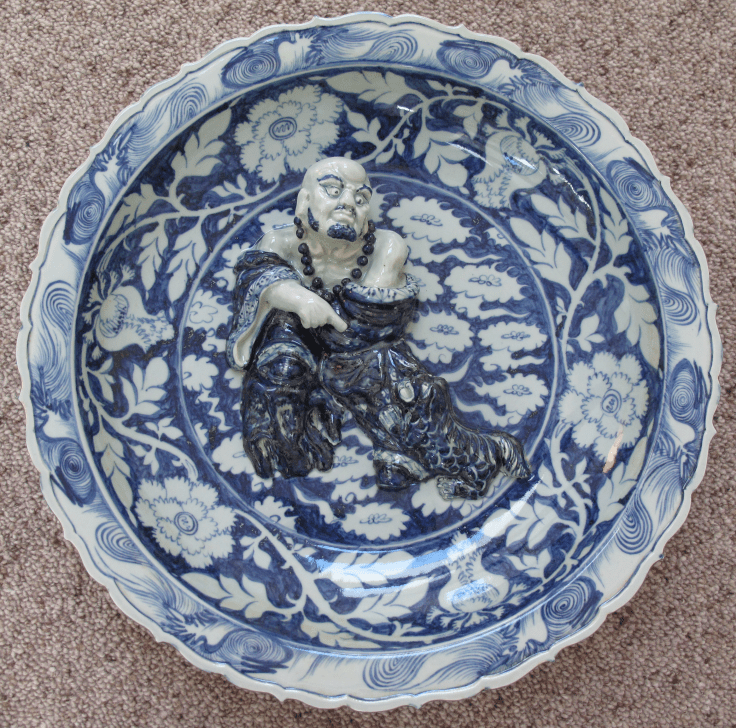
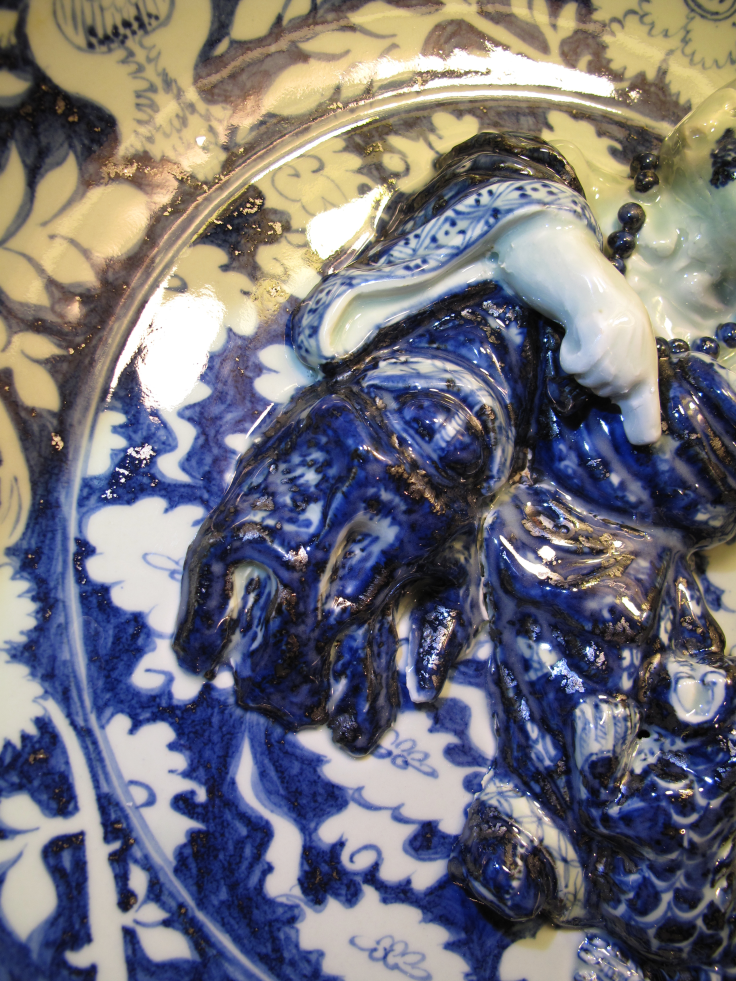
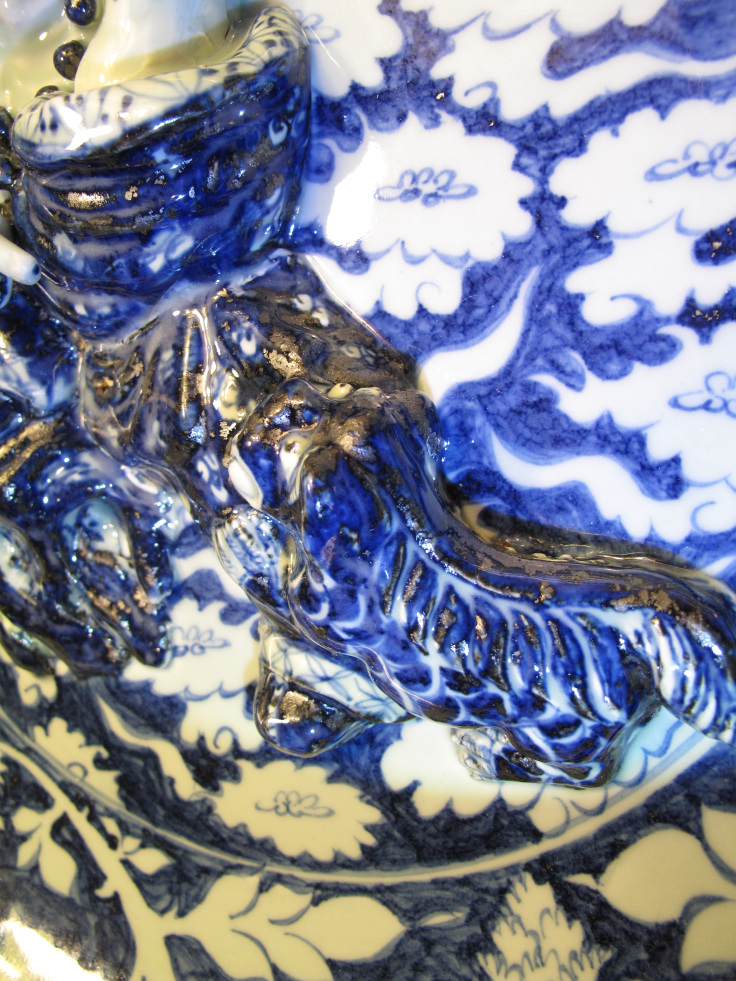
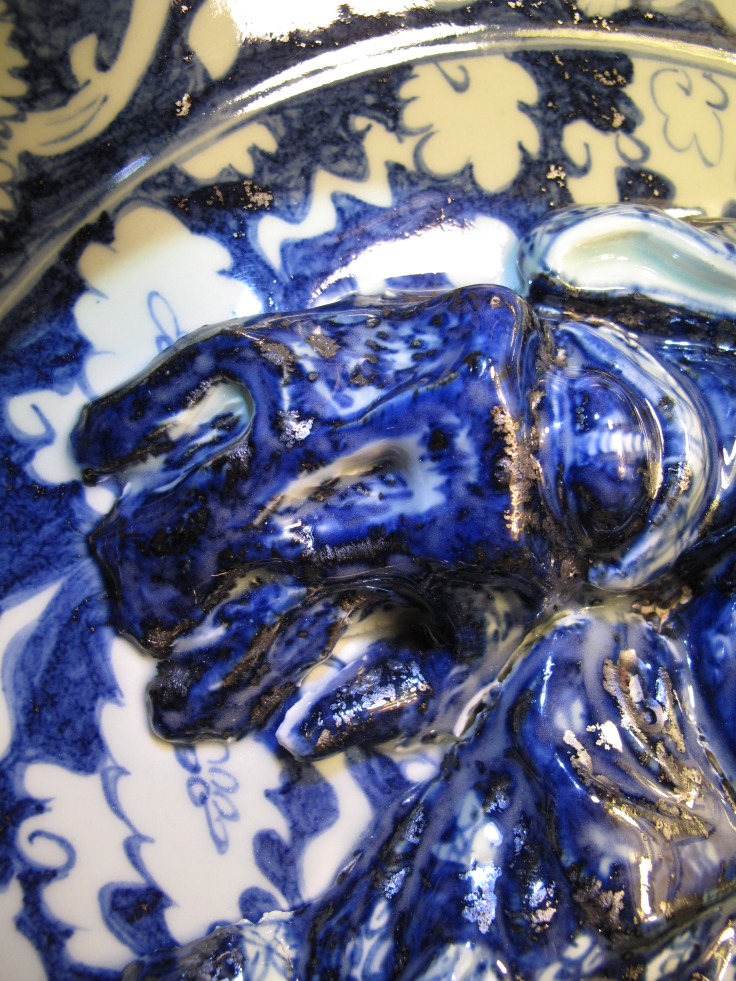
In this article, I am going to show you a Yuan Charger with a Lohan sculptured out in relief at the center of the flat part of the plate. The charger measures 17 inches in diameter, and is 2 7/8 inches high. The Lohan with a tiger at his feet is the tiger-taming Lohan. It is more than 9 inches in length and rises almost exactly 2 inches above the flat part. This is an extremely rare charger (Figure 1).

IMG_1047Figure 1

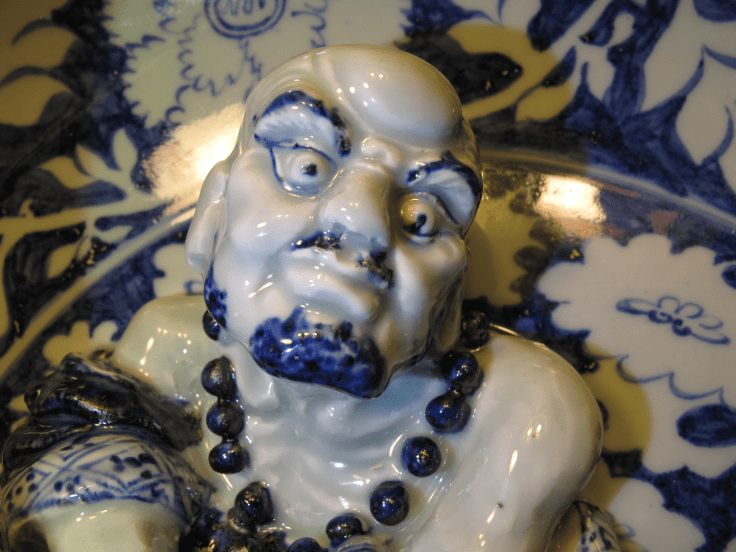
I suppose most of the readers might not have seen a charger similar to this, so I’ll show a few more detailed photos of the Lohan here.

IMG_1492Figure 2

IMG_1500Figure 3

IMG_1497Figure 4

IMG_1495Figure 5

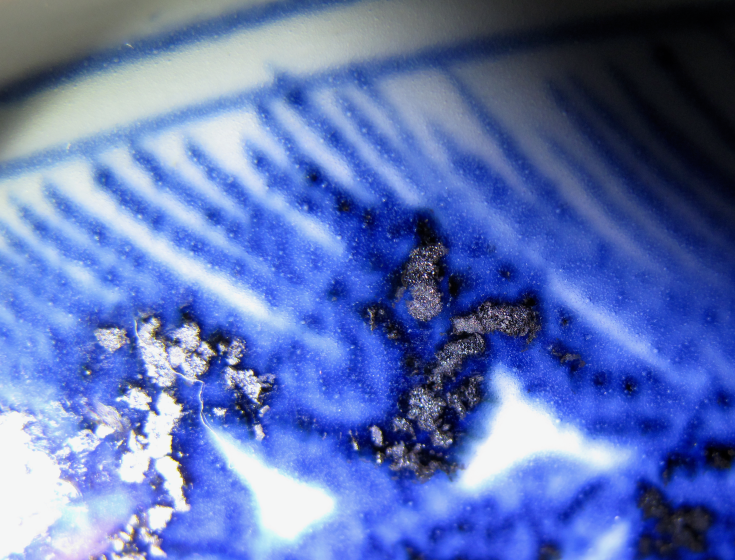
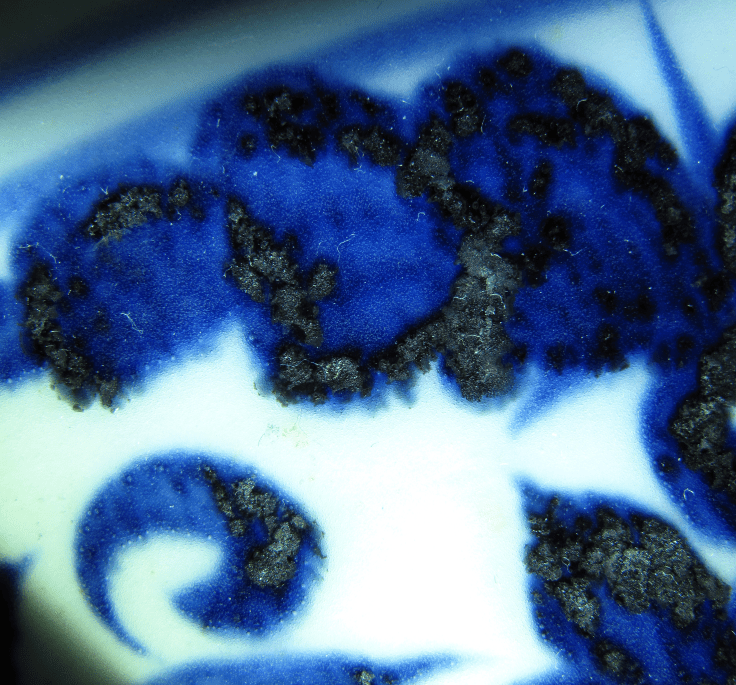
A look at these photos will tell us that the potter, in painting the motif, had used at least two different kinds of Sumali Blue dye. It has often been suggested that potters, in many instances, due to the very expensive nature of the dye, used different grades of Sumali Blue dye in one ware, the better grade was reserved for the main theme, whereas the less expensive grades would be used for the rest. A good example of using two grades of blue pigments in one single ware would be the chicken cup of the Chenghua period. Look at the big hen’s eye. It always has a sapphire blue color with very clear large bubbles even though the rest of the blue motif might not have the same blue color. In the absence of these features in the chicken eye, you must be very careful if the chicken cup is genuine. Of course I am not saying that a chicken cup with very nice blue color and clear and large bubbles in the hen’s eye is necessarily genuine. That is not true, and the question is very complicated. A lot of other factors are in play.  All that I am trying to say is that potters in those times paid a lot of attention to details. The Chenghua potters used the best blue dye for the hen’s eye, for the eye in any painting is very important to the Chinese.

I have a suspicion that potters in the Chenghua period, which begins 29 years after the end of Xuande, still had some nice Sumali Blue dyes that were left and stored away by potters of the Xuande era. The amount would not be much, and potters were very careful with it, and would only use the dye in special circumstances, such as the chicken eye. In fact, some of the blue dye pigment used in the Jiajiung period still retained some characteristics of the Sumali blue dye, albeit there might be some other blue dye pigments added to it and mixed with it.  You may remember  that exporters stopped exporting the Sumali Blue dye at the end of the Xuande period, and the rule of Jiajing is more than 80 years after Xuande. It only shows how potters in those times treasured the Sumali Blue dye pigment that were left behind. It is something of an heirloom.

Let us now get back to this Yuan charger. Here, the Lohan in relief has a very beautiful sapphire blue color, and with plenty of plaques too. The blue color of the rest of the charger is clearly of a different shade—lacking the bright sapphire color that the Lohan carries. Nevertheless, the dye is still a very good dye, as close-up photos of the dye will show.

IMG_8312Figure 6

Figure 6 is taken from the flat part of the charger close to the Lohan. It has all the beautiful features of a nice Sumali Blue dye. The mottling is characteristic. It is not from some deliberate effort of the painter, rather it is dye pigments deposited randomly on the clay surface. It is always a beautiful sight, and can only be seen in good Sumali Blue dyes. Then there are the very deep blue color patches, nearly black. In the midst of the dark blue coloration or right next to them, are the large bubbles. These large bubbles are not nearly as large as those large bubbles in the Yongle period, a feature that is common in the Yuan B & Ws. The small bubbles and the plaques are no different from typical Sumali Blue dye.

IMG_8314Figure 7

Figure 7 is basically very similar to Figure 6. Compare them carefully and you will agree that they are almost the same.

IMG_8315Figure 8 IMG_8315.JPG

Figure 8 is another similar photo. Here you can see the Lohan on the right.

IMG_8294Figure 9

Here in Figure 9, the small bubbles are more dense, and you can easily see the lacunae. The mottling, the dark blue patches, the large bubbles and the plaques, while show variations from the previous photos, are basically the same. Same can be said of Figure 10 below.

IMG_8280Figure 10


Now, look at Figure 11 and Figure 12. They are taken from the decorative pattern in the rim. Here, the mottling is not at all obvious. The blue patches are still there. But there are a lot more large bubbles. Do you think this is another grade of Sumali Blue dye that is different from the dye in the flat part of the charger?

IMG_8303Figure 11

IMG_8307.pngFigure 12

We must now look at the blue dye over the Lohan, the figure in relief. Look at the Lohan again. We can almost say that nowhere in the figure is there any flat area. It is all sloping down, many a time from the ridge, into sort of a valley or a groove. Over the ridge, the curvature does not allow the glaze, even viscous glaze, to accumulate, so that the glaze layer is necessarily thin. Whereas over the valleys and grooves, the shape of the contour is such that it would hold a lot more glaze than a flat surface. I’ll show you photos of various parts of the Lohan, and as you study the particular features of the dye, you must bear in mind these geographical factors.

IMG_8284Figure 13

IMG_1442Figure 14

Compare Figure 13 to Figure 14. Figure 13 is like a slope. There is no ridge and no groove, which is what Figure 14 shows. The most striking part of these two photos is of course the vey beautiful sapphire blue color. Figure 13 shows this perfectly. It is about the best blue color  one can ever get—the dark blue that is almost black, then the very deep blue, fading into the lighter blue in figure 14, and even here, it is a very nice blue color. There are a few relatively large bubbles in Figure 13, whereas in figure 14, the few large bubbles present are all in the margin of the deep blue color at the right lower corner. The appearance is consistent with the typical Sumali Blue dye pigment.

The small bubbles are worth noting in Figure 14. In the groove, the small bubbles are extremely packed, every single one of them gives you the impression that it is rising to the surface, as if it is trying to get out to the open air. Even then, the bubbles do not give us a feeling that they are in disarray. In fact, it is a sight we love. But why are there no large bubbles among the small ones, and none on the ridge too? I suppose the ingredient giving rise to the small bubbles is different from that giving rise to the large bubbles. It has a greater specific gravity, which allows it to slide down the sharp ridge faster. As a result, the groove area is filled with small bubbles. Why then there is no large bubbles at or around the ridge? I can only say that the angle there is sharp, and the fall of the surface rather vertical. There is no place for a thick glaze to build up there, particularly when the nature of the glaze is thin. With just a thin glaze, large bubbles would not be formed.

The sharp ridge can also explain the appearance of the plaque and the blackish streaks over the ridge in Figure 14. As I have already postulated, the plaques have quite a number of ingredients. Some have higher specific gravity, some lower, than the glaze itself. The rather thick plaque, with a greater specific gravity, slides down the slope ahead of the glaze, giving rise to the appearance as shown here. The black streaks are other ingredients of the plaque, but they have a lighter specific gravity, so that, as every other ingredient is sliding down the sharp slope, some of these still remain on the ridge, while others are sliding down slowly, giving rise to an appearance as shown here. These black streaks are fairly common phenomenon whenever we encounter contour as that we have here.

IMG_8286Figure 15

Figure 15 shows the very extensive plaques over the Lohan. Note also the bubbles and the drippings and blackish streaks. The are two very prominent craters amid the very thick plaque. They are formed because the plaque collapses over some thin areas that have not enough strong support.

IMG_8296Figure 16

Figure 16 shows essentially the same features as the previous three photos.

IMG_8301Figure 17

Now, in Figure 17, I want to draw your attention to one important feature. Look at the greenish area that is below the dripping that originates from the ridge right above it. The phenomenon of a greenish element spreading just beyond the last shade of the blackish dripping almost always indicates that the dye is of superb quality. And the very extensive greenish shade here is very seldom seen, a suggestion that the dye here is an exceptionally good dye.

Before I finish off with this article, I just want to show you a few more photos of this charger (Figures 18-21), so that you can be more familiar with the blue dye features of a Yuan B & W.

IMG_8375Figure 18

IMG_8370Figure 19

IMG_8328Figure 20

IMG_8297Figure 21

A Yuan Jar


Collectors of Blue & Whites of the early Ming period all know that the blue pigment used in those periods is the Sumali Blue dye. As I have told you, we know very little about the dye pigment. We do not even know the place of origin of the dye. That is to say, we have no idea which country in fact exported the dye, not to say the nature of the dye. The only thing that we know is that exporters began exporting the dye to China sometime during the Yuan period, and by the end of the rule of Xuande, they stopped importing. Here again, we have no idea why the exporters decided to do that. But for potters in China, that meant something very crucial, and they have to look for a replacement. History tells us that the potters had failed in their endeavor, and no replacements they found had qualities that were anywhere close to the Sumali Blue dye. In short, the Sumali Blue dye are so different from all the subsequent replacement dyes that their characteristics are now cornerstones in establishing whether the Blue and White belongs to those periods or not.

History also tells us that not all Sumali Blue dye pigments are the same. There are some major differences among dyes in different periods, and to a lesser extend, dyes of the same period. There are many reasons for this, but the most important one, I make a guess here, is that the natural ingredients of the dye vary from batch to batch of the dye pigments that were imported. I will elaborate on some of these when we come to it.

Most of the Yuan B & Ws, among other things, have two features that stand out. They have prominent plaques, and the bubbles are smaller. We will discuss all these in more details as we go along, and this Yuan Jar is a good example to start.

IMG_5407 (1)Figure 1

This jar is 11 5/8 inches in height. The motif is well drawn, and the blue color is as good as you can get in a Yuan B & W. Now, how do we tell that this is a genuine Yuan ware? The answer again is by looking at the features of the Sumali Blue dye. I have told you the prominent feature in the Yuan B & Ws is the plaques. The following photos will tell you exactly how prominent the feature is.

IMG_4957Figure 2

IMG_4789Figure 3

IMG_4790Figure 4

DSC01276Figure 5

Figures 2-5 give you an idea the meaning of the word prominent. In the old days, when description could only be done by words, the word prominent would be up to every reader’s imagination and interpretation, and there would be no consensus. This is how amazing technology can do to convey the meaning of the word.

If you are to look at the plaques in detail  by enlarging the photos, you can see the differences between these plaques and those in the early Ming period. Let me enlarge some of these photos for you (Figures 6-11).

IMG_4783 (1)Figure 6

IMG_4773Figure 7

IMG_4969Figure 8

IMG_5428Figure 9

IMG_4958Figure 10

IMG_5759Figure Figure 11

In the early Ming B & Ws, we know that plaques and drippings are closely associated, but this association is very much enhanced here. Look at Figure 6 and Figure 7 again. There, not only do you have drippings that are from the blue dye pigment, there are so many instances where the plaques are actually part of the dripping. That is to say, they form part of the dripping, many a time, for the most part of it, leaving only a small portion at the outermost region that is formed by the blue dye pigment. This is something you seldom see in early Ming B & Ws. Figures 8-10 are showing the same thing.

It is worth noting that the plaques-forming material in this Yuan jar is so abundant that, most of the time, the plaques are just one continuous sheet. I am sure one of the reasons that the plaques are dripping down is directly related to the excesses of this plaque-forming material. You will also note that the plaques appear to be a lot more coarse than those plaques that we see in the early Ming wares, though the reflections under sunlight have the same bright colorful element as those Sumali Blue dye pigments seen in the subsequent decades when the dye was imported (Figures 10 and 11). Again, it is important that you look at these photos carefully, and enlarge them as necessary, so that you will get familiar with their appearances in different shades of light.

Now, we must look at the bubbles. Let me show you three photos first.

IMG_4769Figure 12

IMG_4772Figure 13

IMG_4774Figure 14

As you can see, bubbles in these three photos have large bubbles that are not too large, and small bubbles that are in rather small numbers. Even the strings of large bubbles in Figure 13 and Figure 14 over the margin are small compared to those strings of bubbles that we see in Yongle B & Ws. The small bubbles are not too much smaller than the large bubbles. The number of small bubbles are so few that you cannot find any lacunae formation. However, the bubbles retained the semi-translucent appearance that we see in wares painted with the Sumali Blue dye. You can go back and look at some of the photos showing you the plaques. Many of the photos show this pattern of behavior. In Yuan B & Ws, such appearances are not uncommon.

Now, I will show you a few other photos of the bubbles in this particular jar (Figures 15-17).

IMG_5751Figure 15

IMG_5757Figure 16

IMG_5753Figure 17

In these three photos, the bubbles are quite different from the previous three photos. Here, the contrast of the large and small bubbles is distinct. In many areas, there are very crowded small bubbles. In Figure 17, lacunae formation is very clear in some areas. You can also see short chain formation of large and small bubbles, features that are common in Sumali Blue dye. I would go so far as to say that the plaques in these last three photos are different from the previous three photos. They resembles plaques seen in Yongle and Xuande period.

Why is that? You may want to ask. I think the explanation is simple. It is a question of quality control. I have never read any literature on this topic, and I’ll try to come up with a theory. This is a Yuan B & W, there is little doubt about it. It is during the Yuan Dynasty that the Sumali Blue dye was first imported to China. As I have said, we know close to nothing about the dye except that it is very expensive. It must be something natural—an ore or, more likely, a mixture of several ores and minerals, some of which must be rather rare and pricey. The exporters, in an attempt to keep the ingredients secret, must have grinded down the ores into powder. When the exporters first made the dye, they were not quite sure what the outcome on a ceramic ware would look like. Then they found out that the blue hue was beautiful. What troubled them was the plaques. They marred the beauty of the ware, or so they thought. So, in the subsequent decades when the dye was exported, they made it a point to minimize the plaques with improved technology. They must have also tried on many different ores, the final aim being a  beautiful blue color with as little plaque as possible. In a careful study of the Yuan, Yongle and Xuande B & Ws, we can actually see the improvement. Some Xuande B & Ws are almost without plaques. Along the way, because of the different materials used, the bubbles show a variety of presentation too.

In this Yuan jar, when the technology revolution was still at an early stage and on going, and the mixing of the pulverized ore minerals not done properly, the potters ended up with a B & W that has plaques and bubbles that are not the same on different parts of the ware.

You will also note that many large bubbles do not sit in a small pool of darker blue dye, a phenomenon that is almost the rule in Yongle and Xuande B & Ws. This is another question that you want to ask. Again, I have a theory of my own to explain this.

We need to understand that making a B & W is a very complicated process back then, and the technology was always revolving—in every step in the manufacturing process and in every ingredient that in involved in the making of it. The dye pigment, though they are all Sumali Blue dye, vary much from batch to batch, from year to year. The same is true with the glaze material.  Though experts today don’t talk much about the glaze, I am sure potters at those times paid a lot of attention to it, and the material used must have evolved alongside with everything. Some glazes are thicker, others less viscous. I am sure the glaze in this jar is rather thin, not very viscous, otherwise the plaques would not be flowing down as if in lock-steps with the blue dye pigment components, as we have seen.

Then we have the kiln to consider. The design of kiln changed all the time. We will not be able to tell how a kiln looks like back in the Yuan dynasty. Then we want to know the material potters used to bring up the temperature. What is the temperature potters used? and for how long do they bake the wares? Nowadays, we always say that the temperature they used is 1350 degrees Celsius. I must tell you that this is pure speculation. The real answer is: we do not know. So is the number of hours potters baked their wares. We again do not know. There  are so many unknowns here that critics purposely avoid mentioning them. They do not want to talk about all these. To me, even the position of the ware inside the kiln makes a difference to the outcome.

And in this particular jar, let us go back to the question of why some of the large bubbles are not sitting in a small pool of dark blue color. I think the reason may have some very closed association with all the above. The bubbles, as they were generated from some nidus of chemicals in the blue dye, began to rise to the surface. But under high temperature, within the thickness of the glaze, local tiny currents were formed. The current carried with it the bubbles—to wherever the current might drift. With all these and some more unknown factors playing a part, especially when the glaze was thin, some bubbles might drift far away from their origin, allowing them to end up anywhere.

I am going to show you a few more photos before I end this article. Again, look at them carefully, and try to remember how the plaques and bubbles present themselves.

IMG_5420Figure 18

IMG_5433Figure 19

IMG_5430Figure 20

A Blue and White Yongle Tankard

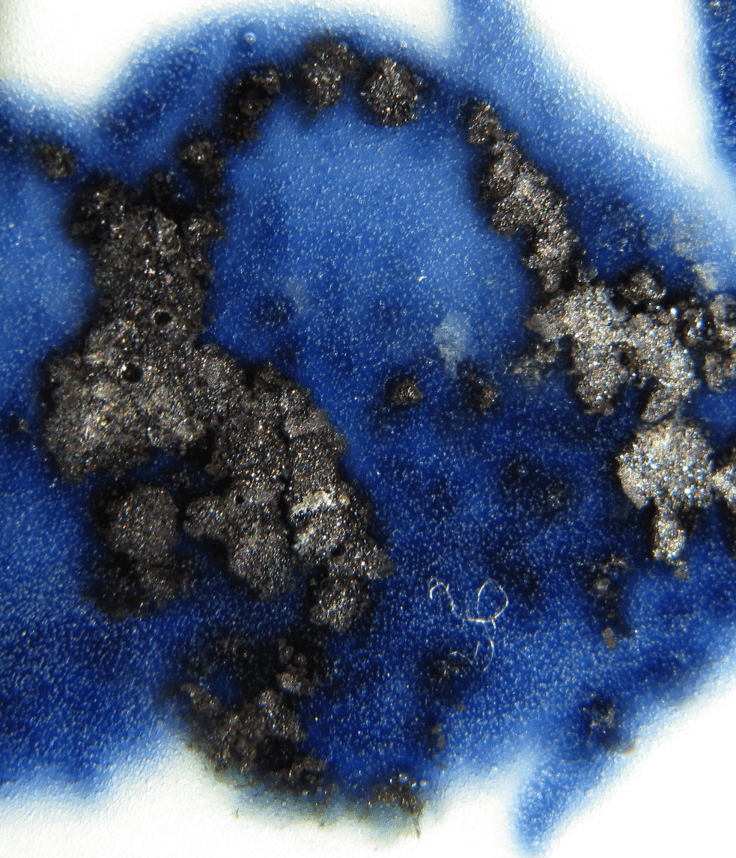
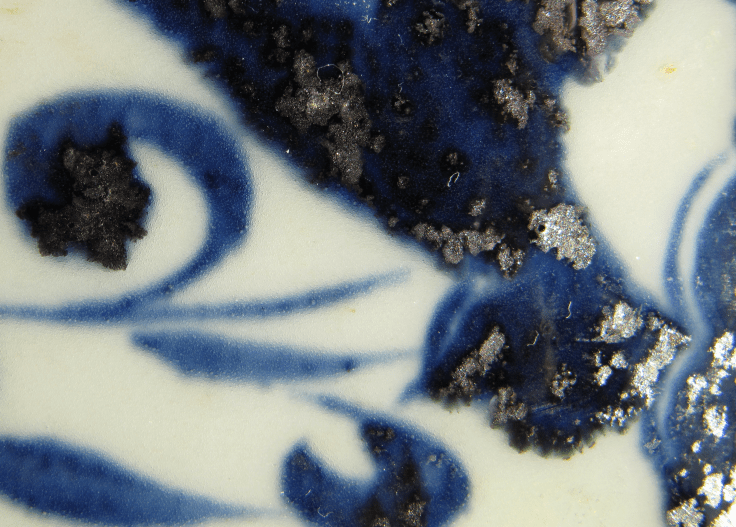
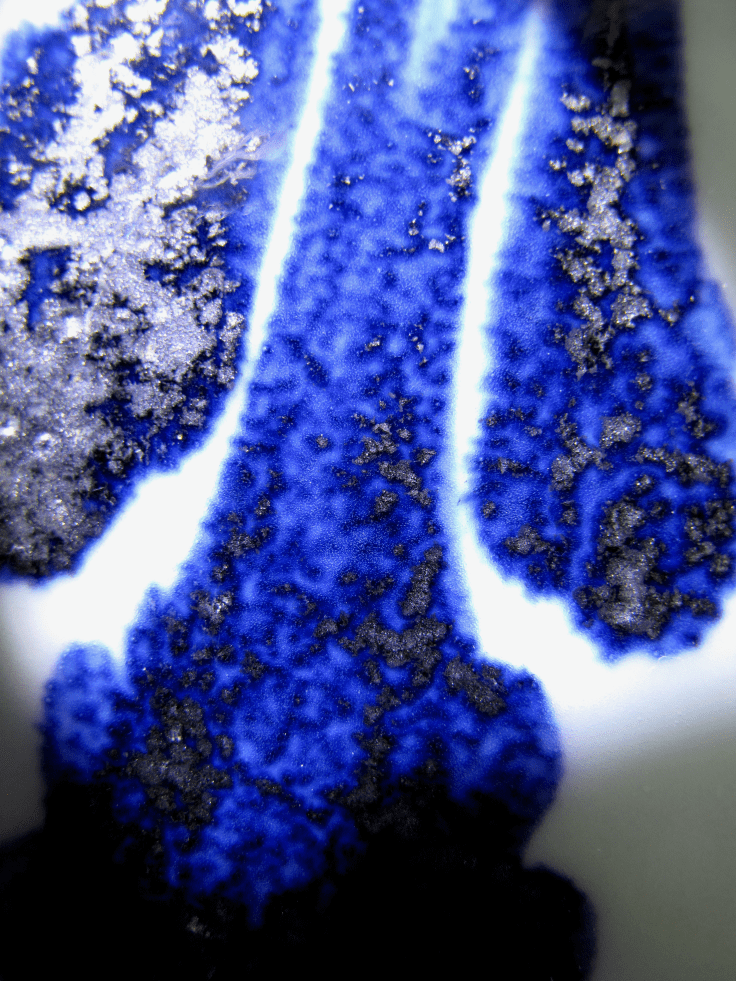
I have told you in my article—A Yongle Blue and White Dragon Moon Flask—in some detail about plaques in wares that are painted with the Sumali Blue dye. Now I am going to show you another Yongle Blue and White that also has a lot of plaques. But the plaques here have appearances that are quite different from the Moon Flask. To be sure, plaques in both of these two wares are beautiful. But it also proves my point that plaques have many faces, and we need to study them, and know them well, before we can be comfortable with ourselves when we deal with Blue and Whites of those eras.

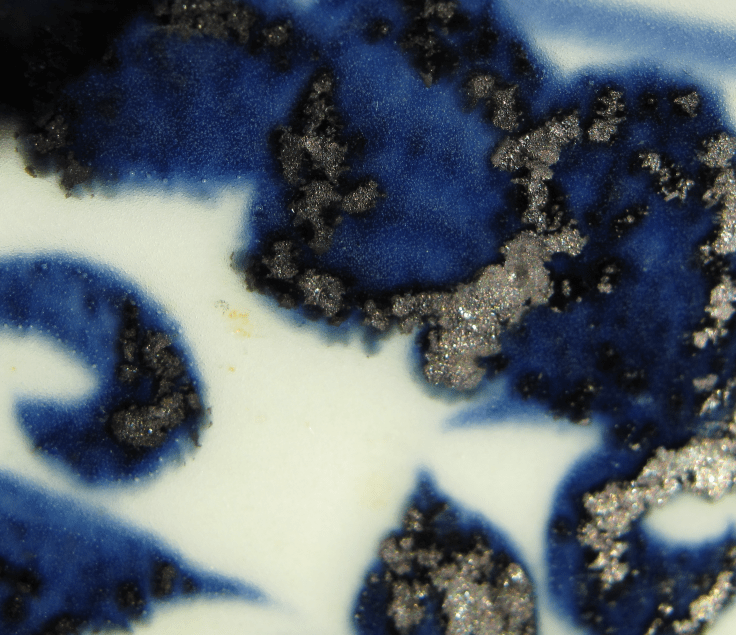
It is a tankard that I am going to show you. It is rather small, measuring only 13.3 cm in height. It is not very rare, but I would not say that it is commonly seen either (Figure 1 and 2).IMG_5630 (12)

read more 

Blog at WordPress.com.

Up ↑