Blog

A Blue and White Stembowl, Xuande Mark and of the Period

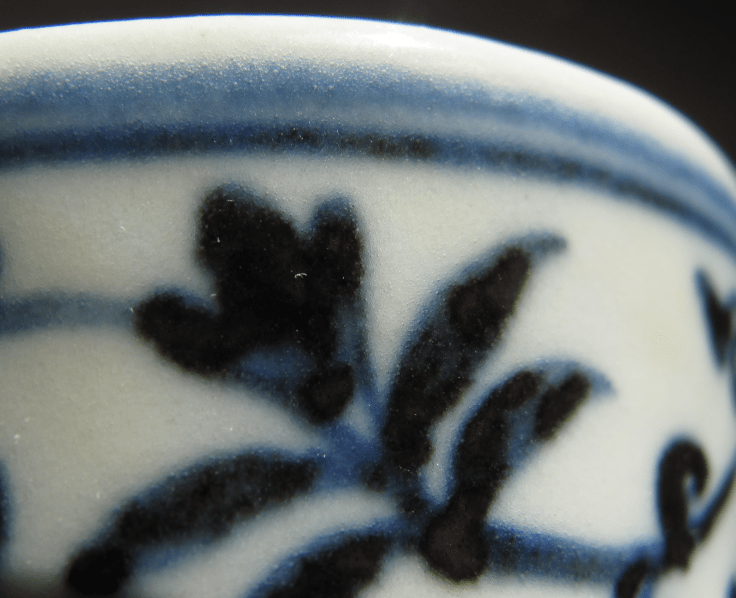
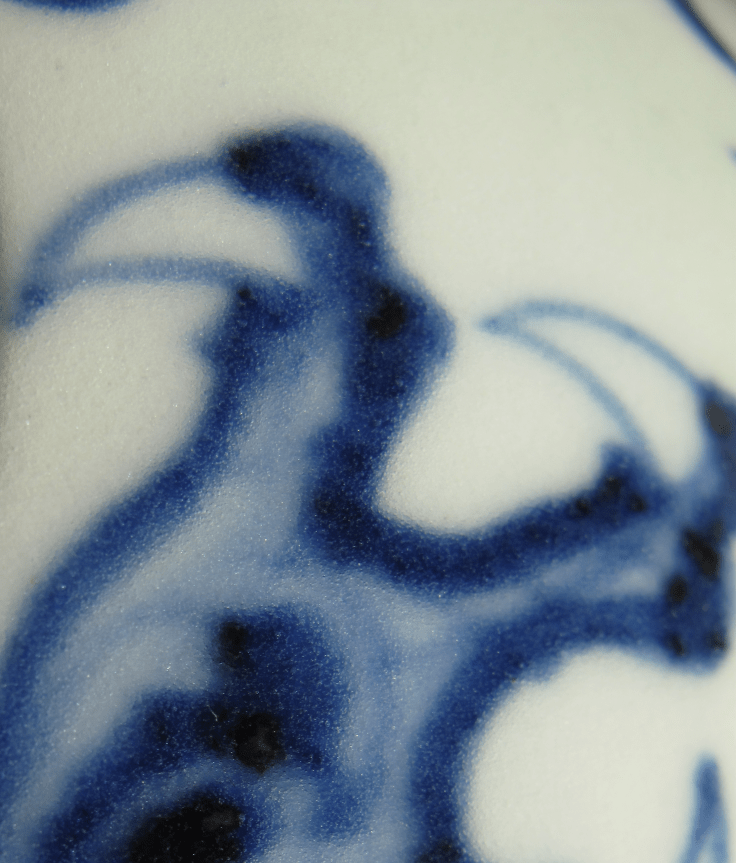
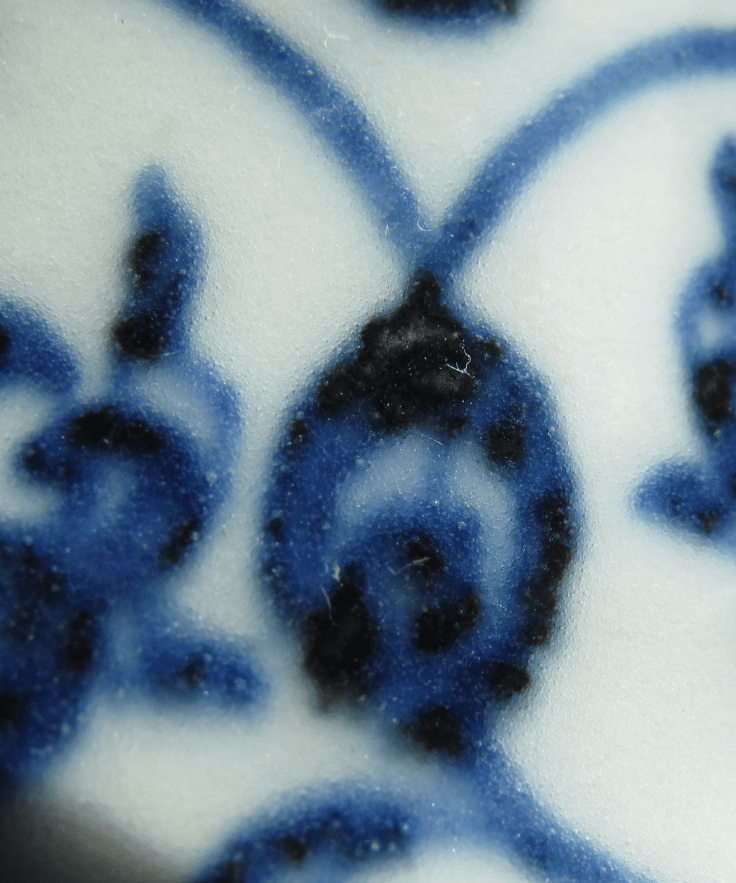
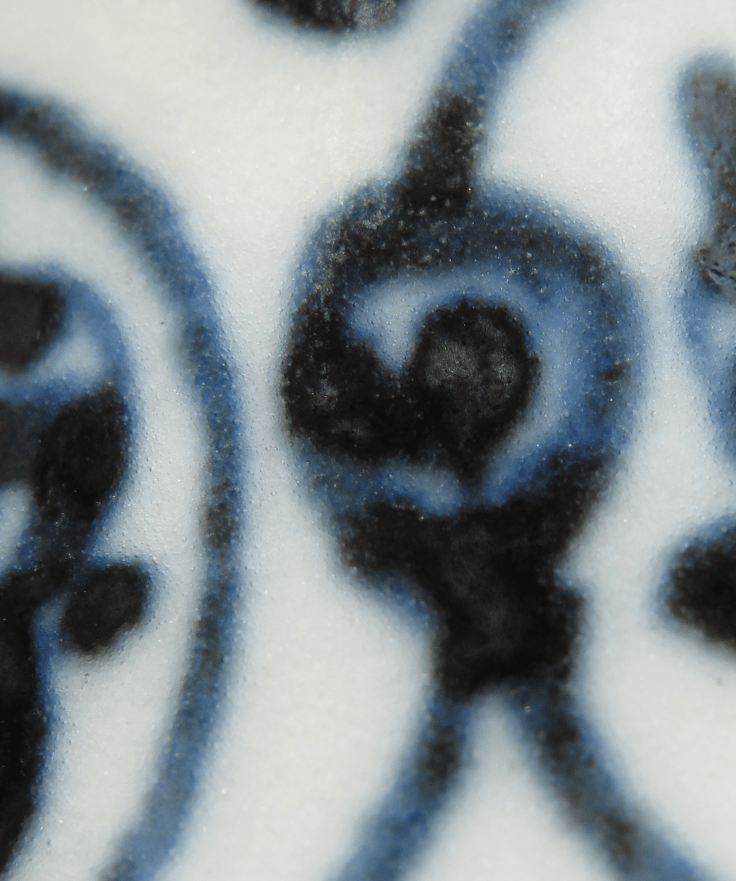
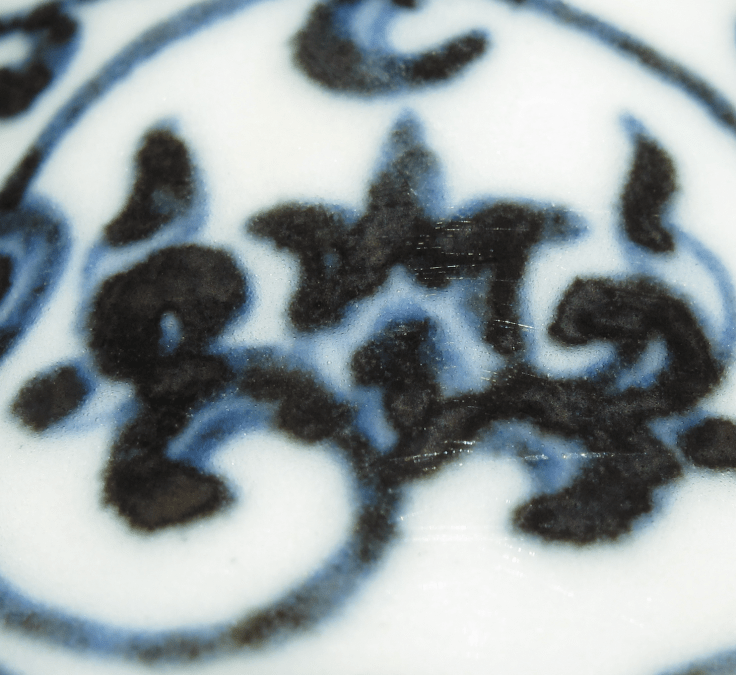
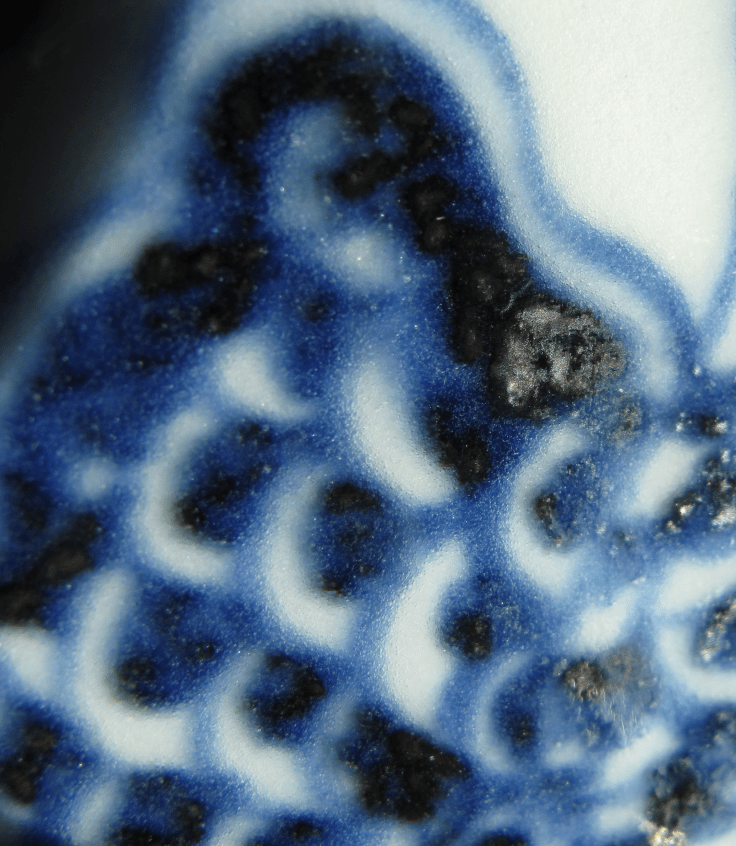
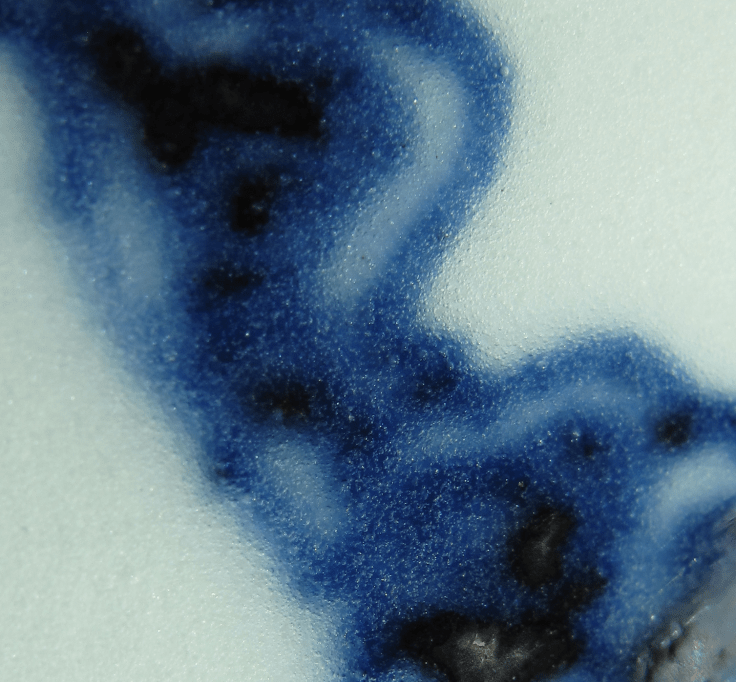
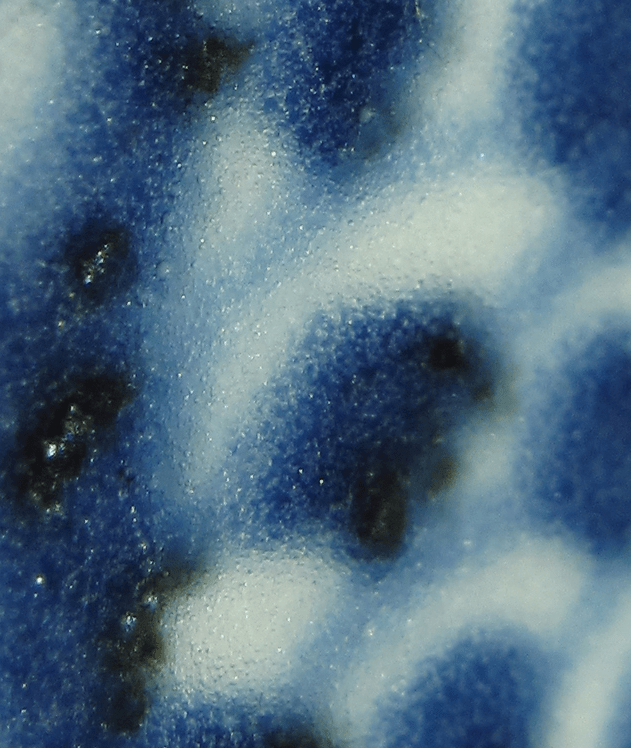
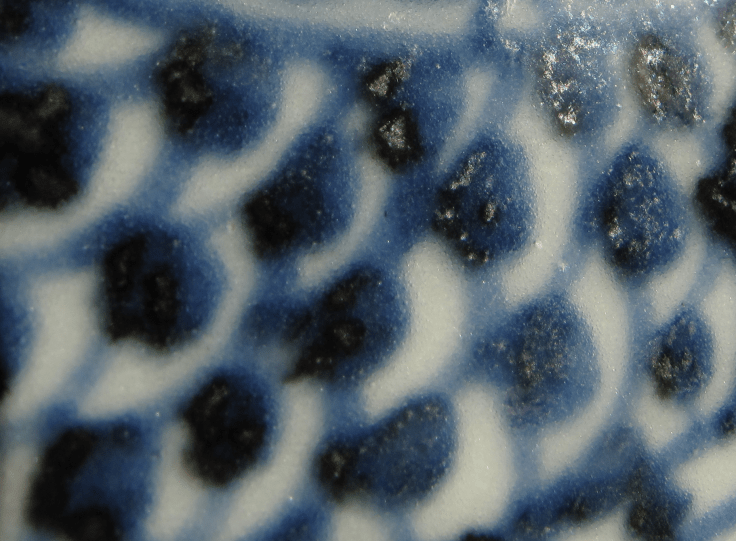
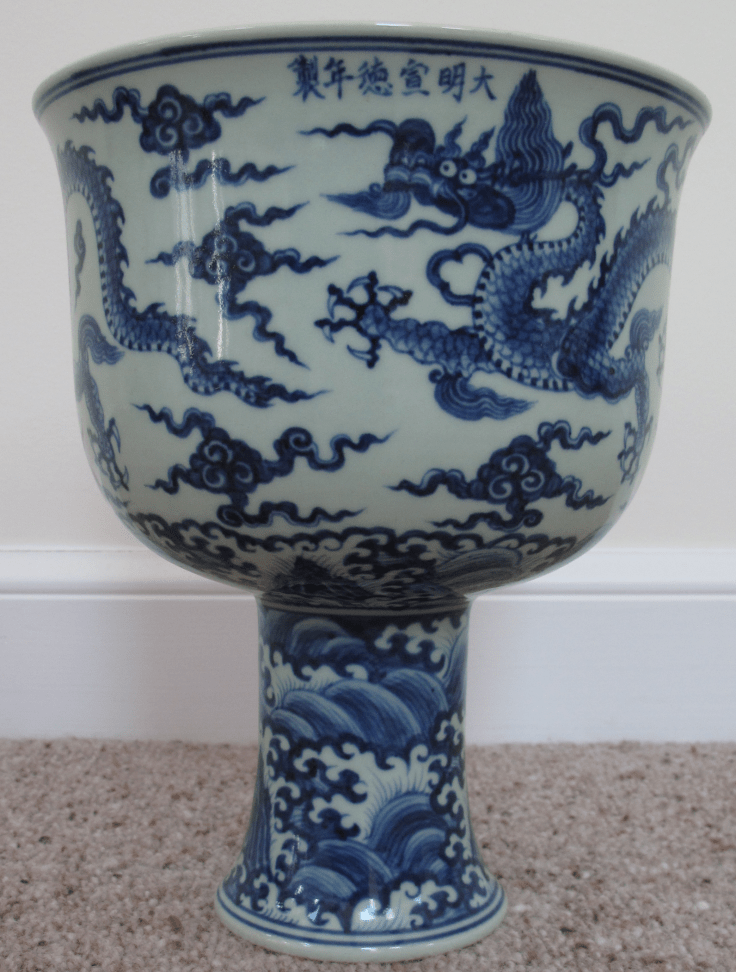
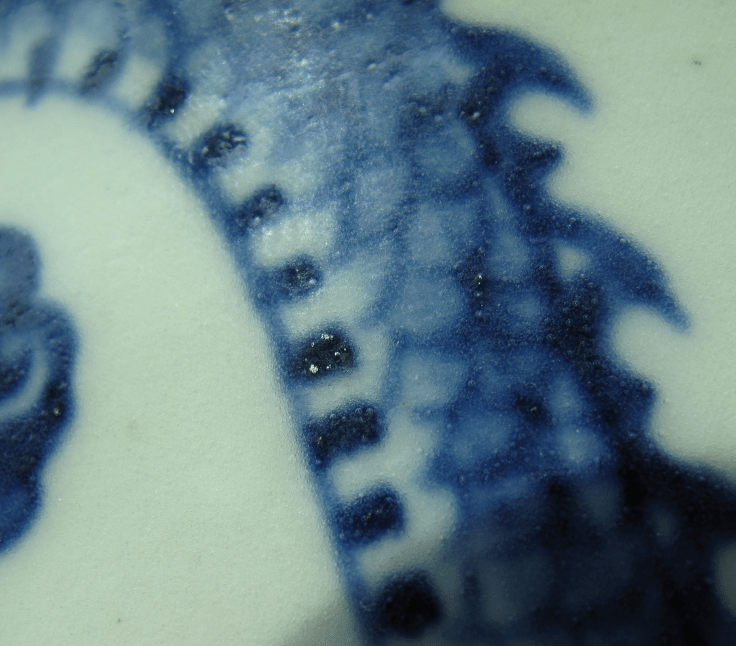
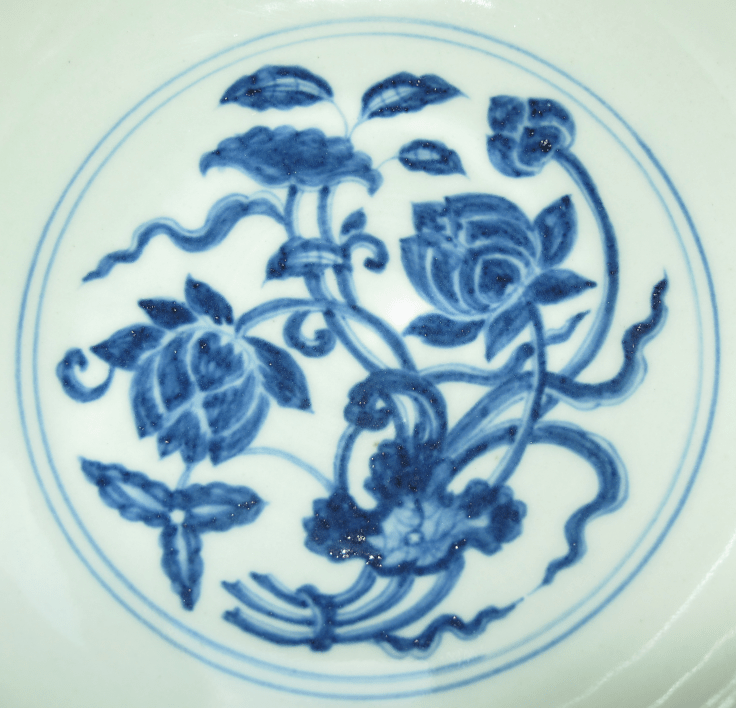
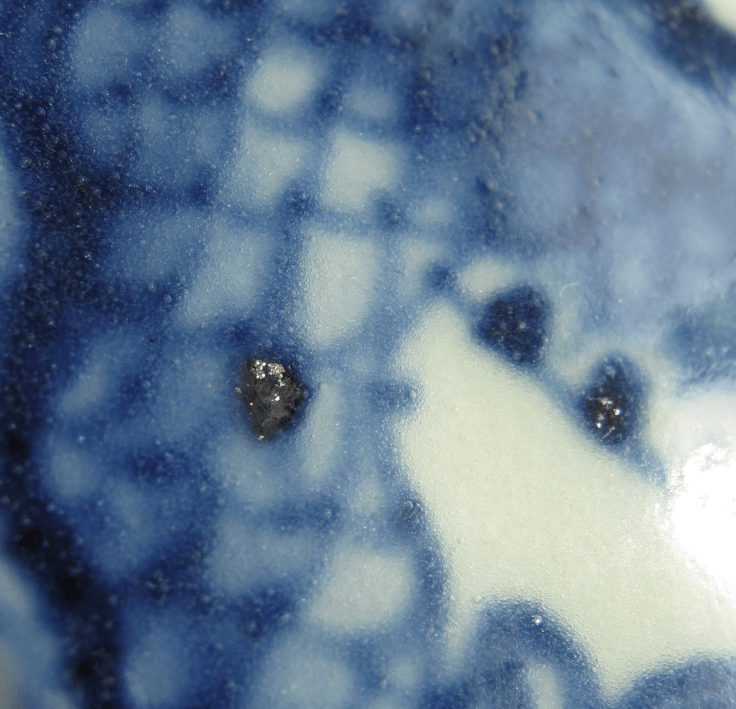
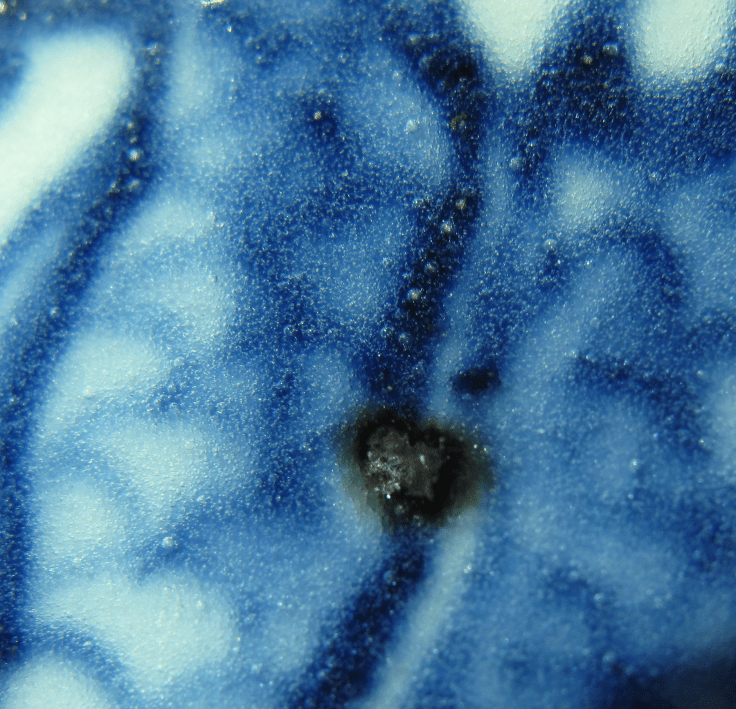
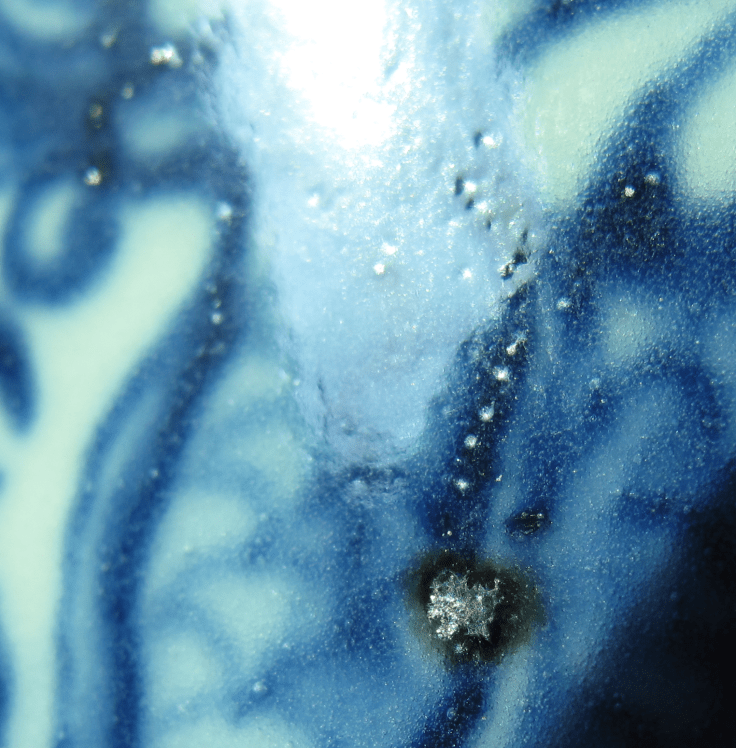
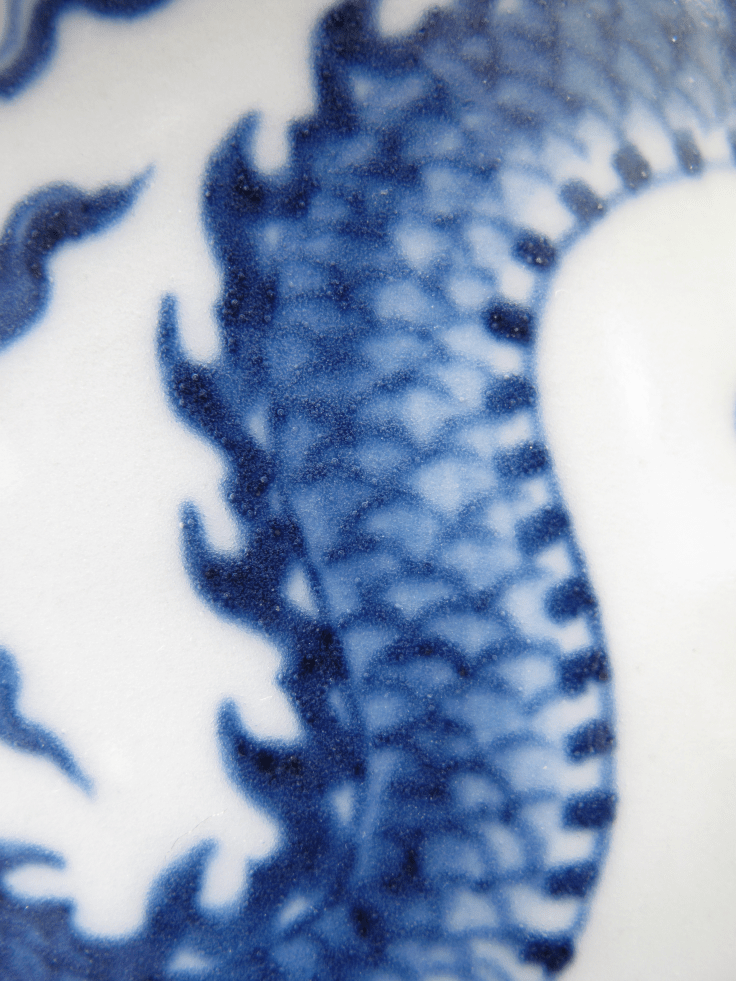
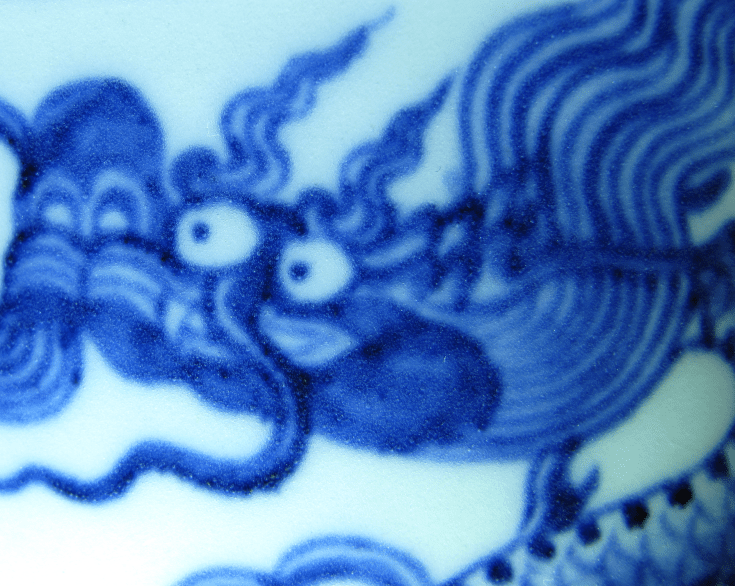
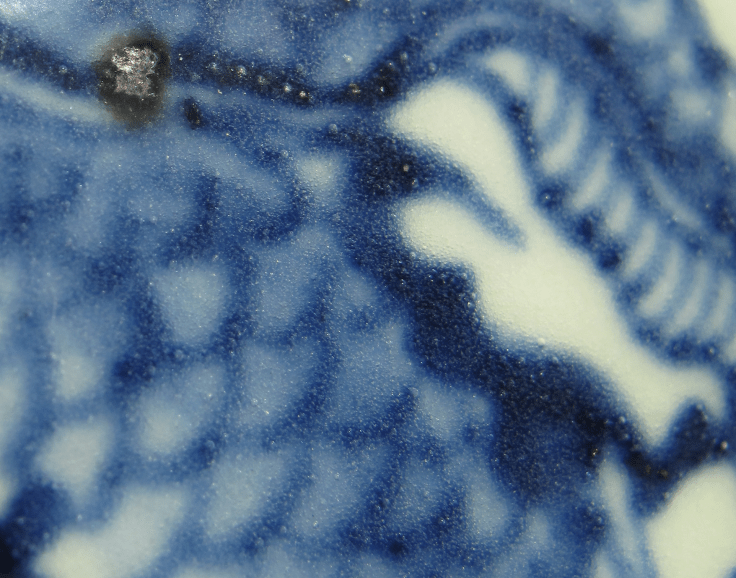
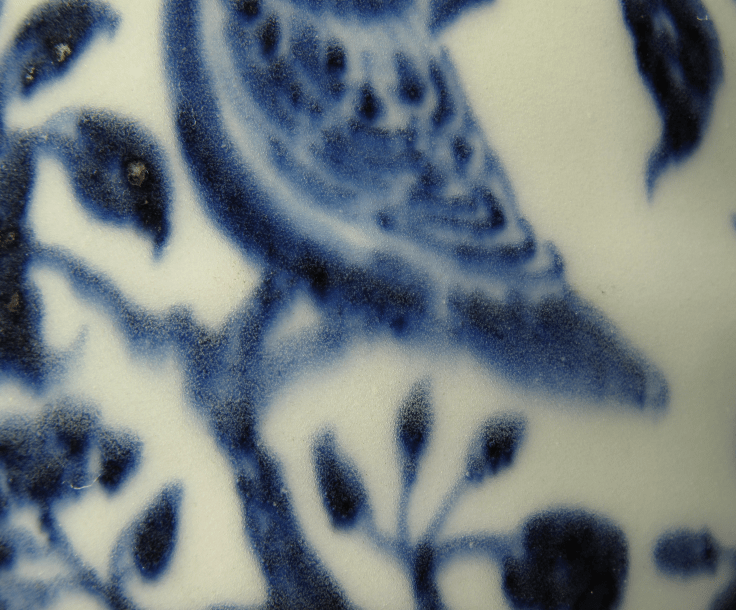
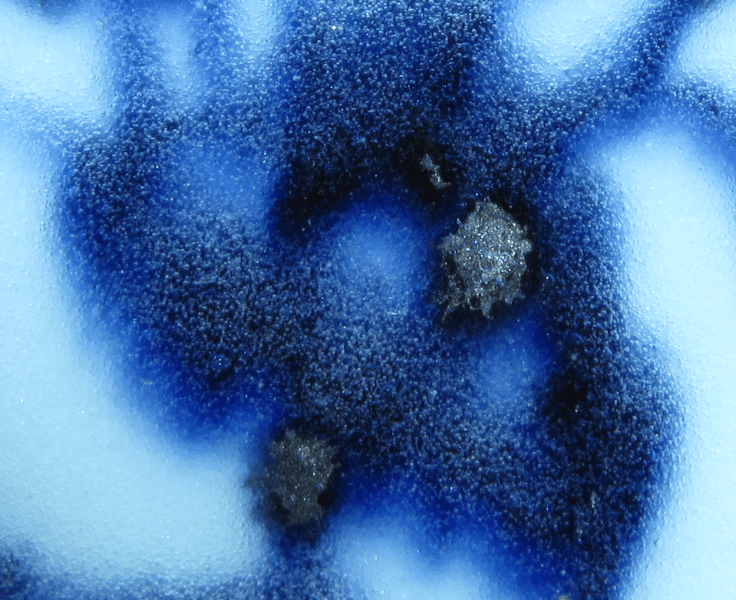
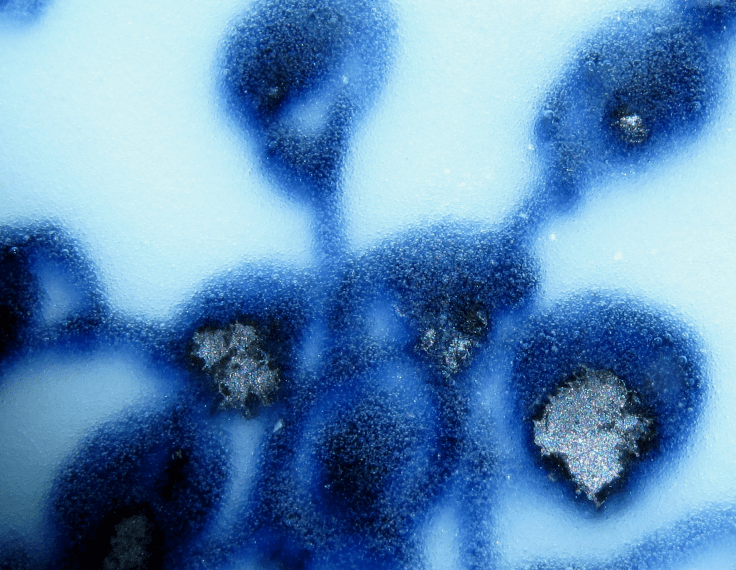
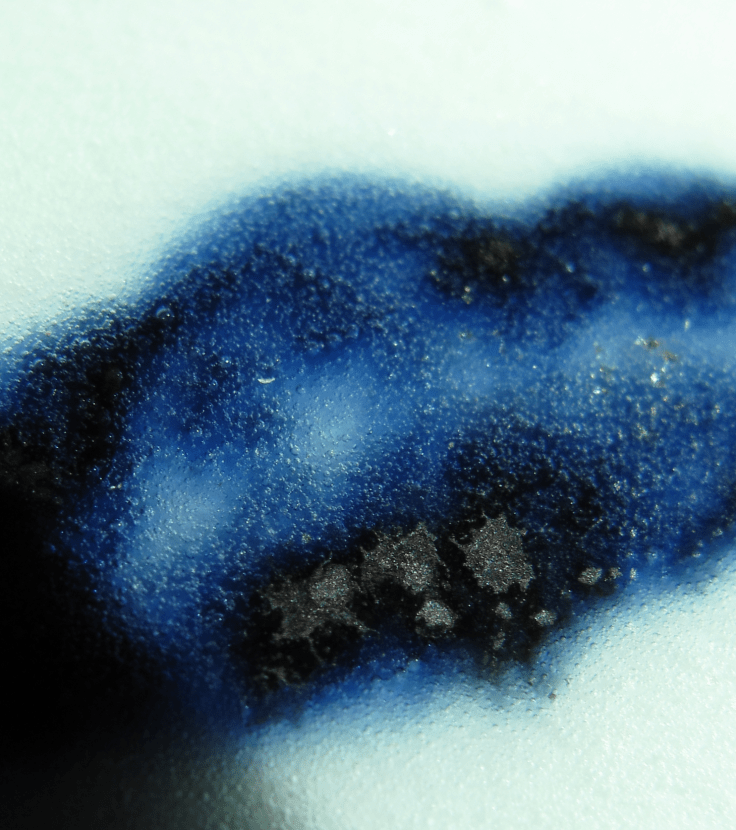
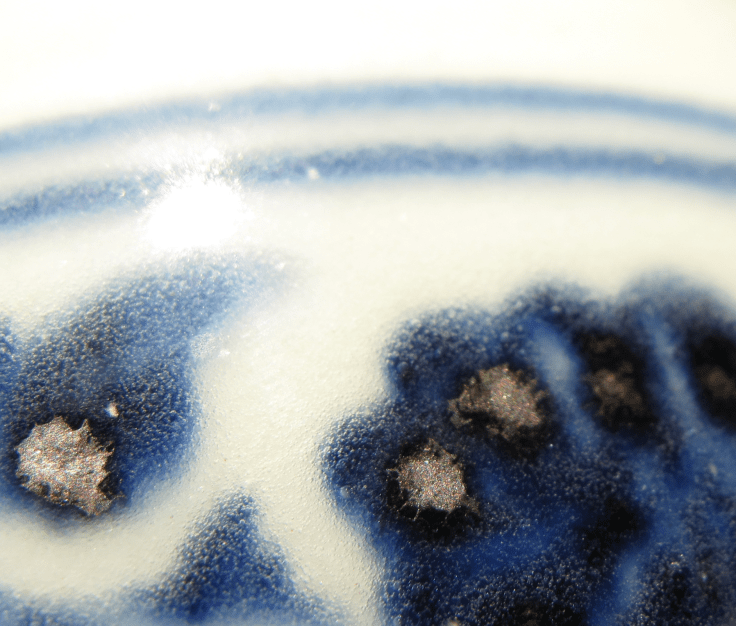
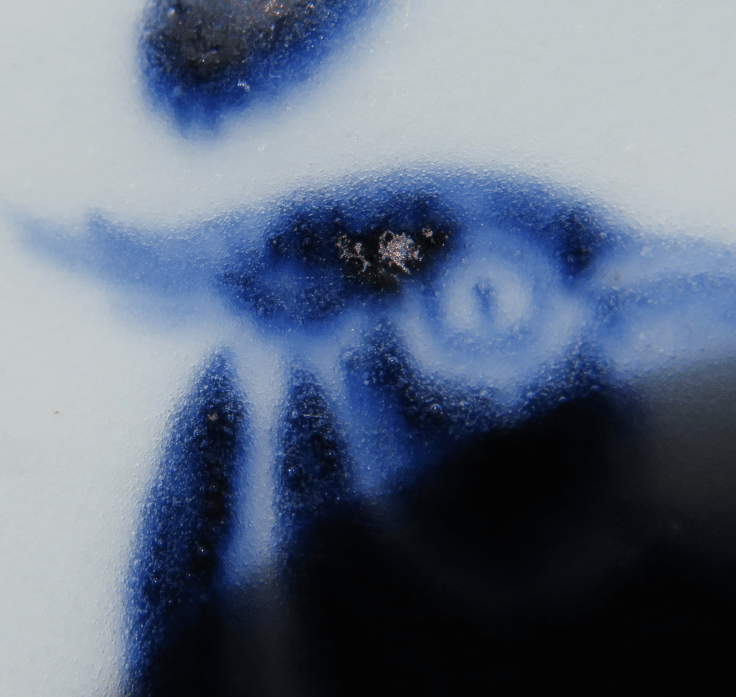
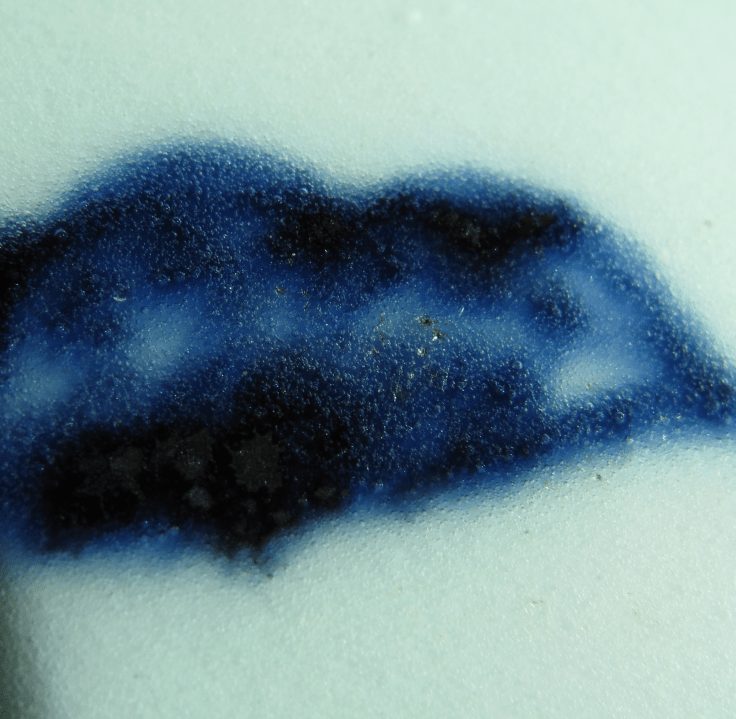
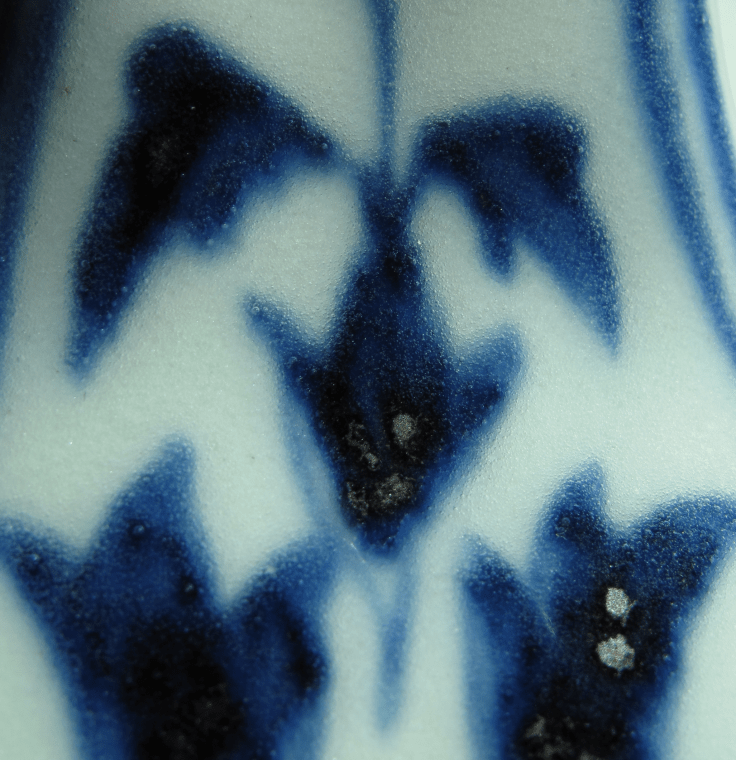
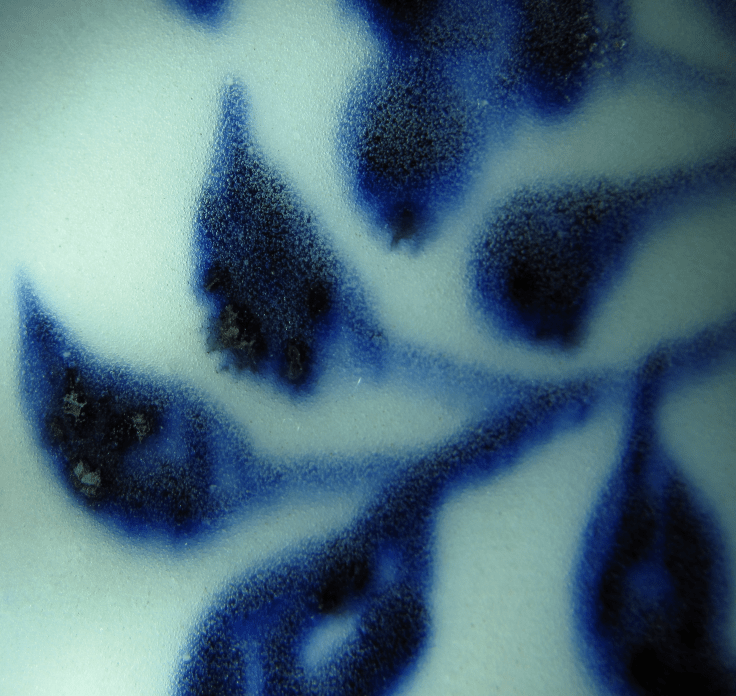
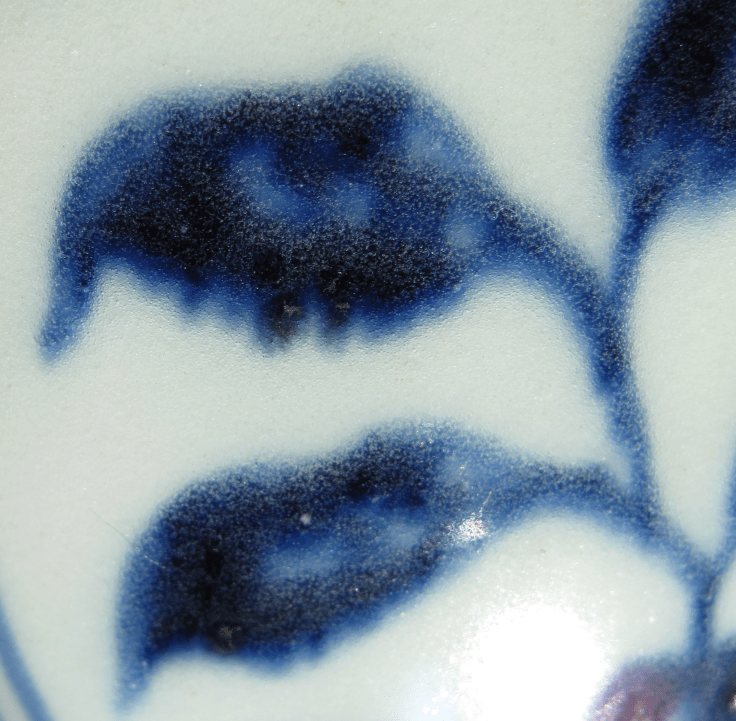
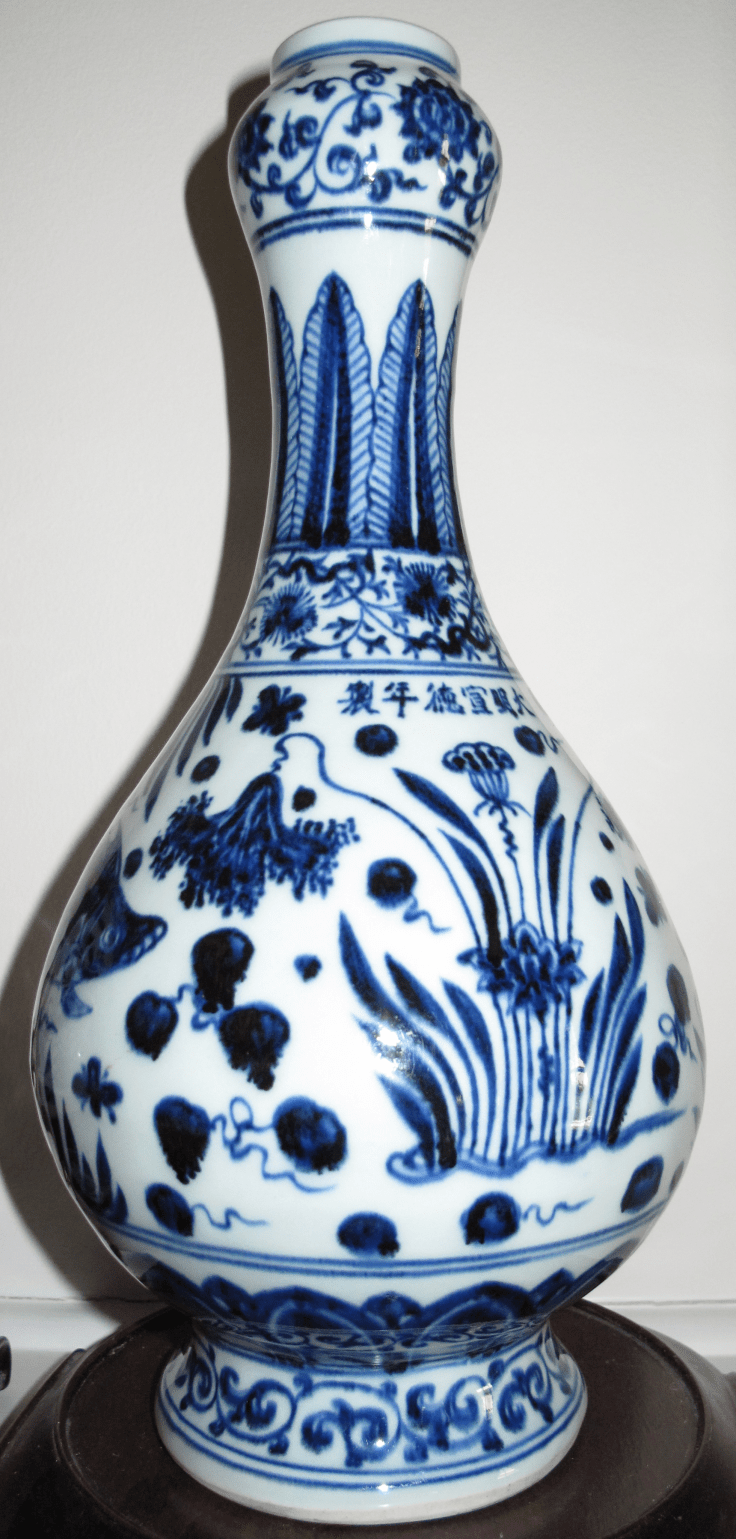
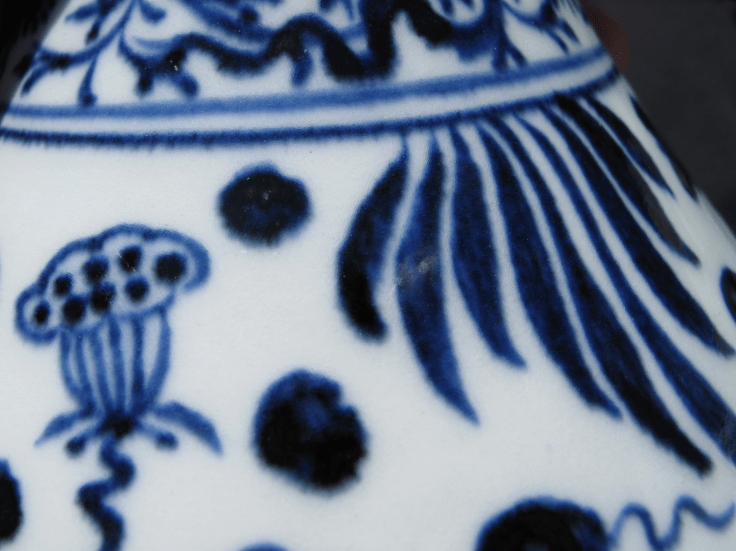
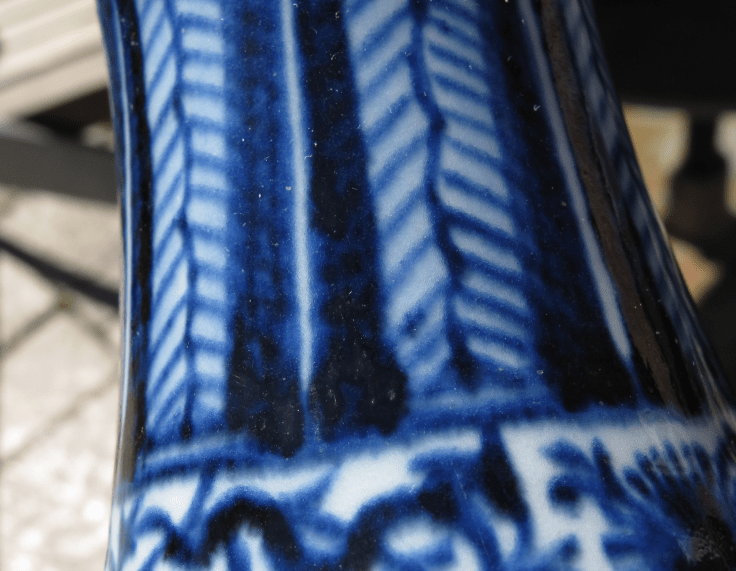
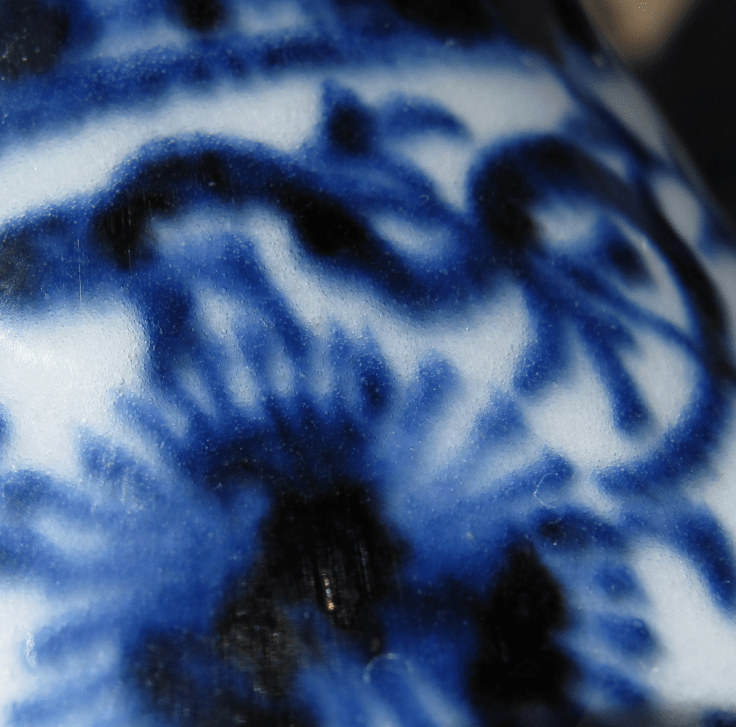
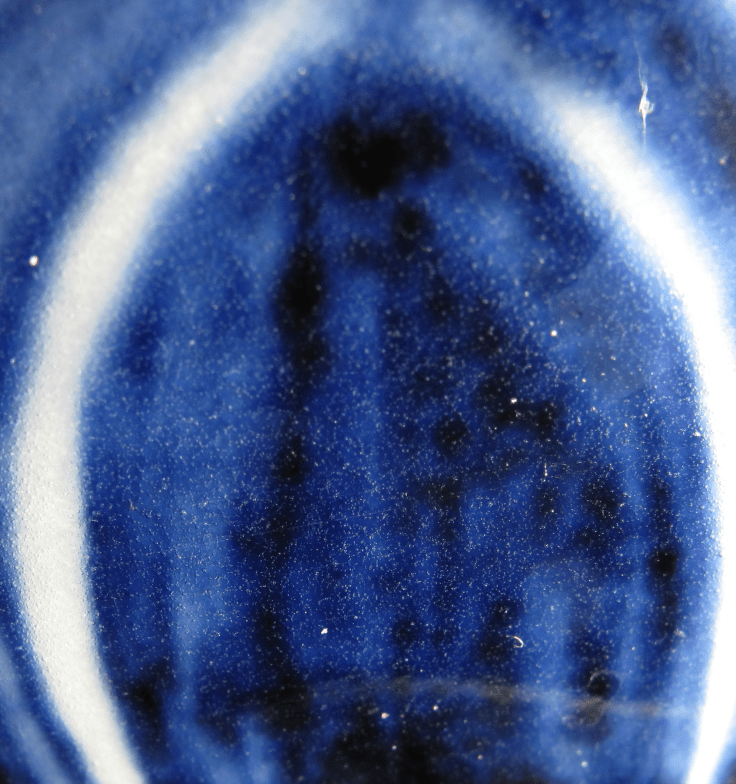
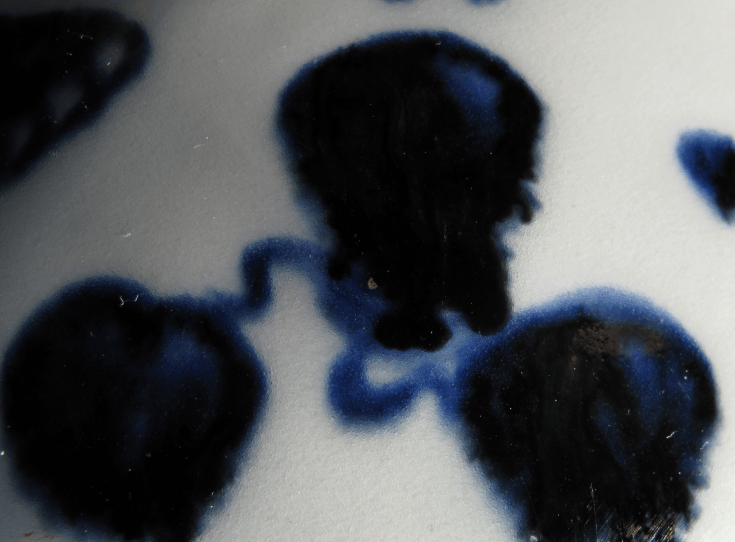
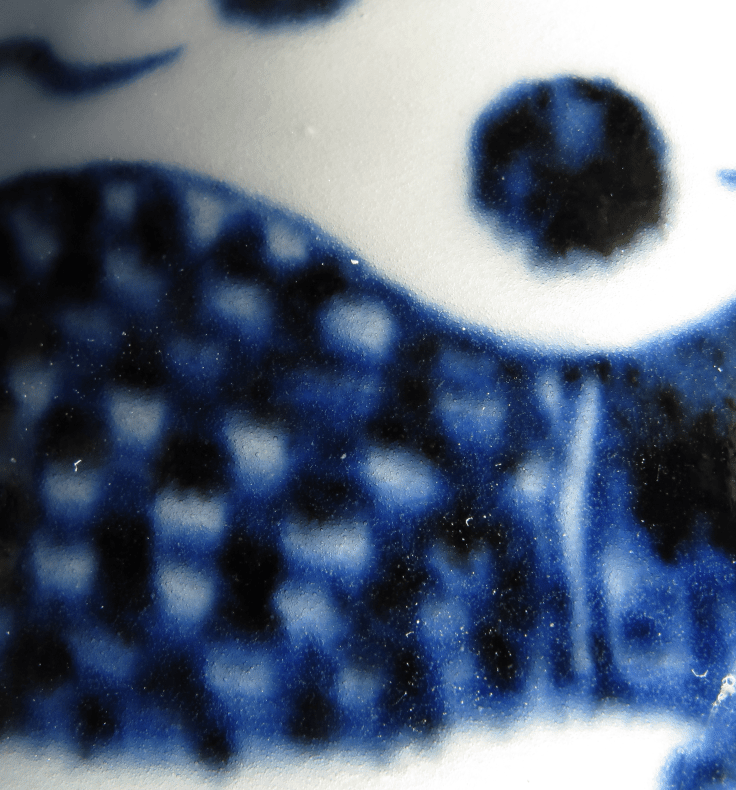
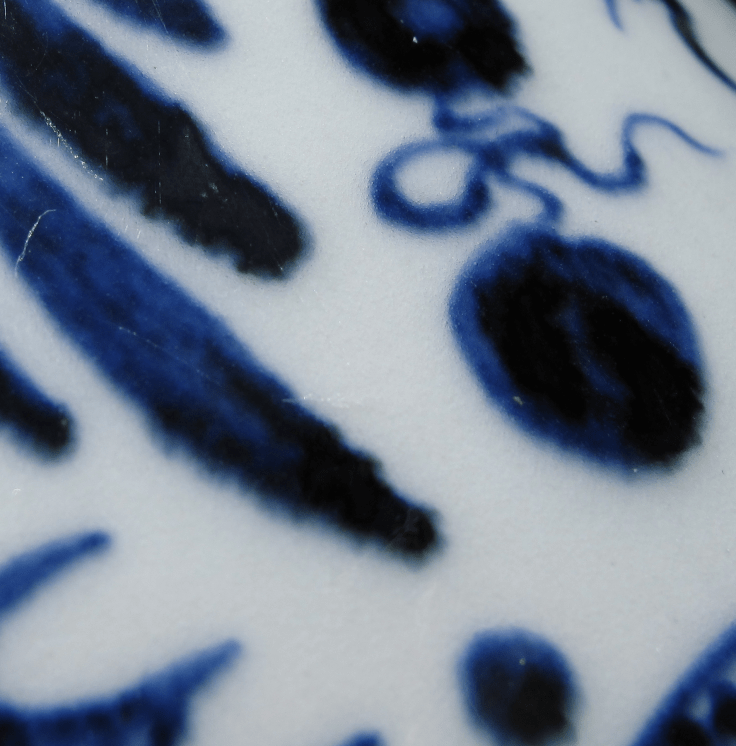
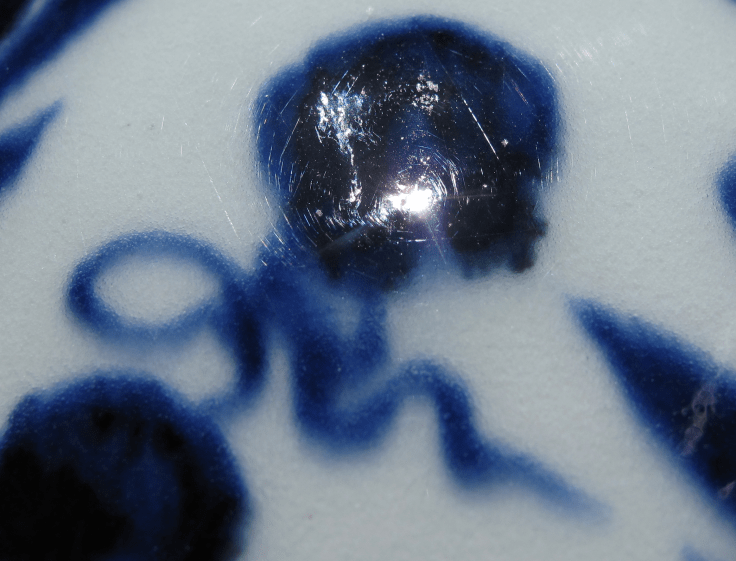
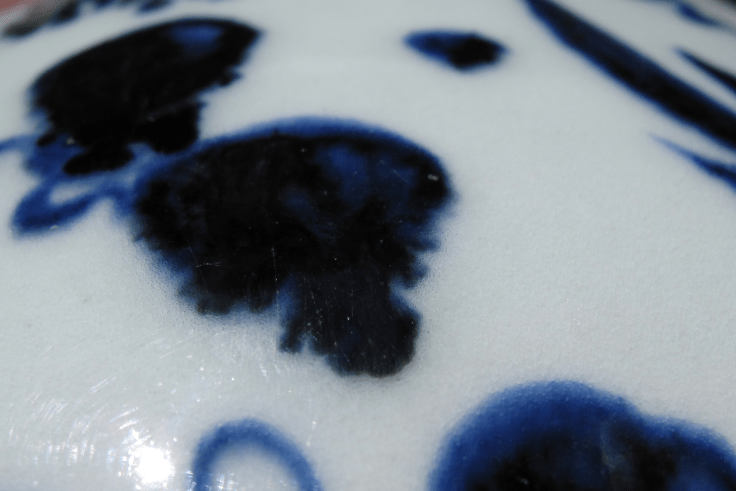
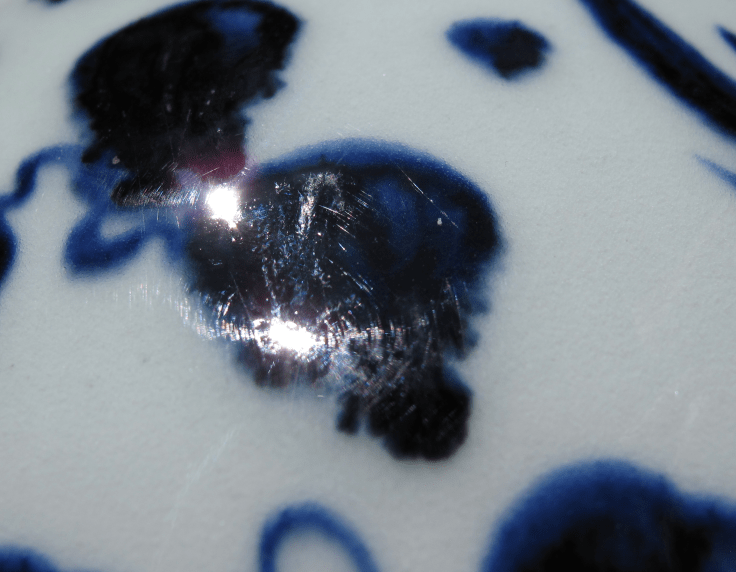
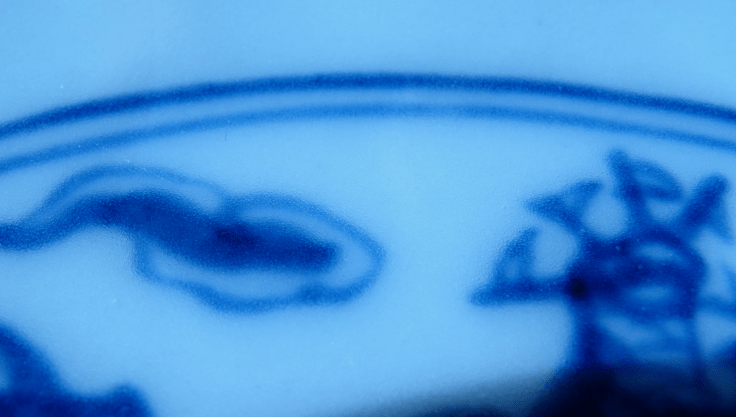
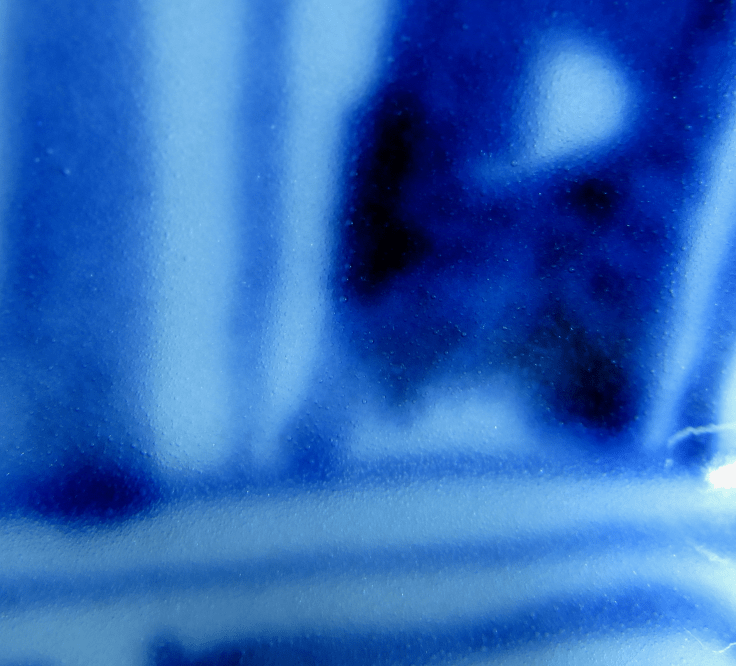
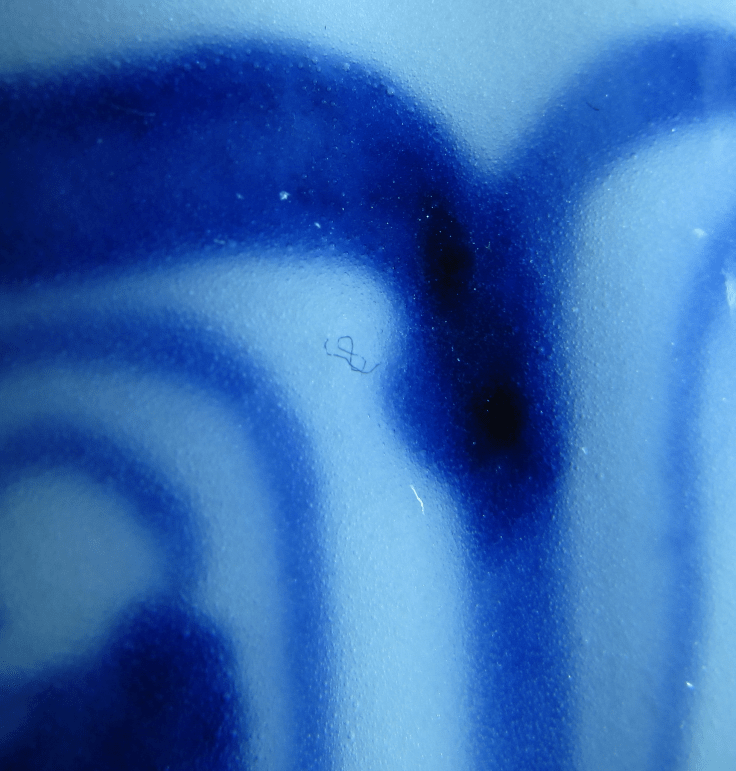
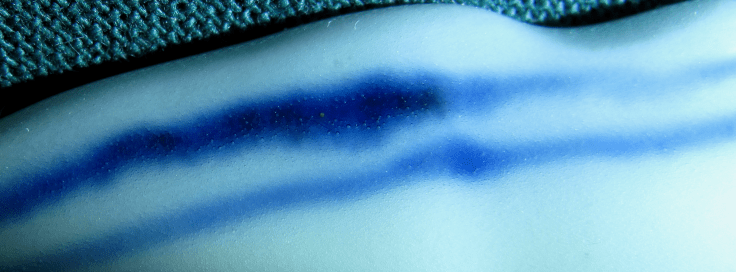
I have shown you the plaques of the Sumali Blue dye in my previous articles. They vary a lot, and I can tell you that the variation is almost limitless. But with these variations, they do have some pattern to follow. With the Yuan Blue and Whites, they often have large shiny aluminum-like plaques, and the underlying muddy layer is often concealed. With Yongle and Xuande, the metallic-like layer is often not large enough to cover up the underlying muddy layer. And in some of the wares, the large muddy layer is the only remains of a plaque—a muddy layer without any metallic sheet on top. The muddy layer also varies. In some, it is clearly seen. Whereas in other cases, the muddy layer is but some blackish patch among the dark blue color, so that it is very inconspicuous. In what I suppose to be the late Xuande period B & W, these muddy layer can be very small, like a tiny dot. But you can detect it when you see it glitter at a certain angle under the sun.Without direct sunlight, these spots become a dimple. They are not difficult to detect. I’ll now show you a ware with these features. It is a blue and white stem bowl (Figure 1). It stands at 9 inches tall.


IMG_3183.pngFigure 1

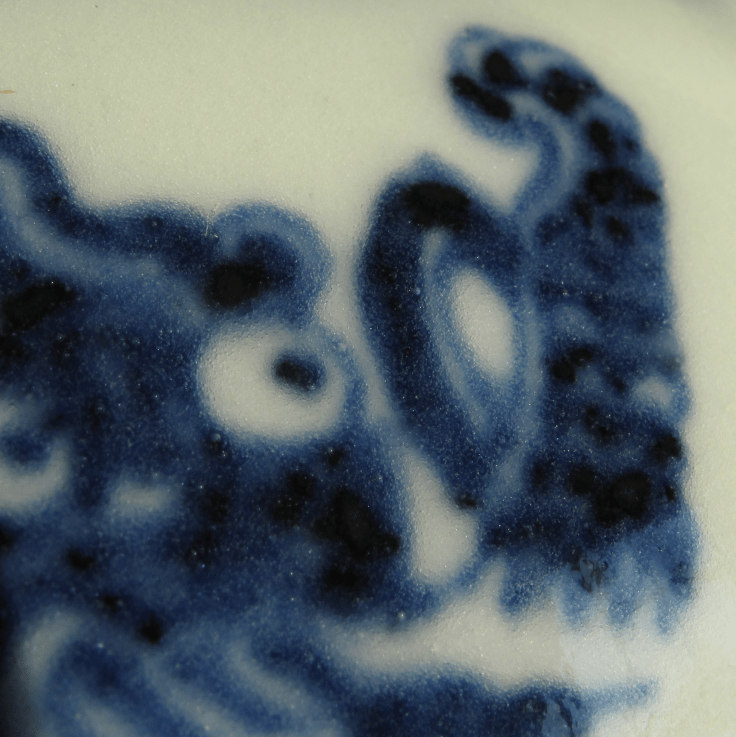
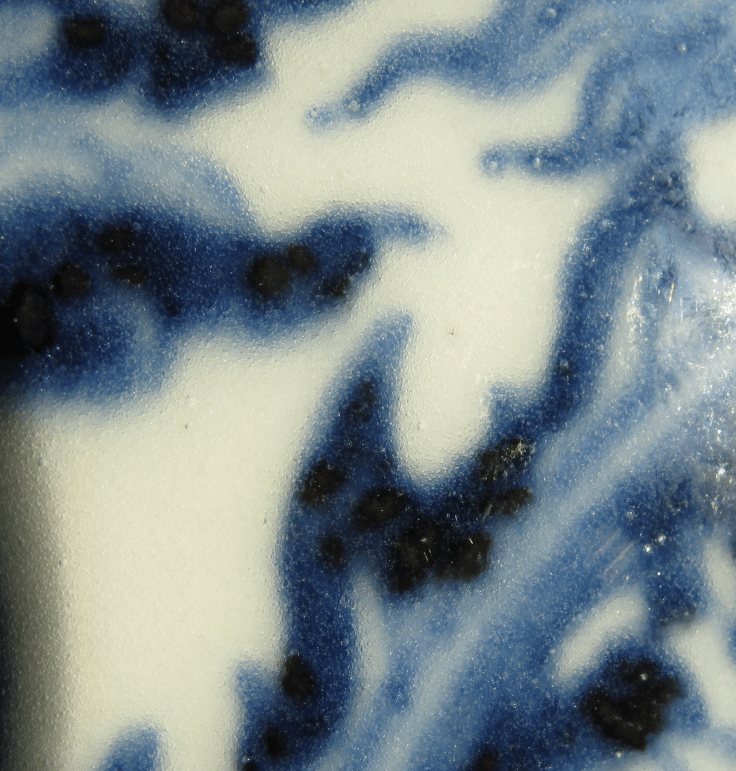
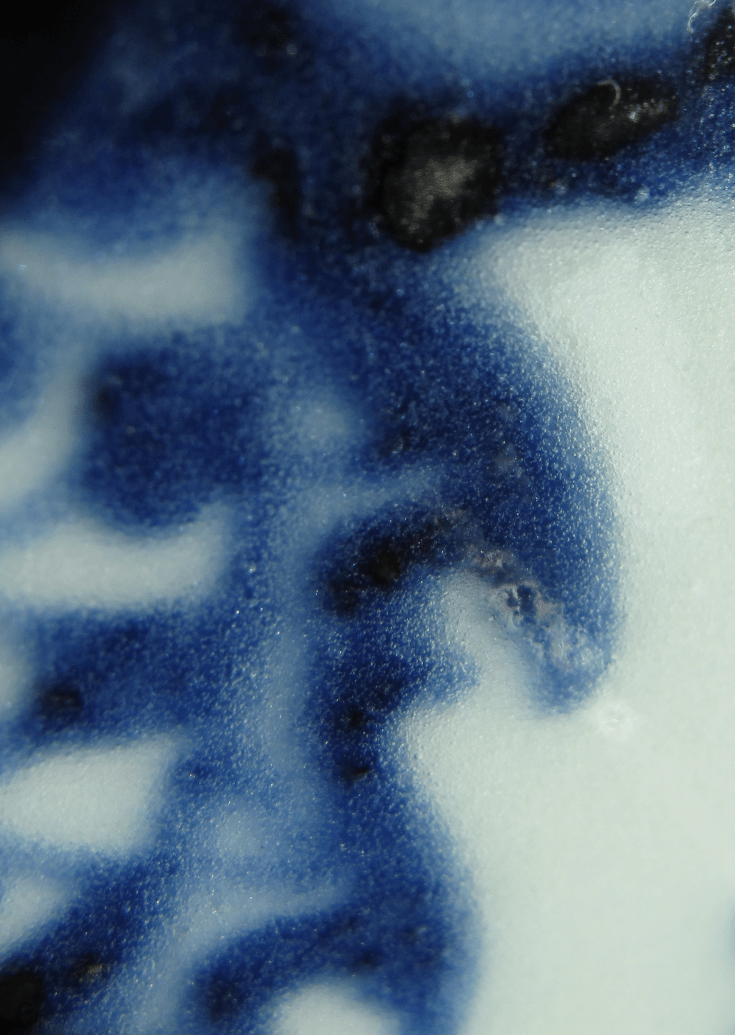
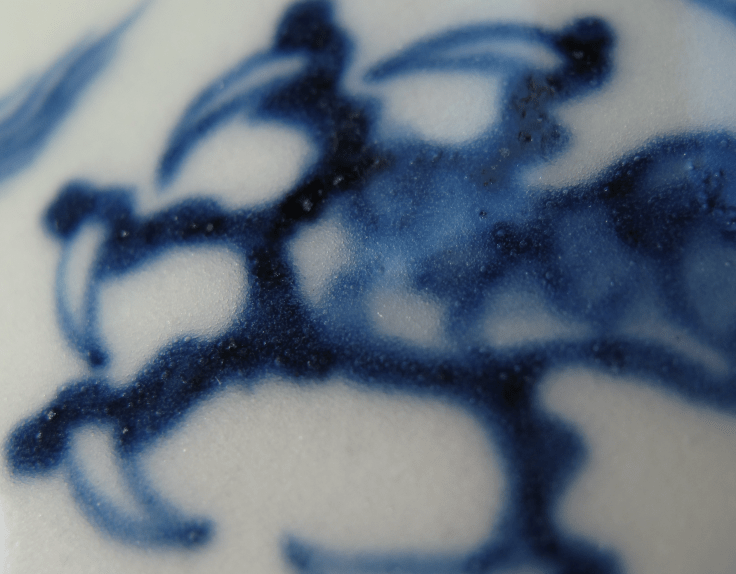
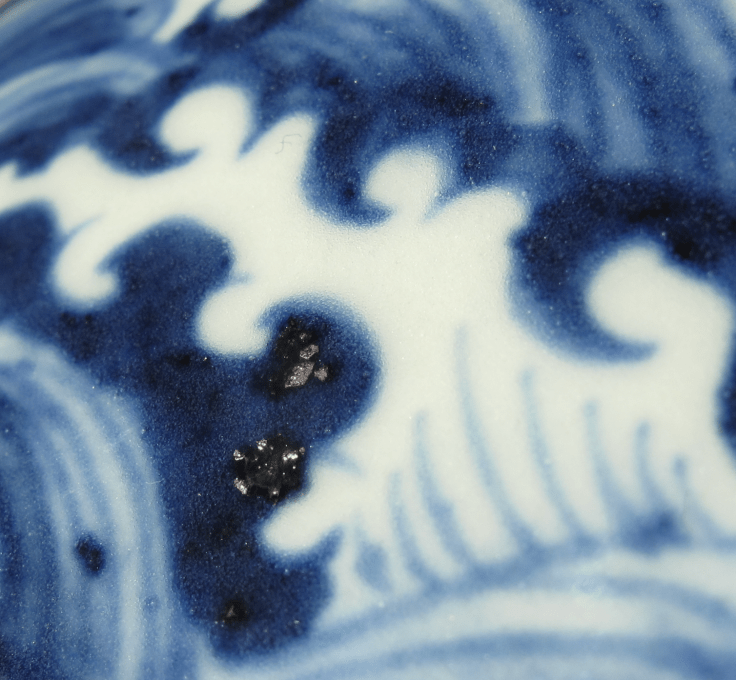
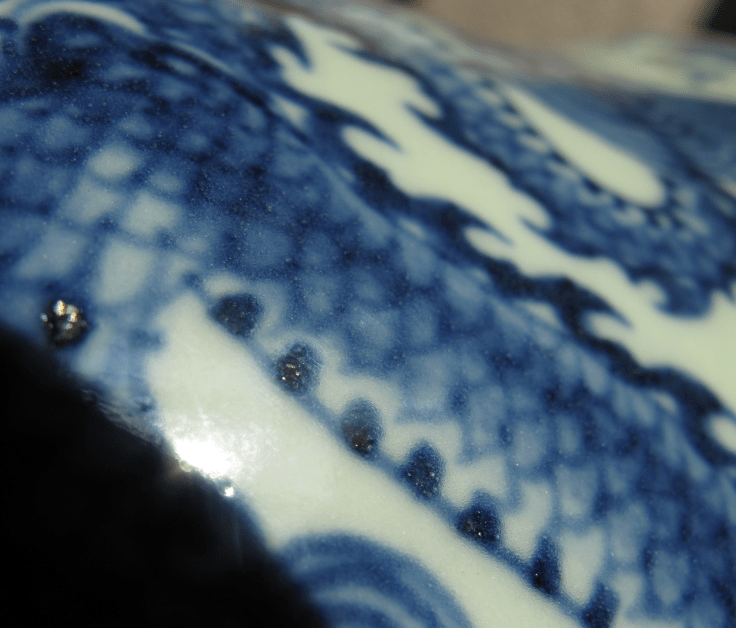
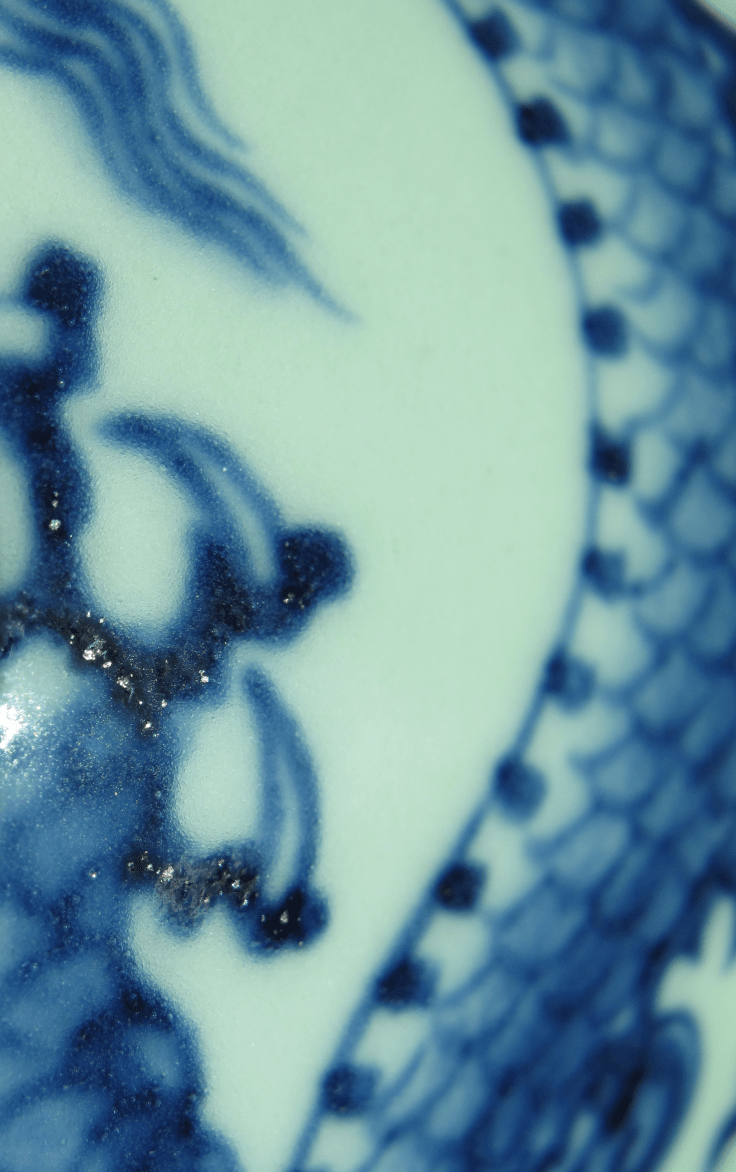
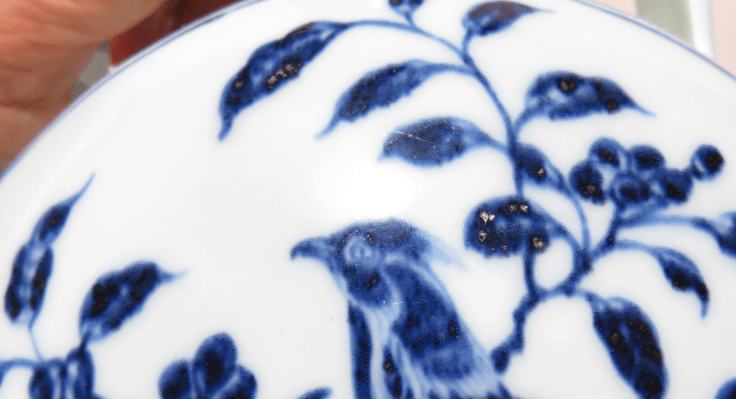
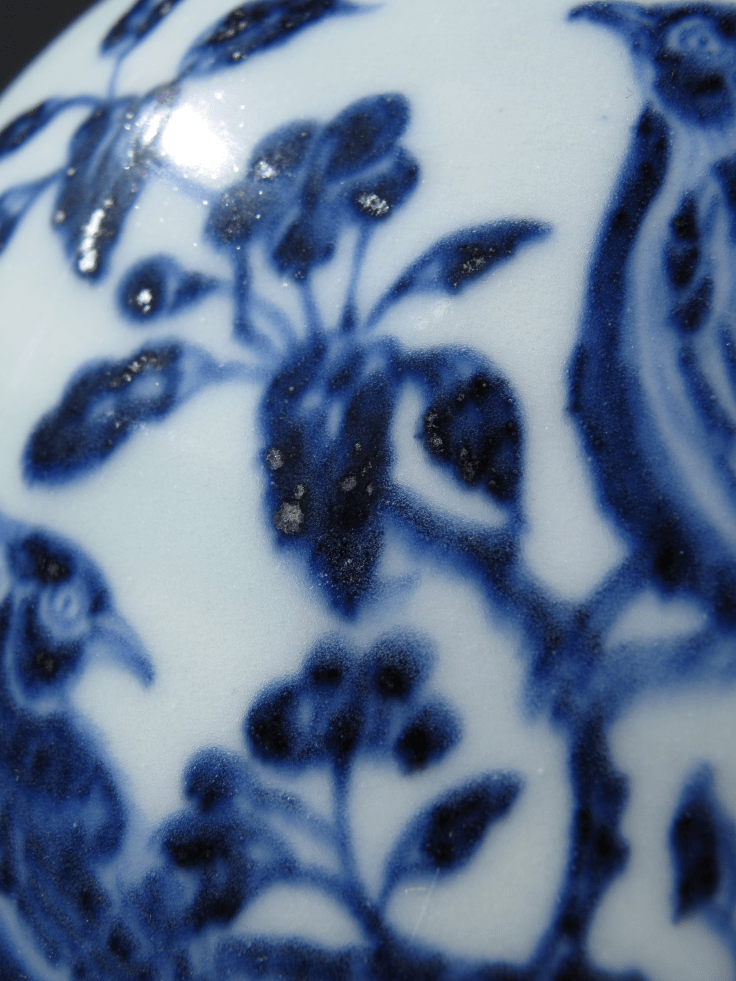
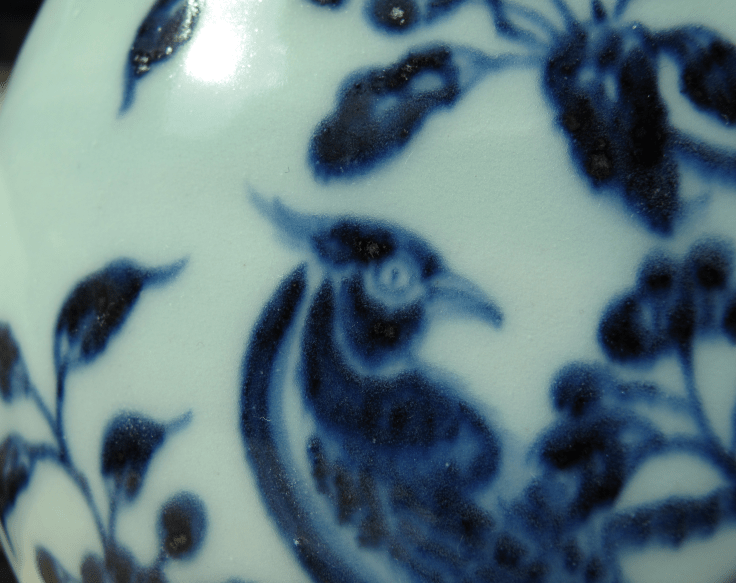
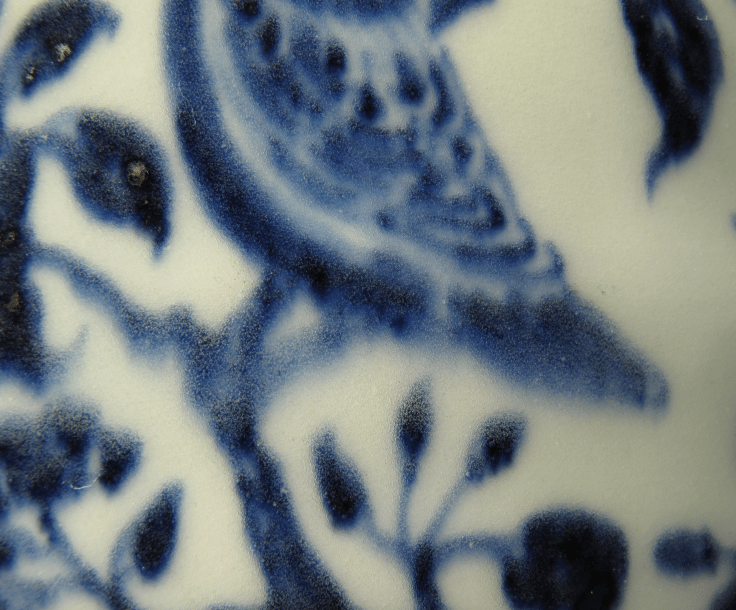
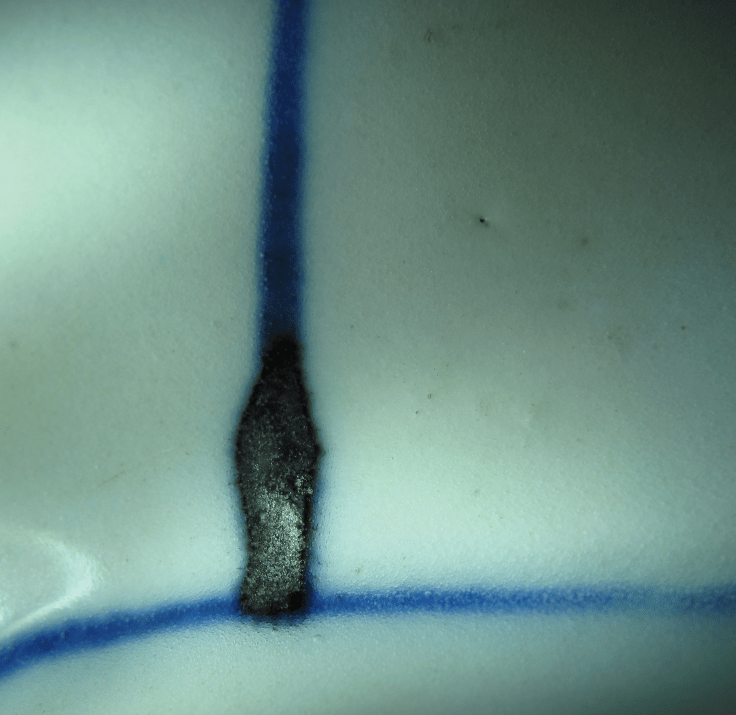
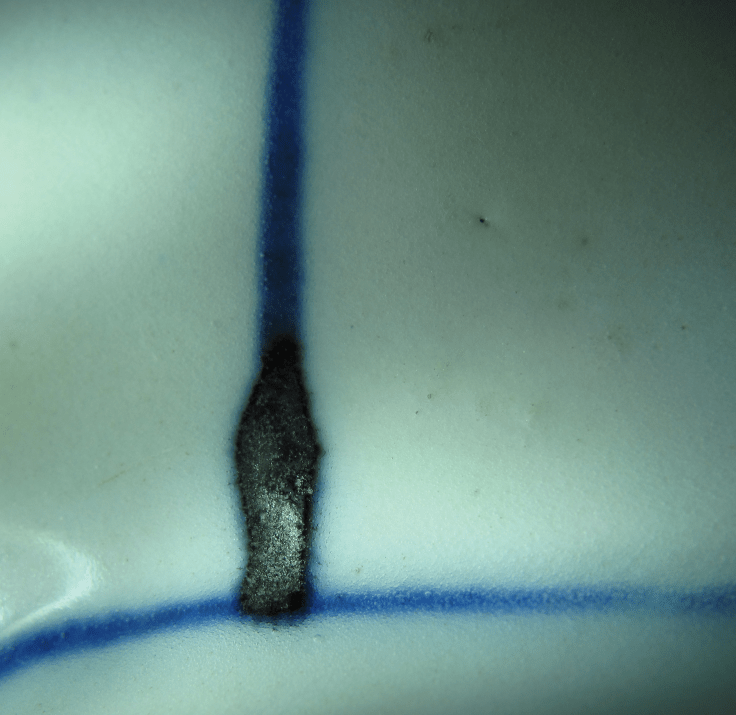
Let me first show you a few photos with these rather small plaques (Figures 2-8). Figure 8  is from the bottom of the inside of the bowl.


IMG_3194.pngFigure 2  


IMG_1031.pngFigure 3  


IMG_1039.pngFigure 4  


IMG_1061.pngFigure 5  


IMG_3579 (1).pngFigure 6  


IMG_6018.pngFigure 7  


IMG_1043.png Figure 8   

Look at these plaques, which are in fact the muddy layer without the shiny metallic sheet on top, are they not quite different from those that I have shown you in my previous articles? In this stem bowl, most of the plaques are similar to these, very small. But there are a few instances where the plaques are slightly larger, as shown in the photos below (Figures 9-11).


IMG_6022.pngFigure 9  


IMG_6023.pngFigure 10  


IMG_6024.pngFigure 11  

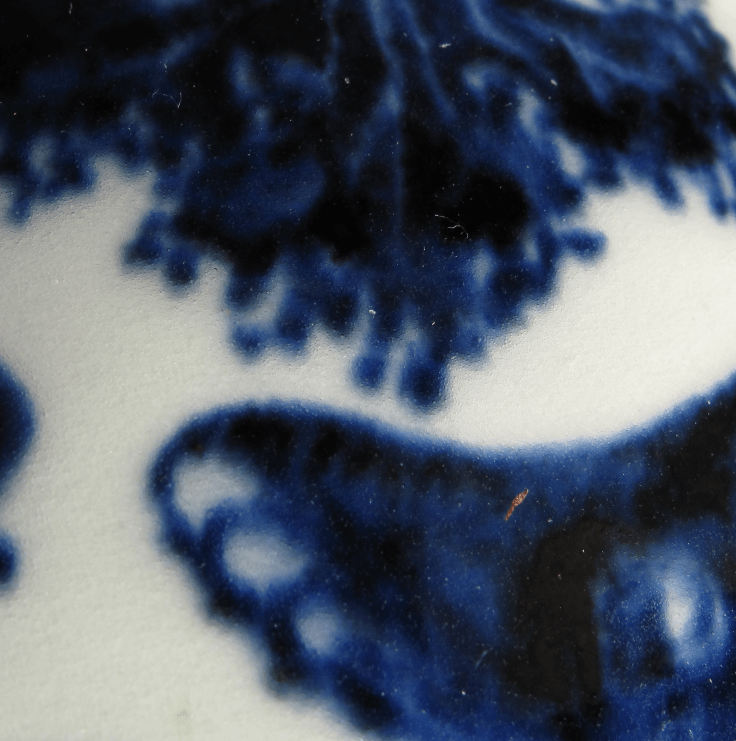
As you can see, the plaques here are bigger, but still they are small. Figure 10 and Figure 11 are taken from the same spot. But you can see the flair emitting some green coloration. I have told you quite a number of times before that when the blue dye pigment emits some green coloration around a plaque, most of the time, it indicates that the dye is of very good quality. In Figure 11, in the out of focus part, you can actually see some dimples—dimples that I refer to in the opening paragraph. You can also see the same kind of dimples in Figure 9.

Here in another photo to show you the dimples.


IMG_6030.pngFigure 12 

Look at Figure 12 again. You can see the large and small bubbles very well. The large bubbles are rather abundant, but not too abundant. I have come to the conclusion after looking at many blue and whites of these three periods, that too many large bubbles may not be very desirable. Here in this stem bowl, I think the number of large bubbles is close to what I call the upper limit of desirable large bubbles in a ware. You don’t really want too many of these. But the large bubbles here are very beautiful.

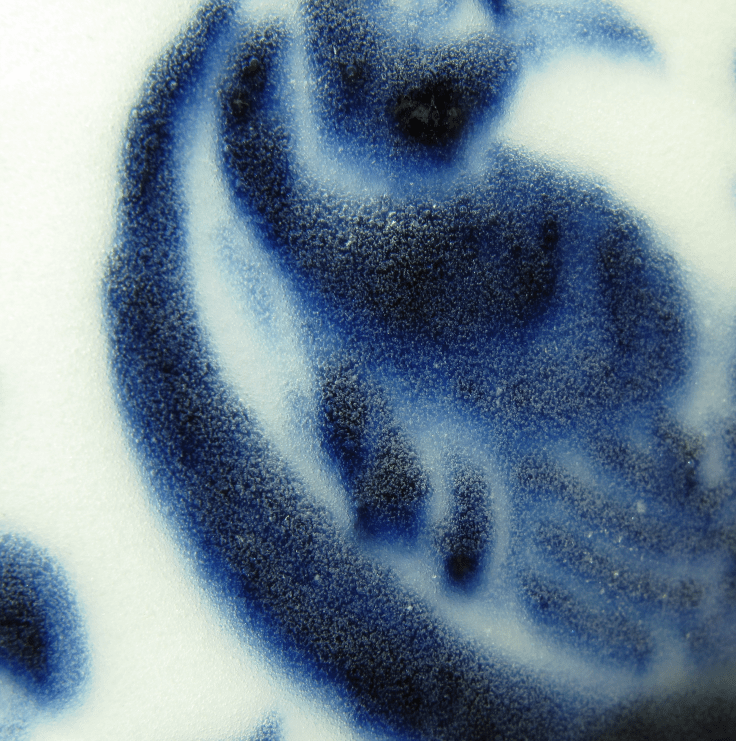
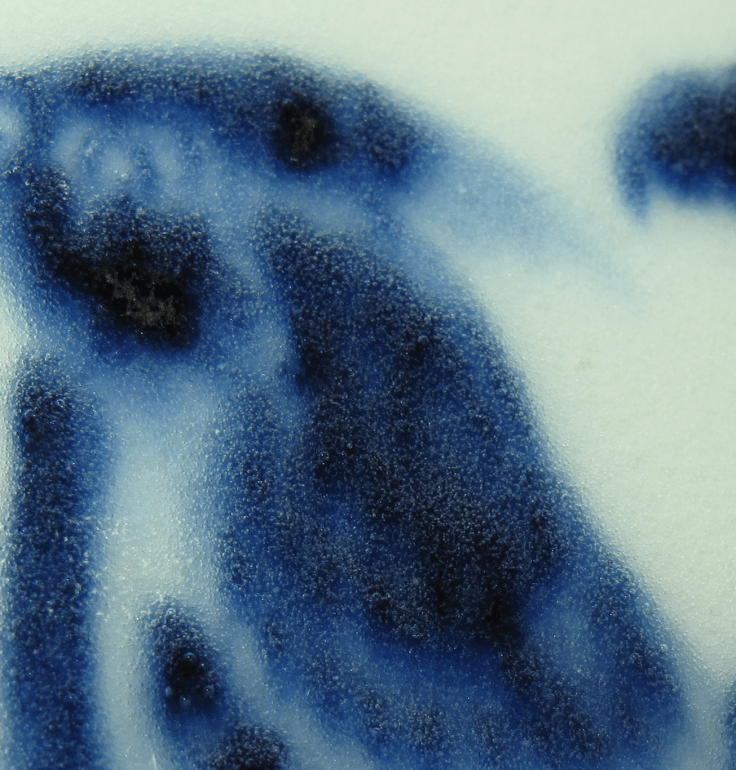
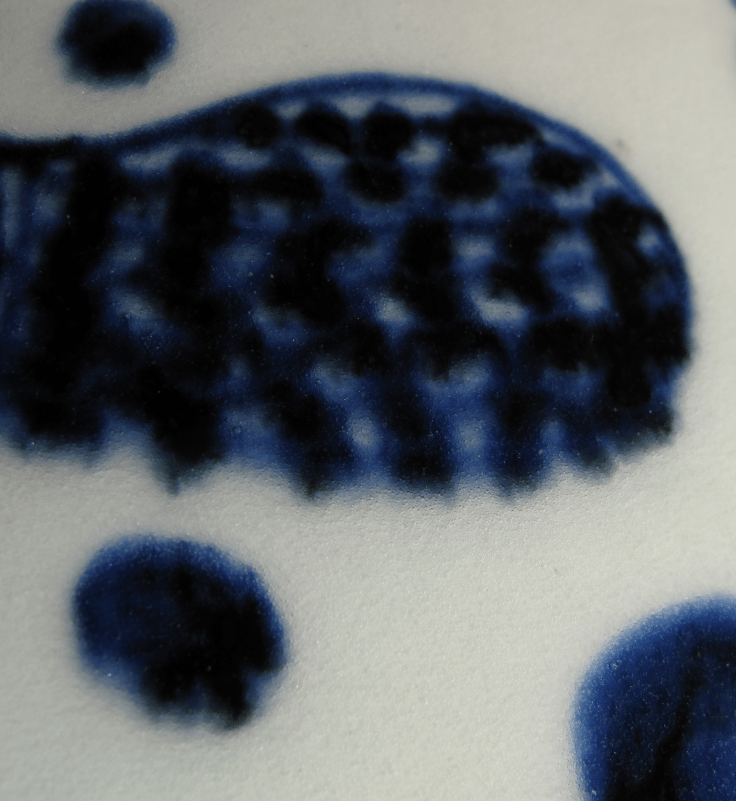
The small bubbles are not very tightly packed, but still, they are quite dense, allowing very nice lacunae formation. Figure 10 is a good example, but I’ll show you more (Figures 13-23).


IMG_5971.pngFigure 13  


IMG_5976.pngFigure 14  


IMG_3224.pngFigure 15 


IMG_1054.pngFigure 16  


IMG_1051.pngFigure 17  


IMG_1047 (1).pngFigure 18  


IMG_1046.pngFigure 19  


IMG_1030.pngFigure 20  


IMG_3218.pngFigure 21  


IMG_3203.pngFigure 22 


IMG_3198.pngFigure 23  

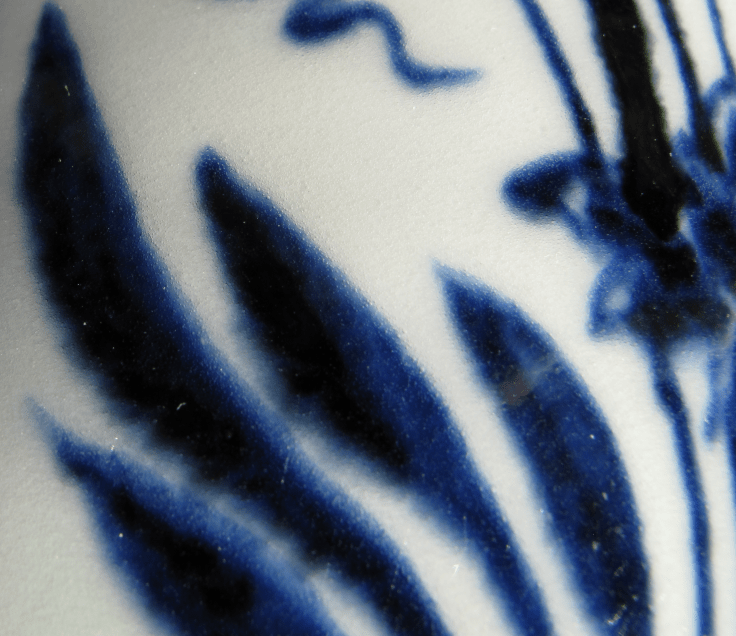
You will note that in these photos, the large bubbles appear in exactly the way I have been describing to you. They all lie within some dark blue coloration. The small bubbles form very nice lacunae. And you must look at the dripping and flair. You must remember that this is a stembowl, so the drawings are all on a vertical plane. I am sure you will not miss the drippings. But they are not very enhanced, as in some other wares. It only shows that the quality of the dye varies from batch to batch of the import, and in many instances, from ware to ware. 

A Xuande Blue & White Pilgrim Flask

Collectors often ask themselves: What is a beautiful ceramic ware? What is a beautiful Blue and White? How do you tell? There is no answer to this. It is often said: Beauty is in the eye of the beholder. So, what is beautiful to you may not be beautiful to another collector. However, I do believe that there are certain criteria that we should consider when we look at a ware from an aesthetic point of view. If we are to look at a Xuande Blue and White, what kind of criteria should we take? I think the ware should be well potted, the motif should be appealing, and it should not be too commonly seen. When you have a ware that you see everywhere, how can you treasure it? That is why collectors put so much emphasis on the uniqueness of a ware.

Aside from this what I call very broad-stroke description of a beautiful B & W, I think a  sophisticate collector would look at finer details of a ware. Is the glaze good? A good glaze is very important, and it takes some experience to appreciate it. The ideal glaze to me is one that will emit some very mellow glow. Some people would stress that the ware should not be shiny. But I would say that a nice ware should be shiny, except that the shine should not give an impression that the ware is new. It is like a fine gem. So, it is shiny, but not anything that makes the ware look new. This is subtle and I don’t believe anyone can give you a more detailed explanation. Experience here rules.

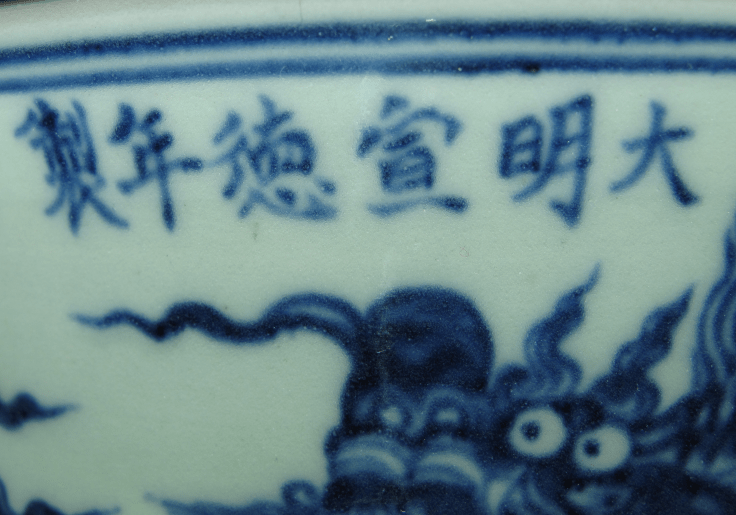
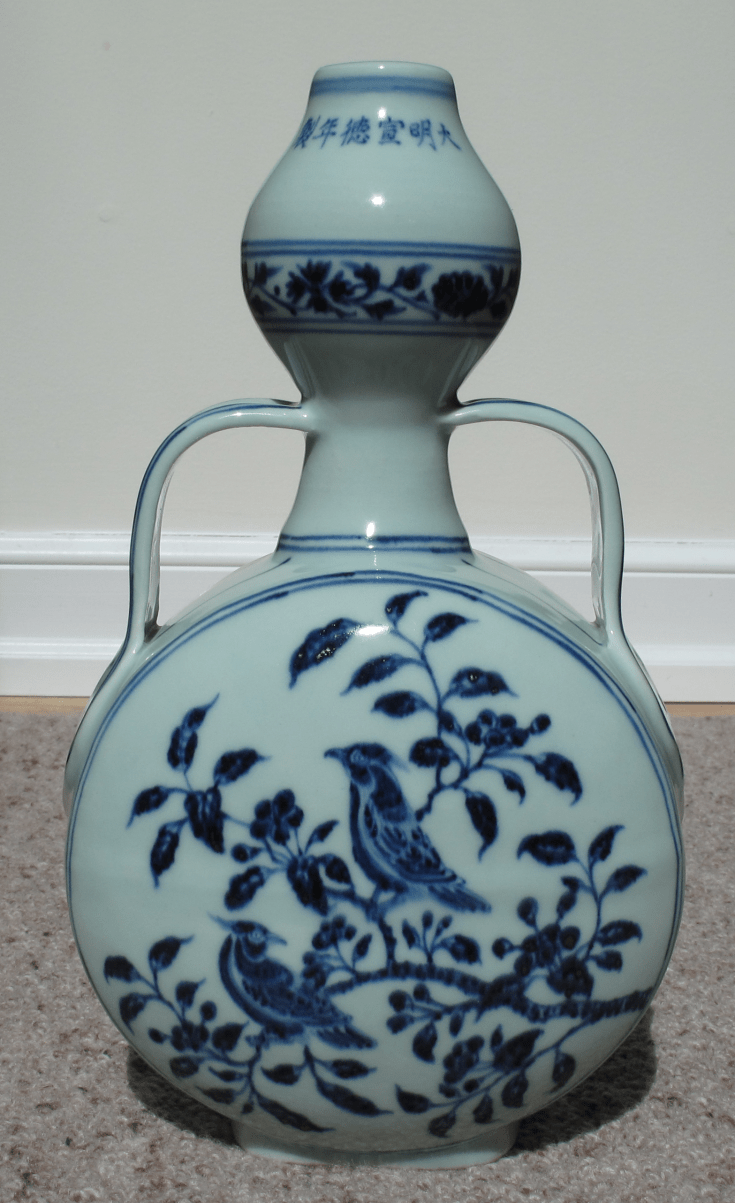
But there  are some other fine details that do not need a lot of experience to appreciate, namely, the color, the plaques, the drippings and flare, and the bubbles. It is these features, on closer look with a magnifying glass, can distinguish a fine B & W from an ordinary one. Now, let me show you a B & W pilgrim flask, Xuande marked and you can see for yourself if the flask is beautiful.


IMG_3133.pngFigure 1

The pilgrim flask, or moon flask, measures 11 inches tall. As you can see, the motif is rather rare in a flask, though in plates and chargers, you can see similar themes more often. The potting, the painting of the motif are all up to standard. Even at a distance, you can see some plaques reflecting sunlight, and some drippings.

With a closer look (Figure 2), more of the reflecting plaques are seen, and quite a number of plaques that are but blackish patches are also apparent. Note also the dripping—they are just right, not too much exaggerated.


IMG_0057.pngFigure 2

I’ll show you some even closer shots (Figures 3-6).


IMG_3158.pngFigure 3


IMG_3140.pngFigure 4


IMG_9850.pngFigure 5


IMG_9850.pngFigure 6

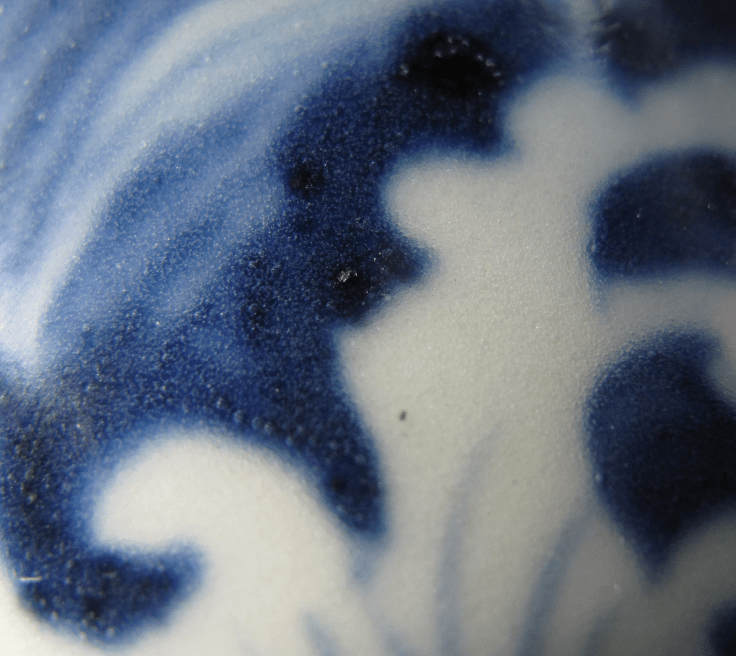
Look at the plaques in these photos. When the sunlight hits the plaques at the right angle, there will be reflections from these plaques. You can see that the reflections from these plaques vary in brightness—from highly reflective to just a dull reflection. But most of the plaques do not even show up, they are just a dark shade inside some deep blue coloration. Note also the dripping effect in these photos. In each of these four photos, you can see some form of dripping. Pay attention to their presentations, and I can tell you that what you see here is very typical. You do not see any excessive dripping, which, you can understand, mars the beauty of a ware, and might lead to doubt as to the authenticity of it.

Experienced collectors will know that, the plaques will have a different appearance under the sun (Figures 7-12).


IMG_7023.pngFigure 7


IMG_7024.pngFigure 8


IMG_8129.pngFigure 9


IMG_0751.pngFigure 10


IMG_0050.pngFigure 11


IMG_8913.pngFigure 12

I am sure you can appreciate the beauty of the plaques here, the shape, the multi-color reflections.  It is also amazing that under sunlight, when plaques are just millimeters away from each other, some show colorful reflections while the others have no reflection at all. Note also the classic feature of a plaque here. Each plaque is sitting in a pool of blackish coloration, which in turn is surrounded by some deep blue color with some lighter blue just beyond. In these same photos, you can see the drippings better. In Figure 9 you can actually see a small speck that breaks away from the main dripping. The blackish dripping is in fact part of the plaque, and the breakaway represents something in the blackish material that is heavier than the rest, and drips down at a faster rate. I have told you before that such a feature occurs in dyes that are of very good quality.


In these photos, you can also see the bubbles, which, together with the plaques, are the main themes of the Sumali Blue dye. Look at figure 9 again. Look at the beautiful  large bubble at the top margin and a few at the lower margin on the right side. The small bubbles are in lacunae formation. But I’ll show you one very unique feature in this vase—the strings of large bubbles that can be found in quite a number of places (Figures 13-20).


IMG_7010.pngFigure 13


IMG_7017.pngFigure 14


IMG_7022.pngFigure 15


IMG_8127.pngFigure 16


IMG_9118.pngFigure 17


IMG_8147.pngFigure 18


IMG_8913.pngFigure 19


IMG_7017.pngFigure 20

String of large bubbles is rather uncommon and it mostly occurs in dyes of very high quality.  It is more common in Yongle B & W.  In any single ware, if it does have this phenomenon, it is seldom for you to find more than 2 or 3 strings. Here, in Figure 13, it is a classic with so many bubbles in one string. In the other photos, the strings are very obvious. It only shows the dye used here is of extremely high quality.

To say that the dye is of high quality, we can also look at the blue coloration and the lacunae (Figures 21-25).


IMG_3149 (1).pngFigure 21


IMG_3151 (1).pngFigure 22


IMG_8933.pngFigure 23


IMG_8196.pngFigure 24


IMG_8119.pngFigure 25

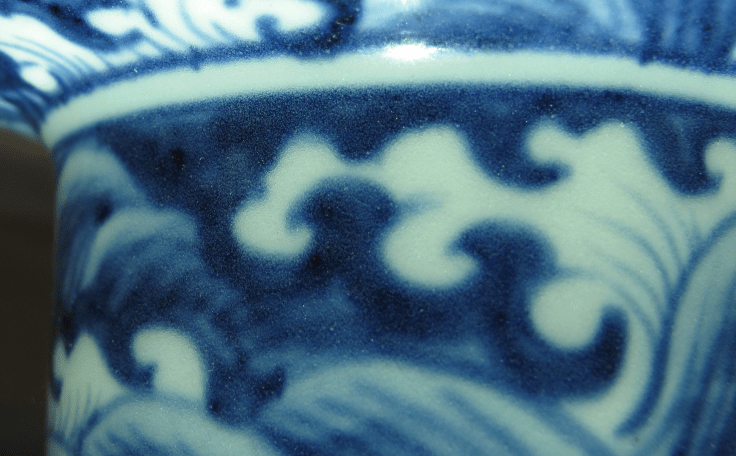
Look at the beautiful lacunae in these photos. They are so crowded together, yet, there is not a feeling that the bubbles and lacunae are in disarray or disorganized. At where the lacunae are most crowded, the background is an almost blackish deep blue color. Further out towards the margin, the very deep blue color becomes a sapphire blue before it fades into a very light blue. The sapphire blue, to me, is just remarkable. Look at Figure 21 again, the changing of the blue coloration–from blackish blue to a light blue, in so many places is as good as it can get in any B & W.

These features, at times subtle, are what sophisticated collectors are looking for in a beautiful B & W. They distinguish themselves with these finer details from the ordinary. I hope you can look at all these photos carefully and remember every characteristic well.

A Blue and White Garlic Mouth Vase, Xuande Mark

In my last article, A Blue & White flower bowl, Xuande mark, I talked about plaques, and primitive plaques in particular. And I have said, plaques are important features in the Sumali Blue dye. They are not only important, but they form a fascinating subject to study. Understanding the nature of these plaques would allow a collector to determine if a Blue and White belonged to the Yuan and early Ming period, and with ease. Here, I am going to show you a Xuande vase with the intention to introduce you more on the subject of the muddy layer of a plaque.

Muddy layer is the bottom layer of a full blown plaque. The top layer is the small aluminum foil like sheet floating on top of the glaze layer. This is the simplest description of a matured plaque. Beyond this, there are many many variations of a plaque. For example, with a Yuan B & W that has many plaques, we can see the shining aluminum foil easily, at every angle in daylight. For wares with not so extensive plaques, say those in the Yongle era, you do not see the plaques in daylight, but tilting it at a certain angle, you’ll see dimple at where the plaque is. So that in such wares, at a correct angle, there are dimples everywhere. In Xuande B & Ws, most of the time the shining foil is not there, and only the muddy layer is present, what do you see? You’ll see patches of darkish blue, almost black, within slightly larger rather deep blue patches surrounding them. When the metallic content is high, on tilting the ware, you can see a very slight reflection from those muddy patches. When the metallic content is low, there will be no more reflections except some vague shadows within those deep blue patches. These are some very general description of the plaques.

Now, let me show you the garlic mouth vase that measures 13 1/8 inches tall (Figure 1). I’ll show you the plaques with only the muddy layer, there being no shining aluminum foil on top.


IMG_2971.pngFigure 1

As I have said, when there is a plaque without the aluminum foil on top, it means only one thing, the part of the dye pigment that produces the plaque has not enough aluminum content. If the content is very rich, the aluminum foil will be large, as in many of the Yuan Blue and Whites. As the metal content of the dye pigment decreases, the metallic foil gets smaller. That is what happens in the Yongle B & Ws. In the Xuande era, many of the plaques are without the metallic foil on top. All that you can see is the muddy layer. This does not mean that there is no aluminum in the muddy layer. No, inside the mud, there is still quite a lot of the metal. But most of the aluminum particles are adherent to the muddy material, and cannot rise up to the surface. So, when the sunlight is striking the muddy layer in the correct angle, the shiny reflection is still very obvious. But when the angle is not right, even under the sun, you can only see the mud, but not the metal.

What is more, when the ceramic ware is still inside the kiln under high temperature, the glaze might be near its boiling point, so that, like water about to boil, the bottom part of the glaze would rise up, forming small, local currents. It is small and localized because the thickness of the glaze layer is rather small, unlike a kettle of water. Furthermore, the viscosity of the glaze does not allow it to boil like water. The whole glaze layer is in effect in dynamic motion, only that everywhere, the current is very slow moving and localized because of the thinness and viscosity of the glaze, and the force rather small. But this dynamic motion forms a small force that would have an effect on the blue dye pigment that includes the mud like material that lies right at the bottom, causing it to drift and shift with the currents. The shifting of the material in the mud, because of the affinity of metal particle to metal particle, allows the mud and the metal to deposit, not in a random manner, but rather in patterns that are constantly changing. I believe this concept of localized small, or should I say, micro-currents within the glaze layer is an important part to understand why bubbles and plaques should behave in a manner as they appear under our magnifying glass.

Now, let me show you how the plaques in this garlic mouth vase look like.


IMG_2974.pngFigure 2


IMG_3021.pngFigure 3


IMG_3034.pngFigure 4


IMG_3058.pngFigure 5


IMG_3073.pngFigure 6


IMG_3073Figure 7


IMG_3082.pngFigure 8

Figures 2-8 are all taken under daylight. In all these photos, you can see dark, almost black patches being surrounded by some deep blue coloration. The margin of this blue coloration can be minimal, or sometimes quite wide. But if you are not experienced, you have no idea that these are plaques. There is no signs of any metallic content anywhere. What is obvious, though, is the flares and drippings that associate with the plaques. Study these photos carefully, and you can get an impression what plaques can look like.

But if you were to take the vase under the sun, and tilt it in various angles, this is what you would see.


IMG_2990.pngFigure 9


IMG_2989 (1).pngFigure 10

In Figure 9, you can hardly see any reflections. But tilt the vase at a certain angle, you can see some very beautiful reflections that is from the muddy layer. The metal is still adherent to the muddy material, but with the micro-currents that is moving around in the glaze layer, the deposit of the muddy material and metal keeps changing, until the cooling process begins, when every movement will suddenly come to a stop, resulting in this particular appearance.


IMG_2993.pngFigure 11


IMG_2995.pngFigure 12


IMG_3013.pngFigure 13


IMG_3015.pngFigure 14


Now, Figure 11 and 12, and Figures 13-14, they all show the same thing as in figures 9-10. At one angle, no plaques can be seen. At other angle, the beautiful reflection is all apparent.In fact, in any of these plaques in this vase, the same effect could be achieved under the sun. It only shows that the muddy layer is not all mud, but with a rather rich content of aluminum, and they all show their beautiful reflections when the angle is right.

I am now going to show you some of the flares and drippings in this vase (Figures 15-19. In fact, the flares and drippings in this vase are beautiful. They are obvious, but they are not exaggerated. With too much exaggeration, sometimes you might want to take a good look at all the other characteristics to see if they are all compatible with the Sumali Blue dye.


IMG_3108.pngFigure 15


IMG_3119.pngFigure 16


IMG_3110.pngFigure 17


IMG_3100.pngFigure 18


IMG_3009.pngFigure 19

These flares, when you enlarge the photos, you will see that at the margin of the flare, as it is fading into the white glaze, shows a tinge of greenish coloration. This, I have been telling you, is a sign that the quality of the dye is very good.

The bubbles in the vase is somewhat different from the Yuan and Yongle B & Ws. There is no very large bubbles. But still you can easily tell the large bubbles from the small ones. The bubbles are not very crowded, and lacuna formation, under these circumstances, are only seen when the bubbles are relatively dense. These bubbles also show a feature that is commonly seen in Sumali Blue dyes. The bubbles tend to form a chain that seems to be strung together by a string. These are rather short chains, just up to five to six bubbles in one chain. But they are quite pretty to look at.

Look at Figures 20-23 carefully, and note the features that I have just mentioned—the bubbles are not too crowded, the large and small bubbles, the lacunae and the short chains of bubbles. And don’t forget to look at many large bubbles that are lurking in the darker part of the muddy layer. these are all features of the Sumali Blue dye, their presence in a B & W is an indication that the ware genuinely belong to the early Ming period.


IMG_3097.pngFigure 20


IMG_3059.png Figure 21


IMG_3062.pngFigure 22


IMG_3082.pngFigure 23

A Flower-shaped Blue & White Bowl, Xuande Mark

In my previous articles, I have told you that plaques are important features in the Sumali Blue dye. But these plaques show changes throughout the whole period when the dye was imported. During the Yuan Dynasty, the Blue and Whites have plaques that are abundant as well as prominent. By the period of Xuande, as I said before, some B & Ws have literally no plaques at all. It is, strictly speaking, incorrect to say that these wares have no plaques. They do, but what they have are not well-formed plaques, immature plaques, and I’ll call them primitive plaques. It sounds confusing, but I’ll elaborate here.

A well-formed plaque, or a matured plaque, has at least two components in its simplest description—a muddy layer at the bottom right on top of the clay biscuit, and a shiny metallic foil floating on top of the glaze with a small gap in between them. The width of the gap is dependent on the thickness of the glaze, so that the distance separating the two layers varies under different conditions. The metallic foil, to me, looks like aluminum, and in all likelihood, it is aluminum. Some critics in the past used to say that the reflection from the metallic foil is tin reflection. I doubt it. Let us look at it this way. The specific gravity of aluminum is around 2.5, while the specific gravity of tin is around 7.5. I don’t believe anything with the specific gravity like tin can float atop the glaze, whereas if the glaze is viscous, it is easy for a tiny sheet of aluminum to float on top of it.

I have told you that the metallic foil, or should I call it aluminum foil, is formed by the aggregate of a lot of aluminum particles deriving from the dye pigment.  When the aluminum content of the dye is rich, the aluminum foil will be large, covering up the bottom muddy layer. All that you can see in a plaque is the aluminum foil surrounded by a small pool of dark blue coloration. I have shown you that in the Yuan B & Ws. With decreasing amount of aluminum in the dye, the shiny layer gets smaller, allowing you to see part of the muddy layer. That is why, when the metallic content of the dye is very small, all that you see is the muddy layer with the aluminum particle still adhering to the ‘mud’ at the bottom. When you examine such plaques under the sun, at certain angles there is still very good reflection from those aluminum at the bottom, for aluminum has a very good light reflection, though the shiny layer is gone.

This theory also explains why in those large plaques with the aluminum foil on top, you can feel a slight depression over the foil with the tip of your finger. There is a reason for this. When, at the end of the baking of the ware in the kiln, the aluminum foil is still a flat piece floating on top of the glaze. However, when the baking process is done, the ceramic ware begins to cool down, affecting both the aluminum foil and the glaze on which it floats. Our knowledge in physics will tell us that the metal contracts more than the glaze in the cooling process. This greater contraction together with the surface tension and other forces, would bend the metal in a concave manner, giving rise to a small depression on the surface of the ware that we can actually feel with the tip of our finger.

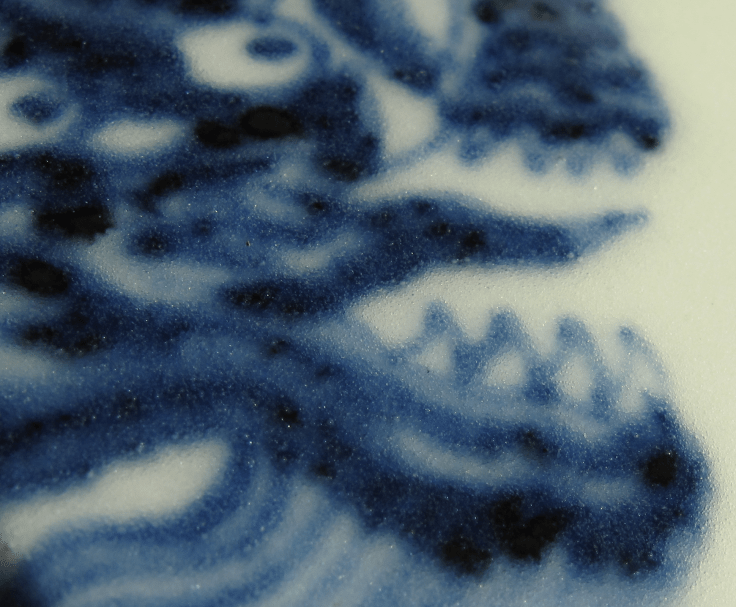
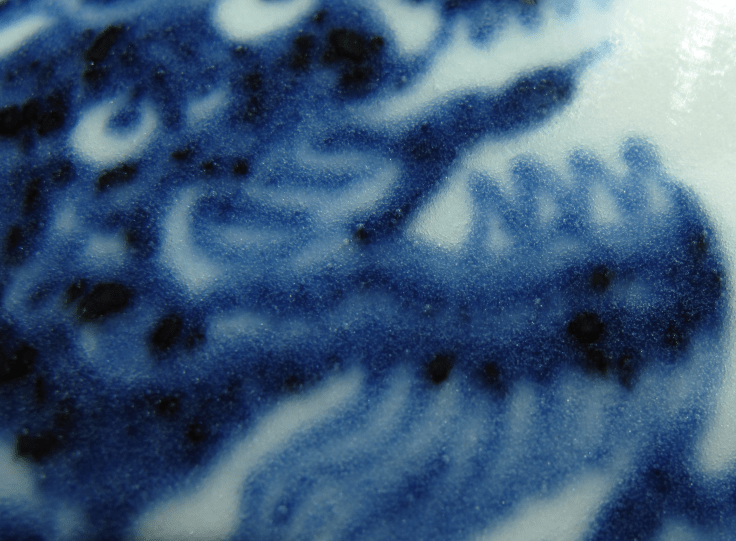
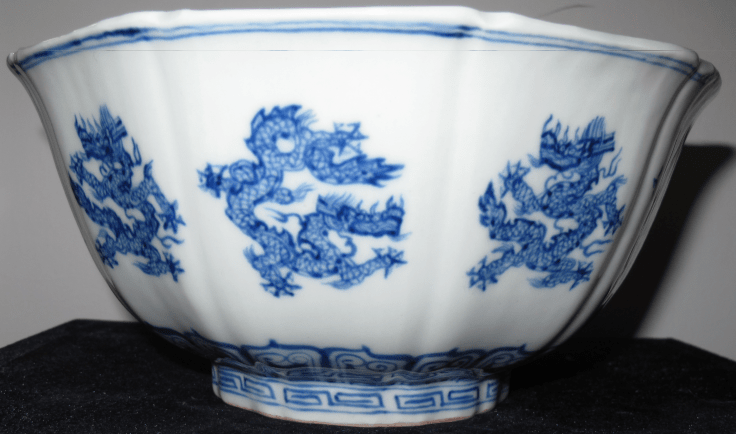
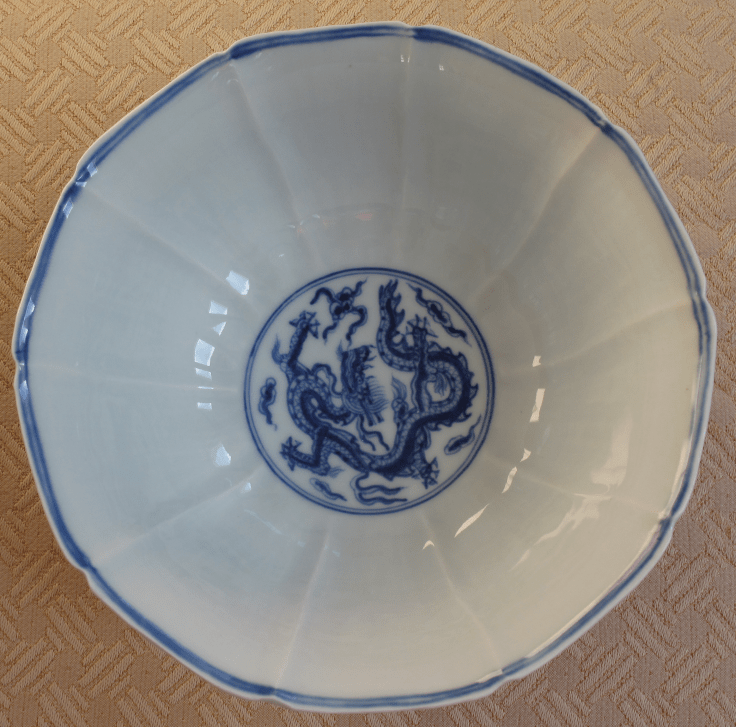
With all these in mind, it is not difficult to identify a matured plaque, and hence the identity of the dye as Sumali Blue is established. But when there is no matured plaque, when there is not even the presence of a muddy layer, and when circumstances are such that we still suspect the B & W to be a Xuande, how are we going to arrive at that verdict? In such a circumstance, what we should do is to look for what I call the primitive plaque. What is a primitive plaque? How does it look like? This is exactly what I want to tell you here, not so much with words, but with photos of this Xuande bowl (Figures 1-3). The bowl measures 8 1/4 inches in diameter.

IMG_2431.pngFigure 1


IMG_9405.pngFigure 2


IMG_2433.pngFigure 3

IMG_2520.pngFigure 4

IMG_2508.pngFigure 5

IMG_2498.pngFigure 6

IMG_2501.pngFigure 7

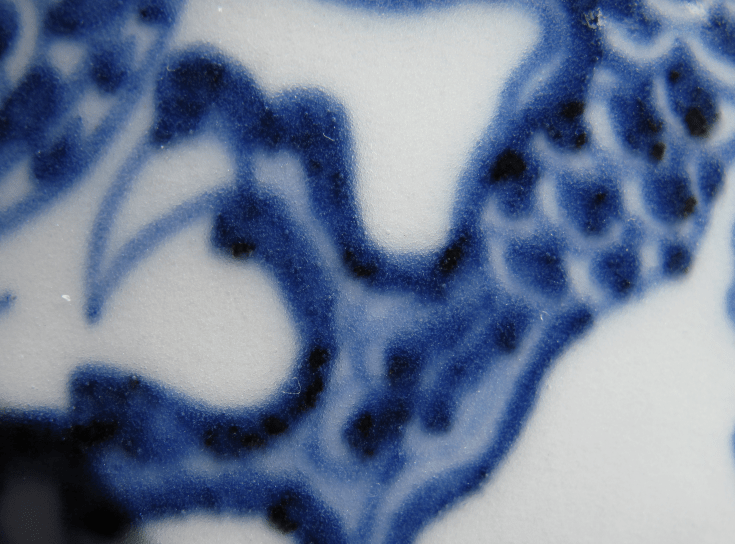
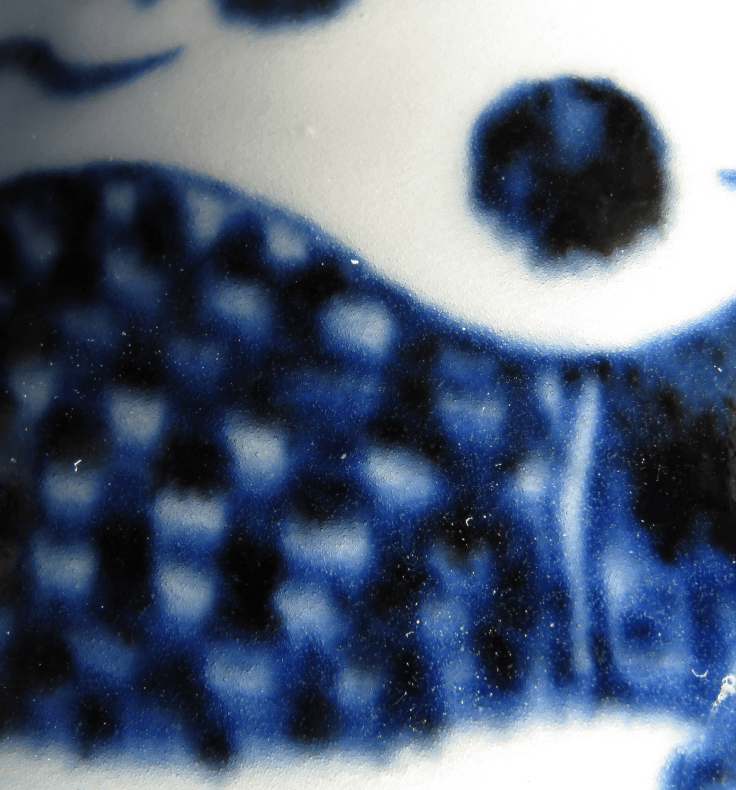
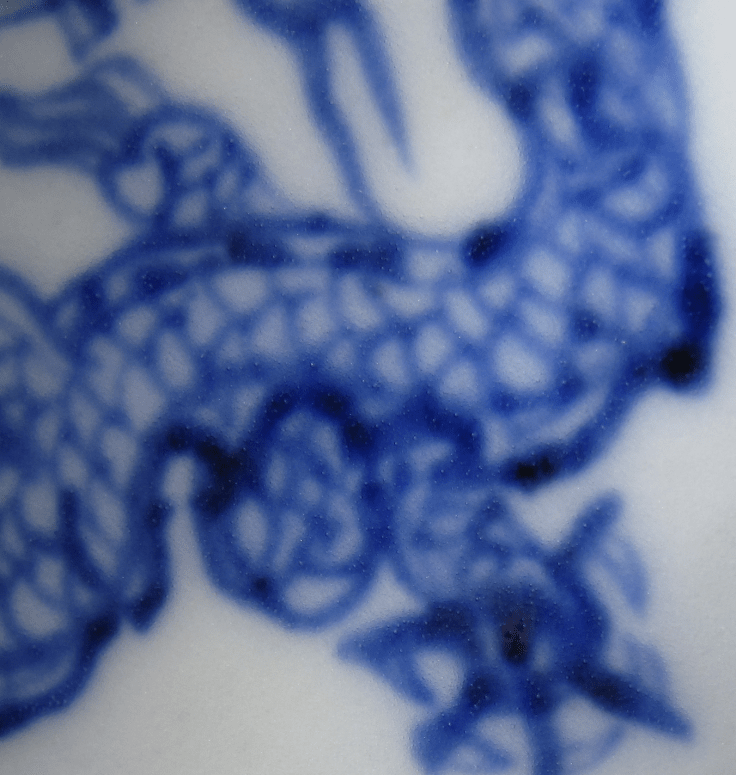
Figures 4-7 are taken from the side of the bowl, from the rather small dragons on the panels. You can immediately see small dark blue, almost black patches here and there. These are the primitive plaques. Blow them up and look at them carefully. Inside the black patch there is an element of dark brownish hue. It is quite irregular with poorly defined borders. It is what I call the primitive muddy layer. Even under the sun, no matter at what angle you are going to tilt the bowl, there is no noticeable shiny reflection. I suppose the metallic content there is very low, and whatever is present, is not enough to generate reflections that can be seen with the naked eye, or by the camera. But, as in any matured plaque in the Sumali Blue dye, you can see large bubbles in adjacent areas. You can also see these large bubbles in other blue color areas that are of a darker hue. Because of the limited dye and fine strokes the potters used in these small dragons, the small bubbles are not well seen, not to say the lacunae. Before I show you these features, which can be seen in the larger dragon at the bottom of the bowl, let me just show you a few more photos of the primitive plaques (Figures 8-10).

IMG_2507.pngFigure 8

IMG_2516.pngFigure 9

IMG_2532.pngFigure 10

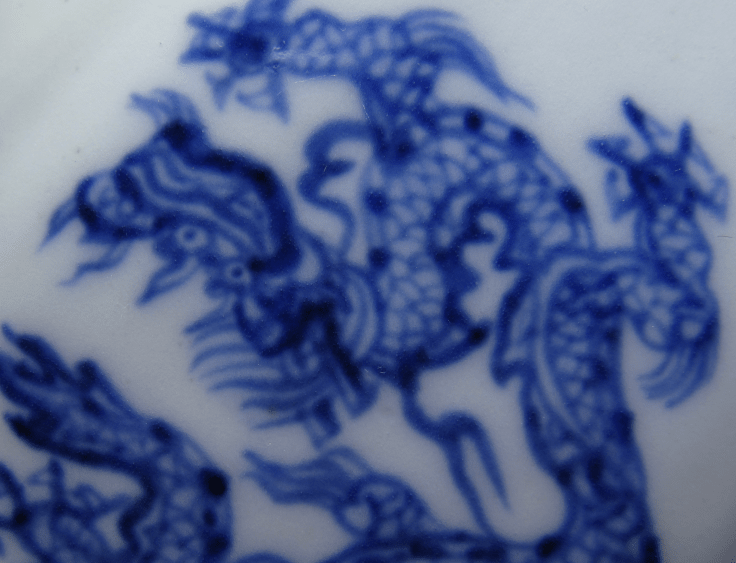
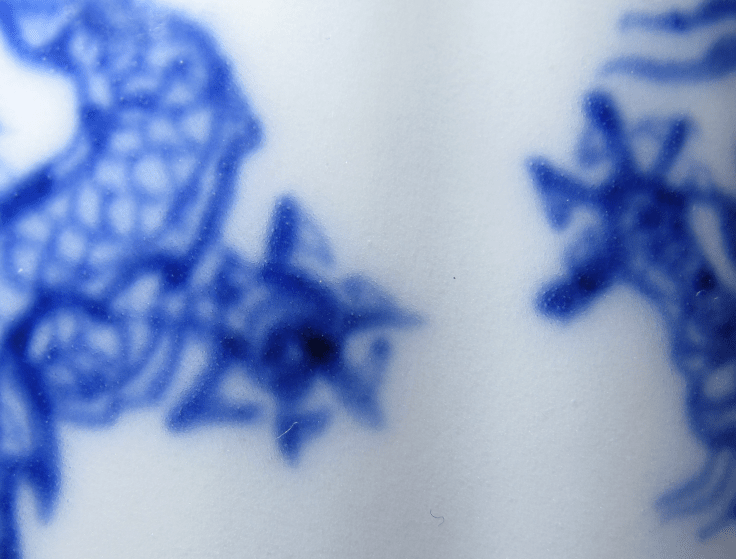
I’ll now show you photos of the large dragon that is at the bottom of the bowl (Figures 11-14). Now, in these four photos, because of the larger drawing and hence the more liberal use of the dye, the large and small bubbles are well seen. Look at the dragon eyes with large and semi-translucent bubbles, these are the classic signs of the Sumali Blue dye. And you can notice again that the potter was paying attention of the eyes, even as they are in the bottom of the bowl, a site where collectors might not be paying good attention. You should also look at the lacunae formation.

IMG_2690.pngFigure 11

IMG_2691.pngFigure 12

IMG_2684.pngFigure 13

IMG_2686.pngFigure 14

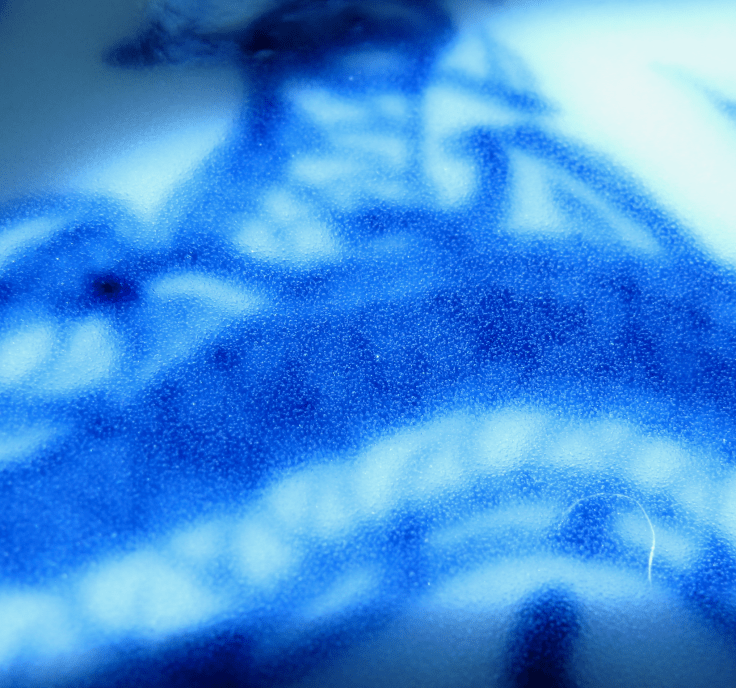
To complete the picture, I’ll now show you the flare and dripping (Figure 15-17). In figure 15, the dripping is particularly obvious. You can see the part of the primitive plaque that is dripping down, in some areas fading into a slightly greenish and light black/bluish hue. Note also the large bubbles and primitive plaques in other areas.

IMG_2826.pngFigure 15

IMG_2823.pngFigure 16

IMG_2817.pngFigure 17

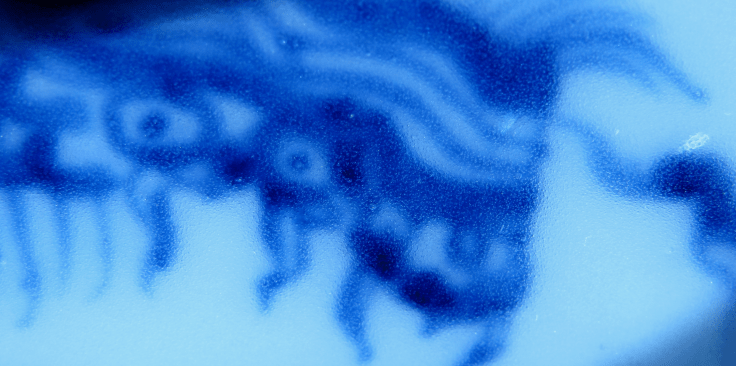
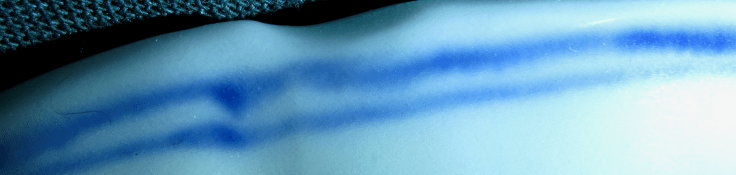
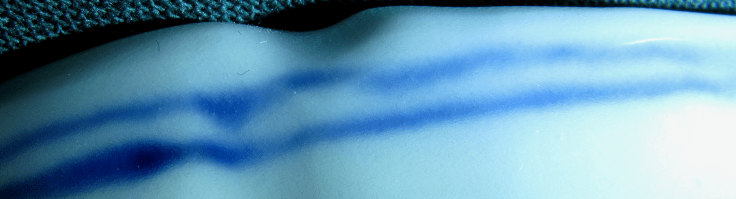
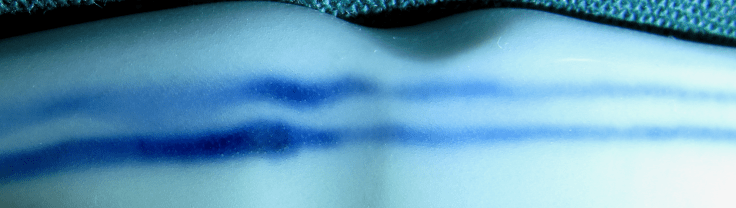
There is another area where the dripping is usually very obvious in many of the B & Ws that are drawn with the Sumali Blue dye. It is in the decorative lines near the mouth of the ware (Figures 18-21).  Pay attention to all the B & Ws in those periods, most of the time, the dripping is easily noticeable. If the lines are straight with no dripping, you should raise your suspicion right away. It is also most common to find some parts of the line in a lighter tone, what critics used to say is from the bleaching effect on the dye by the glaze. It is highly likely that this is another mistake in interpreting the facts. I don’t believe the glaze has any bleaching property. The lightening of color is in fact due to over-application of the glaze at the mouth at certain parts, allowing more glaze to flow downwards at that particular site to wash away the dye pigment there. This results in lightening of the blue color.

IMG_2803.pngFigure 18

IMG_2804.pngFigure 19

IMG_2805.pngFigure 20

IMG_2801.pngFigure 21

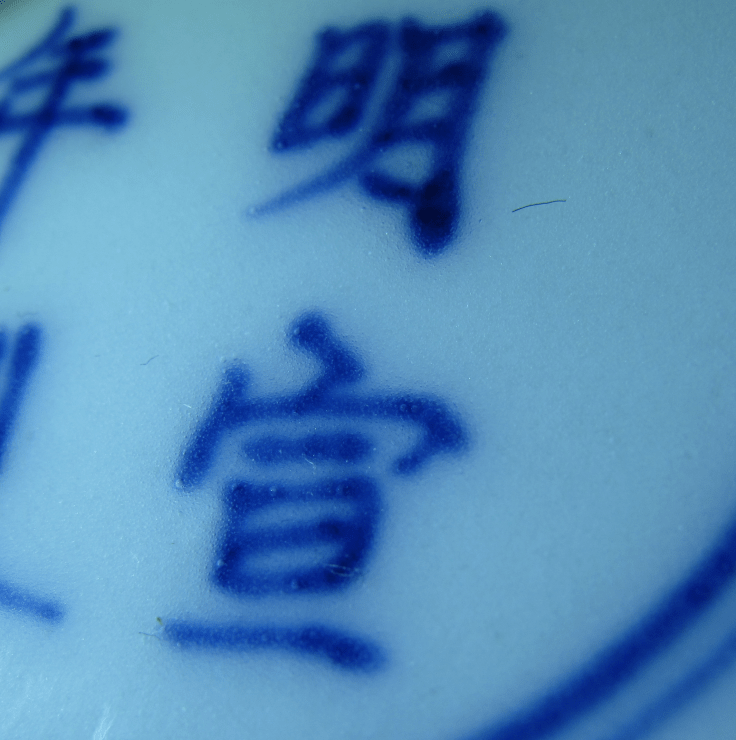
Here, I’ll also show you the Xuande mark. The bubbles there are typical. With the mark, and every other thing that I have shown you here, even there are no matured plaques, we should feel confident that this bowl is a genuine Xuande.

IMG_2815.pngFigure 22

A Xuande Moon Flask (Bianhu) with Dragon Design

As I have said again and again, the benchmark of Yuan and early Ming Blue and Whites is the Sumali Blue dye. It has its characteristics that are quite different from the replacement dyes that were used one following the other in subsequent years. Our experience tells use that potters often used each of these replacement dyes for many years before it is being substituted by yet another dye. During the whole period when a dye was in use, the characteristics and presentations of the dye remain rather constant. For example, the blue dye used in the Chenghua period looks rather constant, except in occasions when potters would mix some Sumali Blue left-overs with their regular blue dye.

This cannot be said of the Sumali Blue dye. During the eight decades when the dye was imported, it revolved constantly, though all through those years, it retains certain characteristics that would allow us to put them in a group. In a way, Sumali Blue dye is a broad term that has a broad meaning. We must not think that the Sumali Blue used by Yuan potters is the same as the Sumali Blue of the Xuande period. No, they are not. They are very different. Even the Sumali Blue dye within the Yuan Dynasty is different, and I have shown you that. It is true with the Yongle period and the Xuande period. They can be very different, and it is of the utmost importance that we know that and that we are able to sort them out.

Here, I am going to show you a Bianhu of the Xuande period that potters used different Sumali Blue dye on the neck of the vase and the body itself. I have told you before that potters, in order to save cost, would use different grades of blue dye on the same ware. Here is a good example (Figure 1). This Bianhu measures 12 5/8 inches tall, 9 5/8 inches wide and 6 1/2 inches thick. As the measurement indicates, its bulging on both sides is more prominent than a regular pilgrim flask.
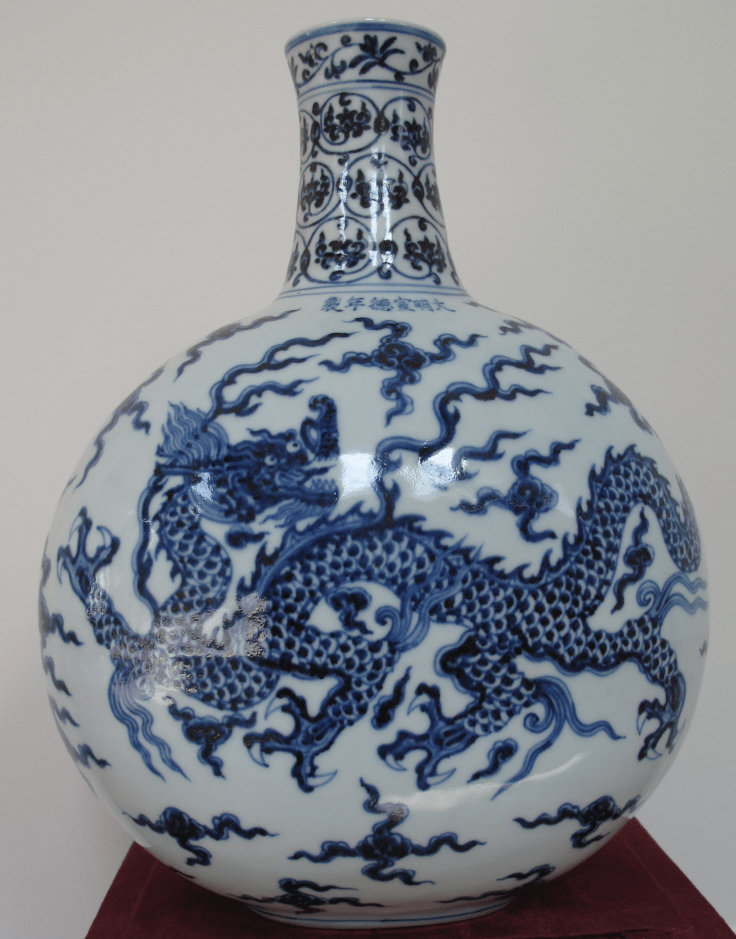
IMG_2064.pngFigure 1

A look at the photo and you can tell that the neck and the body are of a different shade of blue. Common sense will tell us that the body is the center of attraction. Look at the choice of the potters. They picked a nicer color for the body and dragon, even though in so doing it must be more expensive. That is to say, the potters believed quality comes before cost. The area of the neck is substantially less than the body, and by choosing a dye pigment that is of a lesser quality, the saving in terms of cost should not be much. At least, that is how we now look at it. But if we look at the matter from another angle, when the dye pigments were really expensive, as we are constantly told, such a move still means something in economic terms. And we need to have some faith in the rationality of the potters in their choices.

The important issue here is that we are given the opportunity to study two different kinds of Sumali Blue dye pigment in one single ware, allowing us to come to the conclusion that the variation of the Sumali Blue dye can occur within a very short period of time. It would not surprise me that any batch of dye pigment imported is somewhat different from a previous batch.

I have been telling you that there are certain very general differences between Sumali Blue of the Yuan period and the Yongle and Xuande periods. It will not be true in every case, but generally speaking, this is a good guide line. There are a lot more plaques in Yuan B & Ws, and they are thicker and appear to be more coarse. Plaques in Yongle period are less abundant, and many a time, the edges tend to be spiky. In Xuande B & Ws, the plaques become a lot thinner, and in some wares, they appear only as some patches of a darker bluish hue, and reflections are only obvious when seen under sunlight in a particular angle. That is to say, we often have to tilt the ware in different direction in order to see the reflections.

Now, let us look at the two different dyes in this Bianhu.
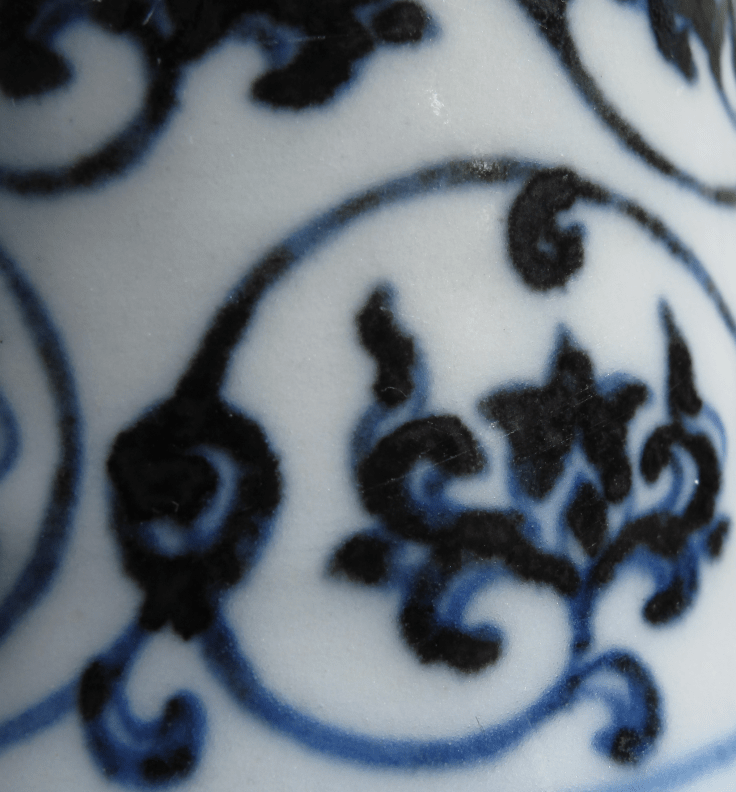
IMG_2401.pngFigure 2


IMG_2108.pngFigure 3


IMG_2623.pngFigure 4


IMG_2600.pngFigure 5

IMG_2084.pngFigure 6


IMG_2417.pngFigure 7


IMG_2087.pngFigure 8

A look at Figures 2-4, which are from the neck, and Figures 5-8, which are from the body, you will note the differences between the two dyes.  They are taken under daylight. There are a lot more plaques in the neck, but they are very different from those found in the Yuan wares. In the Yuan period, as you will remember, the plaques often sit a in small pool pf dark blue color, and the plaque itself is coarse and shiny reflections are common. Here, the plaques are mainly blackish. They might be sitting in a pool of similarly blackish color, of slightly different shade, but often the edge of the plaque is not clearly defined. If you are going to look more carefully by enlarging the photo, many a time, the plaques are in fragments that seem to merge with the surrounding black color. They are much thinner than those in the Yuan period. And you need to look at the texture of the plaque, they are quite different. By looking carefully, and at more of the plaques, you will have your own conclusion how they look like.

My own feeling is that plaques here in the neck have some very basic differences in the ingredients. A plaque, as I see it, has two components. A muddy layer at the bottom and a metallic layer that floats above it. The metal must be a light metal, like aluminum, that has a specific gravity that is lower than the glaze, so that it floats above it. On occasions, the metal might mix with the muddy components, so that the mixed component does not go up completely, but floats halfway in between the top of the glaze and the bottom of it. Here, both components—the mud and the metal, are blackish, and often it is difficult to tell which from which. However, on careful examination, one can still tell, though the demarcation on certain instance is blurred. One reason for this is that here the metallic content is not high enough for it to form a well defined aggregate, allowing a thin tin-foil like layer to be formed. It will take a physicist to tell you what is the critical mass of the metallic content that would allow it to form a tin-foil like structure, but it is suffice to say here that that layer is not well formed, and a reflective layer is absent, so that the appearance is just blackish, with a different shade for the muddy part and the floating metallic part.

The plaques in the body are different (Figure 5-8). They are much less abundant, and their structure tends to resemble more of those we have seen in the Yuan wares and Yongle wares. They are blacks patches sitting among some dark blue colors. But they are not well formed plaques except in certain small areas, another indication that the metallic content is low. But in all these photos, if you look for them. you can see flares and drippings. By now, you should be convinced that the flares and drippings are from the muddy part of the plaque. However, the plaques show some clear differences in their looks between those in the neck and those in the body. Just compare Figure 2 and Figure 5, and you will understand what I am trying to say.

Now you may want to know how the plaques look like when the photos are taken under direct sunlight, or in some cases, under direct LED light.
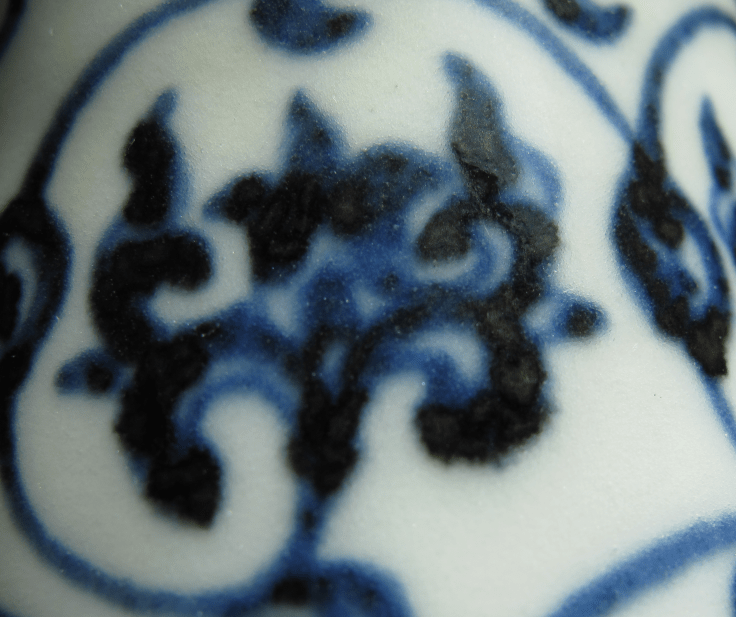
 

IMG_2110.pngFigure 9


IMG_2109.pngFigure 10


IMG_2069.pngFigure 11


IMG_2074.pngFigure 12


IMG_2085.pngFigure 13


IMG_2095.pngFigure 14


IMG_2105.pngFigure 15


IMG_2597.pngFigure 16


IMG_2607.pngFigure 17

Look at Figures 9-12, from the neck, the plaques do show some light reflections. But these are poor light reflections that are not at all colorful. It only shows the low  metallic component of these plaques. Still, it is worth your effort to look at them carefully, and know the texture of them. You should also note that they are rather thinner than Yuan plaques.

Now, the plaques of the body is quite different (Figures 13-17). Its reflections are quite colorful, though when compared to the Yuan and Yongle B & Ws, the reflection is not as strong and not as multi-color. Still, it is much more colorful than those in the neck. Even for the flares and drippings, they follow the pattern of the two previous periods. On that standard alone, we can tell that this is a genuine Xuande. But from these photos, if we care to look at the bubbles, they serve as further evidence that it is without doubt a Xuande.

Look at Figure 15, just above the colorful plaque, the lacunae are beautiful. Above that, the large bubbles are just right, so are the small bubbles. And look at the large bubbles again, and in other photos, there are so many that show the classic semi-opaque appearance. That is all that you need to know that the dye pigment is Sumali Blue dye. But what about the bubbles in the neck part, from a dye that is of a lower quality, you may want to ask. It is true that those bubbles are different from those in the body. But look at Figure 10, though the small bubbles are a lot fewer and do not show lacunae formation, the large bubbles are consistent with Sumali Blue dye. They might be just a bit smaller than those in the body, but, in conformity with the Sumali Blue dye, they all sit within a small patch of blue, and many are semi-opaque in appearance. I would say that, by just looking at the dye of the neck, one is still able to say that the dye is Sumali Blue dye.

I will now show you a few more photos with all the features that we have just talked about, so that you can acquaint yourself more with these feature (Figures 18-25).
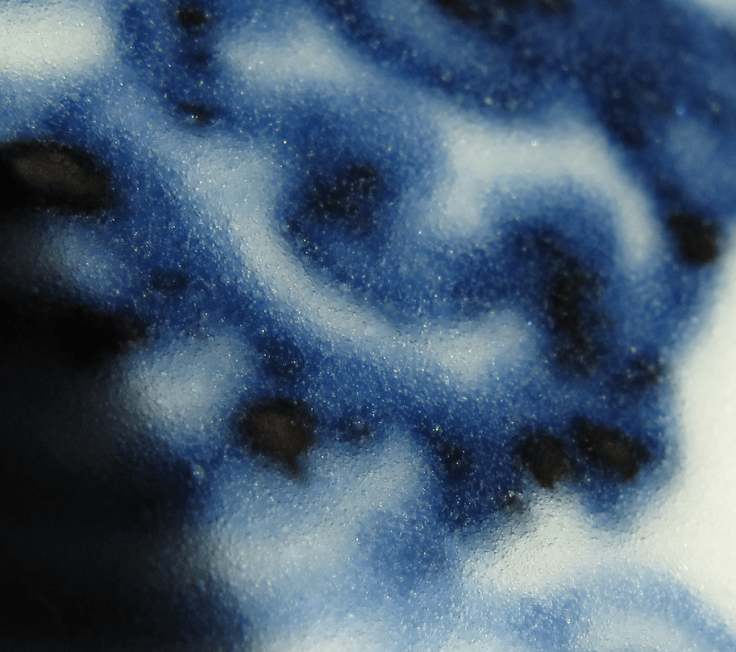
 

IMG_2599.pngFigure 18


IMG_2620.pngFigure 19


IMG_2412.pngFigure 20


IMG_2426.pngFigure 21


IMG_2616.pngFigure 22


IMG_2098.pngFigure 23


IMG_2092.pngFigure 24


IMG_2102.pngFigure 25

Blog at WordPress.com.

Up ↑