
I am not a good photographer. In my attempt to make more beautiful photos of the ceramic wares, I have tried many methods, but the results are not very satisfactory. I have recently discovered that to take better photos, the morning sun and the setting evening sun are probably the best time to do the shots. This is particularly true with the plaques when you want to high-light the effect of sunlight on the reflections of these plaques. The photos that I am going to show you were all taken under the early morning sun or the setting sun in the evening. You must pay attention to the reflections of these plaques. The ware is a Yuan Blue and White Rectangular Flask, measuring 15 1/8 inches tall.
Plaques are important feature of the Sumali Blue dye, and in Yuan B & Ws, I have told you many times previously, the plaques are particularly extensive. They are rather coarse when you look at them with your naked eyes. Many a time, they just appear to be aluminum foils floating on top of the blue dye where the color is dark. But under the sun, the reflection is remarkably colorful. When photos are taken, and when you can capture the reflection, you will be amazed at the beauty of the color of the reflections.
 Figure 1
Let me first show you the plaques. They are so beautiful that you do not feel you need to doubt the authenticity of the ware, for no forgers can ever mimic any plaques like these.
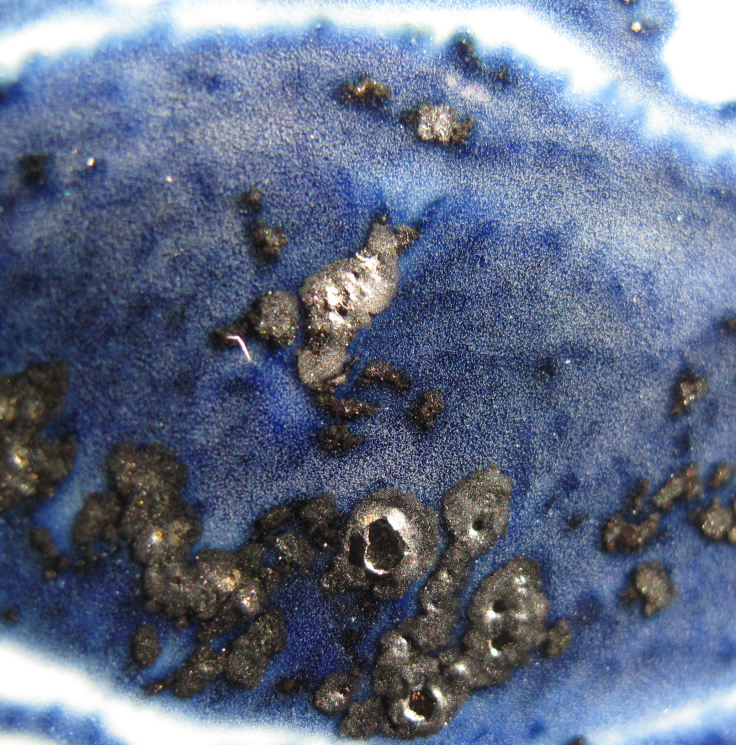 Figure 2
 Figure 3
 Figure 4
 Figure 5
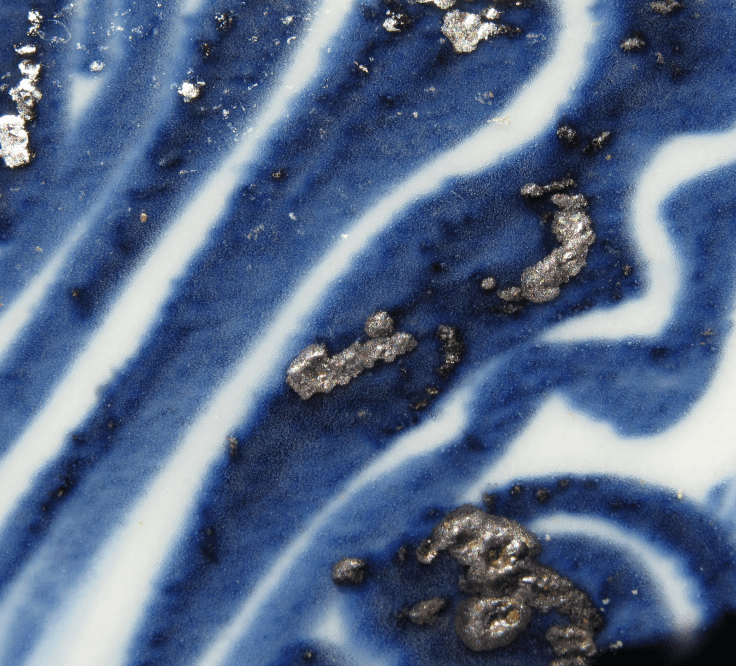 Figure 6
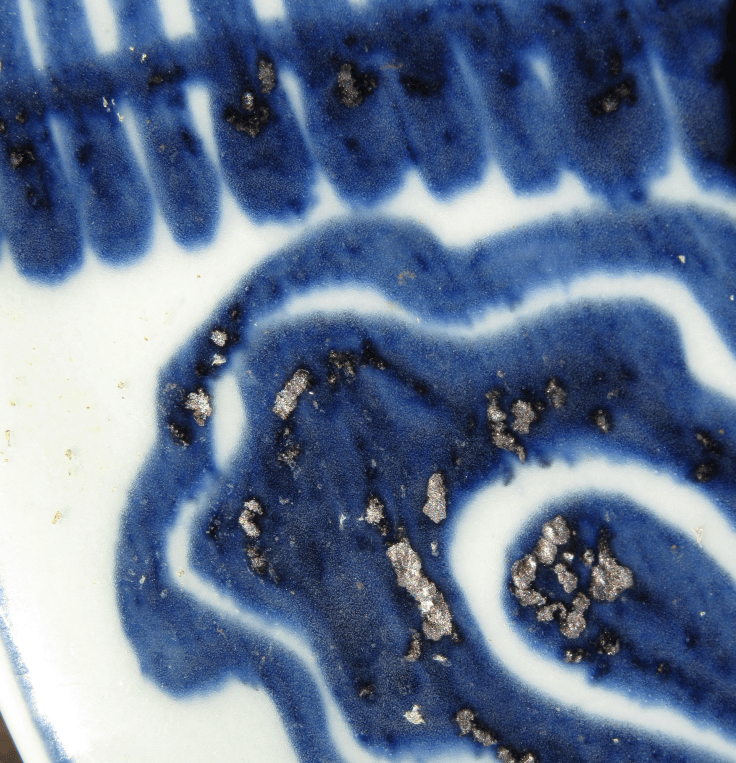 Figure 7
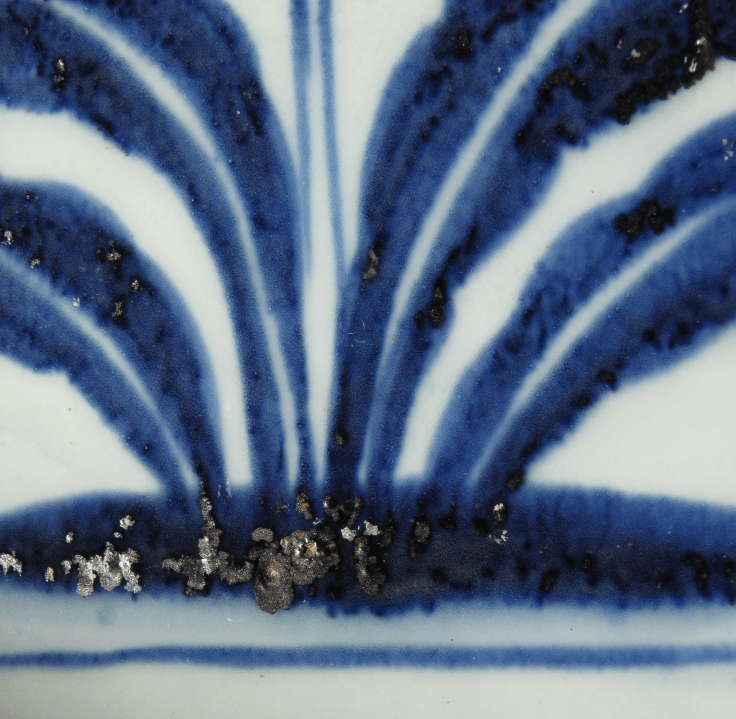 Figure 8
 Figure 9
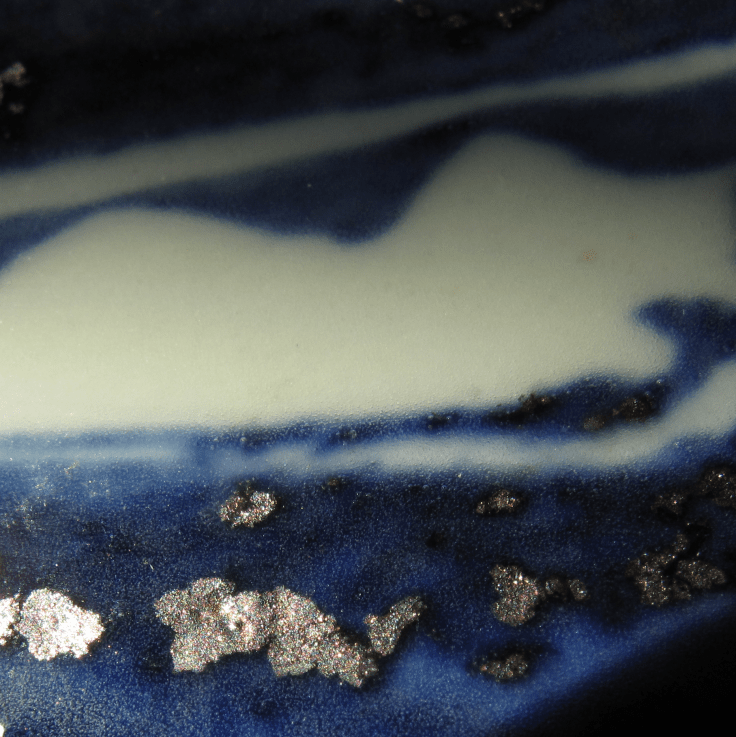 Figure 10
 Figure 11
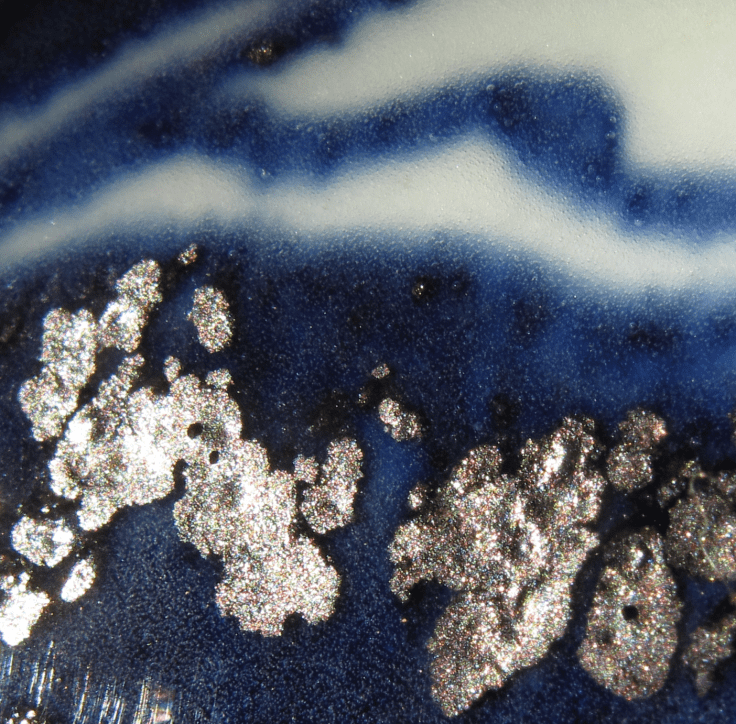 Figure 12
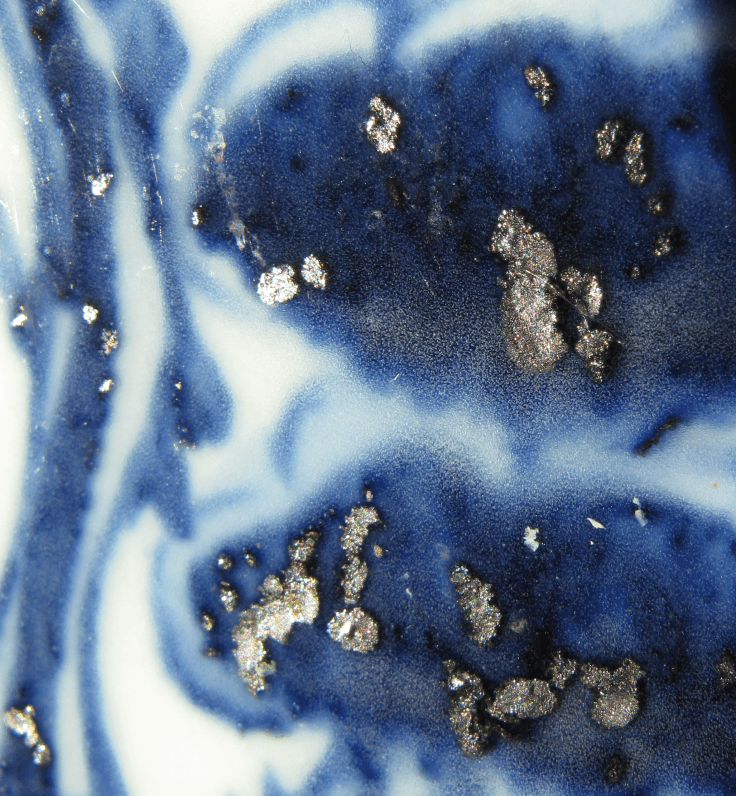 Figure 13
 Figure 14
 Figure 15
 Figure 16
In these photos (Figures 2-16), you have to look at not only the beautiful colors of the plaques, but the bubbles nearby, which many a time, are also colored by the reflection. The plaques are but colored particles aggregated together, and they need not to be uniform. that is why some part of the plaque is thicker than the other. Where the plaque is particularly thin, it might break apart and something that looks like a crater is formed. The blue dye pigment that has this feature must be quite different from those in the Yongle and Xuande periods, when this particular feature is almost not seen.
The colored bubbles seen here are in fact commonly seen in B & Ws that have plentiful of plaques, not only in the Yuan period, but also in Yongle and Xuande. It only means that in the glaze, there are many, many tiny colored particles floating around. Most of them would aggregate together to form a plaque. But there are still many that are still wandering freely. Some would attach to nearby bubbles. If there are enough of them attaching to a bubble, that particular bubble would be colored. If your photo can captured that feature, it would be very beautiful.
Now, in case you are looking for the flare and dripping effect, you can see them in any of these photos, but Figure 8 is one photo that you don’t want to miss.
You will also note the large and small bubbles. Most of the time, the large bubbles are rather few, and they are, like large bubbles in the Sumali Blue dye, lie within a pool of dark blue dye. But in certain areas, the large bubbles are more abundant (Figure 17). This only serves to support my theory that potters in those times had something like a palette to hold their different types of blue dyes, and they used different dyes to suit their purpose when they drew their motif. The small bubbles, on the other hand, are very tightly packed, and rather small. that is why lacunae formation is very obvious. Examples are plentiful in all these photos, and you do not have to look hard to find them. But I’ll show you more (Figures 18-22).
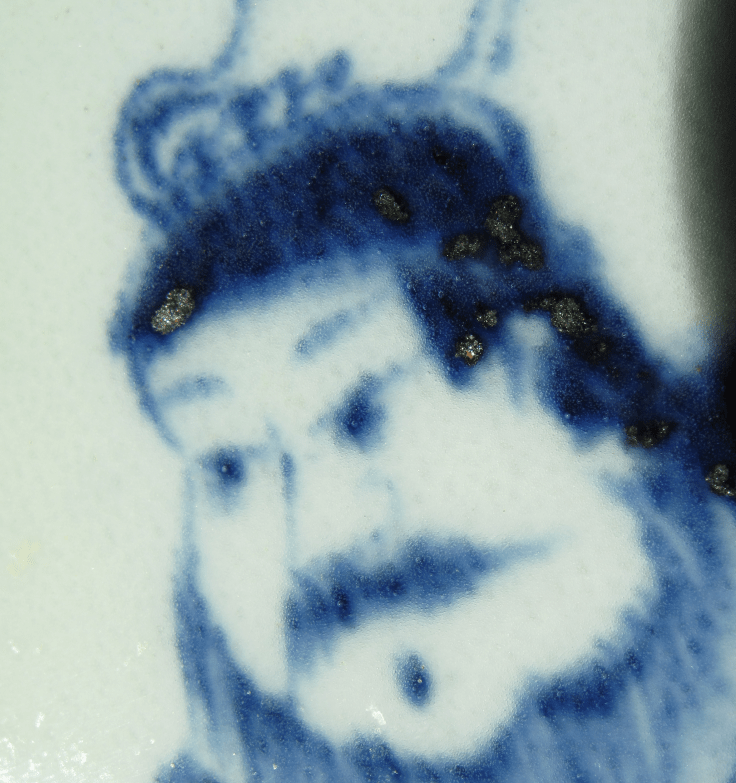 Figure 17
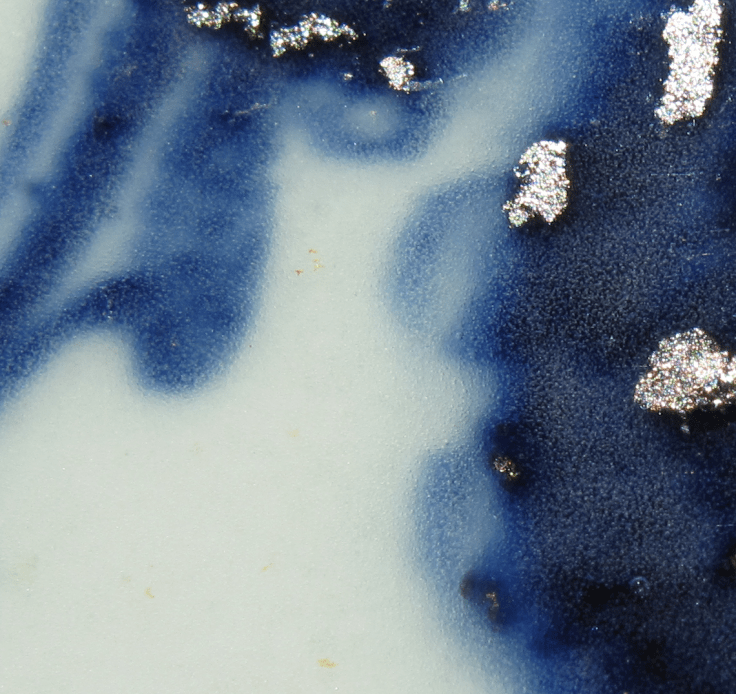 Figure 18
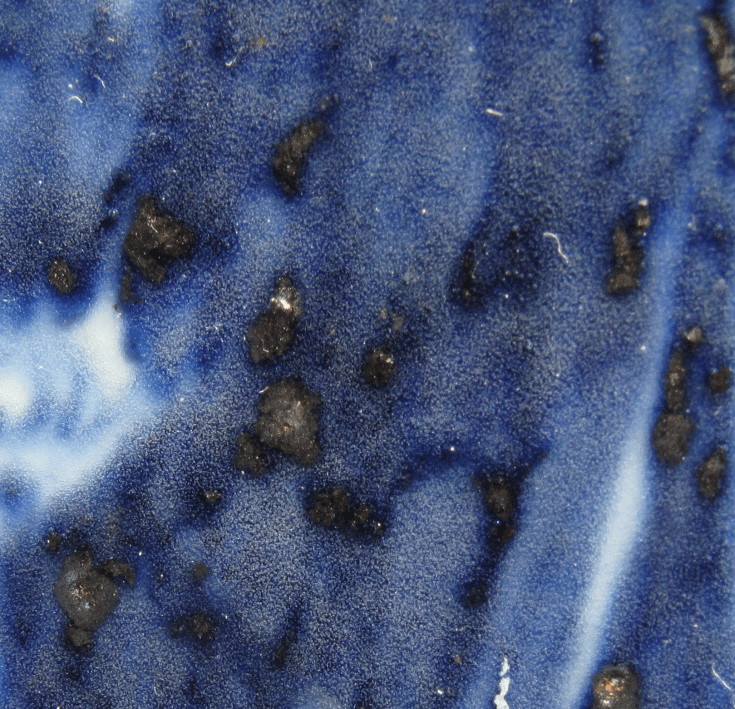 Figure 19
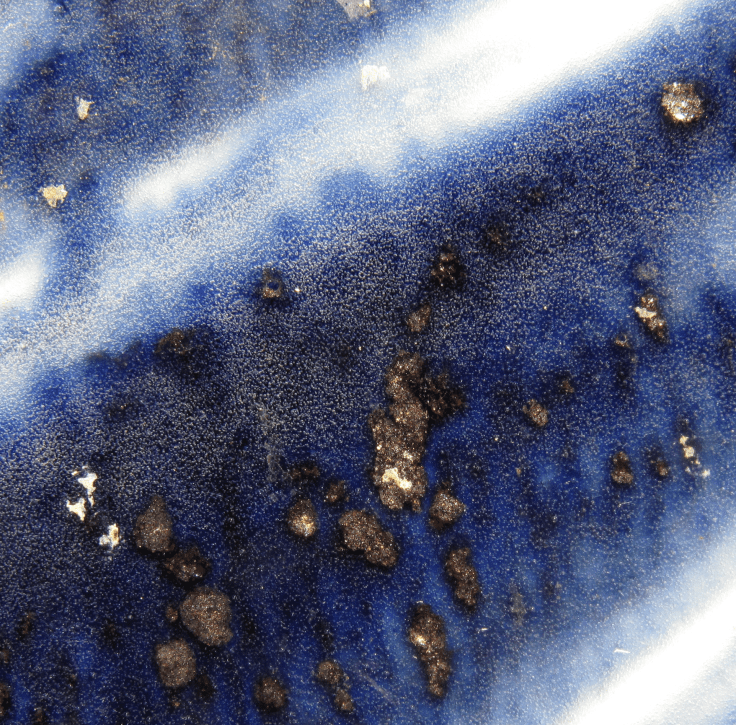 Figure 20
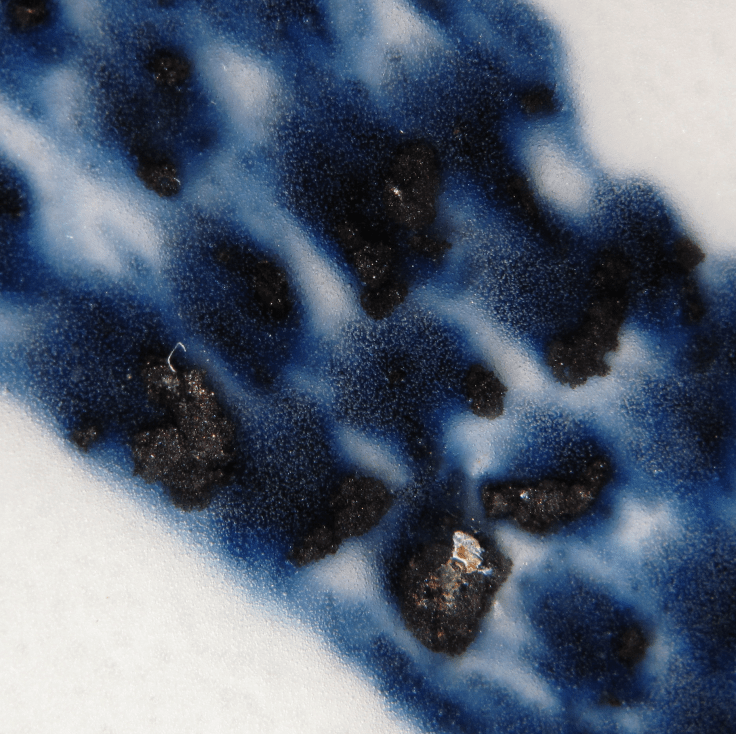 Figure 21
 Figure 22
In these photos, even without enlarging them, the lacunae are already very obvious. But if they are enlarged just a little bit, the lacunae stand out even better. I think lacunae like these are very charming and delightful. What do you think?
If you look at the blue patches of these photos, you will note that the blue background is not homogeneous—across the blue areas, there are streaks of deeper blue coloration spreading around here and there. They are more noticeable in Figures 19, 20, and 22. But if you look at all the blue patches carefully, you will see the same phenomenon. The potters, when they painted the ware, have no control over these. These are dye pigments deposited randomly in the blue patch. I call this mottling. And I have told you before that blue dyes showing mottling are dyes with very good quality. Let me show you more of these mottlings.
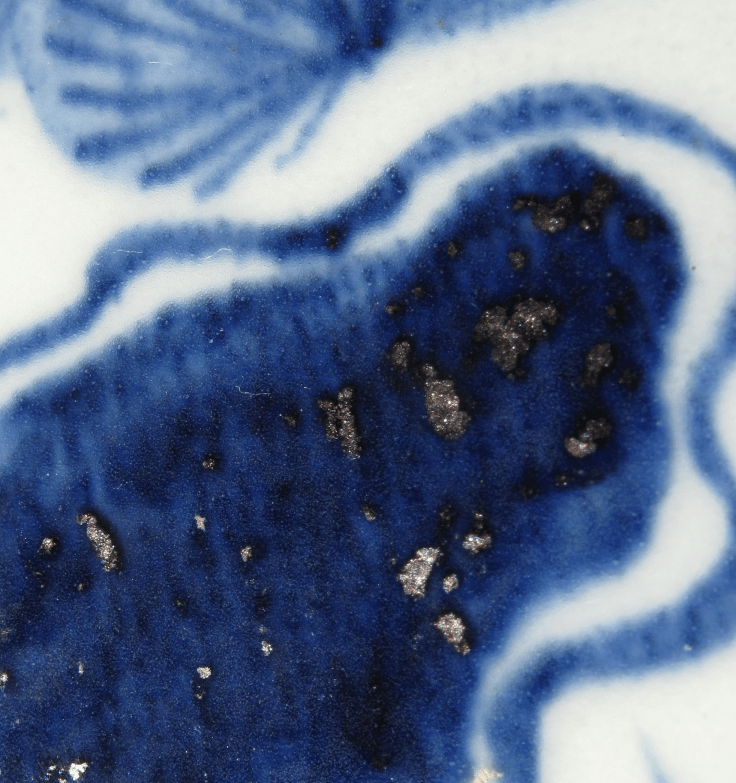 Figure 23
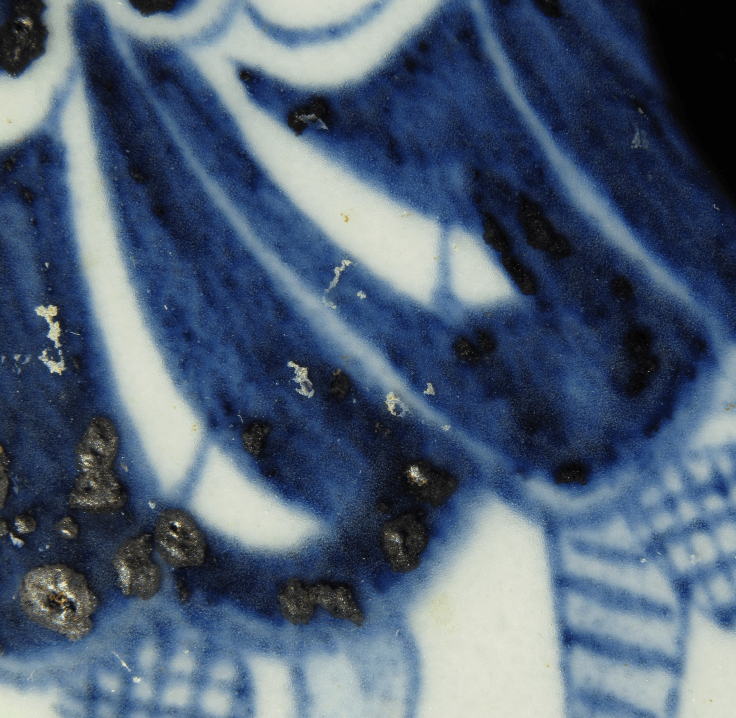 Figure 24
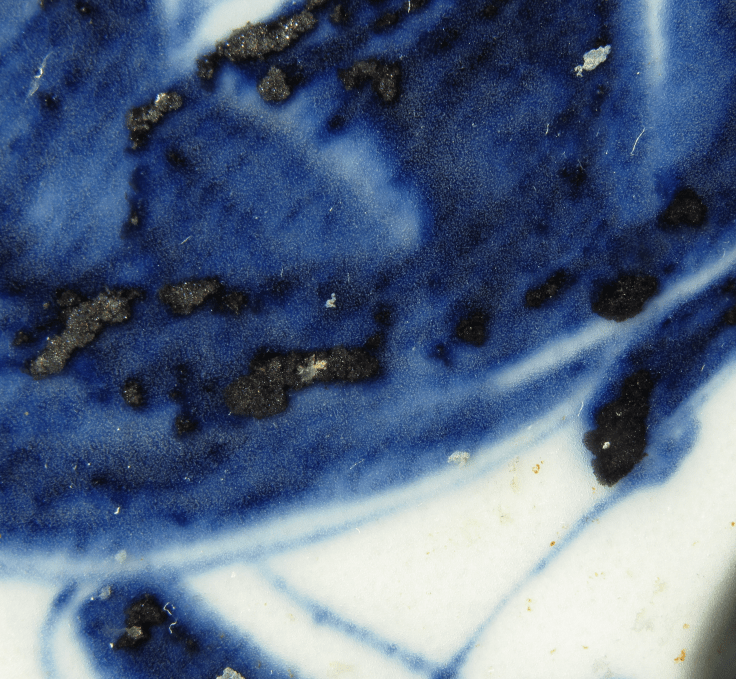 Figure 25
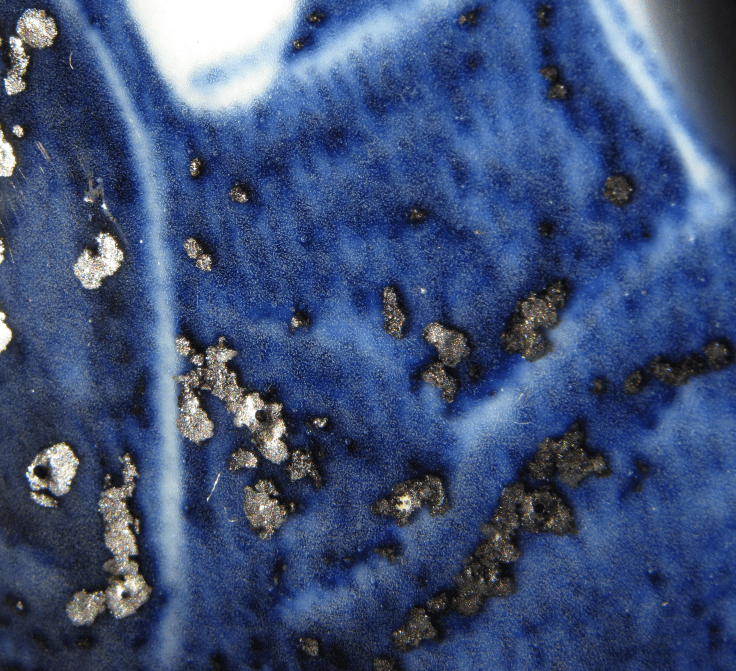 Figure 26
 Figure 27
Look at these mottlings again. Are they not wonderful? Are they not splendid?
I’ll add one more point here. The blue coloration of this flask, a peculiar kind of deep blue, is very typical of a good Yuan B & W.
With all these features, do you need an experienced expert to evaluate if the ware is genuine or not?
 yongleandxuande.com
Leave a comment