
When a ceramic collector comes across a ceramic ware that he likes, the first natural thing he would do is to see if it is real and genuine. This is not easy, even for an experienced expert. It is easier if the collector only collects Blue and White of the Yuan era and the early Ming period. We all know that potters in these periods use the Sumali Blue dye pigment to draw their motif. Once the collector can identify the blue dye as Sumali Blue, he can be sure that he is dealing with a genuine ware. The only problem here is that the Sumali Blue dye is not something that is very uniform. As we have seen in the previous articles, it is quite the contrary.
I don’t want to make a generalized statement here, but in Yuan B & Ws, most of the time, there are a lot of plaques. In Yongle B & Ws, you don’t expect that many plaques, and in the Xuande period, they are even less. And in the evaluation of Yuan B & Ws, the plaques are very important. In many instances, I can go so far as to say that just by looking at the plaques, you very much know whether you are dealing with a Yuan ware or not. In this Yuan charger that I am going to show you, I’ll focus on the plaques. They have very distinctive features that are characteristic of Yuan plaques. In examining these plaques, I have told you before, but I’ll repeat it here, it is essential that you do it under direct sunlight. Not in daylight, but directly under the sun. That is when you can see the reflections best.
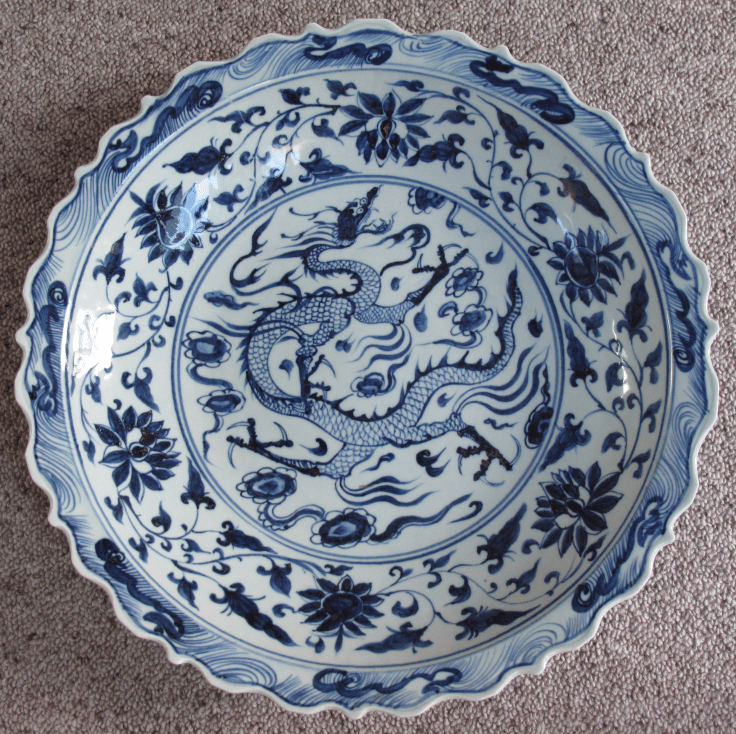 Figure 1
This charger measures 17 1/4 inches in diameter. Let me begin by showing you some of the very characteristic plaques (Figures 2-10).
 Figure 2
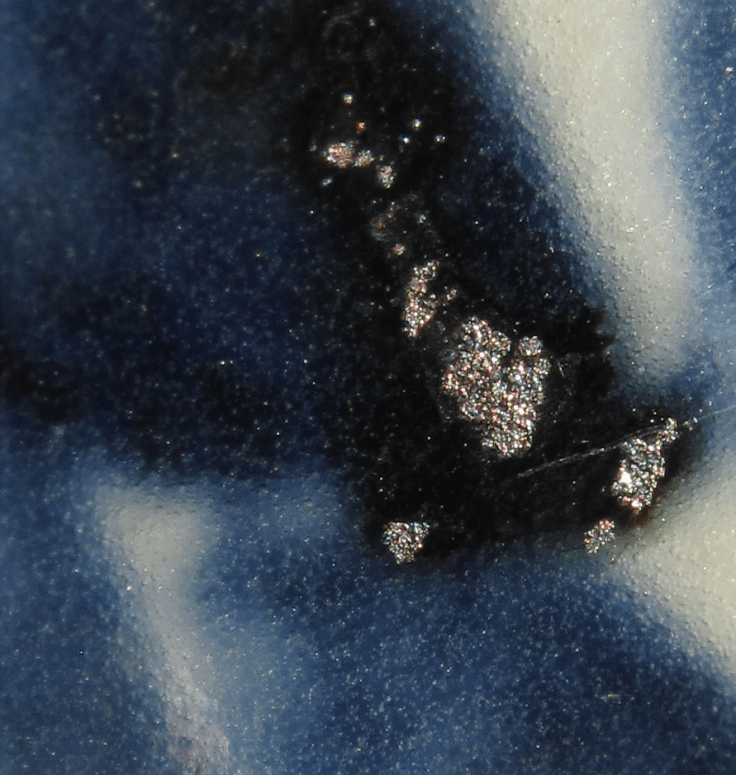 Figure 3
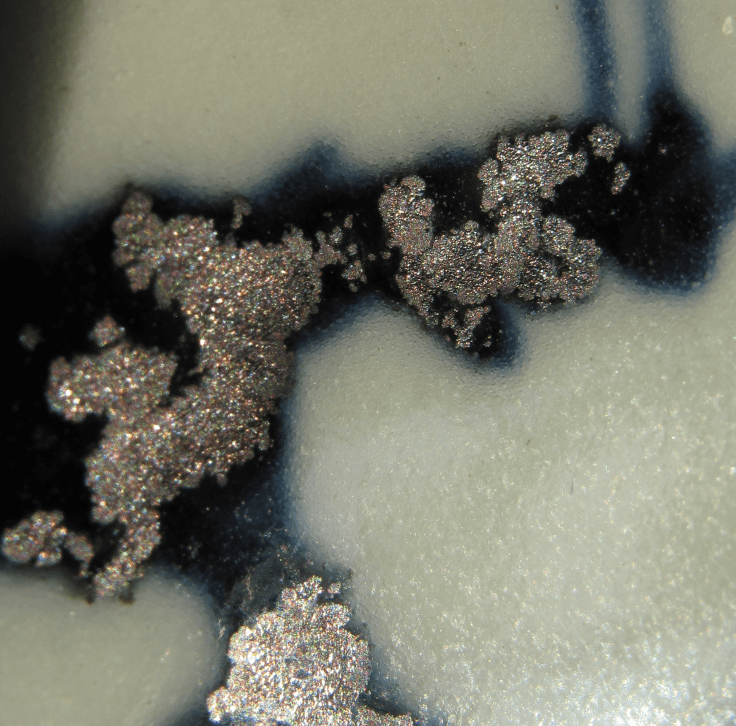 Figure 4
 Figure 5
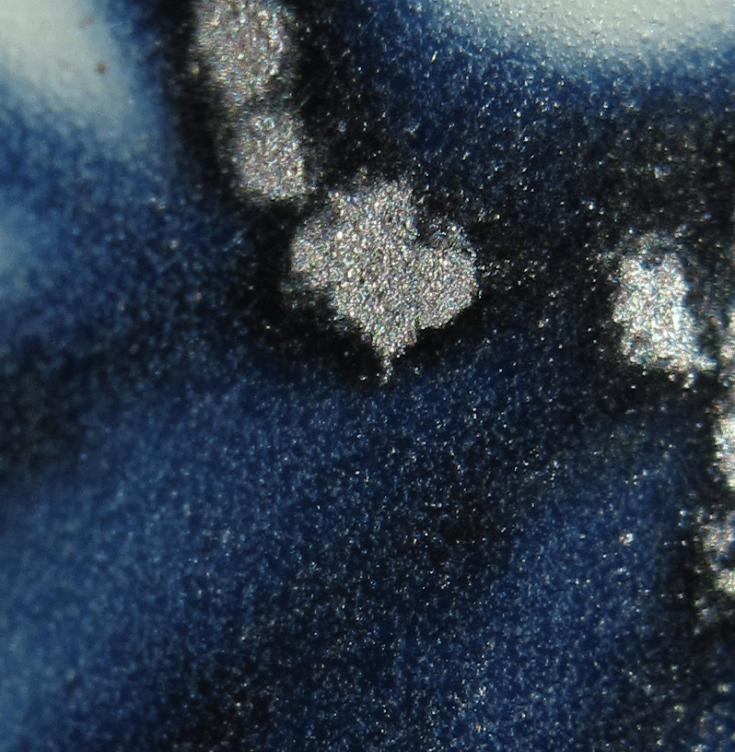 Figure 6
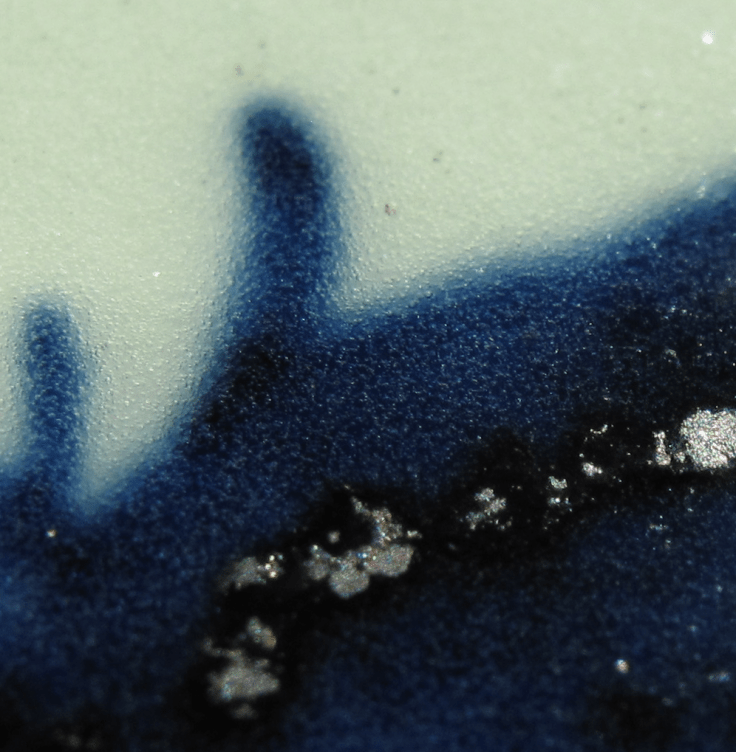 Figure 7
 Figure 8
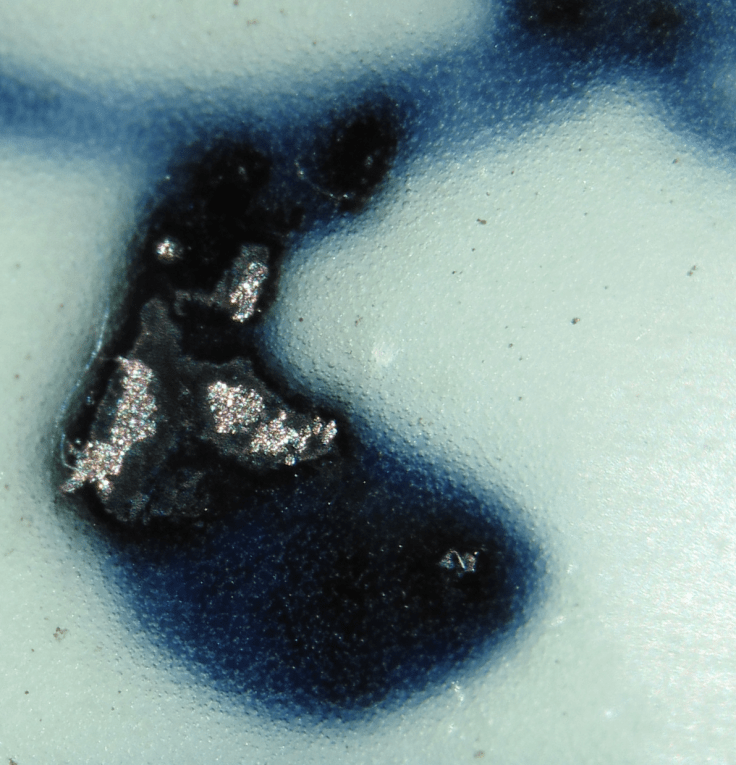 Figure 9
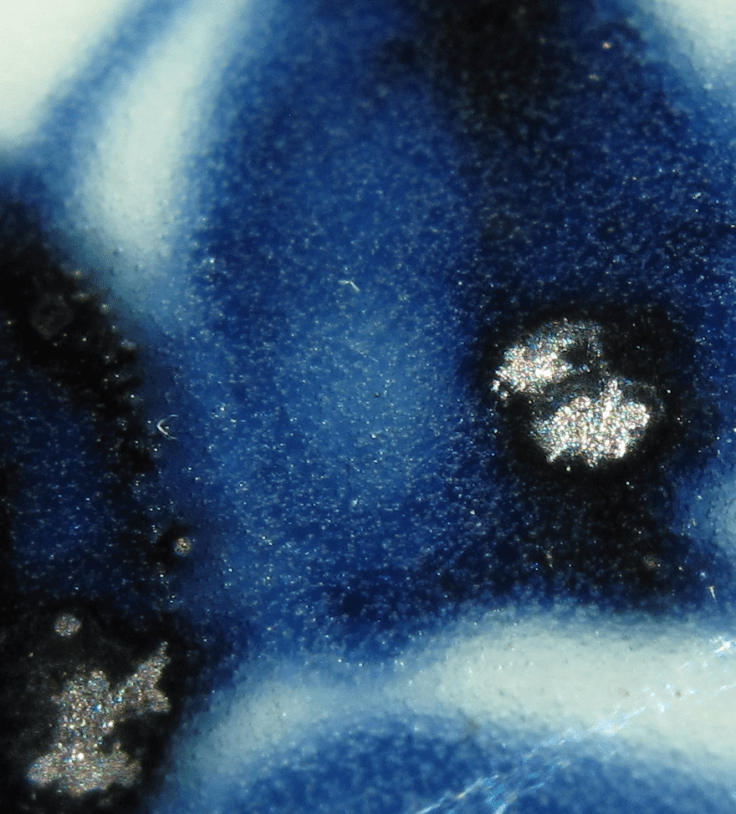 Figure 10
Look at these photos carefully. The plaques are vey colorful. Particles of highly reflective index dotted the main plaques here and there. Many a time, these highly reflective particles drifted beyond the margin of the main plauqe, and become brightly lit dots in nearby territory of different colors. In Figure 6, these color particles are so extensive that many bubbles in adjacent areas are all colored. In Figures 8-10, these drifted away color particles coalesced partly together as to form a thin veil around the main plaques. Are they not unique?
I suppose all these brightly colored particles that flow around the plaques should have been part of the main plaque, but for whatever reasons, they fail to form part of it. You must note that this phenomenon is not unique to Yuan B & Ws, and you do see such appearances in Yongle and Xuande wares. But then, they are much more uncommon, and the particles not so colorful.
I need to point out to you that these plaques, when you look at them with the naked eye, appear to be rather coarse aluminum foils. You do not get the very refine feeling that you have when looking at plaques of Yongle and Xuande wares.
What do you think will happen when these plaques are examined in daylight, but not under the sun? Or when they are photographed under LED light. Figures 11-16 are taken under LED light, and you can tell the differences.
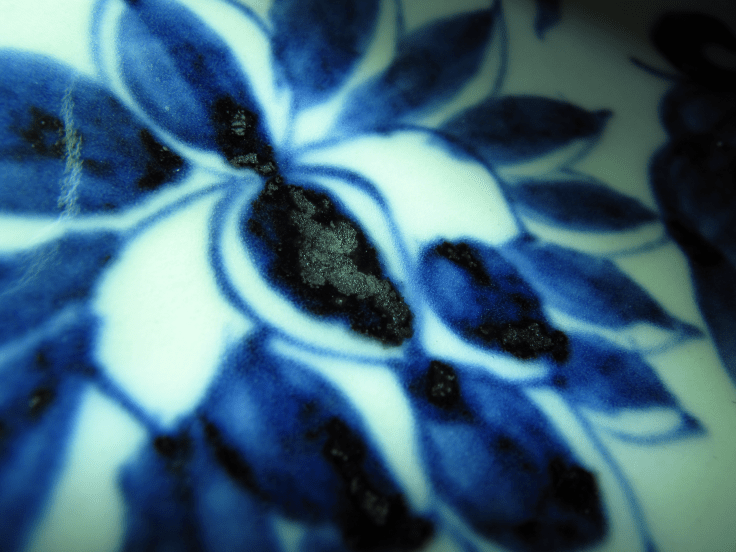 Figure 11
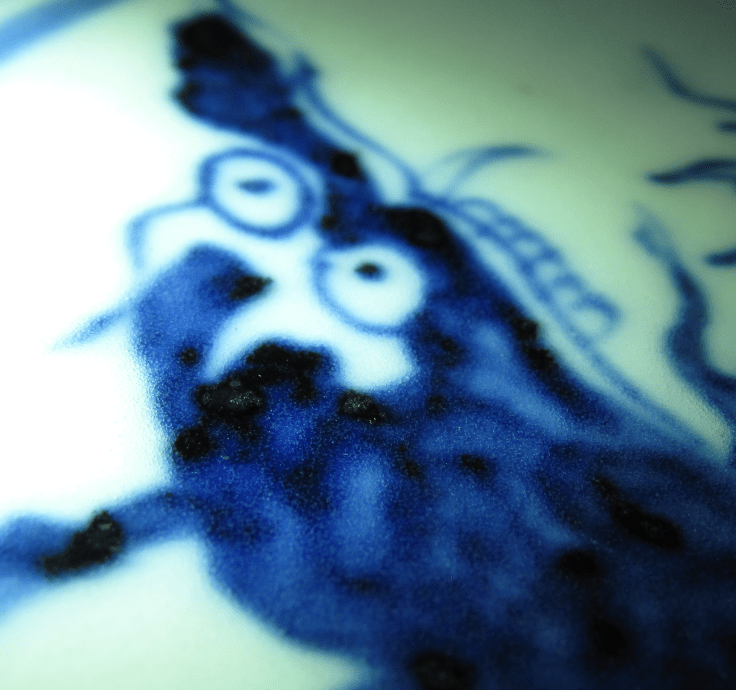 Figure 12
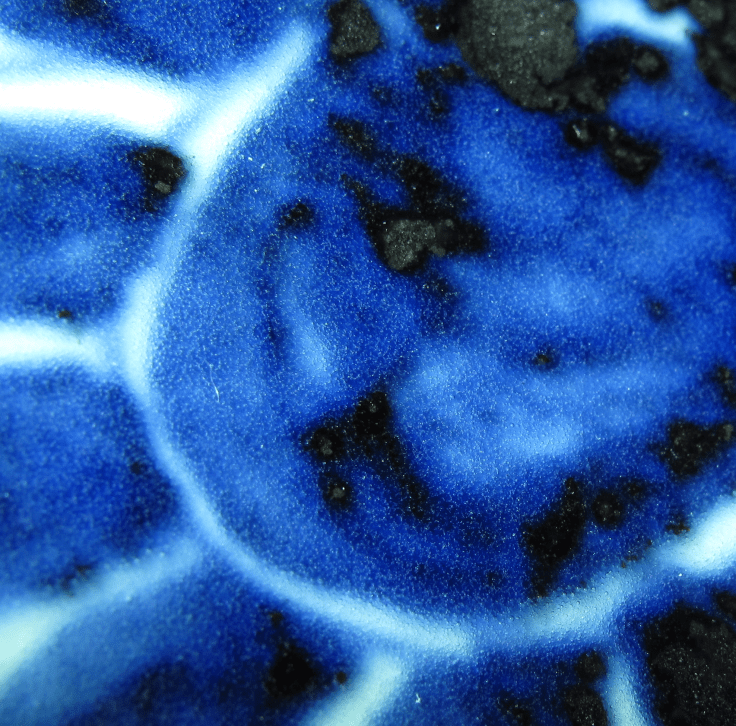 Figure 13
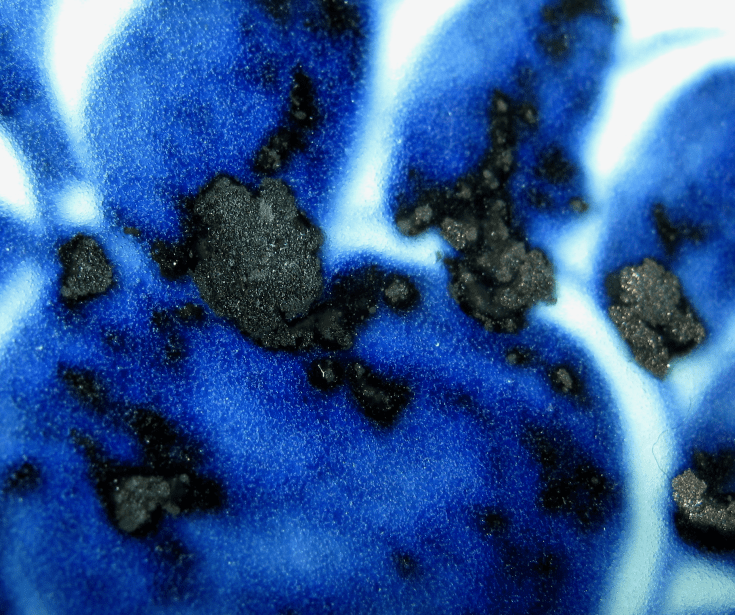 Figure 14
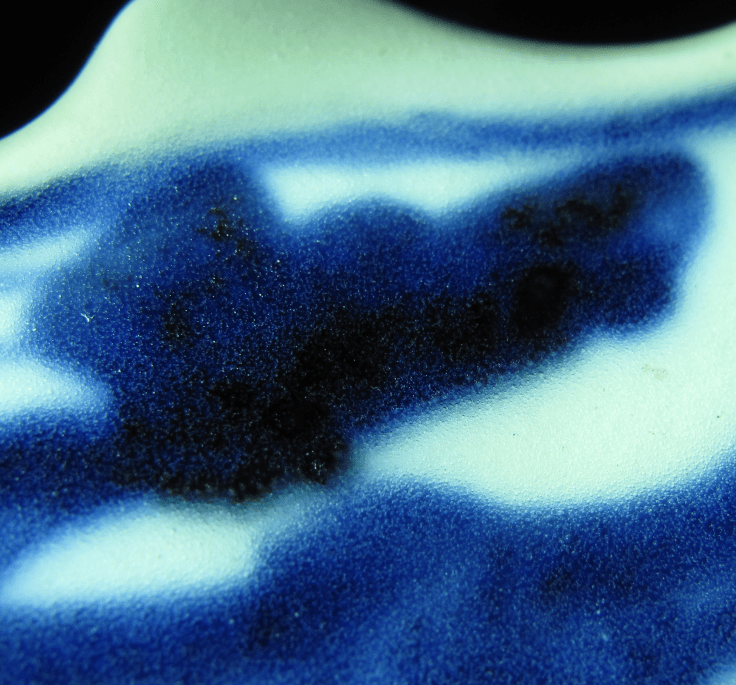 Figure 15
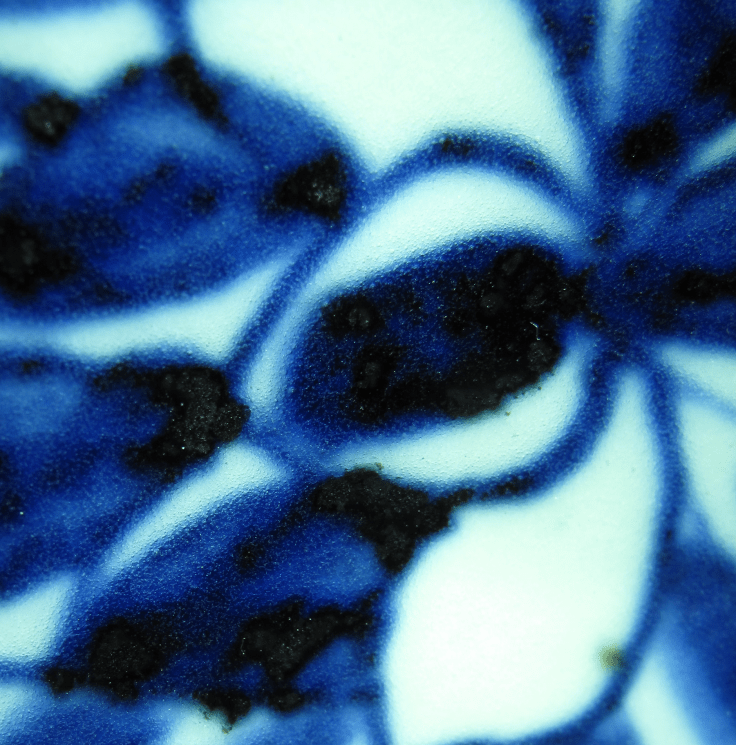 Figure 16
Now, in all these photos, try to pay attention to the flares, drippings and the bubbles. You will note that the features of all these fall conveniently into what I have previously described to you. The large bubbles, sometimes forming a string (figure 10) all lie within the dark blue coloration, many a time, right next to the plaque. The large bubbles, like typical Yuan B & Ws, are not particularly large. They are obviously not as large as some of the Yongle ones. And they do not have very small bubbles immediately surrounding them, like satellites. They are also typically pearly, translucent rather than transparent.
Look at the flares, and the drippings. And look at some of the small blackish spot that are break-aways from the mainly blackish mass. They break away from the main mass because the components of the tiny spot has constituents that have a greater specific gravity, allowing them to fall under gravity faster than the main mass. As I have told you before, dyes showing these break-away spots tend to be dyes of very good quality, and you need to take note of this too.
Another rather spectacular phenomenon seen in Yuan B & Ws is with the small bubbles. Small bubbles are small in Yuan wares, and often very tightly packed. But these tightly packed small bubbles do not give an impression of chaos or disarray. There is no feeling of a disoriented state. The only reason is that these small bubbles are arranged in lacunae, tightly packed lacunae. Let me show you photos of these (Figures 17-23).
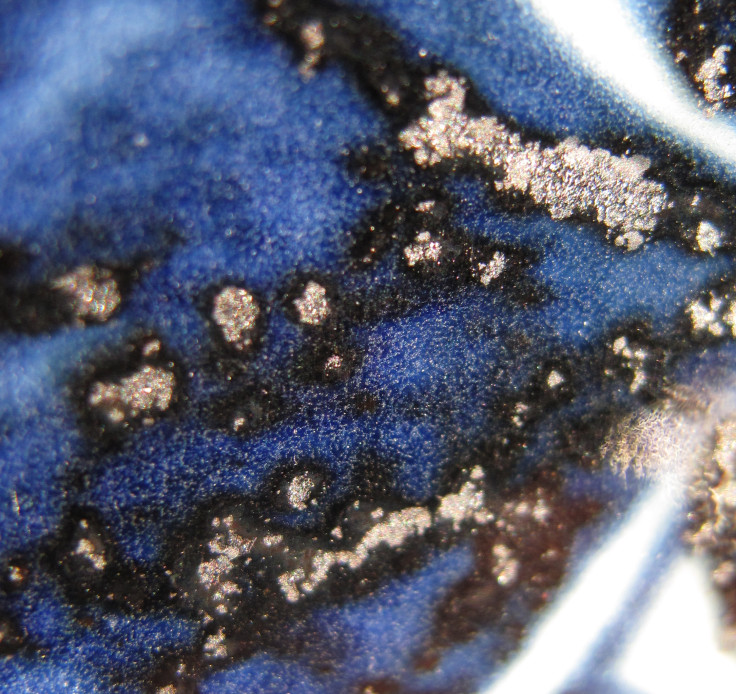 Figure 17
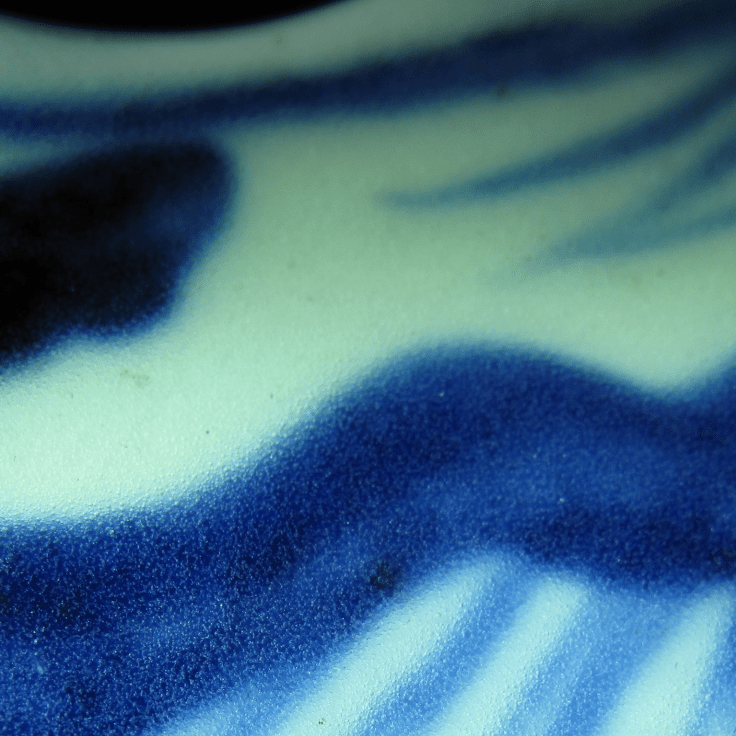 Figure 18
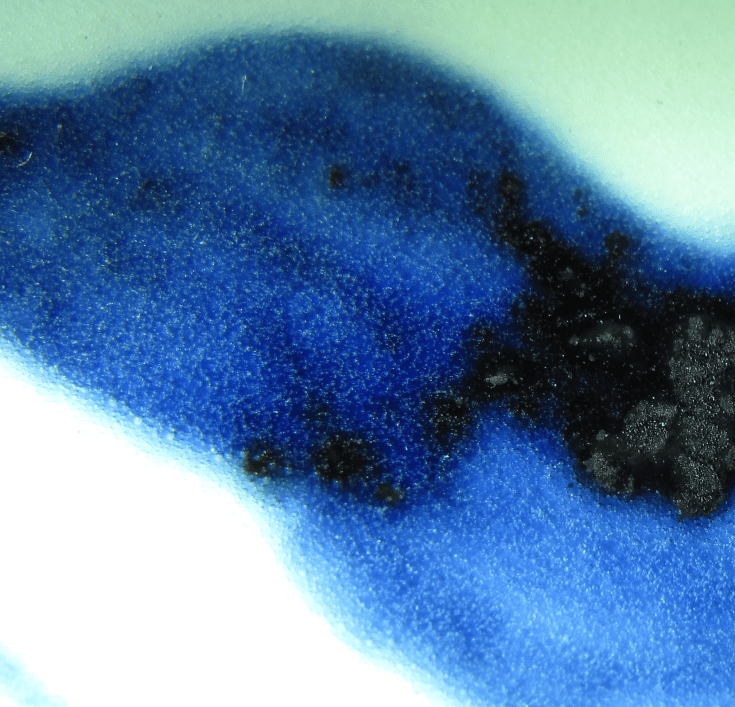 Figure 19
 Figure 20
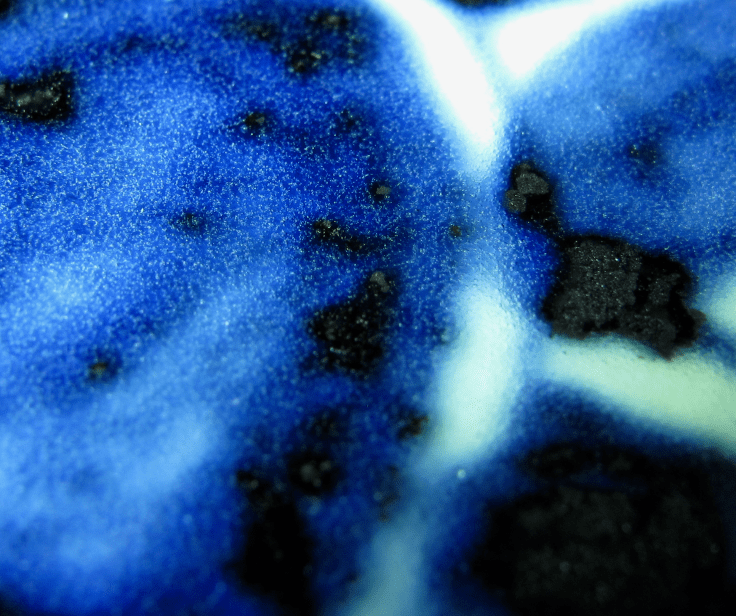 Figure 21
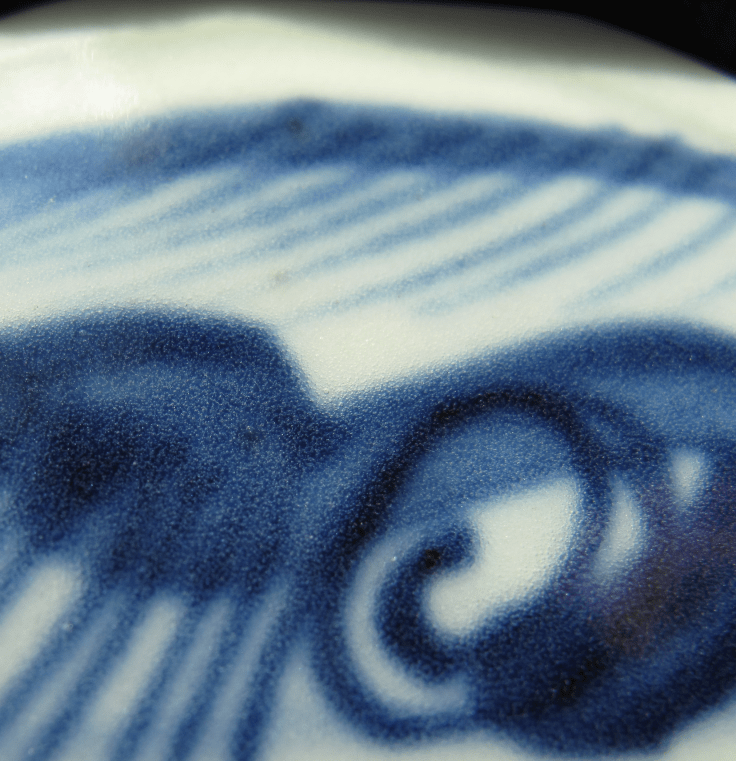 Figure 22
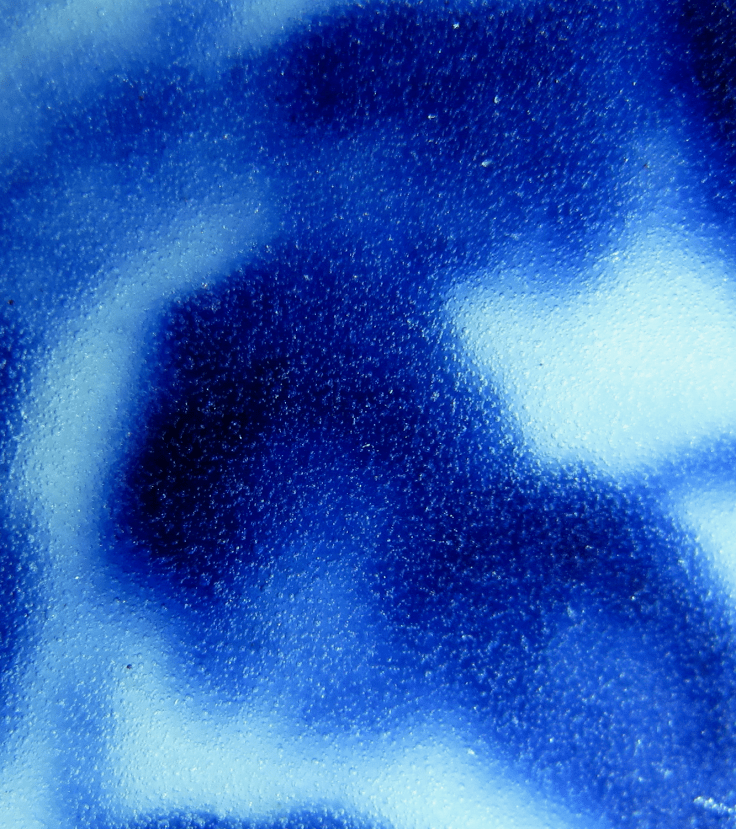 Figure 23
 Figure 24
In some of these photos, the lacunae are not immediately obvious. Enlarge the photo slowly bit by bit, there is a point when you can see the lacunae stand out, and you’ll be amazed how beautiful these lacunae are, and it is in the Yuan B & Ws that this phenomenon of beautiful lacunae occur most frequently.
If you look at all these photos again, and note their specific features, would you be totally convinced that you are dealing with the Sumali Blue dye. Even without looking at the motif, which is plainly Yuan, you are quite certain that this is a Yuan B & W.
 yongleandxuande.com
Leave a comment