
In the past I have shown you quite a number of Yuan Blue & Whites. In the last article, I showed you a large Zhihu, and in the process, I showed you the plaques and bubbles of the Zhihu. The plaques and bubbles are not exactly the same as those plaques and bubbles in the other Yuan B & Ws. They are all similar, but not exactly the same. Every ware has its own characteristics. This has a lot to do with the nature of the Sumali Blue dye pigment. But the fundamental problem here is that we do not have a clue as to the composition and constituents of the dye. We do not know even its place of origin. So, for us to understand more of the variations of the dye, the best approach is to look at more wares that are painted with the Sumali Blue dye. We need to know that the dye has a clear pattern of presentation, and certain characteristics. So here, again, I am going to show you another Yuan B & W, a vase, and you can compare the characteristics of this vase with the Zhihu in the last article, and the other wares that I have shown you here in this blog. It does not matter if the ware is a Yuan, a Yongle or a Xuande. Just look at the characteristics and you will know more about the presentation of the plaques and bubbles of the Sumali Blue dye.
This Yuan vase is also quite large. It stands at 19 1/4 inches tall.
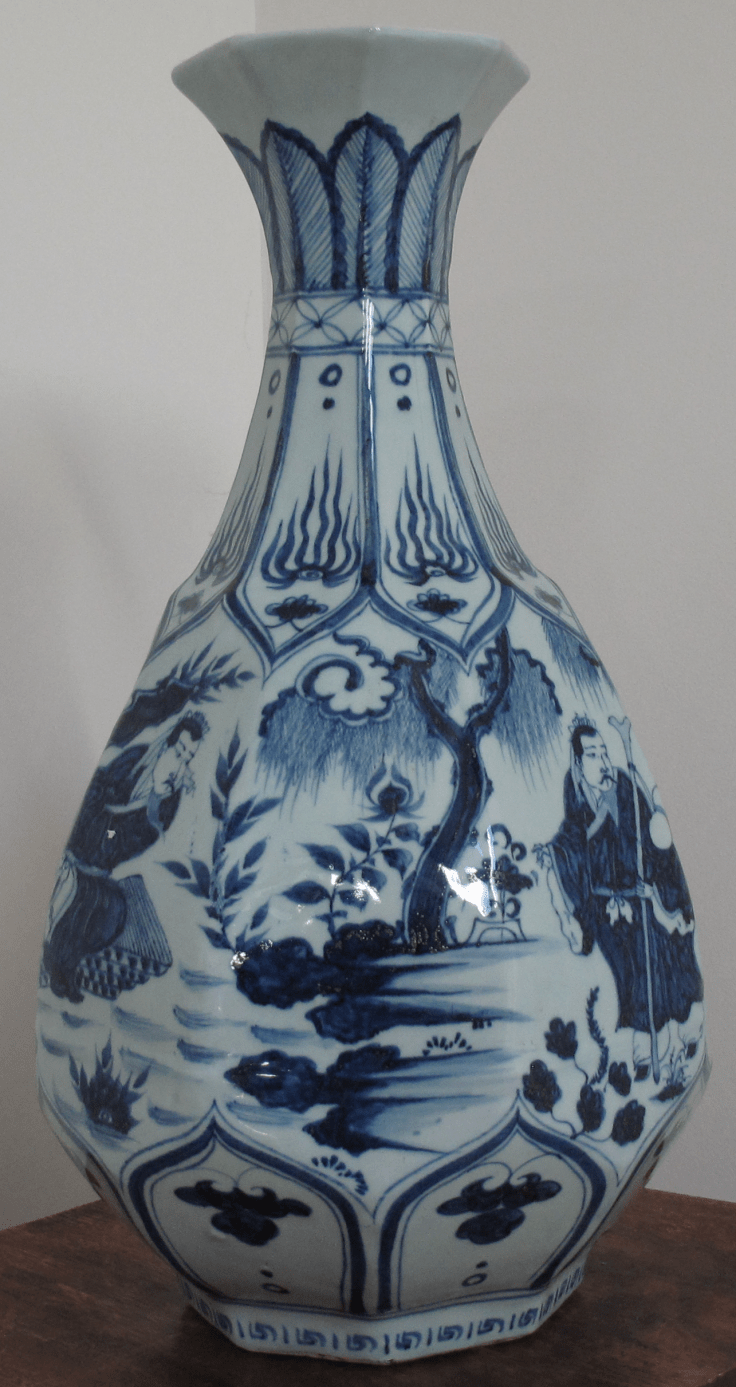 Figure 1
Let us first look at the plaques of this vase (Figures 2-8).
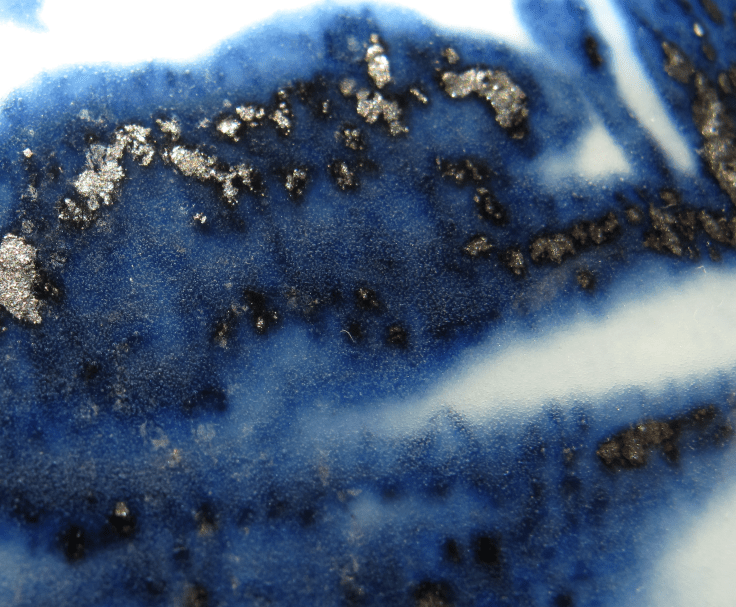 Figure 2
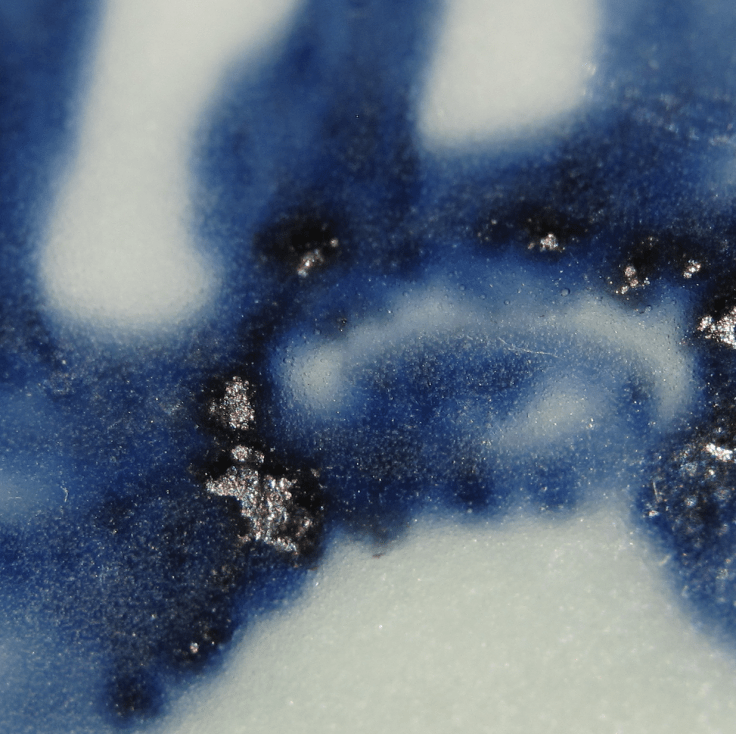 Figure 3
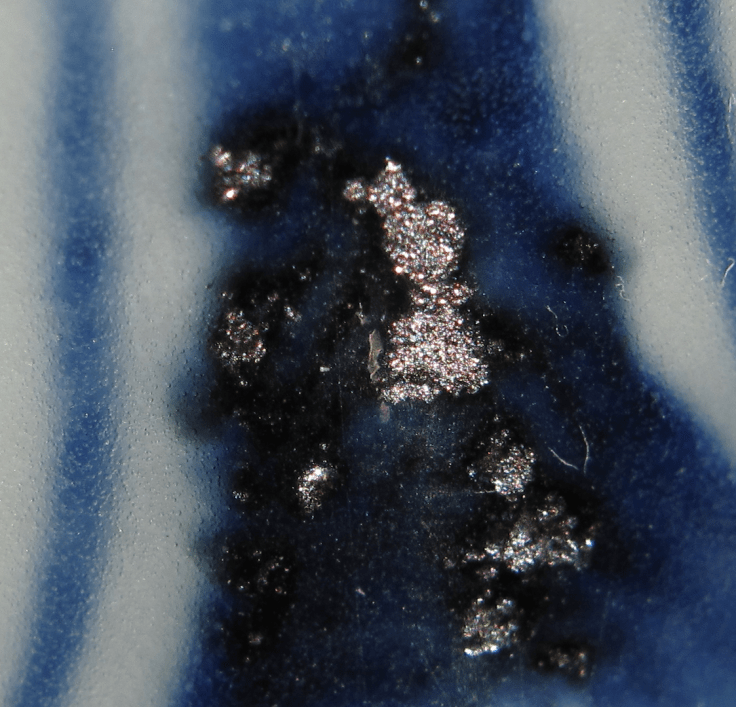 Figure 4
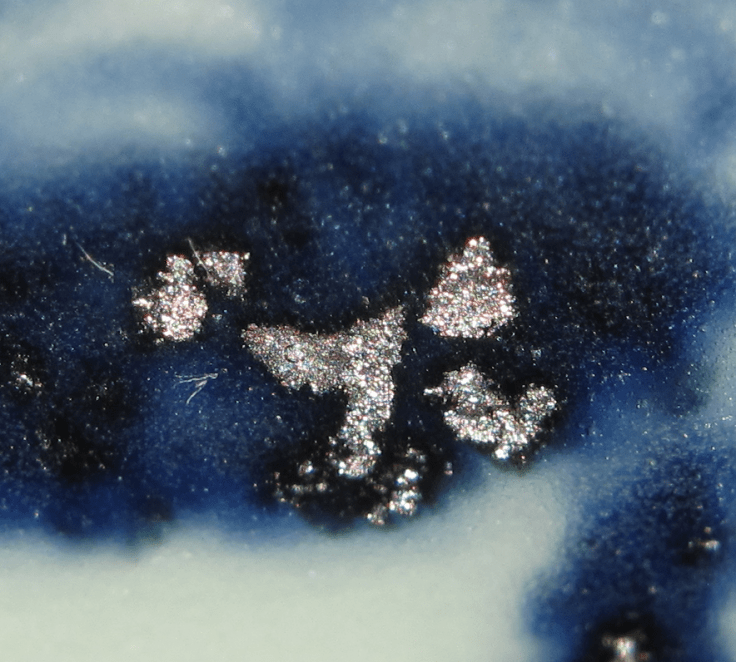 Figure 5
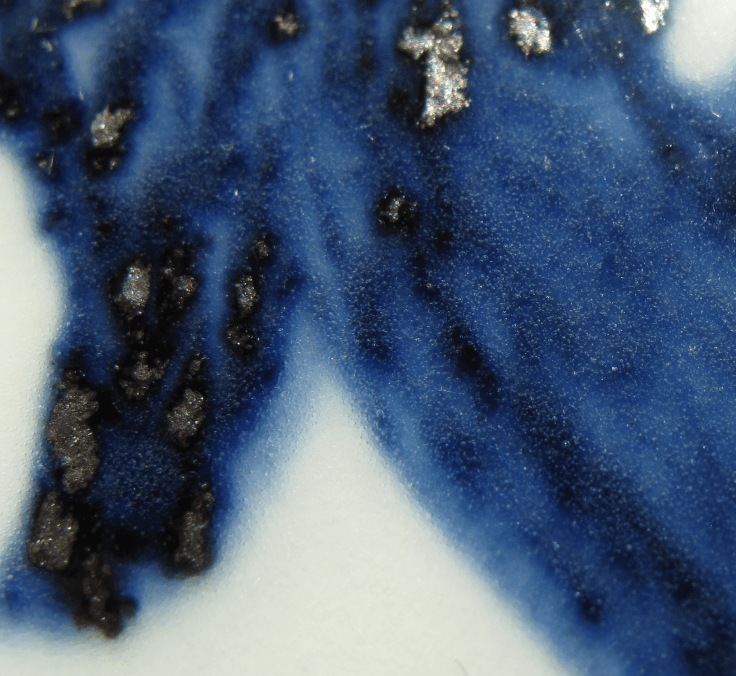 Figure 6
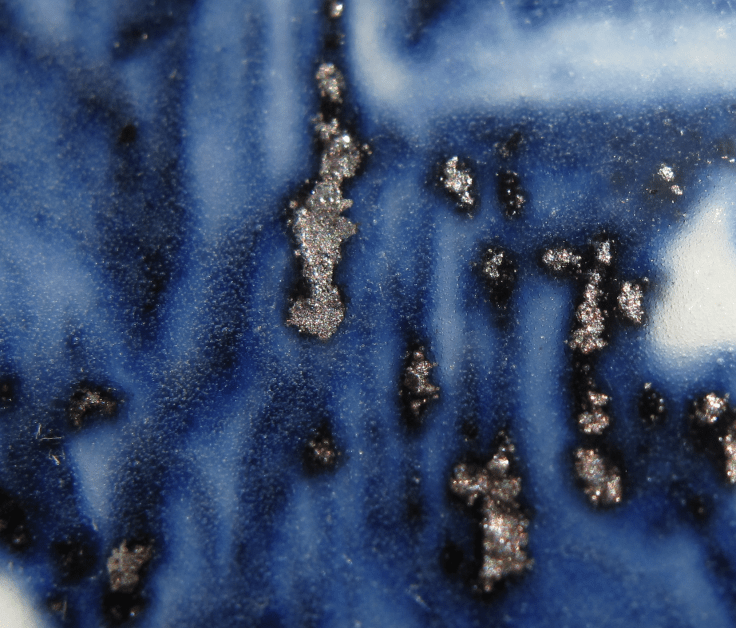 Figure 7
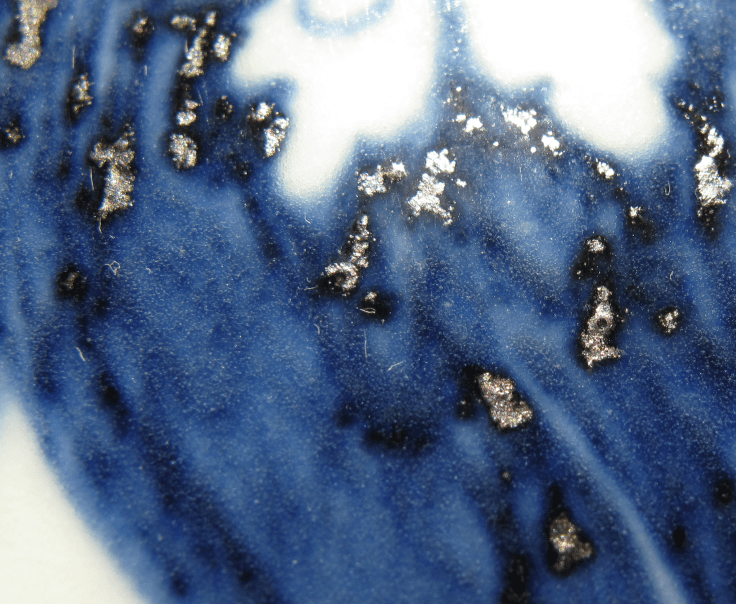 Figure 8
 Figure 9
Look at these plaques carefully. They have the common features seen in Yuan wares. The plaques are large and you have quite a large number of them. They are quite colorful, though much less so when compared to some of the plaques with muddy layers only in the Yongle and Xuande wares. And they give you a feeling of coarseness, quite unlike those floating foils in Yongle era, which are much finer. They are rather like coarse sands in some beaches as compared to very fine sands in other beaches. The shiny metallic foil floating on top tends to be large in one continuous sheet. In figure 2, figure 8 and Figure 9, one can actually see holes in some of the sheets. I suppose the holes are created when the gas bubbles trapped below the sheet become too large, and they have no way to go except to burst through the weakest part of the foil. These photos are all taken under sunlight.
When photos are taken under LED light, or LED light combined with sunlight, the plaques reflect the colors differently. They are no longer as colorful. And you can tell that the photo is taken with the LED element in it by the shade of the blue coloration—it is a different shade of blue.
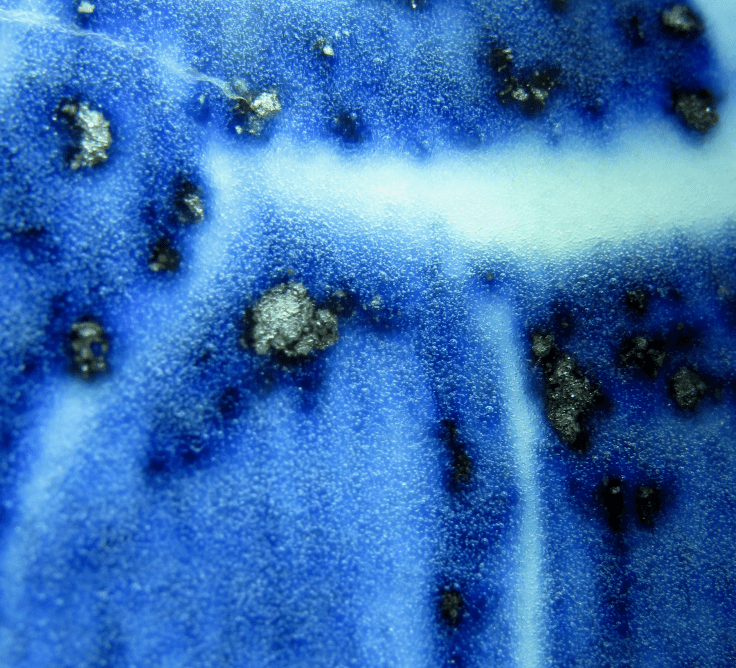 Figure 10
 Figure 11
 Figure 12
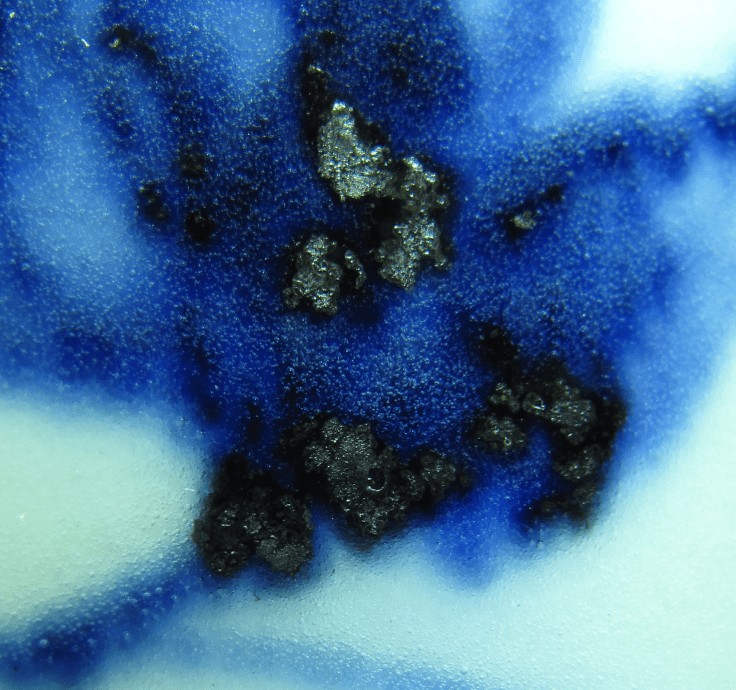 Figure 13
 Figure 14
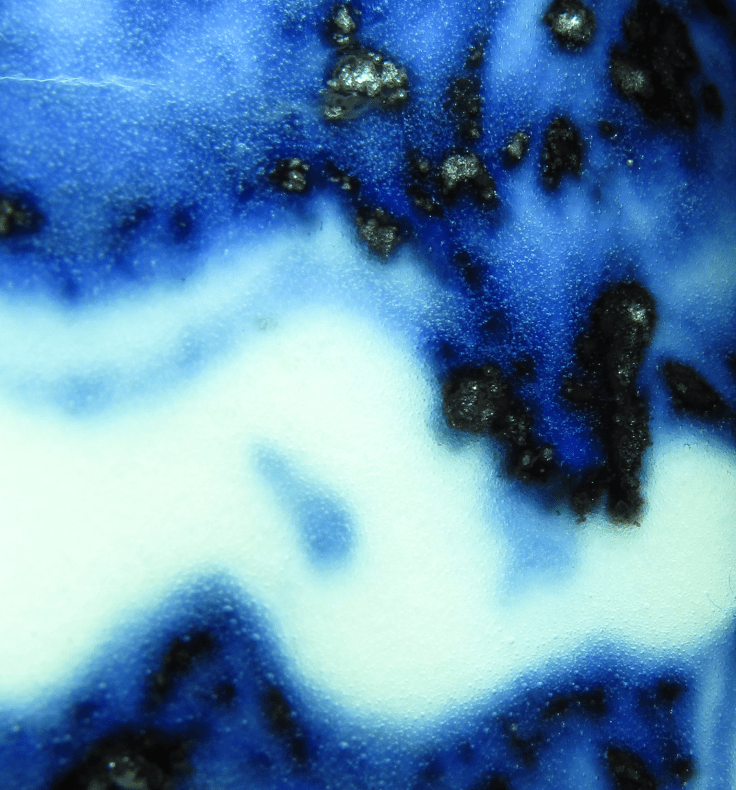 Figure 15
 Figure 16
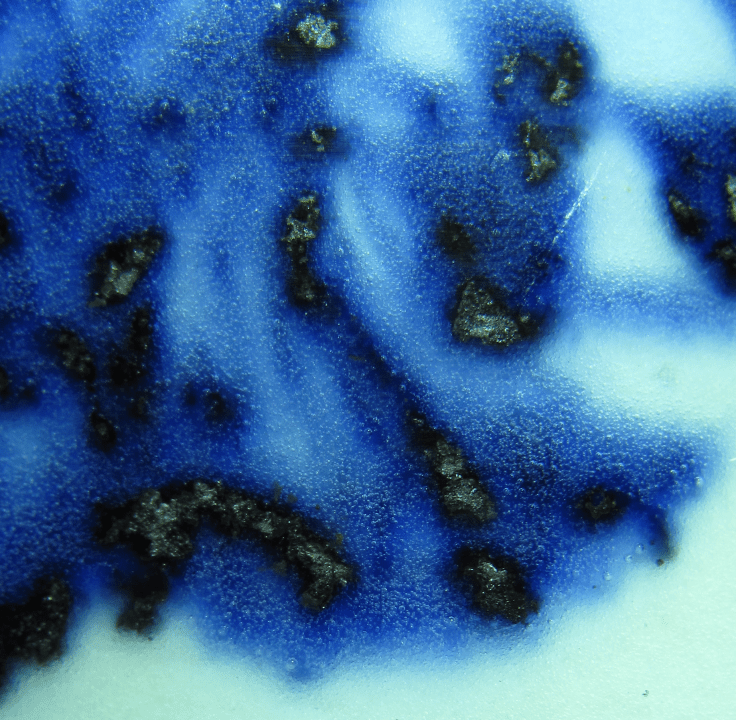 Figure 17
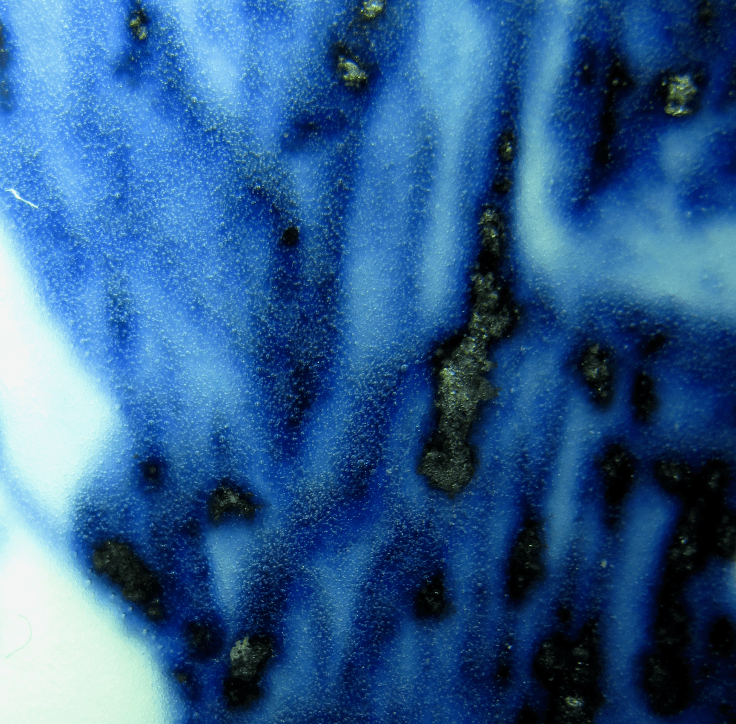 Figure 18
Note that in these photos (Figures 10-18), the coarse granules become less obvious. They look as though they become coalesced together with a lot of denting on top. When granules reflect colors that are not distinguishable from one another, this is the result.
You must have also noticed that these plaques are all sitting in a small pool of blackish dye that is a typical characteristic of the Sumali Blue dye. The amount of dye applied must have been very liberal for the blackish color to be so intense. Look at the dripping effect and you know what I mean, particularly at the edge of the dye. Good example can be found in Figures 12, 13, 15, and 17. In many of these dripping, you can also find small blackish dots breaking away from the main plaque/dripping. These are beautiful and I’ll say it again that the occurrence generally indicates that the quality of the dye is good.
In these photos, you can also see that the bubbles behave in a typical manner of the Sumali Blue dye. You have large and small bubbles, though the large bubbles here are, to me, just a little bit smaller than the large bubbles in other Yuan wares, not to say those in the Yongle era. The small bubbles are also smaller, and very tightly packed, basically allowing the formation of very beautiful lacunae. Enlarge some of these photos, at some point of the enlargement, nice lacunae can be seen very well. Again, note the large bubbles sitting in a pool of dark blue dye, and many a time, lurking around the plaques. I’ll show you more photos of these features (Figures 19-30).
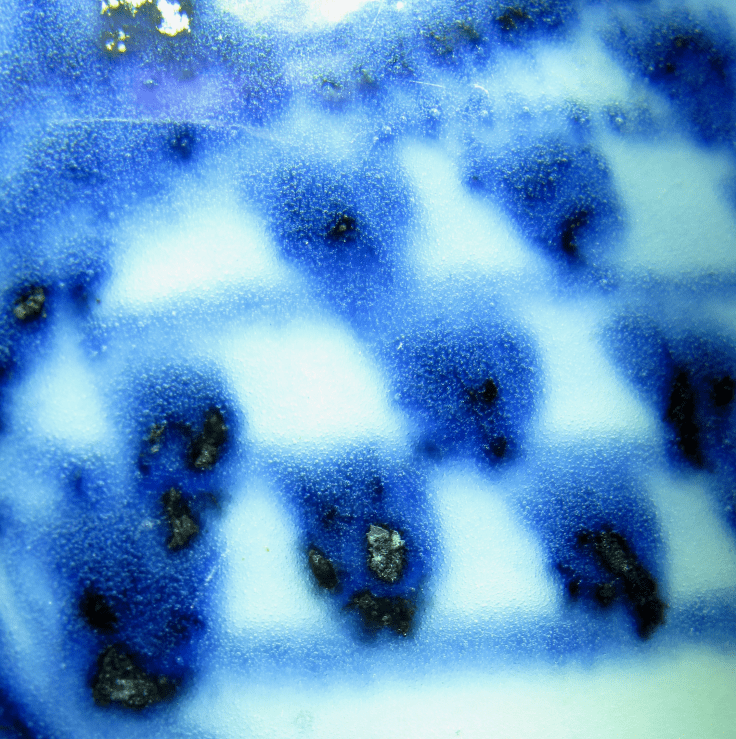 Figure 19
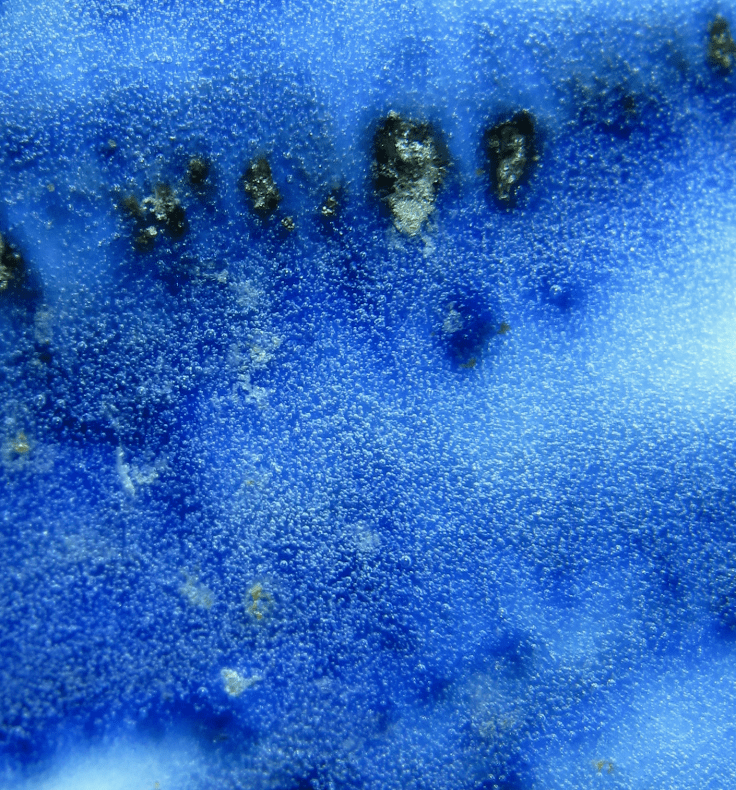 Figure 20
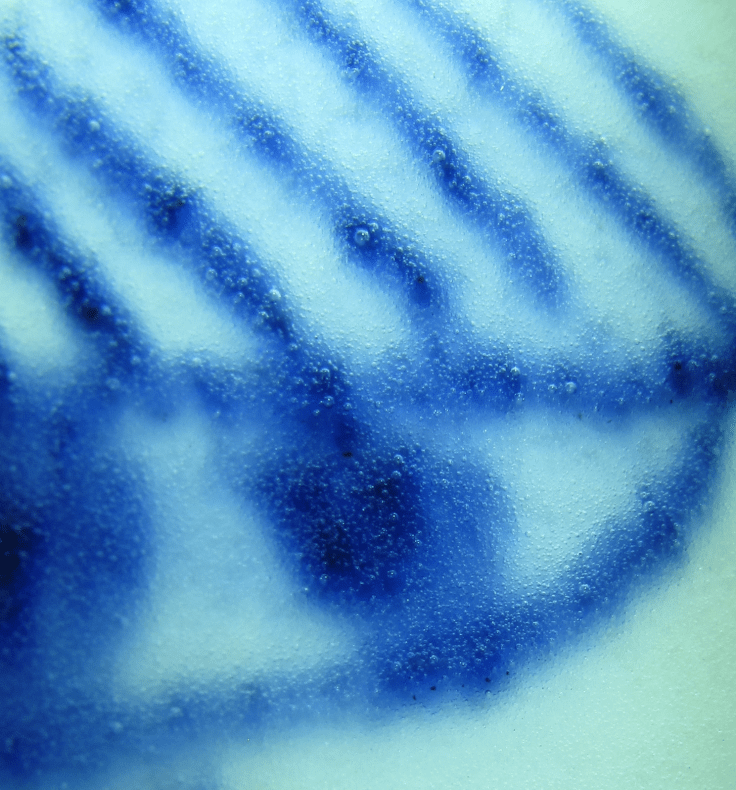 Figure 21
 Figure 22
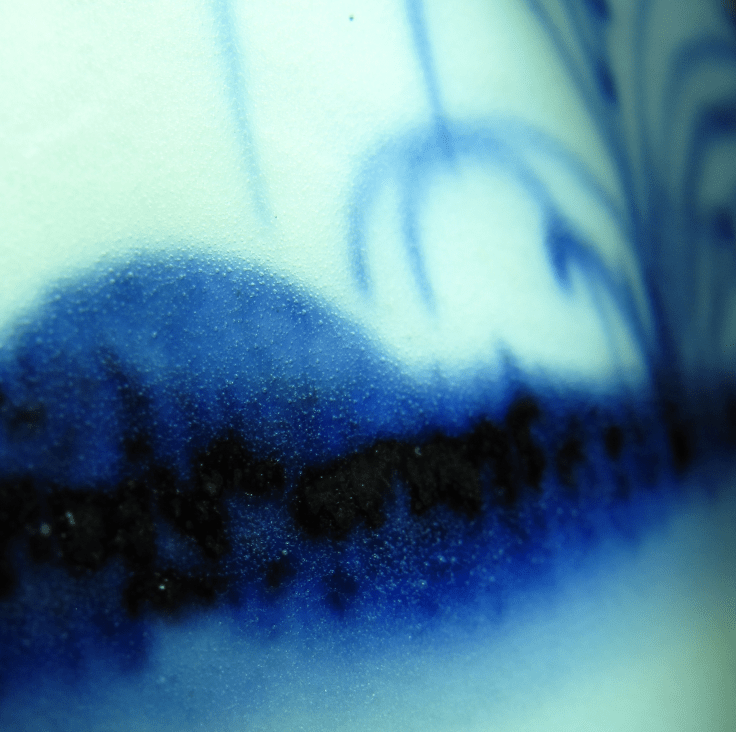 Figure 23
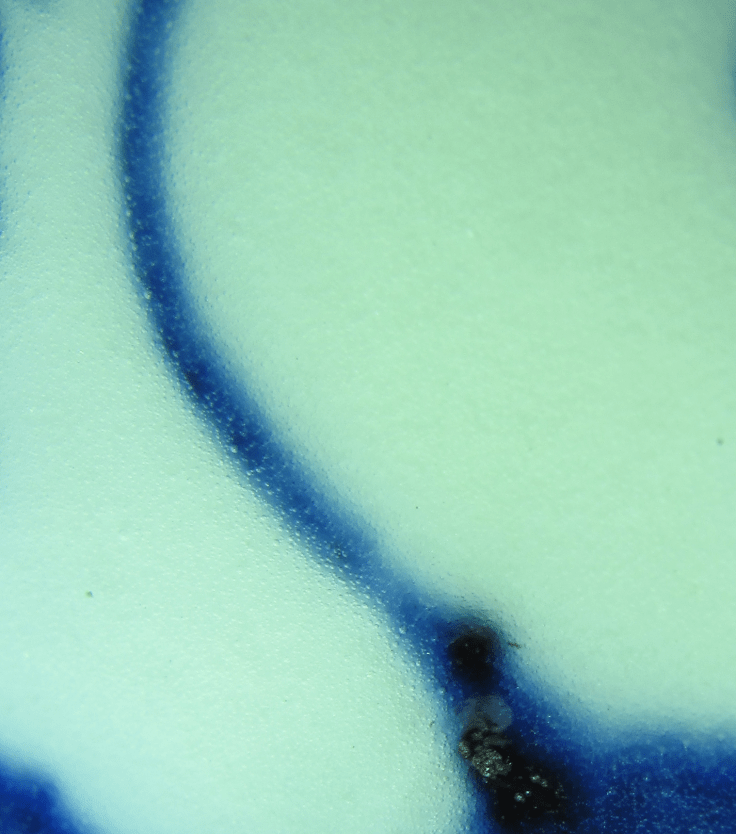 Figure 24
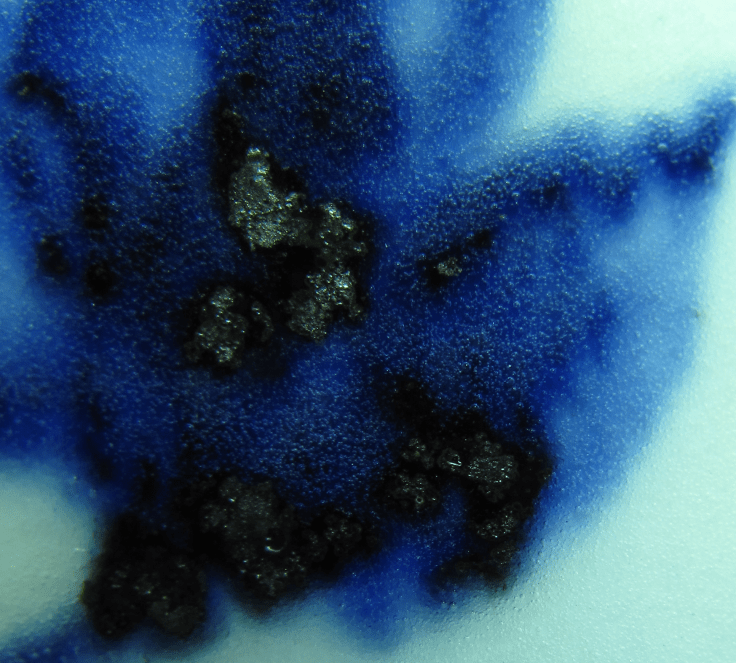 Figure 25
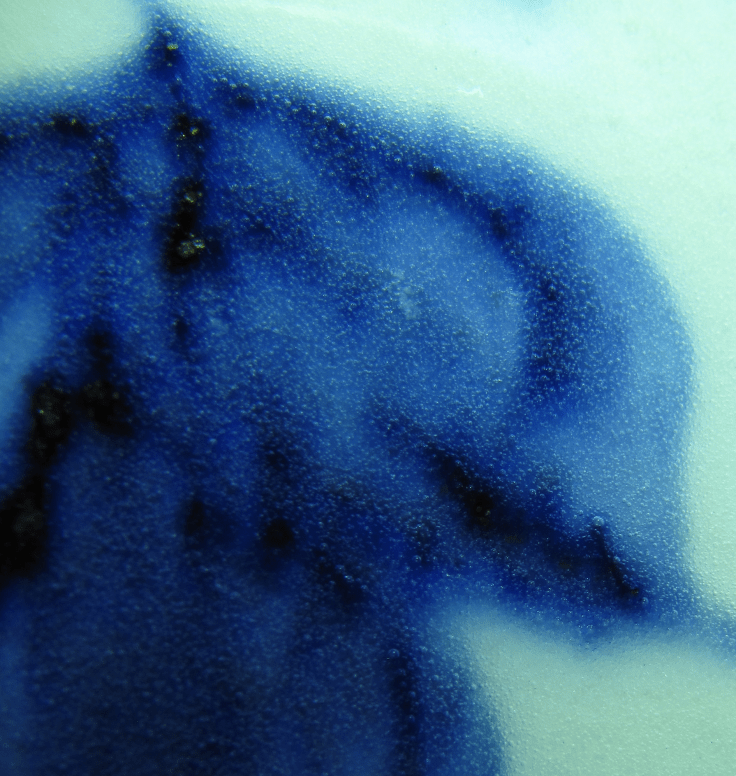 Figure 26
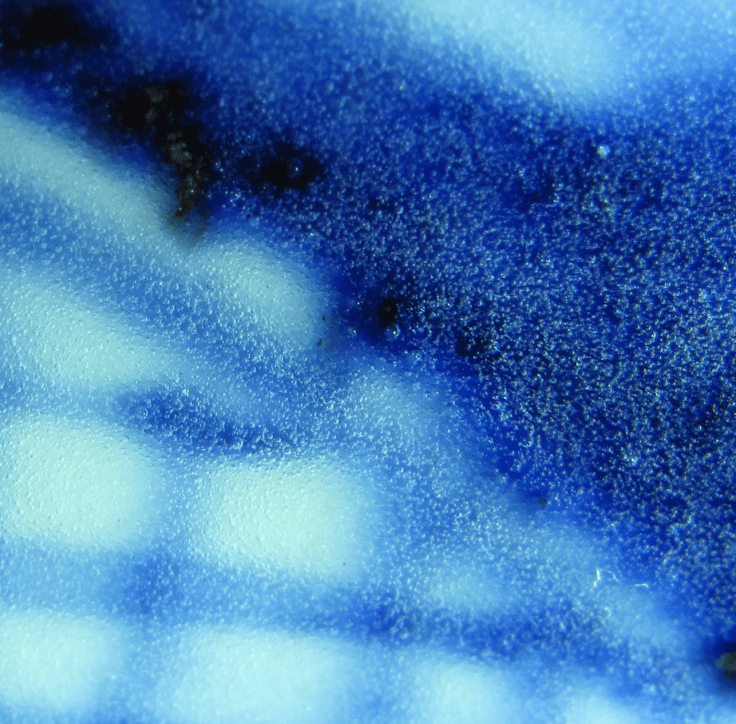 Figure 27
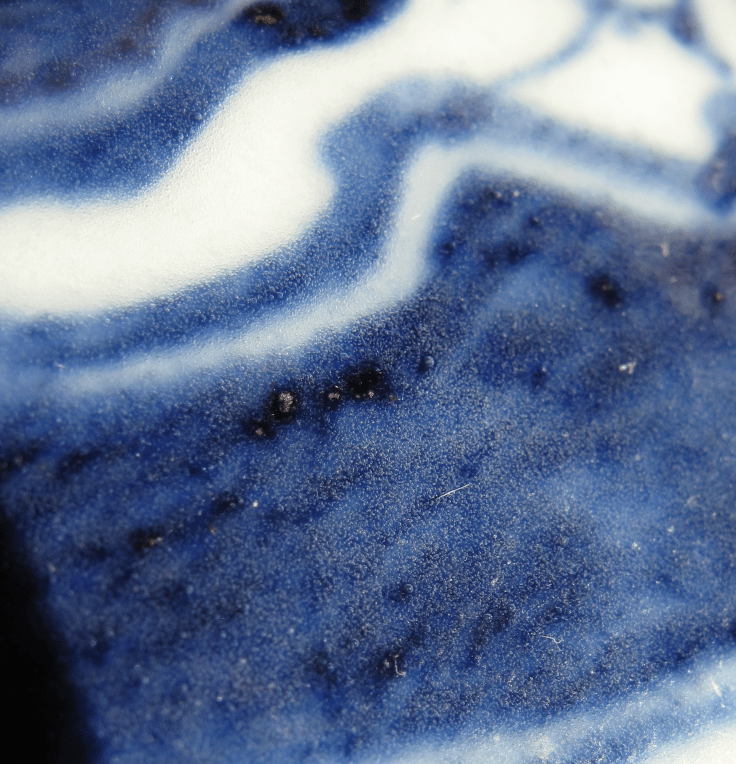 Figure 28
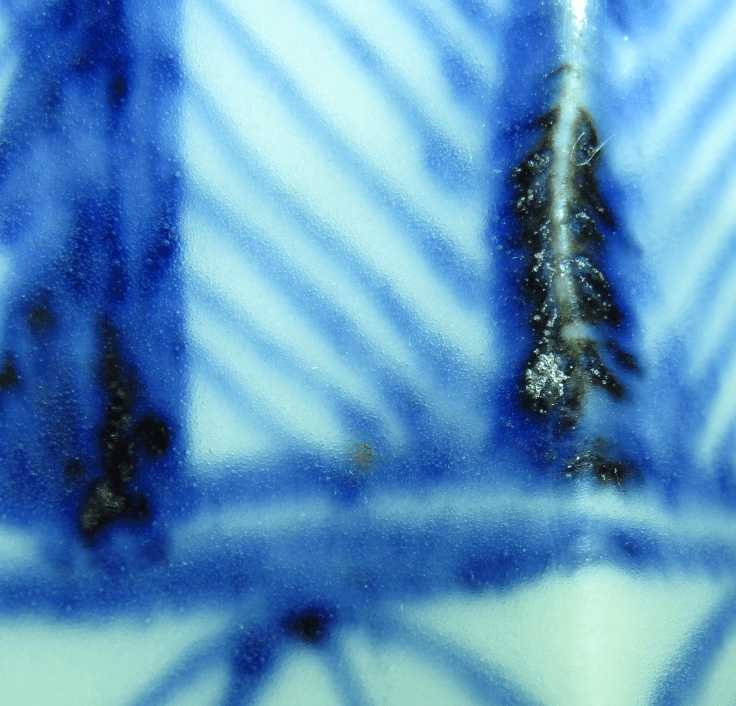 Figure 29
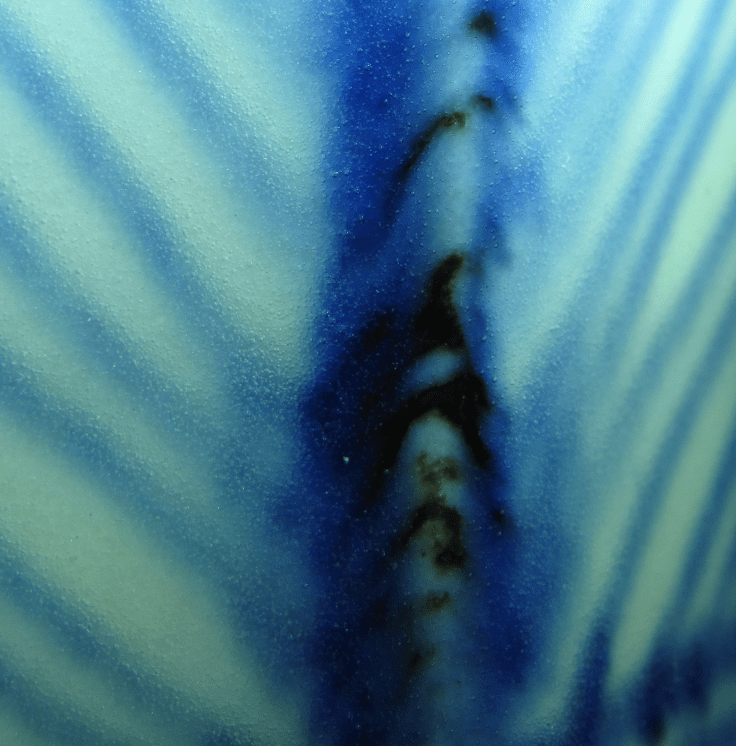 Figure 30
Look at these photos carefully, and look at the plaques, the drippings, the bubbles and the lacunae, and the peculiar features that are associated with these. Compare these photos to photos of other ware and note the similarities and differences. Figures 29 and 30 shows you how the dye behaves over a ridge, how the plaque, and the plaques that are in the formative state look like. These features are very specific to the Sumali Blue dye. When you see these features, you have no doubt that the dye is Sumali Blue dye, and that the ware is genuine and real.
 yongleandxuande.com
Leave a comment