
In April 2017, Sotheby’s sold in Hong Kong a Blue and White Xuande ceramic bowl for HK$229 million. This is the second highest price ever paid for a Chinese ceramic at an auction. The bowl is a 9-inch diameter bowl and the theme of the motif is ‘Fishes in the Imperial Pond’. As it is a highly important work of art, before the sale, there is a long article published, introducing the bowl as well as the motif of it. For those who want to see photos of the bowl, they can search in Google—Sotheby’s Xuande bowl Fishes in the imperial pond. There are quite a number of photos there.
One of the selling point of the bowl is that it is rare, very rare. There is no similar bowl, in size and motif, found in museums and private collections. There is only one bowl with similar basic shape and design found in the Taipei National Palace Museum, but it is of much smaller size, measuring 18.4 cm or 7 1/4 inches in diameter, though there are two such bowls listed in the inventory. These are the only known bowls with such a shape and such a design, and that is why they are very rare.
This brings us to the subject of rareness. Collectors pay tremendous importance to the rareness of a ceramic ware. It is easily understandable. No one will treasure anything that can be found everywhere, even though it is beautiful. A beautiful ceramic is only valuable when people you know do not have it, few big-name collectors own it, and only a small number of museums possess it. Generally speaking, the value of a piece of beautiful ceramic is inversely proportional to the number of similar pieces in existence. That is to say, the fewer you get, the more valuable these pieces would become. It is hardly any wonder that this bowl, with no similar known bowl in existence, could fetch a price of more than HK$200 million.
When Sotheby’s makes the claim that this bowl with this particular size, shape and design is the only one known in existence, they are perfectly honest about it. They have looked into catalogues of museums and well-known private collectors, and nothing similar is found. The only problem here is that they have not taken into account all small and nameless collectors. But there is no way to contact all these people, collectors or not, and I would say the claim is still perfectly legitimate. There is nothing wrong there.
But the hard truth might turn out to be quite different. I have explained to you before that there are many people who are interested in ceramics. Some are collectors, but many others are not even collectors. They are just interested in ceramics and they might have one or two pieces at home, and that is all that they have. But when you combine all these collections together, their collection must be many, many times larger than the collections of museums and big-name collectors combined. And many of these pieces are very beautiful, and might not have been seen in museums, books and catalogues. In short they are not even known to the world.
With all these said, I am going to give you a solid example. Not something the world has never seen, but something the world knows to have only one in existence. You guess it right. It is a Xuande B & W bowl with the theme—Fishes in the Imperial Pond. It belongs to a collector no one has heard before. For the purposes of comparison to the one sold at Sotheby’s, I am going to show you multiple photos of the bowl first (Figures 1-6). The bowl measures 8 7/8 inches in diameter, just 1/8 of an inch smaller.
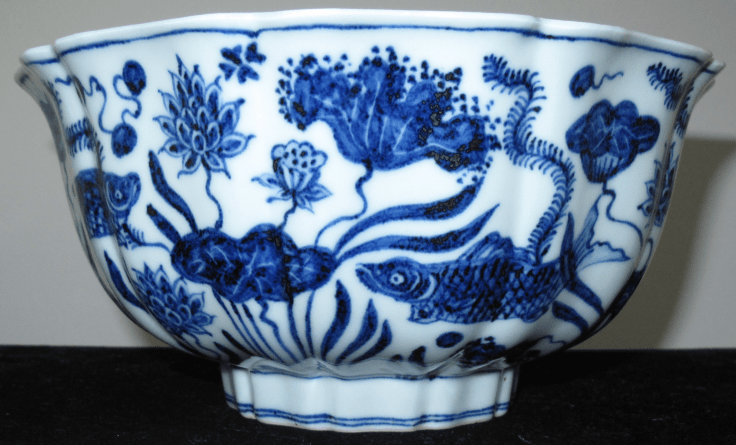 Figure 1
 Figure 2
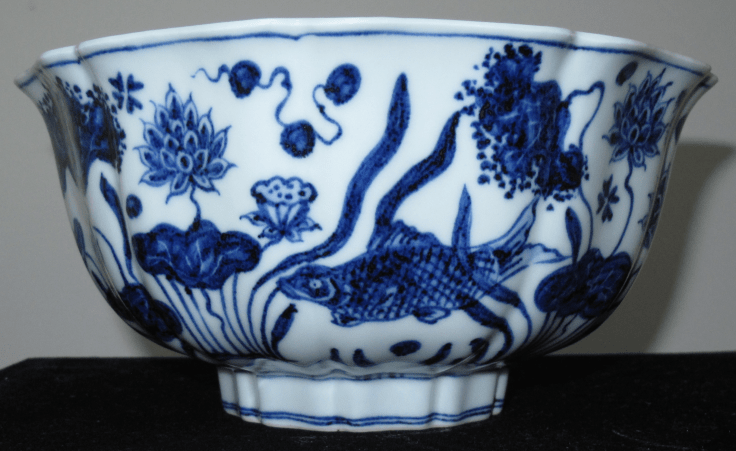 Figure 3
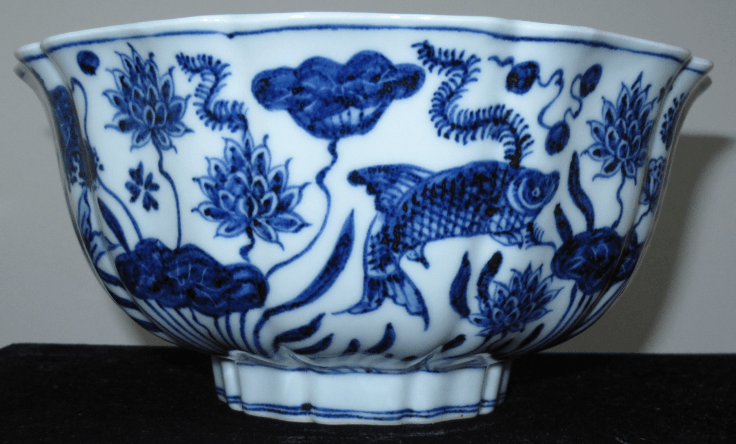 Figure 4
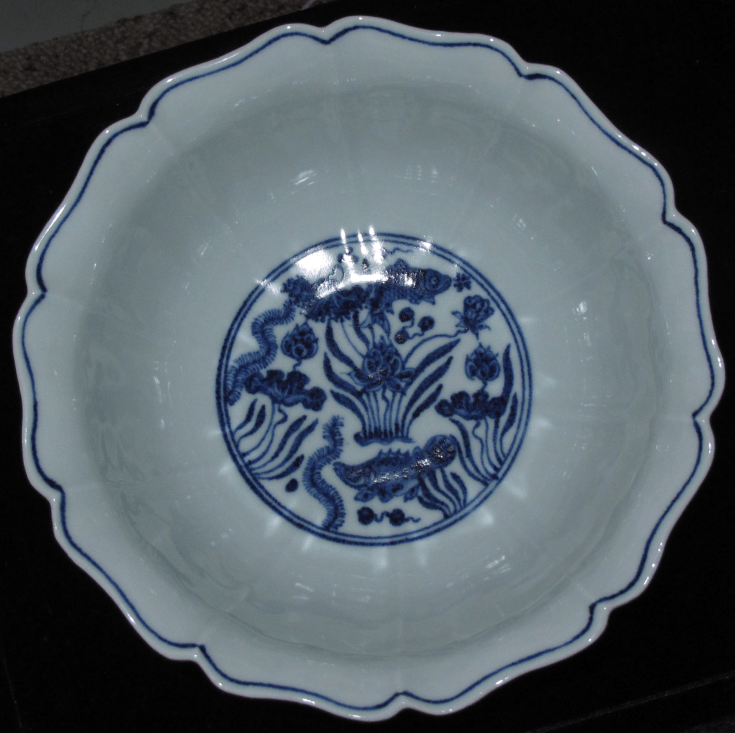 Figure 5
 Figure 6
Now, when you compare this bowl to the one sold at Sotheby’s, the size, the shape and the motif are very much the same. The way the motif is drawn is not identical, but the pattern is the same. It seems to me that the potter/painter has some sort of a draft, and every bowl should have the motif painted according to the drawing of the draft. This only makes sense, for these painters are highly skilled artists. They should have the freedom to paint the bisque in the way they want, just to express their artistic feeling, if the general principle of following the draft is observed. We have seen this sort of thing happening again and again in other wares. In this case, it is highly likely that the two bowls were painter by the same potter/painter. Just look at the style and the end product, and you’ll agree.
In this era when fake news and fakes things abound, it is only logical to ask if this bowl is a fake, not to say that the two bowls are both painted by the same potter/painter. Well, I am going to show you the blue dye pigment here is Sumali Blue dye, and that is proof enough. Let us first look at the bubbles first (Figures 7-14).
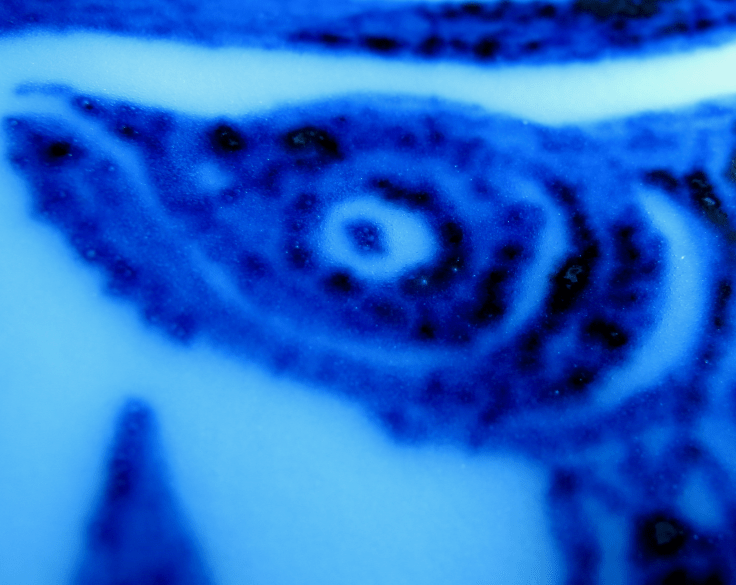 Figure 7
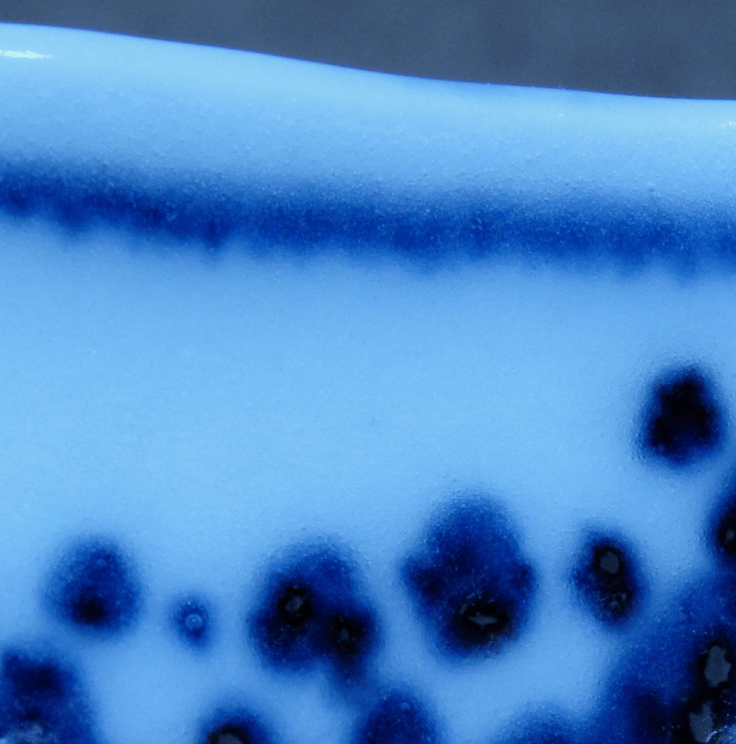 Figure 8
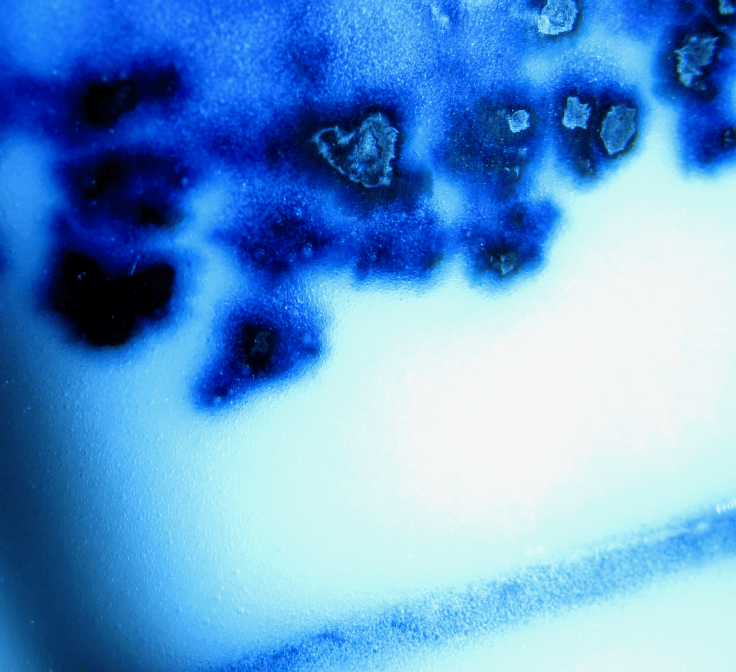 Figure 9
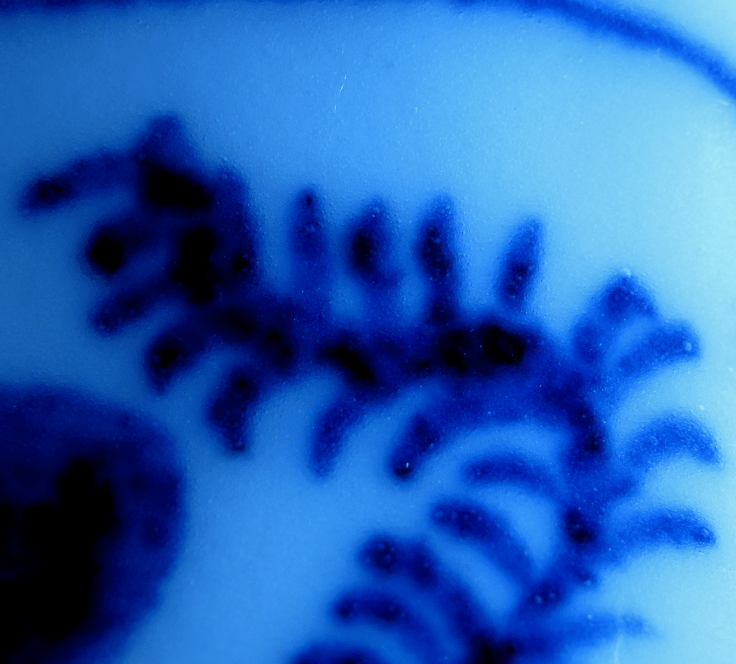 Figure 10
 Figure 11
 Figure 12
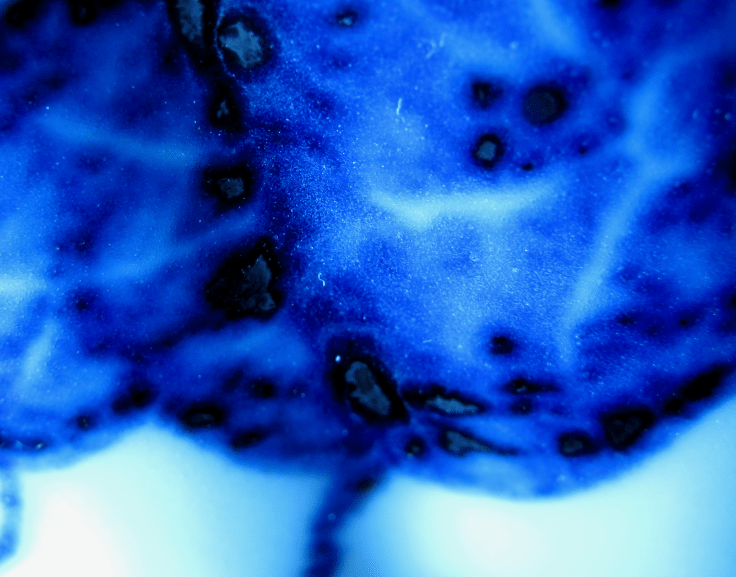 Figure 13
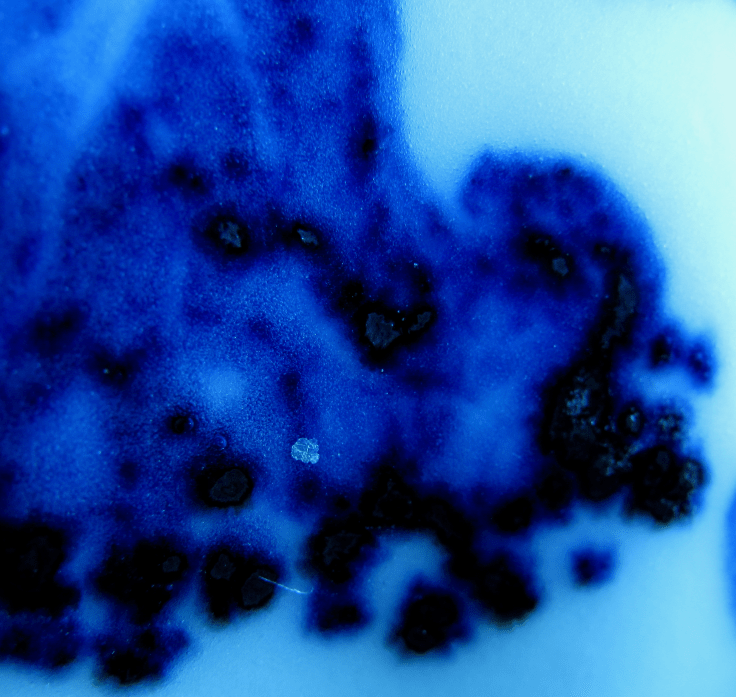 Figure 14
Before we talk about the bubbles, let us assess the photos in general terms. The blue color is beautiful, what we call sapphire blue, and there is mottling in areas where there is a large patch of blue. Mottling, I have told you before, is more often seen in Yuan B & Ws, and most of the time, is indicative that the blue dye pigment is of very good quality.
Now the bubbles. Look at the large bubble in figure 8, pearly white and beautiful. In fact, in this bowl, there are few bubbles as large as this one. The small bubbles in the adjacent blue spot are rather smaller. In these photos (Figures 7-14), if you enlarge them, you will see large bubbles in varying sizes. Not only that, the small bubbles also seem to have varying sizes too, so that, taking together, you seem to have bubbles from the very small size to bubbles of rather large size (Figure 14). You do not see very large bubbles here, which are most present in Yongle B & Ws. It is interesting to note that there seem to have more large bubbles in the sea weeds than anywhere. To me, the painter back then must have, like modern painters, a palette with different blue dye pigments in front of them, and they use different colors for different purposes. In areas where there are few small bubbles, there is no lacunae formation. But you do see lacunae areas where the small bubbles are packed (Figures 13 and 14). In fact, bubbles presenting themselves this way, from large to the very small, are not the most common pattern, but they are beautiful, and you must enlarge these photos to have a good look at them. I’ll enlarge portion of Figure 14 for you.
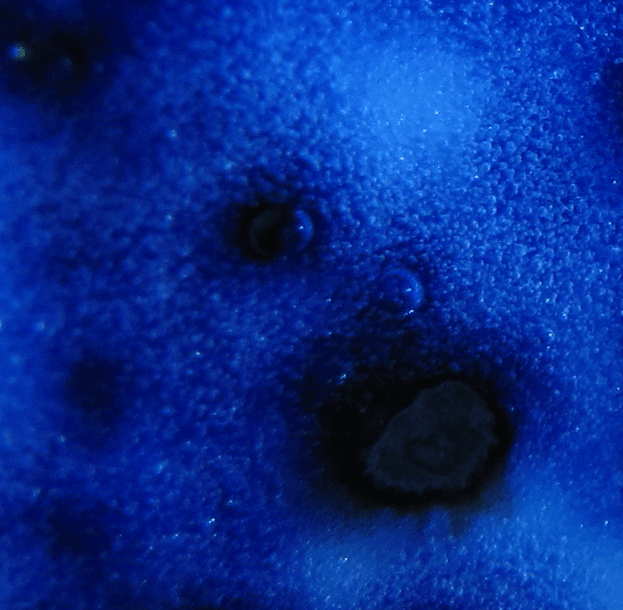
Figure 15
In these photos, you can see some very obvious plaques and the flares and dripping around them. You will note that the flares and, even with the added dripping effect, are not exaggerated. This is an important point. Any dripping that is excessive, you need to have a second look, you need to be careful. Here, I’ll show you more of these plaques and flares.
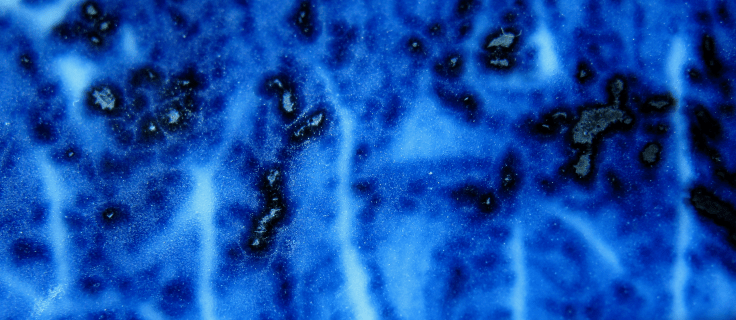 Figure 16
Here, in Figure 16, the colorful plaques can be seen reflecting under the sun. Here in this bowl, all plaques are without the metallic foil floating above the muddy layer. They are just represented by the muddy layer. You can also see particles forming ring like structures surrounding some of these very dark areas with a plaque in the center. These particles, if they were to coalesce together, will form a plaque. Again, do you think they are beautiful? Figures 17-22 are just more photos showing these reflecting plaques and the associated flares. Again, take a good look at these photos.
 Figure 17
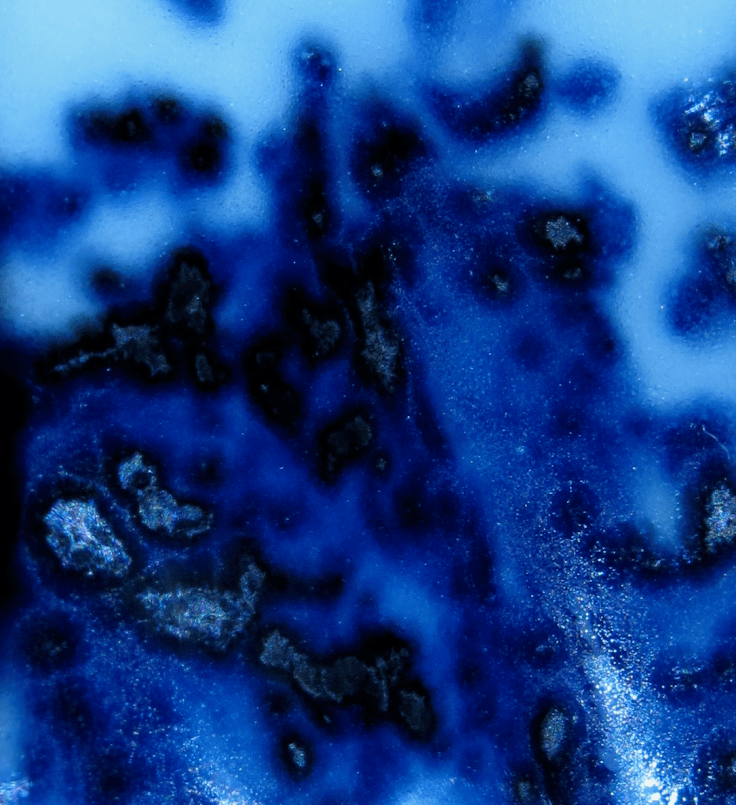 Figure 18
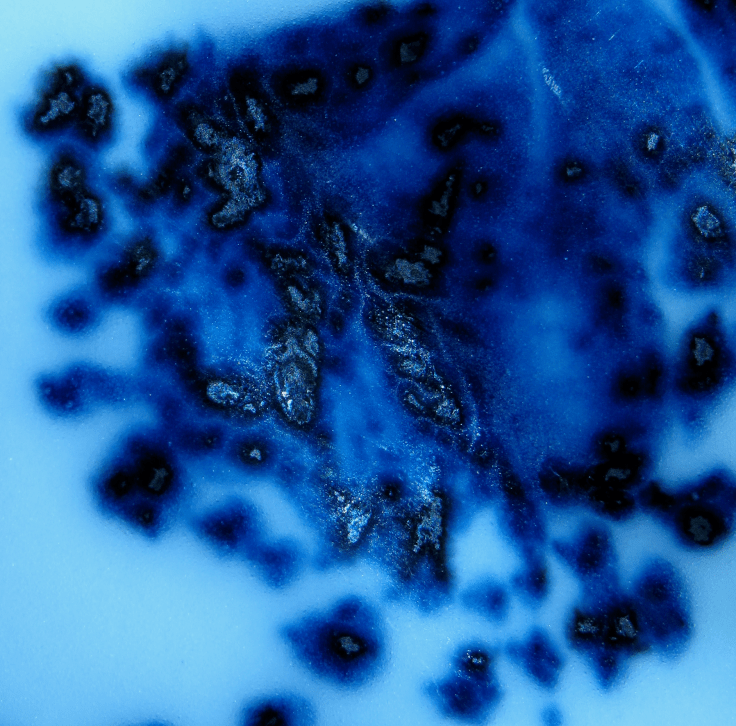 Figure 19
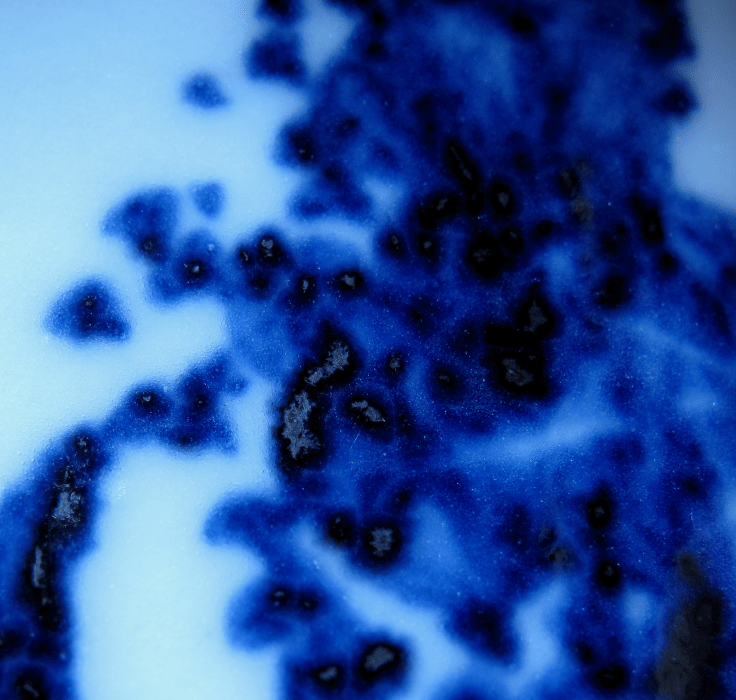 Figure 20
 Figure 21
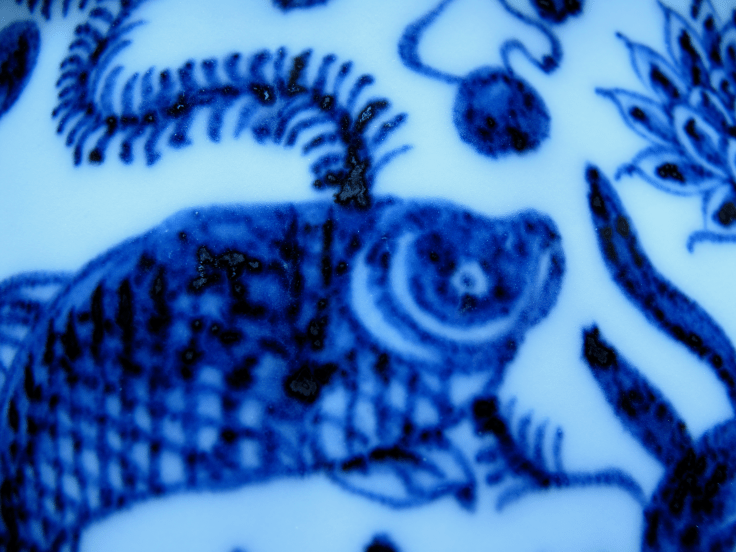 Figure 22
 Figure 23
Figure 23 is taken from the motif inside the bowl. I’ll now show you the mark on the bottom.
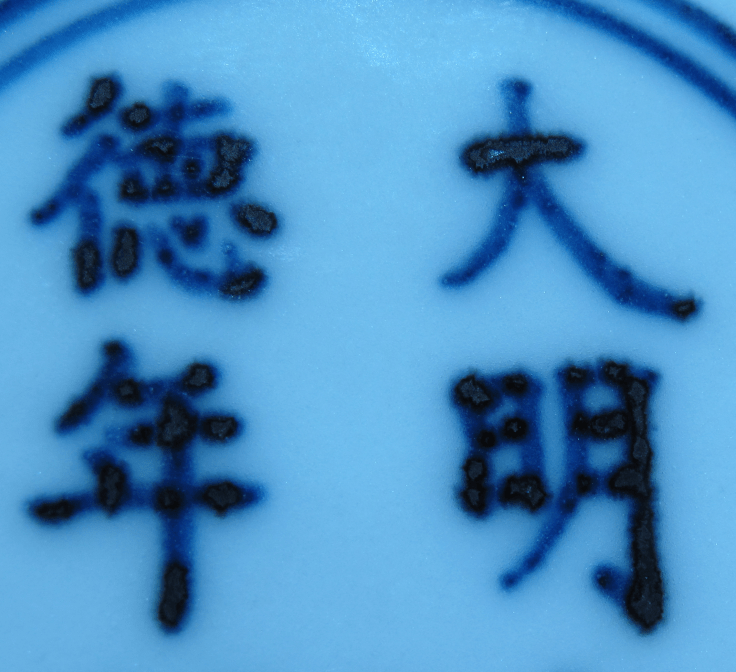 Figure 24
 Figure 25
 Figure 26
Do you see the plaques, the bubbles, and the flares here? With all these photos showing the features of the Sumali Blue dye, do you have any doubt that the bowl is a genuine Xuande and of the period? Someone might want to tell me how is this different from the one that Sotheby’s had sold? I cannot tell, nor you, because we do not have that bowl in our hands.
 yongleandxuande.com
Leave a comment