
Whenever we talk about a Blue and White of the Yongle period, we know that the blue dye pigment of that B & W is of the Sumali Blue dye. I have been talking to you about the Sumali Blue dye and its specific features for quite sometime now, particularly the plaques and the bubbles. By now, you must have some idea how the Yuan plaque is different from that of early Ming’s, and the differences of the appearances of the bubbles in those periods. The variations of plaques and bubbles can be quite large, if you can recall the photos that I have shown you. But in the literature, they have not the technology to show you photos, so they can only describe the appearances to you in words which, as we all know, can be quite inaccurate. For example, when critics try to describe to you the appearances of bubbles in the Yongle period, they would say that in Yongle B & Ws, you only have large and small bubbles, in very brief terms. While this is true in certain cases, and I have shown you some of the photos of these large and small bubbles, it is not always the case in many other instances. Try to refer back to the Yongle photos that I have shown you, and you would understand what I mean.
Here, I am going to show you a very unique Yongle B & W flask with very beautiful bubbles that I have not shown you before. It is not the classic large and small bubbles, though in a way, you can still say that the bubbles are either large or small, but they are a different kind of large and small, as you’ll see. You must look at them carefully. The shape of the flask is very unique (Figure 1). It stands at 18 inches in height. It would be very difficult for me to describe the shape, but a look at it and you would agree with me that it is very rare. I have never seen a similar one before anywhere in the world. The chances are, you have never seen a similar one either.
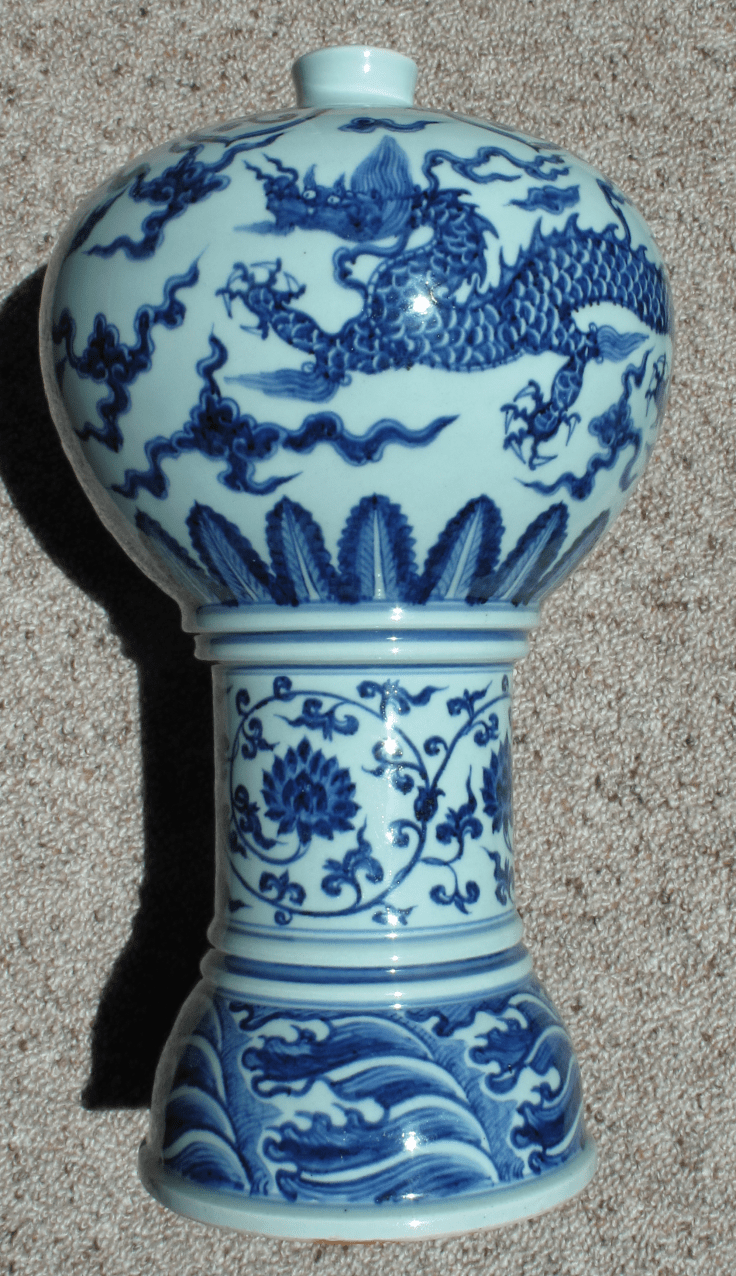 Figure 1
Aside from the shape, the bubbles are also very different from those that you have seen before. I’ll just show you a few photos first.
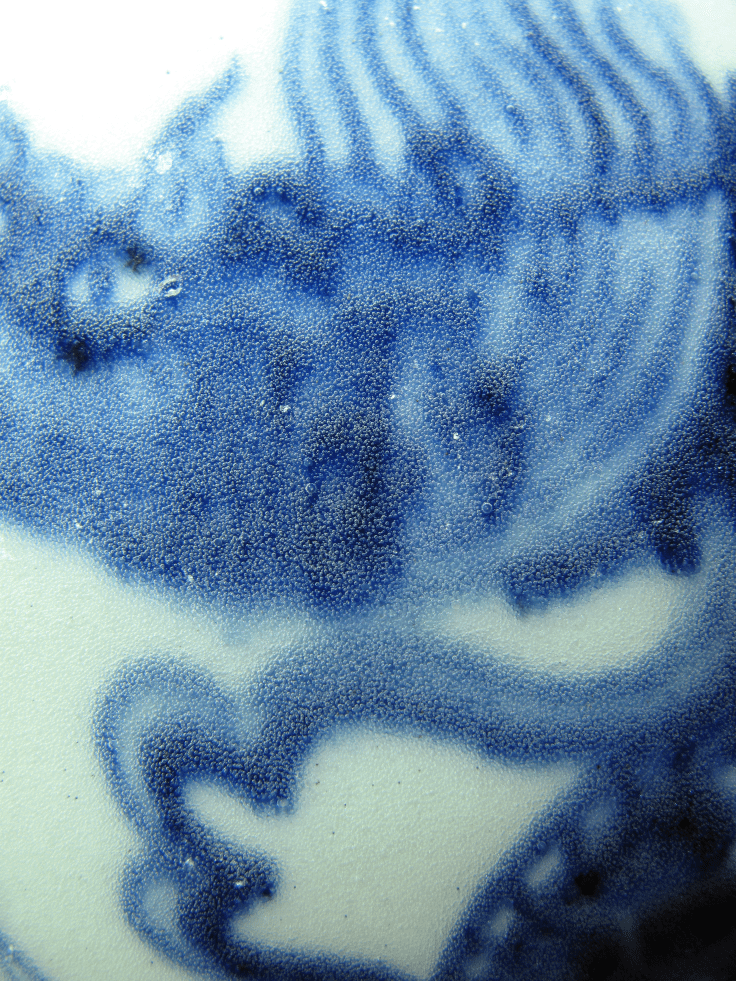 Figure 2
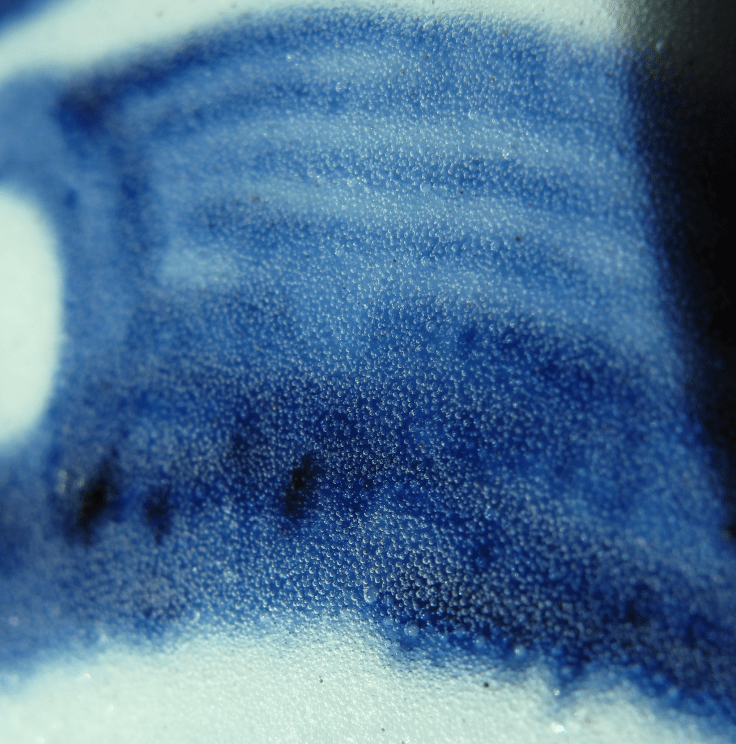 Figure 3
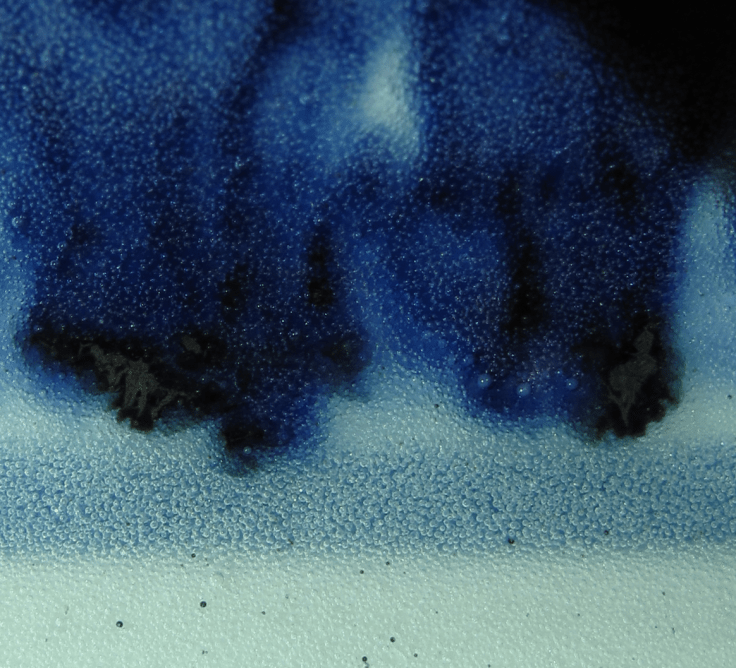 Figure 4
 Figure 5
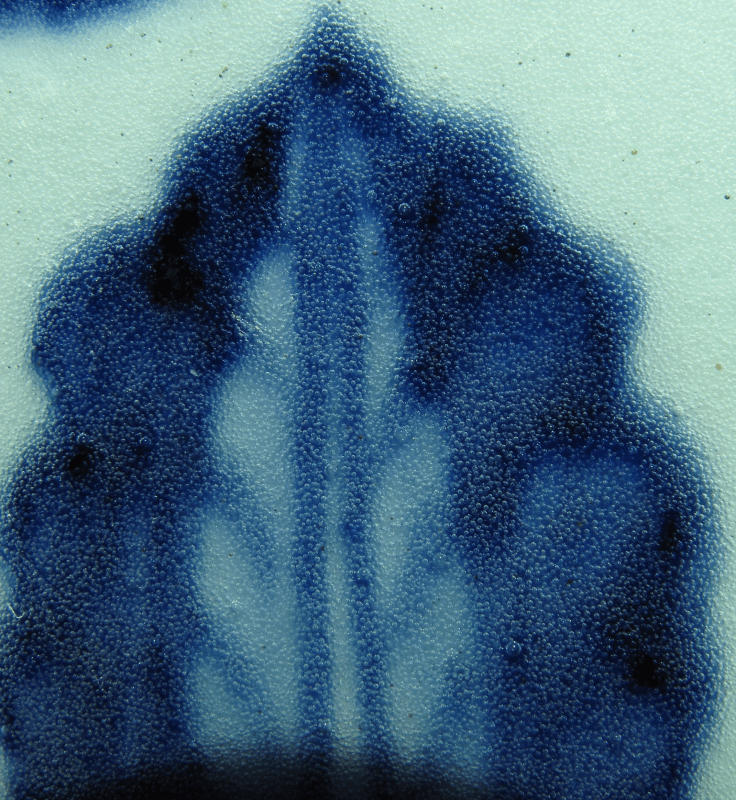 Figure 6
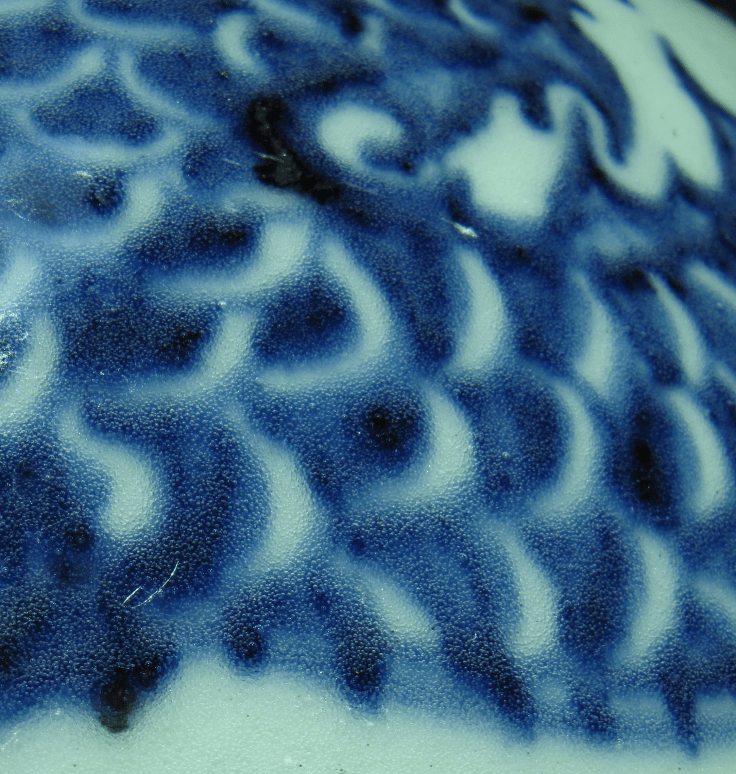 Figure 7
 Figure 8

Figure 9
In these photos (Figures 2-9), they show you the large and small bubbles. Figure 9 in fact is part of the blown up portion of Figure 8. I would suggest you to enlarge all these photos to the limit that your computer will allow, and you can appreciate the beautiful bubbles better. In some of your computers you may not be able to enlarge these photos very much. That in why, in Figure 9, I enlarge part of Figure 8 for you. The main point to notice in these photos is that all the small bubbles are very tightly packed. But they are extremely clear, and give you the impression that they are rising from the bottom of the glaze to the top. What is more, even though lacunae formation is not well shown, these small bubbles do not make you feel that that are disorderly, and that is why they look just beautiful. In looking at the large bubbles, you will fully understand what I meant when I say that they are opaque or semi-opaque. Are they not charming? This kind of small and large bubbles are very rare, but you do see them once in a while.
But if you look at these photos carefully, there are certain areas where lacunae formation can be seen clearly. such as in Figure 4. I’ll just show you another photo showing you the exact same feature (Figure 10).
 Figure 10
You will also notice at the groove of the flask at the bottom of the photo, the small bubbles are closely packed, This is commonly seen, as you can recall, in the Sumali Blue dye of the late Yuan and Yongle period.
You must have noticed the plaques and the drippings in figures 8 and 10, and other photos. The appearances of the plaques and drippings are very much influenced by the lighting condition when the photos are taken. In figure 10, you see some shiny reflections. I’ll show you more of these plaques with reflections.
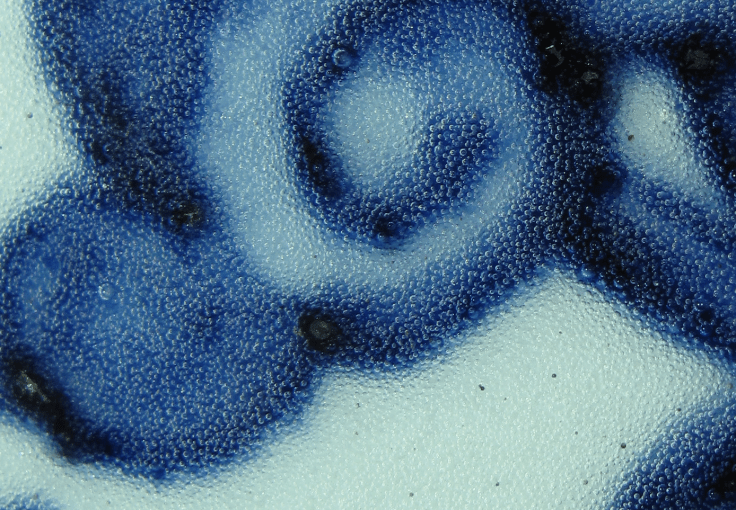 Figure 11
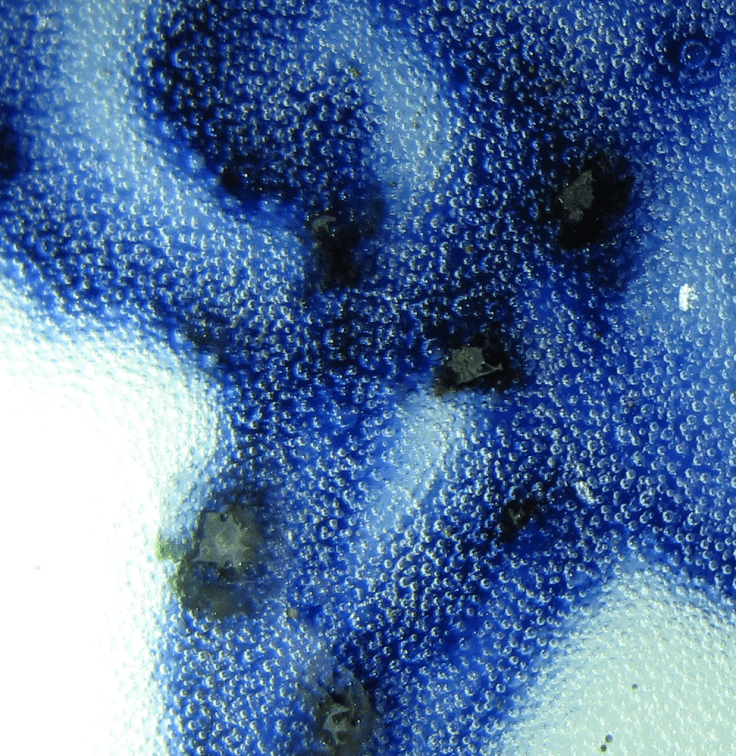 Figure 12

Figure 13
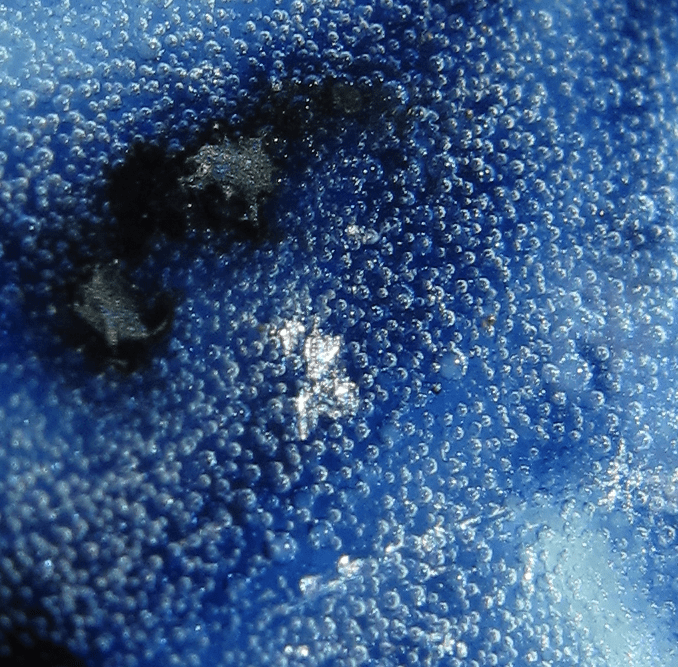 Figure 14
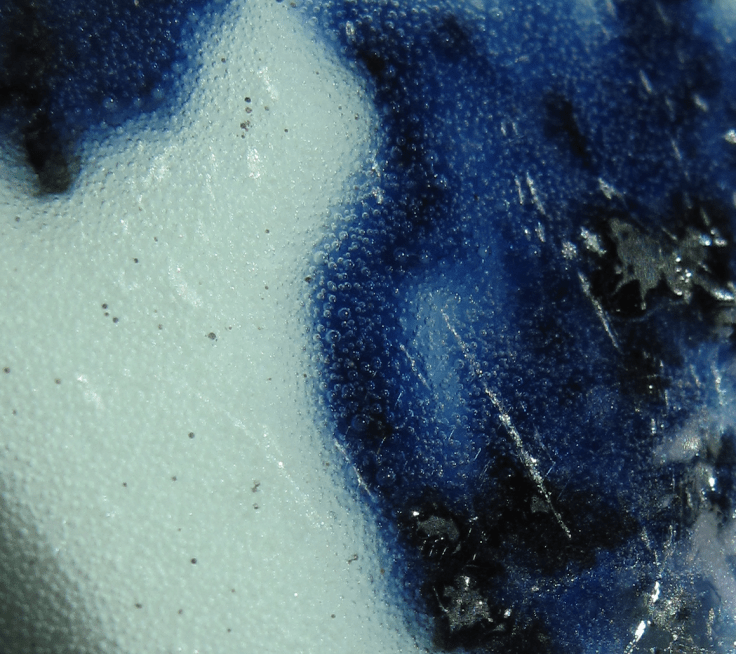 Figure 15
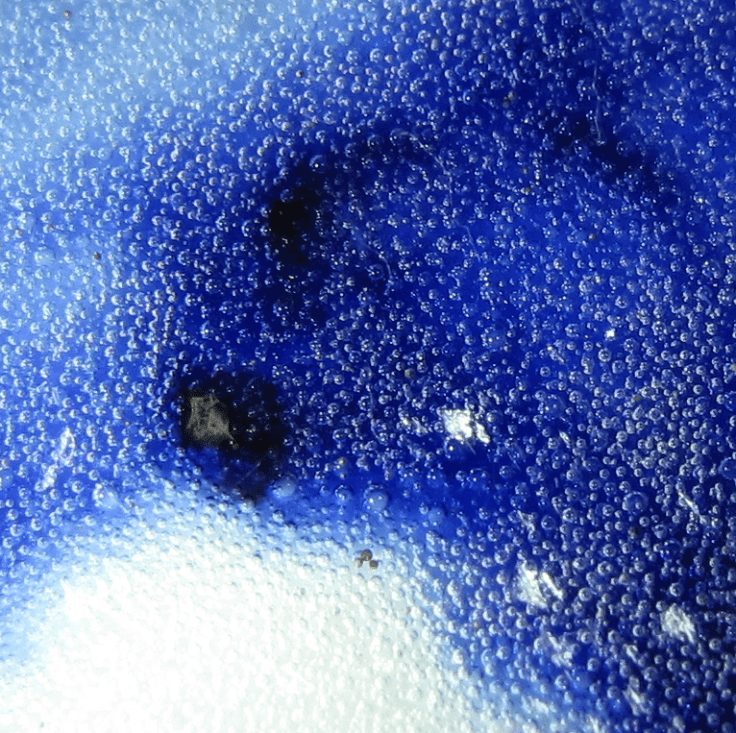 Figure 16
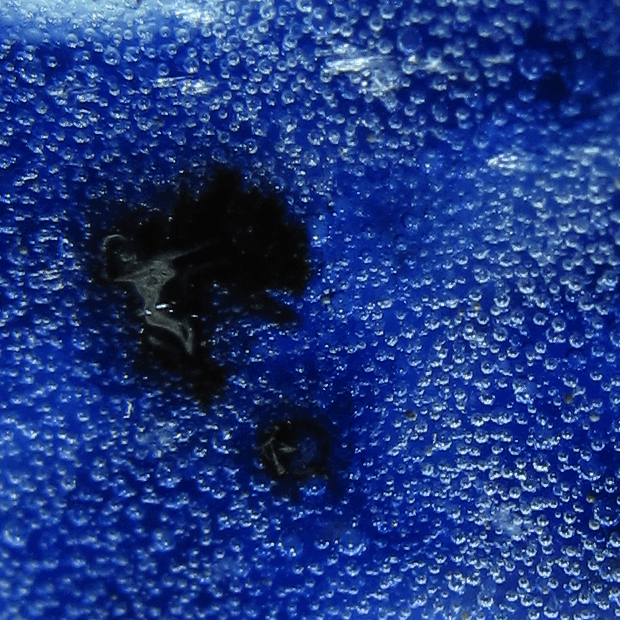
Figure 17
 Figure 18
 Figure 19
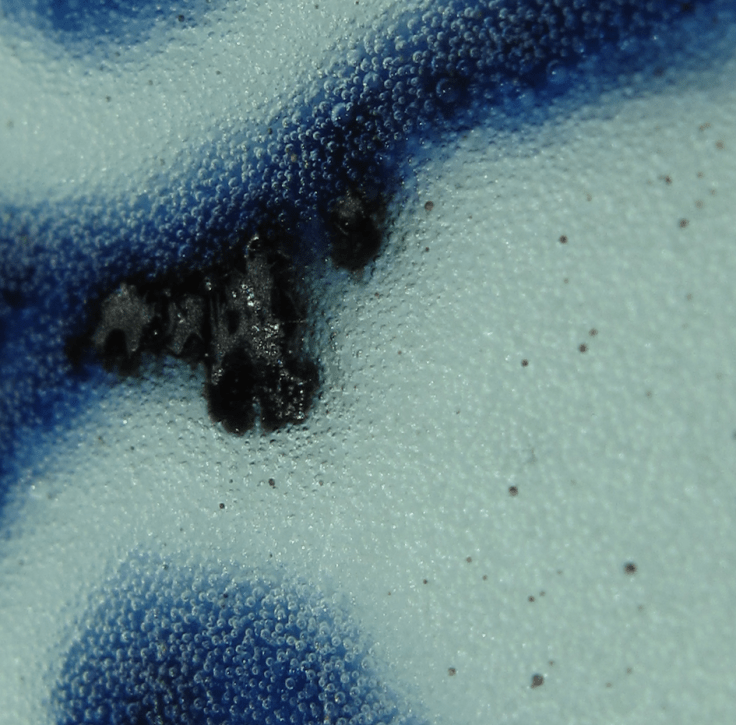 Figure 20
 Figure 21
Figures 11-21 show you the beautiful plaques. They are spiky, colorful, not too large, all typical of Yongle plaques. Don’t just pay attention to the plaques. Note that they all lie within a pool of dark blue, almost black coloration. And inside that pool, many a time, you can see large bubbles lurking there. And I have said before, such features are again typical of Sumali Blue dye. You must have notice the large bubbles in these photos. There are not too many of them. Remember, too many large bubbles are not a blessing. They will somehow make the appearances of the photos not so beautiful, and more importantly, such an appearance will make you doubt the authenticity of the ware. But, when would you say that there are too many large bubbles? I have given you examples before, and I do not think I can be very precise here. But one thing is certain here—there are not too many large bubbles in these photos.
You may also note the flare that is associated with the plaques. In some of these photos, you can see the greenish tinge at the margin of the flare which is a sign that the dye is of very high quality. I’ll show you some more of these greenish tinge.
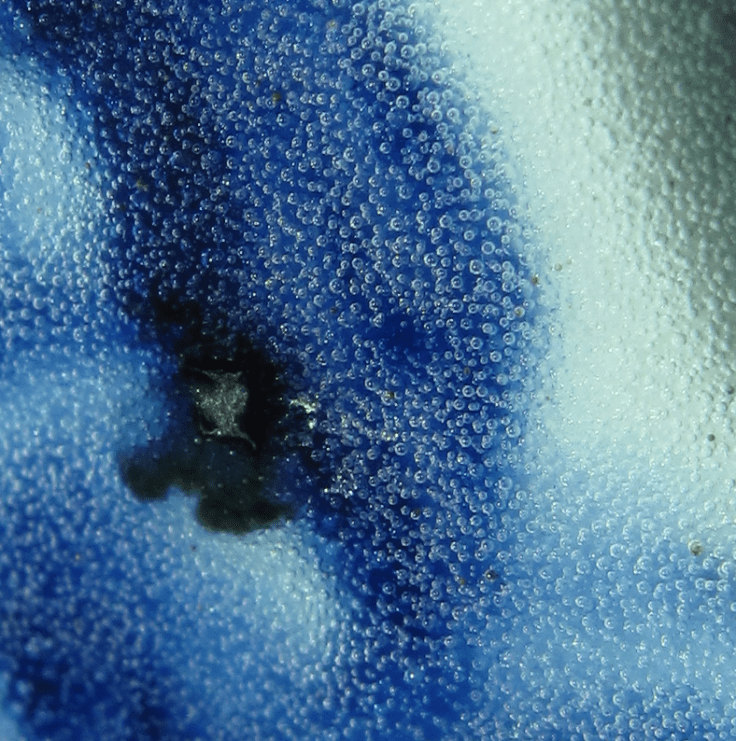 Figure 22
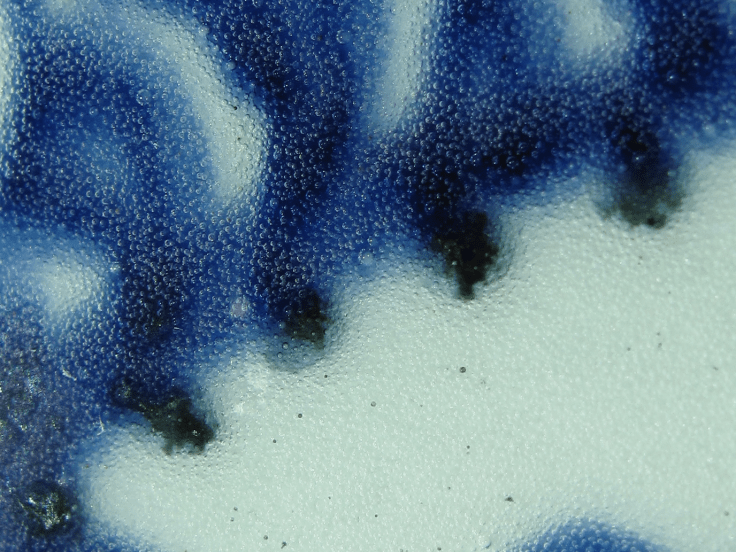 Figure 23
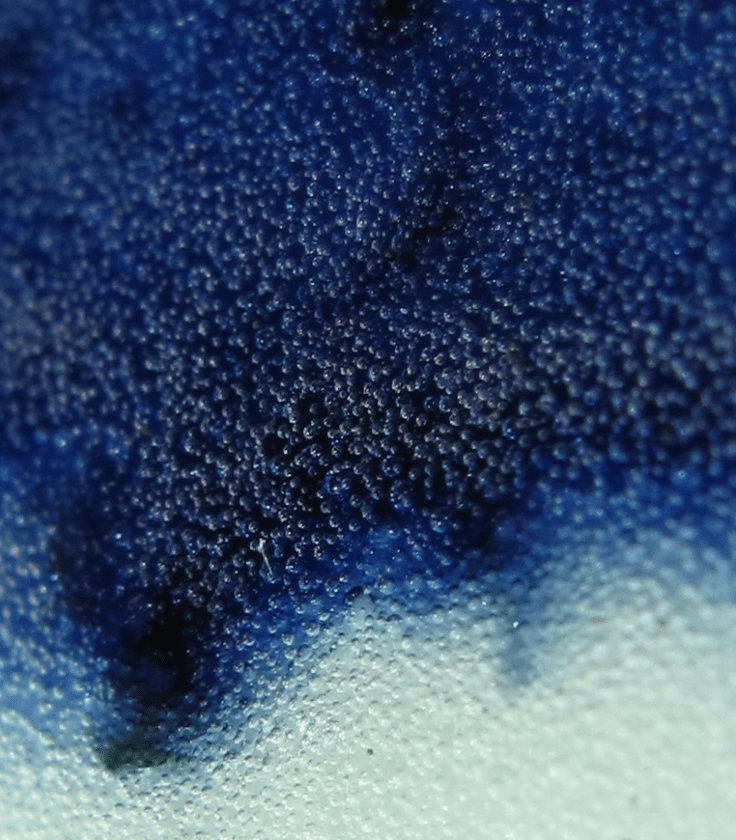 Figure 24
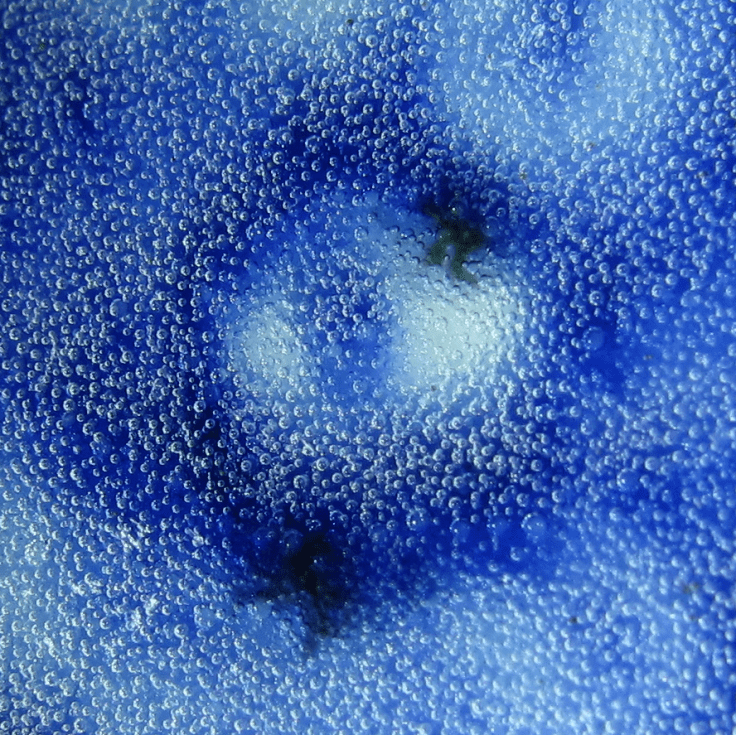 Figure 25
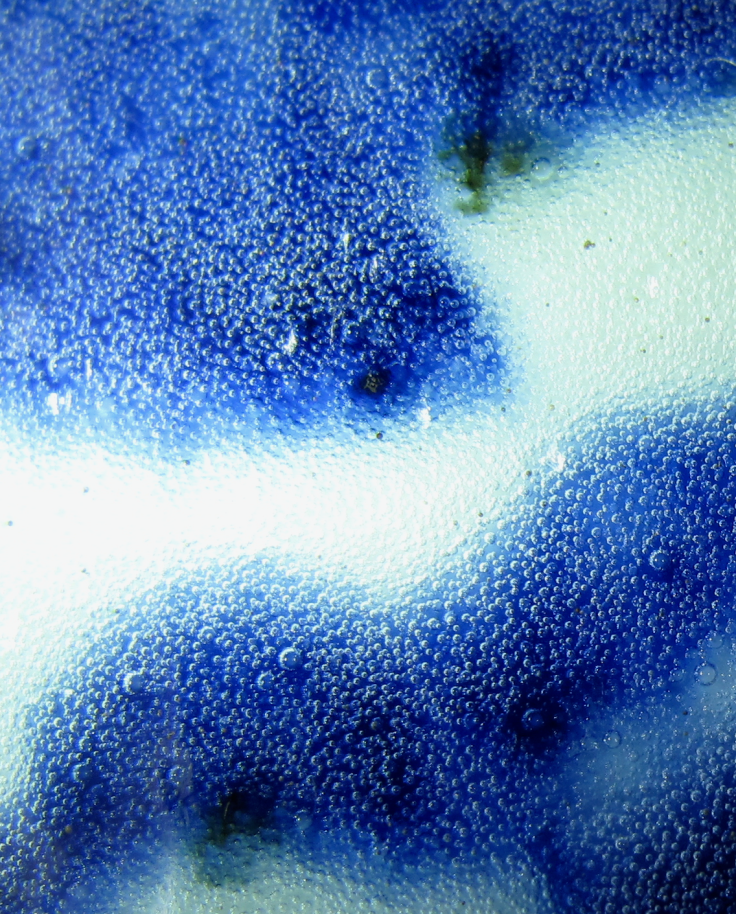 Figure 26
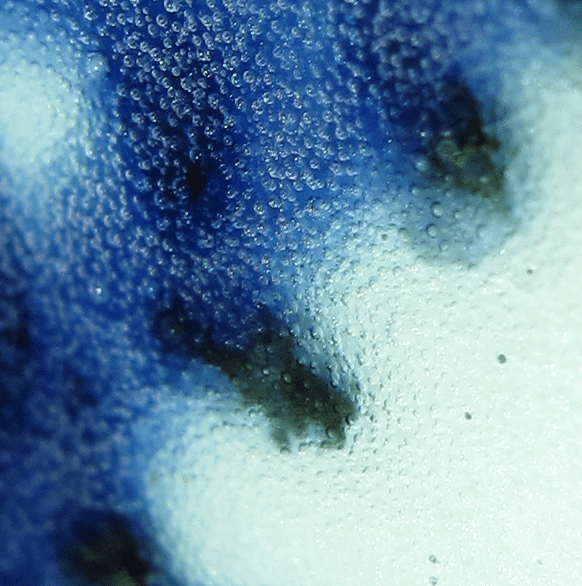
Figure 27
Figures 22-27 show you the greenish tinge at the edge of the dripping. The greenish tinge is again very specific to the Sumali Blue dye. The moment you see it, you can be sure that you are dealing with the dye pigment that is only found in the late Yuan and early Ming periods. Not only that, this green tinge adds a lot of beauty to the dye. Do you agree?
In many of these photos, the sapphire blue color that makes the Yuan and early Ming B & W well known to collectors is apparent. A good example can be found in Figure 12. Try to look for this beautiful color in other photos. It would be a good exercise for you.
With all these features that we have seen here, we should not have any doubt that the dye is Sumali Blue dye. The shape of the flask might be extremely rare, and possible might not have been recorded anywhere before, but that is no argument that the ware is a fake.
 yongleandxuande.com
Leave a comment