
Many a time, when you go to a museum, you see something very beautiful. It may be a painting, it may be a ceramic ware. Since you are a ceramic lover, let us presume the beautiful item is an early Ming Blue and White. It is so exquisitely beautiful that you promise yourself that you’ll go back there again just to look at the ware one more time and to appreciate the beauty of it. And frequently you’ll wonder if some other museum has a similar piece. The caption is normally very brief, and will seldom say if it is rare or not. As a collector, you are often very concern about the rarity of an item. If it is extremely rare, you tend to pay more attention to it. But there is no way you can tell for certain.
In this aspect, the big auction houses have done us a big favor. When a rare item is auctioned, they would tell you and advertise that it is rare, very rare, or extremely rare. This is very important to big-time collectors. They want to have an item that is so unique that you can never find another similar item anywhere in the world. The auction houses are also very much interested in this, for rarity and auction price go hand in hand, the more rare the item is, the more money it can fetch. And big auction houses have the resources to make in-depth research to find out if the item is really very rare. They would go through all reference books, museum and famous collectors’ catalogues and other means just to make sure that the information that they give out is correct. When there are just two very similar items to the one that they are going to auction off, they would say in no uncertain terms their findings: that these two wares are the only two other wares known to the world similar to the one that is being auctioned. They would then give details as to where the two others can be found. And the rarity of the item can be quantified.
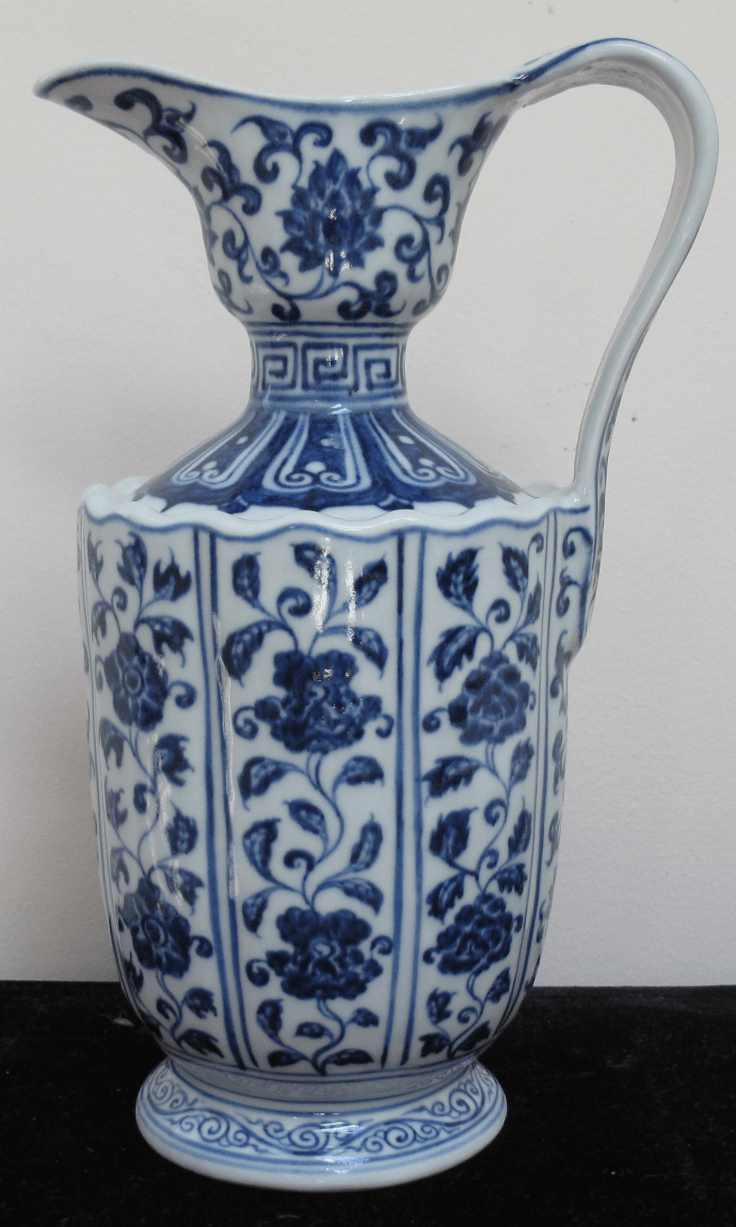 Figure 1
 yongleandxuande.com
Leave a comment