
I talk about the blue color of the Sumali Blue dye very often. The blue color is not uniform, and has many different shades of blue. That is why it is unwise to determine if a ware belongs to the early Ming period by the blue color. But you do find some very beautiful blue color in some Sumali Blue dye pigments, what I would say is sapphire blue—a blue color that can only be seen in the best sapphires. If you see that, and if you recognize that, the chances for the Blue and White to be genuine will be very high. But then, this needs experience, and to rely on experience to determine if the Blue and White is genuine is something I want to avoid. That is why the characteristic features of the dye pigment, rather than the blue color, albeit it might be of a very good sapphire blue, is so important. These features have the final say if the Blue and White is genuine.
Traditional experts also pay a lot of attention to the way the decoration theme is drawn. The strokes should be natural, forceful and beautiful. There is no doubt that this is important, but the problem with this is that this is too subjective, and the opinion might not be shared with other experts. Still, it is something we need to bear in mind all the time.
I am now going to show you a Yongle flask that I think has a very good blue color and is very nicely drawn. But the important issue here is that the characteristic features are also very distinctive, you will not mistake it for a reproduction.
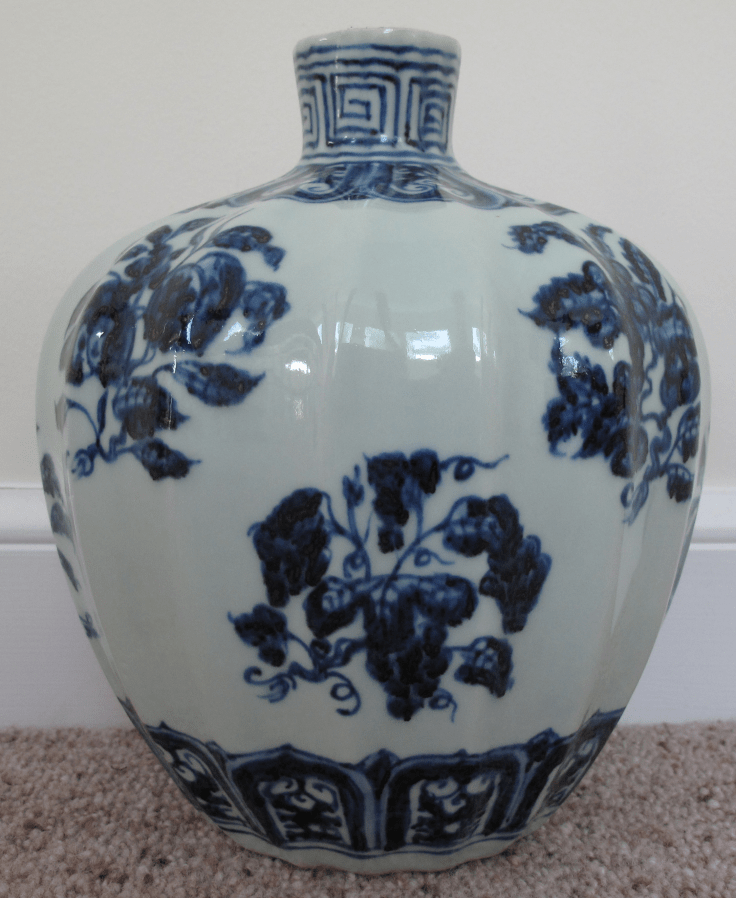 Figure 1
It measures 8 3/4 inches tall. A look at it and you would agree with me that the blue color is beautiful, and the theme of the decoration is lively drawn. But the important issue here is the characteristic features of the dye pigment.
Let me first show you a close-up photo of this flask.
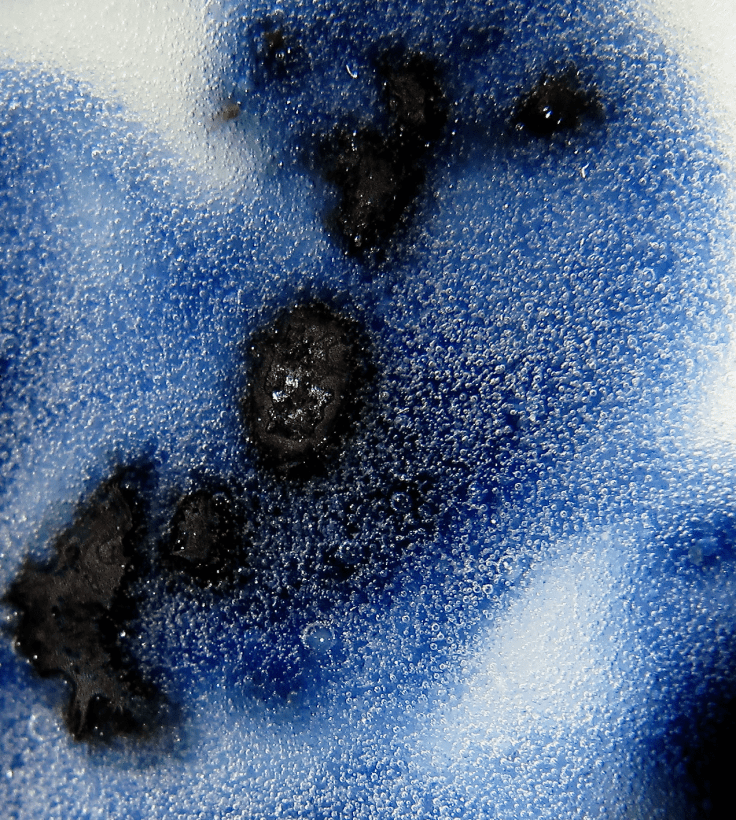 Figure 2
First, let us look at the color. Right at the center is a plaque that is surrounded by a very deep blue color that you can say is black. From there, extending outwards, the blue color gradually fades into a very light blue. In between is what is interesting, you must pay good attention to this. Somewhere along this, you will see a blue color that mimics a sapphire that you like—it all depends on your taste. If you like a dark sapphire, the large patch that is near the center plaque is the color you want. Moving further out, near that large bluish bubble, is several shades of blue. Not as dark as the patch in the center, but very beautiful blue color. This is what I call sapphire blue. But the blue color is not the verdict to conclude that the flask is genuine, but rather the features of the dye pigment.
Look at the bubbles, just large and small bubbles, very typical of Yongle. The large bluish bubble is worthy of note. It is half opaque, and is almost completely surrounded by a rim of what looks like small bubbles. The other large bubbles also have this feature. The small bubbles are clear and distinct. Looking at them, you have a feeling that they are rising to the surface. I suppose at the bottom, right on top of the clay bisque, there is a minute nidus that gives out bubbles. When a bubble is first formed, it is small. As it rises through the thickness of the glaze layer, it gets slightly bigger. Now, the nidus is continually generating bubbles, one after another. These bubbles, when moving up, one after another, and helped by the micro-current that is set up by the heat of the kiln, they form some sort of a slight curve. From this observation, we cam also conclude that the glaze layer is not too thin. And you need to remember that these are special features of the Sumali Blue dye.
The plaques here are typical. They do not have the tiny metallic layer on top, they only have the muddy layer at the bottom. And under the sun, a few areas give reflection of the sunlight. You can also see the flare below the plaque. These are again unique characters of the Sumali Blue dye. I can go so far as to say that, by looking at this picture alone, this picture must have been taken from a ware that uses the Sumali Blue dye. In another word, this is a genuine early Ming ware. But I’ll show you more.
I’ll show you more plaques first.
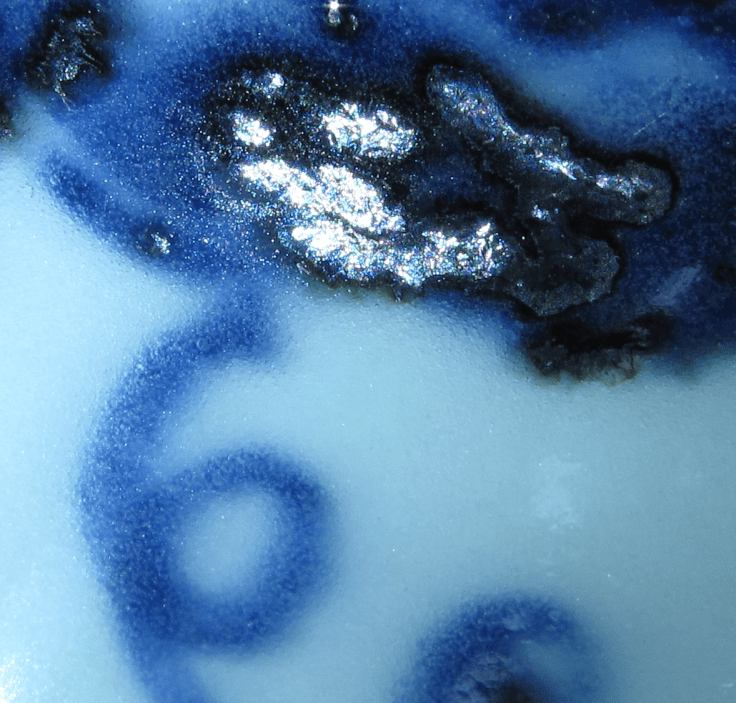 Figure 3
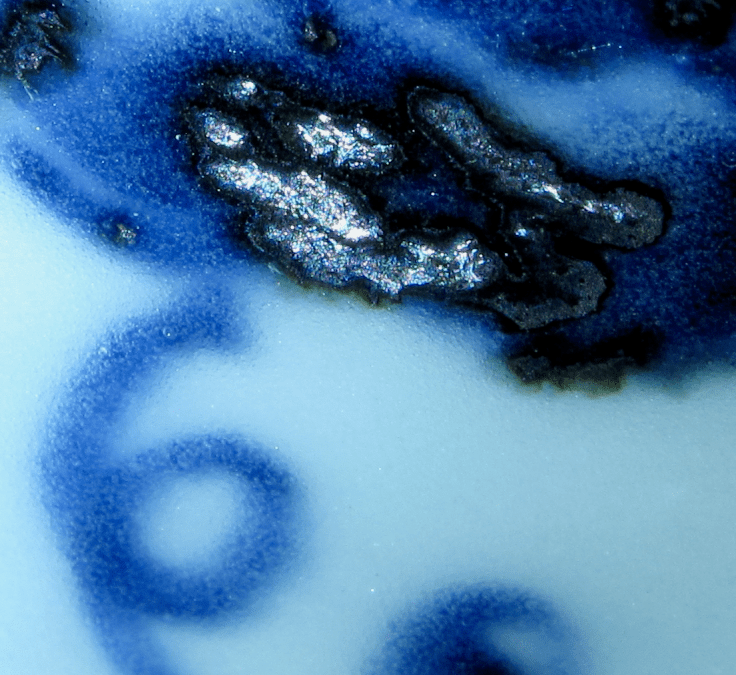 Figure 4
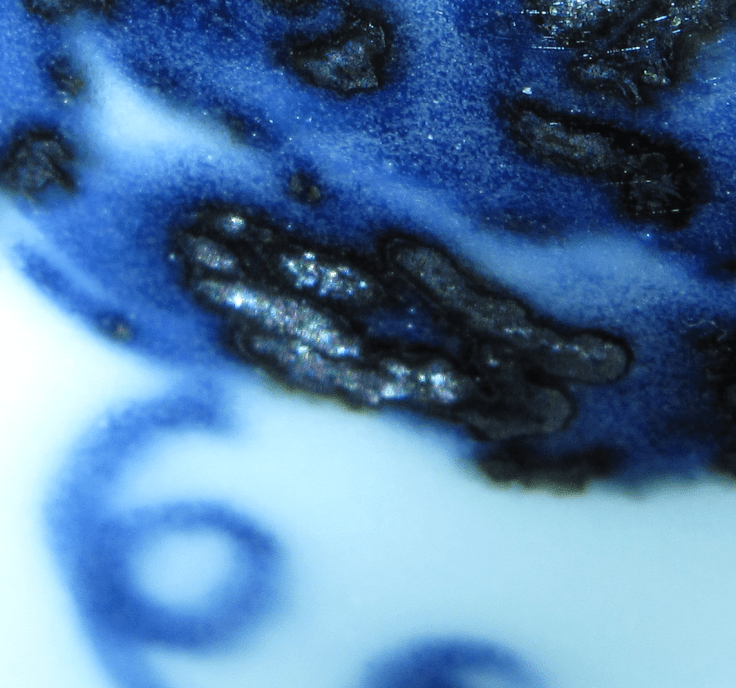 Figure 5
Figures 3-5 are in fact taken from the same site. I include Figure 5 because I think the reflective blurred view of the plaques give you a better feeling of the colorful nature of the plaque. But here I want you to pay attention to the flare that is just below the reflective plaques, particularly Figure 3. You will notice that there, part of the plaque has something like a triangle. But in Figures 4 and 5, you don’t see that. It only show you the subtlety of these photos—a slight change in angle, and things will look different. But the real important issue here is that, once you see something like Figure 3, you know you are dealing with a dye pigment that can only be the Sumali Blue dye. No other dye will give you this feature.
Let me show you another three photos taken at the same site, but under different lighting conditions.
 Figure 6
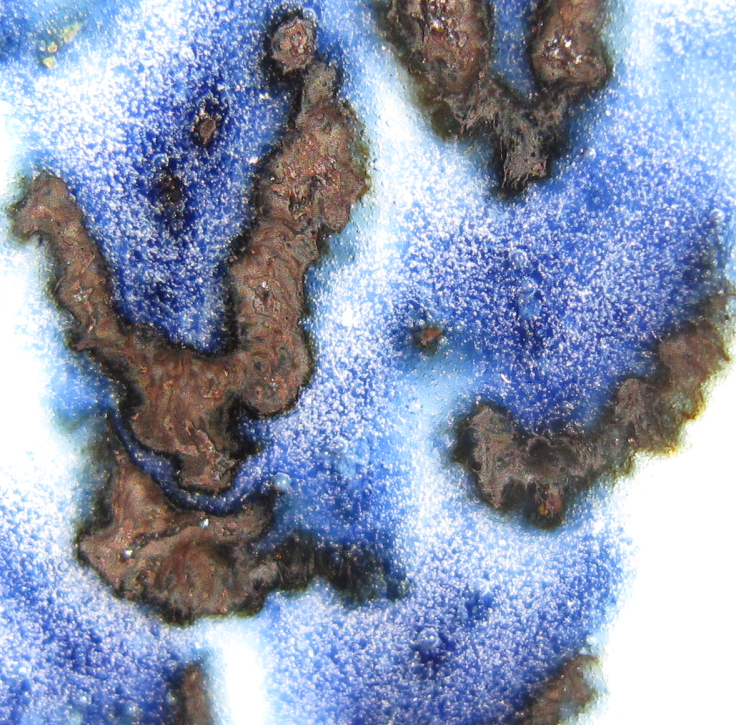 Figure 7
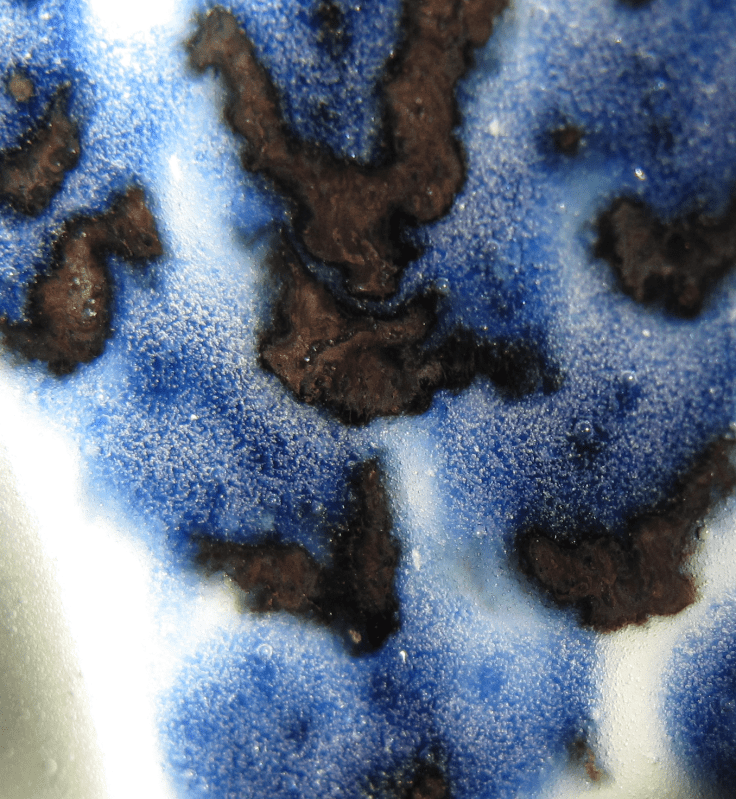 Figure 8
Now, these three close-up photos of a muddy layer can tell you exactly how beautiful the muddy layer can be. Note also the flares and the pearly large bubbles whose half-opacity also varies with the light condition. But the most beautiful, to me, is the sapphire blue color, particularly in Figure 8. If it were not for the very small bubbles acting as a sort of shield to hide much of the blue coloration, the sapphire blue would have been intense. Now, seeing the blue coloration emitting among the small bubbles, it give you a different impression, an impression that is even more beautiful, thanks to the beauty of the small bubbles. As I have said before, there is no definition for a beautiful blue color. But here I can show you what that definition should be.
I will show you a few more photos of these plaques without any metallic layer on top, all that you see is the muddy layer.
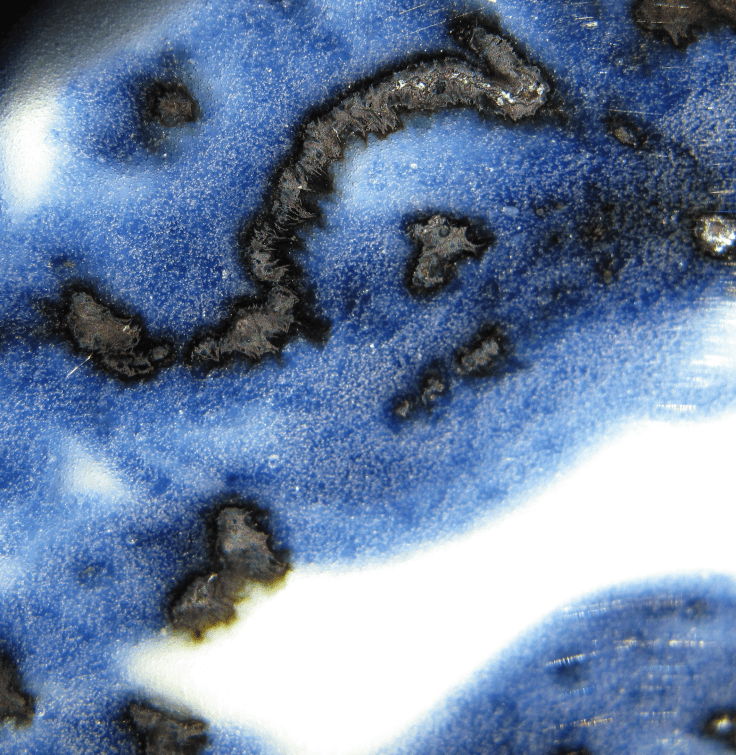 Figure 9
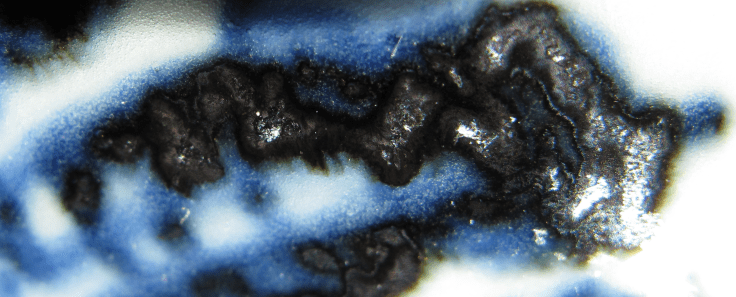 Figure 10
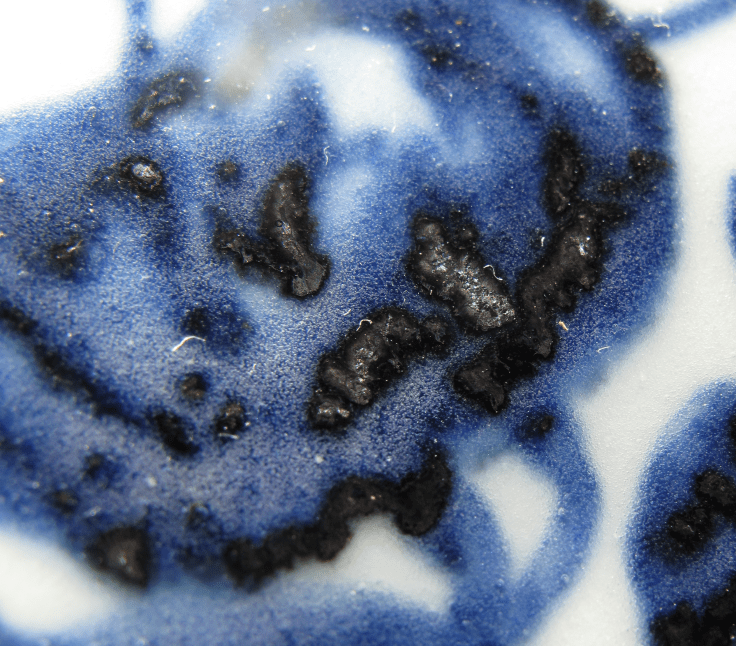 Figure 11
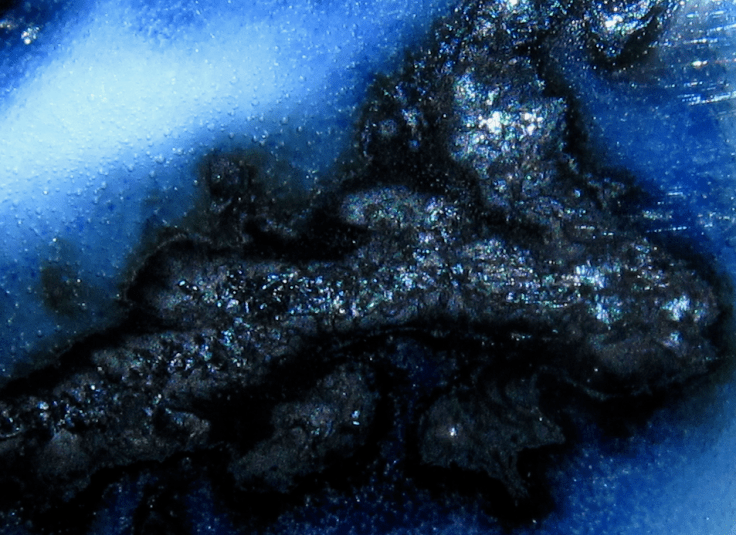 Figure 12
 Figure 13
 Figure 14
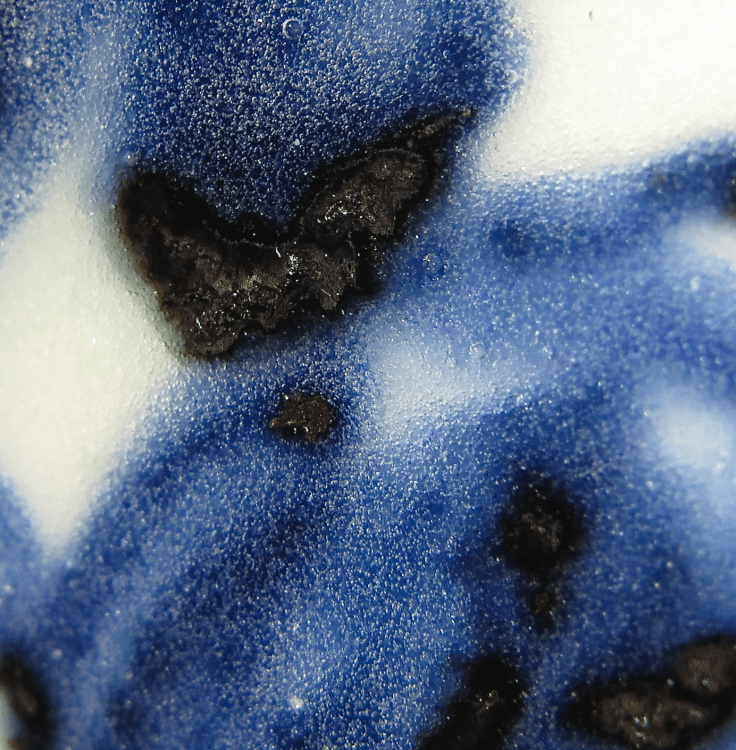 Figure 15
 Figure 16
You must look at these photos carefully, and be familiar with the way the plaques, the flares and the bubbles present themselves. In figure 16, the greenish coloration of the flare is specially prominent. This green coloration of the flare, and I have said many times before, indicates that the dye is of very good quality. In this photo, you can also see a few large bubbles, but you have to pay attention to the lacunae formation of the small bubbles.
I’ll now show you a few photos showing the large bubbles and lacunae formation of the small ones.
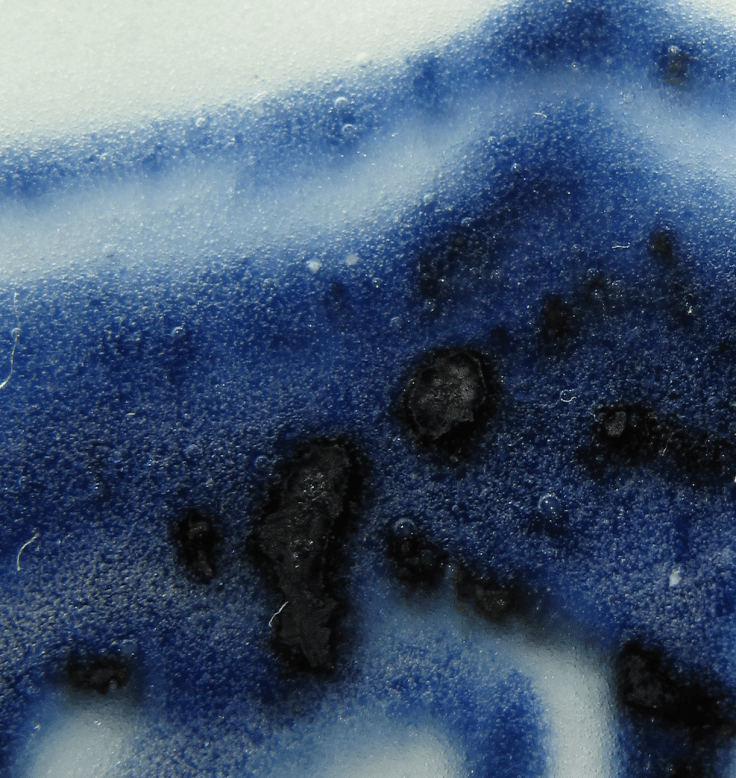 Figure 17
 Figure 18
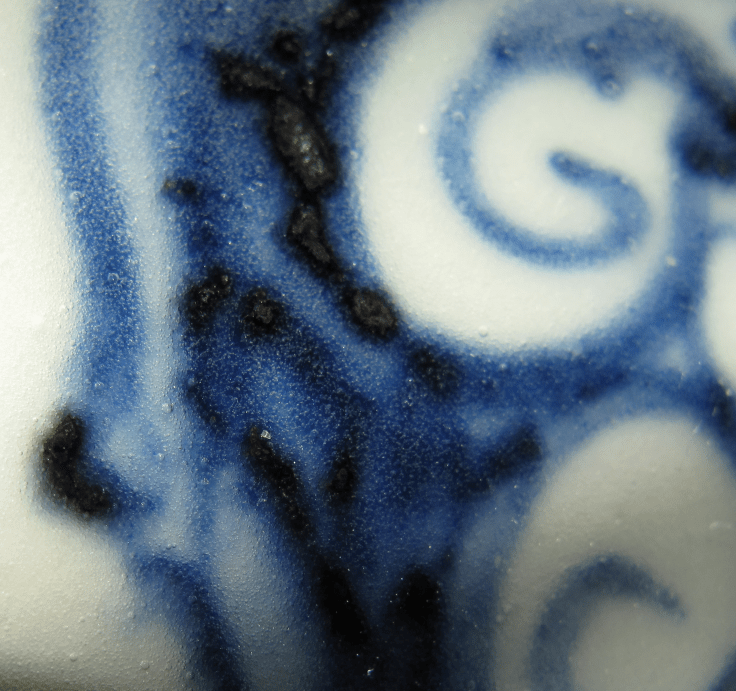 Figure 19
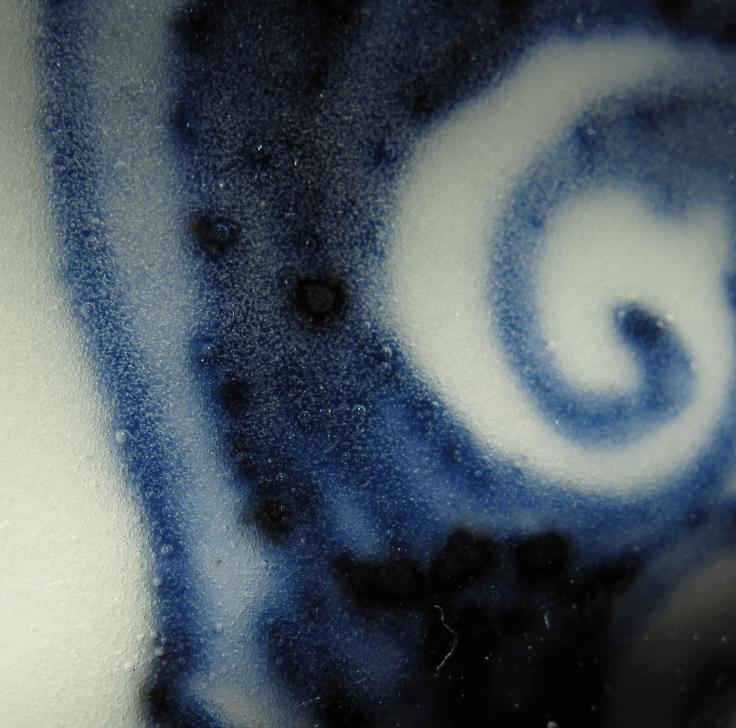 Figure 20
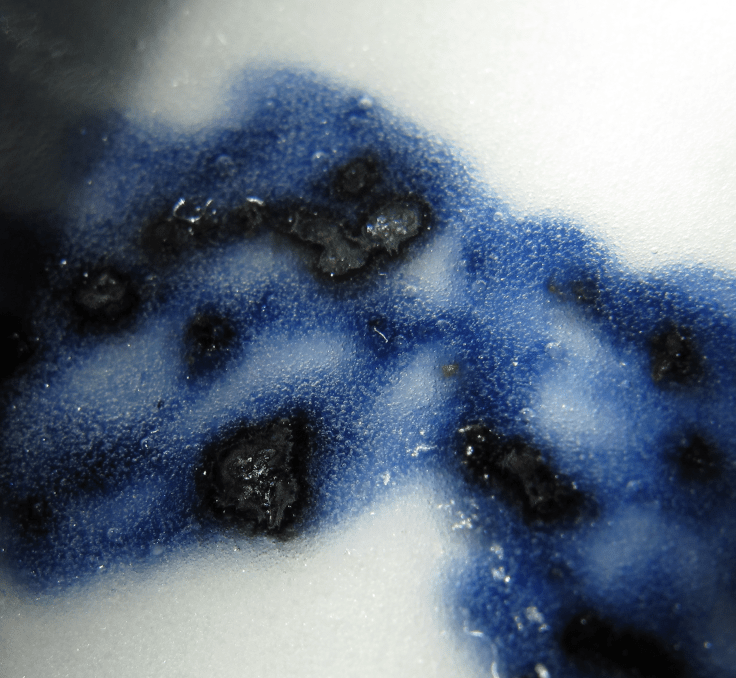 Figure 21
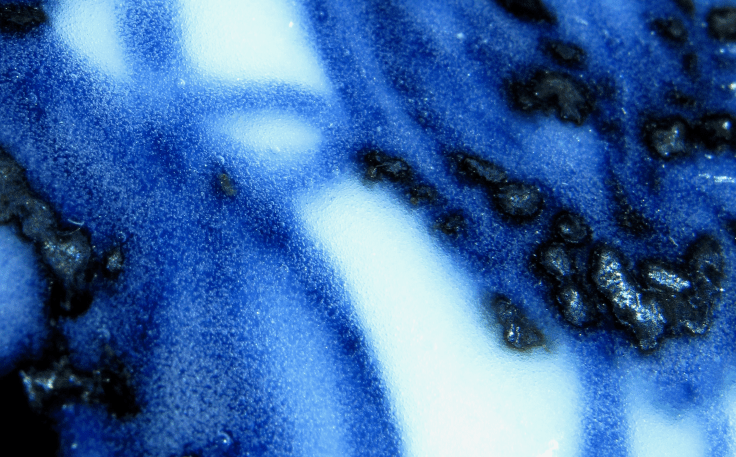 Figure 22
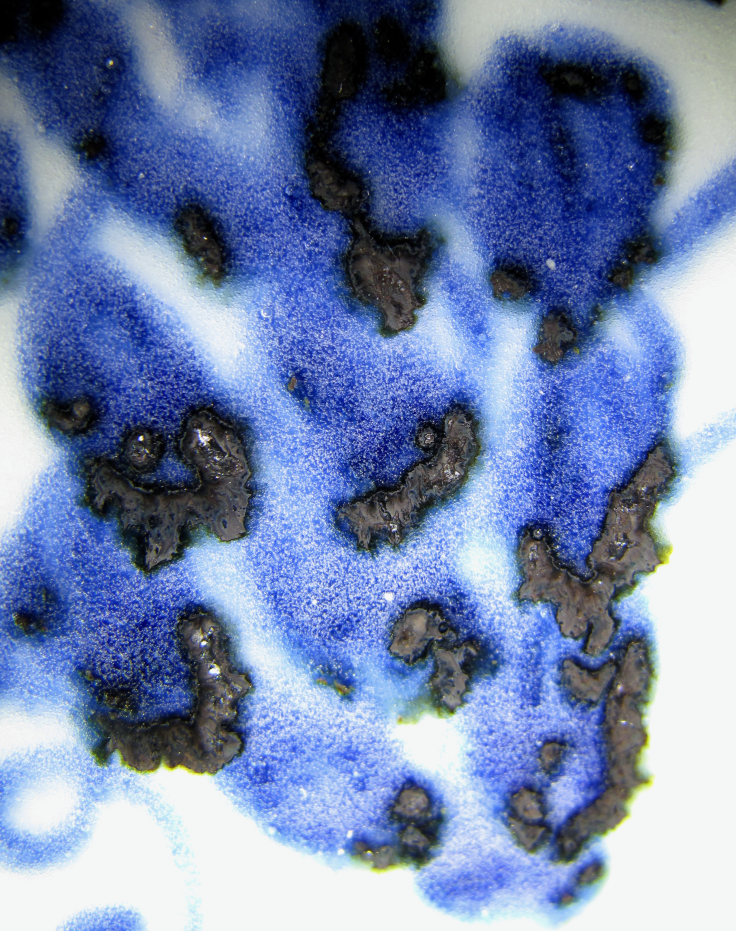 Figure 23
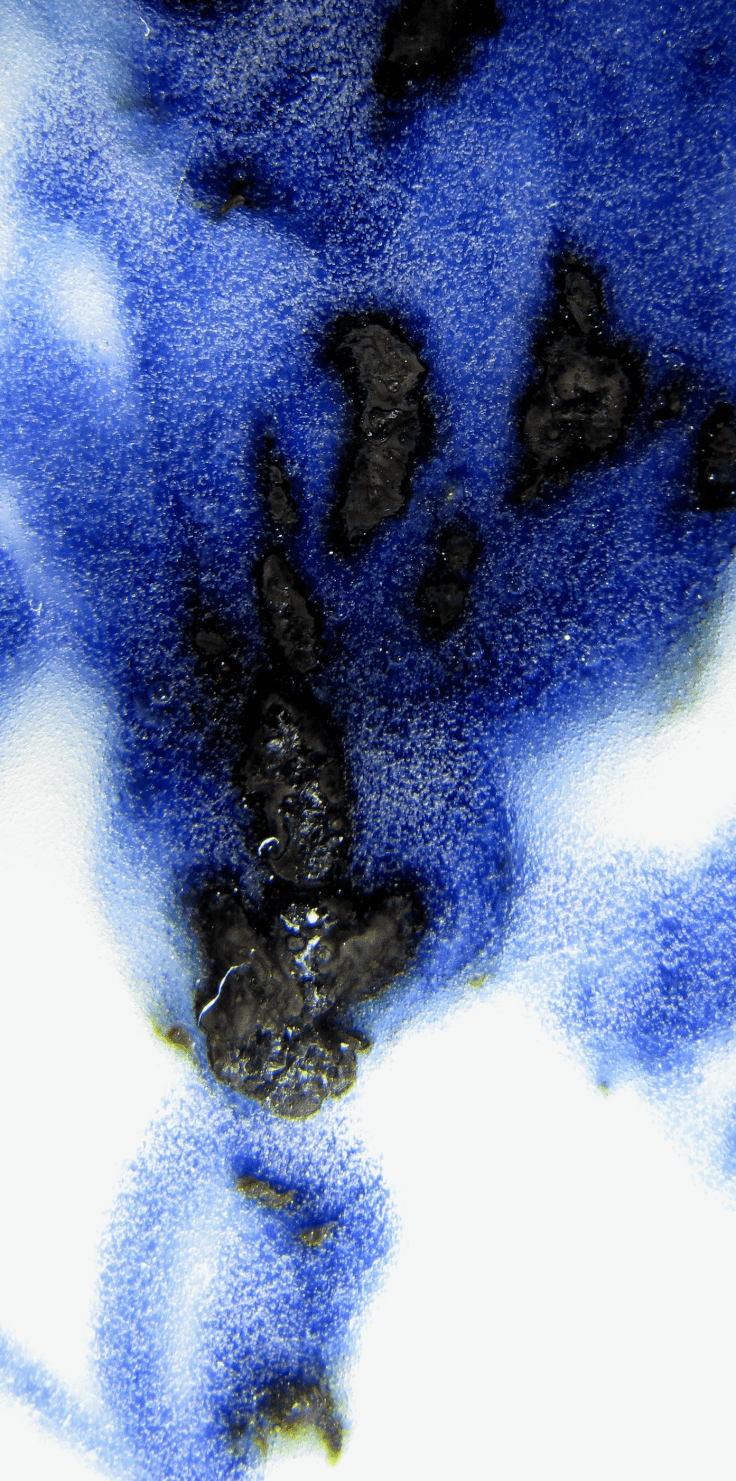 Figure 24
 Figure 25
These photos of large and small bubbles, with rather tightly packed lacunae, are typical of early Ming blue and whites. Experts have said it all along that it is difficult to tell Yongle and Xuande apart, for good reasons. What do you think? I myself would say that it is a Yongle.
 yongleandxuande.com
Leave a comment